Every order ships USPS Priority — $10.95 flat-rate USPS Priority shipping on all US orders, no minimum. Free shipping on domestic orders over $299.
Welcome to Stillpoint. Subscribe to our newsletter for sale details and new-product news · One discount code per order · Every order is hand-poured, packed with care in ceremony, and shipped as we receive it.

Sweet Birch Essential Oil | Deep Relief, Release + Mobility

Betula lenta

  • Sweet Birch Essential Oil | Deep Relief, Release + Mobility

Average Rating: (see reviews)

$10.00 Ex Tax: $10.00
GC/MS Report
Current: Winter 2017

GC/MS Report

Batch: bir2017 (Winter 2017)
Distilled: Spring 2017

Gas Chromatography Analysis (%)

Monoterpenes

α-pinene 0.10
β-pinene 0.02
d-limonene 0.02
para-cymenene 0.02

Monoterpenols

benzyl alcohol 0.03
linalol 0.02

Sesquiterpenes

β-caryophyllene 0.02
aromadendrene 0.01

Esters

Methyl salicilate 98.94
ethyl salicylate 0.21
linalyl acetate 0.06
α-terpinyl acetate 0.03

Aliphatic Aldehydes

benzaldehyde 0.01

Ketones

carvone 0.02

Oxides

1,8-cineole 0.39

Essential Facts

  • Latin Name: Betula lenta
  • Country of Origin: Cameroon
  • Botanical Family: Betulaceae
  • Plant Parts: Bark, Wood
  • Note Classification: Top
  • Cultivation Method: Wild Harvested
  • Method of Extraction: Steam or Hydro Distillation
  • Extraction Date: Spring 2025
  • Approx. Shelf Life: Gets Better With Age
  • Chemical Family: Esters
  • Batch: birch
  • Aroma: Astringent, Cool, Fresh, Minty, Slightly sweet, Strong
  • Energetic Applications: 1st Chakra - survival and support, 3rd Chakra - personal power, 7th Chakra - higher information, Energizing, Expansive, Grounding, Purifying
  • Therapeutic Properties: Analgesic, Anti-arthritic, Anti-inflammatory, Anti-rheumatic, Anti-septic, Anti-spasmodic, Astringent, Cooling, Depurative, Disinfectant, Diuretic, Energizing, Rubefacient, Tonic, Warming
Notes & Use

Personal Use

Sweet Birch Essential Oil (Betula lenta)
Sharp | Penetrating | Relieving

Sweet Birch doesn’t drift in politely. It cuts straight through. Its aroma is intensely sweet, minty, medicinal, and wintergreen-like, with a sharpness that feels like cold air hitting sore muscles. It has that unmistakable methyl salicylate punch — clean, penetrating, almost icy at first, then warming as it settles into the body.

This is an oil for deep aches, old stiffness, and the kind of physical discomfort that feels lodged in the tissues. Sweet Birch doesn’t feel delicate. It feels like a liniment in plant form — direct, strong, and built for relief.

Energetically, Sweet Birch has the medicine of release. It moves into the places where the body has braced, hardened, clenched, or held on too long. It does not ask the tension to explain itself. It goes to the stuck place and says: soften, move, let go.

Stillpoint’s Sweet Birch essential oil is steam distilled from the bark of Betula lenta, a deciduous tree native to eastern North America. Traditionally, Sweet Birch was valued by Indigenous and folk medicine traditions for its aromatic bark, warming/cooling topical preparations, and its connection to muscular comfort, joint support, and deep physical relief.

This oil is for movement. For release. For the body that has carried too much and needs help letting the damn thing go.

Therapeutic Applications

Musculoskeletal Support + Deep Relief
  • Sweet Birch is traditionally used in massage blends for sore muscles, joint discomfort, stiffness, and overworked areas of the body
  • Especially useful in formulas for deep aches, tight shoulders, low back tension, and post-exertion soreness
  • Its penetrating aroma and methyl salicylate-rich chemistry make it ideal for targeted topical blends, liniments, balms, and massage oils\
  • Best suited for localized use rather than casual full-body application, because this oil is powerful and needs respect
Joint Support + Stiffness
  • Traditionally used in topical preparations for areas that feel stiff, cold, tight, or difficult to move
  • May support comfort in massage blends for knees, hips, hands, shoulders, or other joints that feel overused or resistant
  • Combines well with oils like Ginger, Black Pepper, Plai, Helichrysum, Katafray, Rosemary, and Juniper Berry for deeper musculoskeletal support
  • Particularly helpful when the body feels locked down, rigid, or slow to warm up
Warming-Cooling Sensation
  • Sweet Birch has an interesting dual nature — it can feel cooling and sharp at first, then warming as circulation and sensation return
  • Useful in blends where the goal is to bring awareness and movement back into sore, tired, or contracted tissue
  • That icy-hot quality makes it a classic choice for sports massage-style formulas, recovery balms, and targeted relief blends
  • This is not a subtle comfort oil. This is “I need something that actually gets in there” medicine
Energetic Release + Tension Clearing
  • Sweet Birch may support emotional and energetic release when stress has settled into the body as tension, holding, or guardedness
  • Helpful when someone feels clenched, braced, defended, or physically exhausted from carrying too much
  • Its sharp, penetrating nature can help cut through stagnant pain patterns, old emotional rigidity, and the tendency to armor the body against life
  • Combines well with grounding oils like Vetiver, Patchouli, Cedarwood, or Frankincense when emotional release needs structure and safety
This is an oil that doesn’t just soothe discomfort — it confronts what has been held too tightly. Physical, emotional, and energetic.

Traditional Use

Musculoskeletal Relief & Deep Release
Sweet Birch has a long history of traditional use in North American folk medicine, especially for pain, fever, rheumatic discomfort, muscular aches, and conditions where the body needed warmth, movement, and relief. The bark and twigs of Betula lenta carry that unmistakable wintergreen-like aroma because of their methyl salicylate content — the same general chemical family that gives Sweet Birch its strong connection to topical pain-relief traditions.

This was old-school liniment medicine. Bark medicine. Tree medicine. Not soft and pretty — useful.

Sweet Birch was traditionally turned into teas, decoctions, infused preparations, poultices, and eventually distilled oil. Its medicine was used when the body hurt, when joints were stiff, when fever needed support, or when deep tissue discomfort needed something stronger than a gentle pat on the back.


Musculoskeletal Pain + Rheumatism
  • Sweet Birch has been traditionally associated with rheumatic discomfort, joint pain, muscular aches, stiffness, and neuralgic pain. Broader research on the Betula genus notes long-standing traditional use for inflammatory conditions, including arthritis and bone-related discomfort. 
  • Bark preparations and distilled oil were used externally in liniments, rubs, and topical applications for sore muscles, stiff joints, and deep aches
  • Especially valued for pain that feels lodged, cold, tight, or resistant to movement
  • Traditionally used in formulas for rheumatism, gout, neuralgia, and overworked tissue
  • This is the kind of plant people turned to when the body was not asking for comfort — it was asking for relief
Fever + Heat Regulation
  • Sweet Birch twigs and bark were traditionally prepared as teas for fever support, stomachache, and lung complaints. Plants for a Future specifically notes twig tea for fevers, and a 2022 review of Sweet Birch market authentication also references traditional bark use for stomachache, lung disease, and fever-supporting teas.
  • Twig and bark teas were traditionally used when the body was hot, uncomfortable, and working through illness
  • The plant carried a reputation for helping the body move through fever states and physical distress
  • Its energetic signature here is interesting: cooling the excess while still carrying warmth and movement
  • That dual nature — cooling and warming — is part of Sweet Birch’s strange brilliance
Skin + Astringent Use
  • Sweet Birch bark has also been used traditionally for skin concerns, especially where astringent, toning, or cleansing action was needed. Some traditional sources reference use of bark or leaf preparations for skin afflictions, including eczema and psoriasis, though essential oil use on irritated skin requires much more caution. 
  • Bark preparations were used as washes, poultices, or topical applications for irritated or troubled skin
  • Its astringent nature made it useful when tissue needed toning, tightening, or cleansing
  • This does not mean the essential oil should be used freely on damaged or inflamed skin — that’s where modern safety has to step in and say, “Easy, my friend.”
  • The traditional plant preparation and the concentrated essential oil are not the same thing
Clearing Stagnation + Restoring Movement
  • In traditional use, Sweet Birch’s medicine sits strongly in the category of movement — moving pain, moving stiffness, moving heat, moving stagnation.
  • It was not used as a dreamy spiritual perfume. It was used because bodies hurt. Backs hurt. Joints hurt. People worked hard, lived close to the land, got cold, got stiff, got injured, and needed plants that actually did something.
  • Sweet Birch answered that call with sharp, penetrating, wintergreen-like force.
  • Energetically, this is an oil for the places where the body has clenched around pain or memory. It helps speak to rigidity, bracing, and the deep physical holding that can happen after stress, grief, labor, or survival mode.
Strength After Hard Use
  • Sweet Birch carries the folklore of the working body — the body that chops wood, carries water, walks hills, kneels, lifts, bends, tends, survives.
  • It belongs to the world of sore shoulders, aching knees, tired backs, and hands that have done too damn much.
  • That is part of its sacredness. Not every sacred plant floats around in a temple. Some of them show up in a liniment bottle after a long day and say, “Here. Let’s get you moving again.”
Sweet Birch is strong medicine. In traditional use, it was turned to for pain, fever, stiffness, rheumatism, and the deep ache of a body that has been asked to keep going. Its medicine is sharp, penetrating, relieving, and direct — a tree ally for the places that are stuck, sore, and ready to release.

Botany

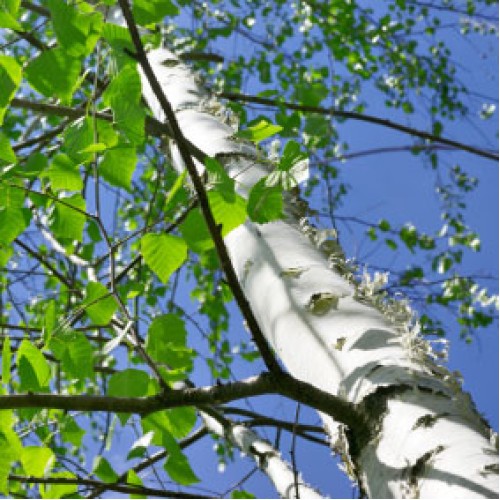
Betula lenta, commonly known as Sweet Birch, Black Birch, Cherry Birch, or Mahogany Birch, is a medium-sized deciduous tree native to eastern North America. A member of the Betulaceae family, Sweet Birch is closely related to other birches and carries the graceful, resilient presence of that lineage — but its aromatic identity is completely its own.

The essential oil is steam distilled from the bark, which contains the plant’s strong wintergreen-like aromatic compounds. This is where Sweet Birch holds its penetrating, relieving, methyl salicylate-rich medicine. Unlike some trees whose aromatic presence lives in resin, needles, or leaves, Sweet Birch keeps its strongest aromatic signature in its bark — the protective layer, the boundary, the living shield.

In its native ecosystem, Sweet Birch often grows in cool, moist woods, mountain slopes, ravines, and well-drained upland forests. It is a tree of edge and endurance — able to root into rocky ground, tolerate cold winters, and rise with quiet strength through the understory toward light.

  • Botanical Name: Betula lenta
  • Family: Betulaceae
  • Common Names: Sweet Birch, Black Birch, Cherry Birch, Mahogany Birch, Spice Birch
  • Plant Type: Deciduous hardwood tree
  • Part Used for Distillation: Bark
  • Growth Habit: Medium-sized tree, often reaching 15–25 meters tall, with an upright trunk and spreading crown
  • Flowering Season: Spring, with male and female catkins appearing before or as the leaves emerge
  • Harvest Time for Distillation: Bark is typically harvested when aromatic compounds are most available, then macerated/soaked before distillation to develop the methyl salicylate-rich profile
Physical Characteristics
  • Leaves: Simple, alternate, oval to oblong leaves with serrated edges; glossy green above and paler beneath, turning golden yellow in autumn
  • Bark: Dark reddish-brown to nearly black on younger and mature trees, often smooth at first and becoming plated or cracked with age; strongly wintergreen-scented when scratched or broken
  • Wood: Dense, strong, reddish-brown wood historically valued for furniture, flooring, and tool handles
  • Flowers: Small catkins; male catkins are longer and drooping, while female catkins are shorter and more upright
  • Fruit/Seeds: Small winged nutlets released from cone-like catkins, dispersed by wind
  • Roots: Spreading root system that anchors the tree into rocky, moist, or sloped woodland terrain
Native Habitat + Growth Conditions
  • Native To: Eastern North America, especially from southern Maine and Ontario south through the Appalachian region into Georgia and Alabama
  • Preferred Soil: Moist, well-drained, slightly acidic soils; often found in rich woods, ravines, and rocky uplands
  • Sunlight: Partial shade to full sun, depending on forest conditions and stage of growth
  • Climate: Temperate climates with cold winters, moderate moisture, and seasonal change
Ecological Notes: Sweet Birch provides food and habitat for wildlife; its seeds, buds, and catkins support birds and small mammals, while its presence in mixed hardwood forests contributes to slope stabilization, woodland diversity, and forest regeneration

Energetic Botanical Signature
Sweet Birch holds its strongest medicine in the bark — the boundary between the inner life of the tree and the outer world. That matters. This is not delicate leaf medicine or soft flower medicine. This is protective-layer medicine. The part that takes the weather, the injury, the pressure, the cold, and still keeps the tree alive.

Its bark is dark, aromatic, and deeply alive when scratched — releasing that sharp wintergreen scent like a sudden truth. Hidden under the surface is the chemistry of relief. Hidden under the hardness is movement.

Sweet Birch teaches through contrast: cooling and warming, sharp and sweet, protective and releasing. It shows us that strength does not always mean staying rigid. Sometimes strength means knowing when to soften the armor so life can move through again.

This is a plant that teaches: The places that protected you may also be the places ready to release. Your body does not have to hold the old pain forever.
Energetics

Energetic Properties

Deep Release, Pain Patterns & Protective Armor

Release • Pain Memory • Embodied Softening
Sweet Birch is not gentle in the fluffy way. It is mercy with teeth.
This oil moves into the places where the body has been braced for too long — the jaw that won’t unclench, the shoulders that forgot they can drop, the hips holding old fear, the back carrying history like a damn backpack full of stones.

Energetically, Sweet Birch speaks to the places where pain has become identity. Not because we choose that, but because the body is brilliant. It protects. It guards. It tightens. It remembers. And sometimes what once protected us becomes the thing that keeps us from moving freely.

Sweet Birch doesn’t shame the armor. It respects why it formed. Then it asks, quietly but firmly:

Are you ready to loosen this now?

This is deep release medicine. Not surface-level relaxation. Not “take a breath and pretend everything is fine.” Sweet Birch goes after the old holding patterns — the physical and energetic contractions that settle into muscle, joint, connective tissue, and fascia when life has asked too much of us for too long.

It has a sharp, penetrating quality that can feel almost surgical energetically. It cuts through stagnation. It clears density. It brings sensation back to places that have gone numb, cold, rigid, or overprotected.

Energetic Themes:
  • Releasing old pain patterns held in the muscles, joints, fascia, and connective tissue
  • Softening protective armor without collapsing boundaries
  • Supporting emotional release when grief, fear, or stress has settled into the body as tension
  • Helping the body move out of rigidity, bracing, and chronic guardedness
  • Clearing stagnant energy from areas of deep physical discomfort
  • Supporting the transition from “holding it all together” into actually feeling supported
  • Helping unwind the energetic imprint of overwork, survival mode, and long-term stress
  • Encouraging trust in movement after pain, injury, exhaustion, or emotional shutdown
  • Bringing awareness back into parts of the body that have gone numb or disconnected
Chakra Connections:

Root Chakra
Sweet Birch has a strong relationship with the root chakra because it speaks directly to survival patterns. The root is where the body asks: Am I safe? Can I trust the ground? Do I have enough support to soften?

When the root chakra is imbalanced, the body may grip, freeze, tighten, or brace. Sweet Birch can be supportive when fear has created contraction in the physical body — especially in the legs, hips, low back, knees, and feet.

It helps bring the conversation back to the body:
I am here. I am supported. I do not have to stay locked in survival mode.


Sacral Chakra
Sweet Birch also connects with the sacral chakra through movement, fluidity, and the release of old emotional residue. The sacral chakra governs flow — emotional flow, creative flow, pelvic movement, pleasure, and our ability to soften into life instead of gripping against it.

When grief, shame, trauma, or fear settles into the body, the sacral field can become frozen or guarded. Sweet Birch can help thaw the places where feeling has become too painful or too inconvenient to touch.

This is not “dance naked under the moon and everything is fixed” medicine. Though honestly, no judgment if that helps.
This is the deeper sacral medicine of allowing motion again — in the tissues, in the breath, in the emotional body.

Solar Plexus Chakra
Sweet Birch can also support the solar plexus when pain has made someone feel powerless, frustrated, or trapped inside their own body. Chronic pain can take up a lot of psychic real estate. It can make the spirit feel small, irritated, defeated, or disconnected from agency
Sweet Birch helps restore a sense of command — not control in the clenched way, but agency in the embodied way.

It says:
You are not powerless here. Your body may need care, but you are not broken.

Spiritual Use:
Ideal for body-based release rituals, especially when working with old tension, protective armor, or pain stored in the tissues
Useful in root and sacral chakra blends for grounding, embodiment, movement, and emotional thawing
Supportive after deep emotional processing, trauma work, grief work, or therapy when the body feels physically sore from carrying what was brought up

Can be used in ritual massage blends for releasing what the body no longer needs to hold
Helpful in practices focused on forgiveness of the body — especially when someone has felt betrayed by pain, injury, fatigue, or limitation

Can be paired with oils like Black Pepper, Ginger, Plai, Katafray, Helichrysum, Vetiver, Patchouli, or Frankincense for deeper structural, emotional, and energetic release

Best used when there is enough grounding and support present — because Sweet Birch can open the door to release, and the body needs to know it is safe to walk through it

Energetic Cautions:
Sweet Birch is strong. It is not the oil I would reach for when someone is already emotionally raw, overstimulated, overheated, or feeling unsafe in their body.

This oil is better for targeted release than broad emotional flooding.

Use it when the system is ready to move something — not when the system is barely holding itself together. There’s a difference. We honor that difference.

Sweet Birch is for the clenched places. The guarded places. The old ache that has become part of the furniture. It helps the body remember that protection does not have to become prison.
This is the oil for loosening the armor without abandoning the self.

Affirmation
I honor the ways my body has protected me. I soften what is ready to release, restore movement where I have been braced, and return to myself with strength, safety, and grace.

Traditional & Folklore

Sweet Birch is a tree of deep relief, dark bark, wintergreen breath, and old woodland medicine. While Betula lenta belongs specifically to eastern North America, the larger Birch family carries a wide ancestral story across the Northern Hemisphere — renewal, purification, protection, beginnings, resilience, and the return of life after hardship.

Birch has long been understood as a threshold tree. It is one of the first trees to return after fire, clearing, or disturbance. It comes back where the land has been stripped. It rises where the old growth has fallen. In that way, Birch is not just a symbol of freshness or springtime. It is a symbol of recovery after damage.

That matters for Sweet Birch.

Because Sweet Birch medicine is not just about pain relief. It is about what happens after the body has endured too much.

Folk Use as Pain-Relief Tree Medicine
In North American folk medicine, Sweet Birch bark and twigs were valued for their wintergreen-like aroma and their use in preparations for sore muscles, joint discomfort, fever, stomachache, and physical distress. The bark of Betula lenta is a known source of methyl salicylate, which gives Sweet Birch its strong wintergreen-like medicinal character. 

Bark and twig teas were traditionally used for fever, stomach discomfort, colds, and general physical complaints
Topical preparations were used for aching muscles, stiff joints, rheumatic discomfort, and deep soreness

The tree became associated with the working body — the body that labors, bends, carries, hurts, and keeps going
This was not ornamental medicine. This was “my back hurts, my joints ache, my body needs help” medicine

Sweet Birch belongs to the medicine cabinet of the forest — sharp, strong, practical, and direct.

Birch as a Tree of Renewal
In Celtic tradition, Birch is strongly associated with beginnings, purification, renewal, and the start of a new cycle. Birch, or Beithe, is the first tree of the Ogham tree alphabet, and it came to symbolize fresh starts, cleansing, and the movement out of the old year into the new. Birch twigs were used in purification rites to drive out the stagnant energy of the old cycle. 


Energetically, Sweet Birch does not just relieve discomfort. It helps clear what has hardened around the discomfort. It speaks to the body after long contraction and says: this is not the end of your story.
Birch is the tree that returns.
  • After winter.
  • After fire.
  • After clearing.
  • After pain.After the old structure has broken open.
That is not fluffy symbolism. That is ecological truth turned into medicine.

Protective Bark + Boundary Medicine
Birch bark has long been used in practical life: containers, coverings, tools, waterproofing, and protection. Across birch species, the bark is not just decorative — it is functional, protective, resilient, and weather-wise. Birch bark and birch tar have historically been used for waterproofing, glues, leather oil, and practical survival applications. 

That gives Birch a strong symbolic link to boundaries.
The bark protects the inner life of the tree.
The bark takes the weather.
The bark holds the line between the living center and the outer world.

Sweet Birch essential oil comes from that bark — from the boundary layer.

So in folklore language, this is boundary medicine. Not wall-building. Not shutting down. Not becoming untouchable. Boundary medicine that says: I can protect myself and still stay alive inside.

Slavic + Northern European Birch Symbolism
In Slavic and Northern European traditions, Birch is often connected with spring, feminine vitality, protection, purification, and the return of life. Birch branches were used in seasonal rituals, homes, and ceremonies to mark renewal, blessing, and cleansing. Birch also has strong cultural importance in Russia and Finland, where it is deeply woven into national and folk identity. 

This gives Birch a softer layer beneath its pain-relief medicine.
Yes, Sweet Birch is sharp.
Yes, Sweet Birch is strong.
Yes, Sweet Birch can feel almost medicinally fierce.
But under that sharpness is a spring tree. A returning tree. A tree that knows how to start again.
That is the deeper folklore: not just relief from pain, but the possibility of movement after pain.

Purification + Driving Out the Old
Birch was traditionally used in cleansing and purification rites, especially in Celtic and Northern European contexts. Bundles of birch twigs were used symbolically to sweep away the old, drive out stagnant forces, and prepare for renewal. 
For Sweet Birch, this has a direct energetic translation.

This oil helps “sweep” the body-field.

Not gently like a feather duster. More like: enough, let’s clear this out.
  • Old tension.
  • Old guarding.
  • Old pain patterns.
  • Old stiffness.
  • Old grief that settled into the back, hips, shoulders, jaw, knees.
Sweet Birch is broom medicine for the body’s hidden corners.

No Greek/Roman Myth — And That Matters
Sweet Birch does not have a major Greek or Roman mythological tradition. That is important to say plainly. This is not laurel, myrtle, cypress, rose, or frankincense. We don’t need to shove it into a mythology where it does not belong.
Its ancient lineage belongs more to northern forests, Indigenous North American plant use, Celtic tree symbolism, Slavic renewal customs, and the practical magic of people who knew trees as shelter, medicine, fuel, boundary, food, tool, and spirit.

That is sacred enough.
Actually, that may be more sacred.

Because Sweet Birch is not temple incense medicine. It is forest-floor medicine. Working-body medicine. Renewal-after-hardship medicine.

Pain, Renewal + Return
In folk memory, Birch carries the energy of beginning again. Sweet Birch adds the medicine of relief to that story.
It says:
You can come back after the hard season.
You can move again after stiffness.
You can soften without losing your strength.
You can release what your body no longer needs to carry.

Sweet Birch is not a delicate mythic flower. It is a dark-barked tree with wintergreen breath and serious medicine. In folklore, Birch is the tree of renewal, purification, protection, and return.

In Sweet Birch, that ancient Birch story becomes physical: relief for the aching body, release for the guarded spirit, and the possibility of movement after a long season of holding on.
Chemistry

Chemical Components

Sweet Birch is a methyl salicylate-dominant oil, and there is no dancing around that. This oil is strong, direct, medicinal, wintergreen-like, sharp, sweet, penetrating, and built for targeted relief.

Where some essential oils have broad, layered chemistry with many constituents sharing the stage, Sweet Birch is almost monastic in its focus. The chemistry points in one main direction: methyl salicylate. Natural Sweet Birch essential oil is commonly reported as being dominated by methyl salicylate, often in the 93–99% range, with one analysis of hydro-distilled Betula lenta oils showing methyl salicylate as the main component at 93.24–99.84%.

That is why Sweet Birch smells the way it smells. That is why it behaves the way it behaves. And that is why we respect the hell out of it.

This is not an oil for casual overuse. This is not “add 20 drops because it smells nice.” Sweet Birch is concentrated plant chemistry with a very specific therapeutic lane.

Main Chemical Family:

Aromatic Esters
  • Sweet Birch essential oil is overwhelmingly dominated by methyl salicylate, an aromatic ester responsible for its intense wintergreen-like aroma and its traditional connection to muscular and joint comfort. 
  • Known for its strong association with topical pain-relief traditions
  • Gives Sweet Birch its sharp, sweet, minty, medicinal, wintergreen aroma
  • Provides the penetrating “liniment” quality that makes this oil feel like it gets into deep tissue
  • Supports its traditional use in massage blends for sore muscles, stiffness, and joint discomfort
  • Requires serious dilution and safety awareness because methyl salicylate is potent and can be toxic if misused
  • Energetically, methyl salicylate is the blade and the balm. It cuts through stagnation, but it is not gentle chemistry. It needs form, dosage, and respect.
Methyl Salicylate
Methyl salicylate is the defining molecule of Sweet Birch. It is also the primary reason Sweet Birch and Wintergreen are often compared, confused, or substituted for one another. Both oils are known for extremely high methyl salicylate content, though they come from different plants. Sweet Birch is distilled from Betula lenta bark, while Wintergreen typically comes from Gaultheria species. 

This constituent gives Sweet Birch its unmistakable identity:
  • Sweet, minty, medicinal aroma
  • Strong penetrating quality
  • Traditional use in topical pain-relief preparations
  • Association with muscle, joint, and rheumatic-support blends
Powerful safety considerations, especially around children, pregnancy, salicylate sensitivity, anticoagulant medication, and internal use
This is why Sweet Birch feels like it moves straight into the sore place. It does not linger politely at the surface. It goes in.

Minor Components:
Although methyl salicylate dominates the profile, natural Sweet Birch essential oil may contain trace or minor components depending on harvest, distillation, aging, and authenticity. One market survey of commercial Sweet Birch oils identified more than 60 compounds in natural hydro-distilled Betula lenta oil, even though methyl salicylate remained overwhelmingly dominant.

These minor components may contribute subtle differences in aroma, quality, depth, and authenticity, but they do not change the core identity of the oil.

This is one reason authenticity matters. Methyl salicylate can be synthesized, and because Sweet Birch and Wintergreen oils are so methyl salicylate-heavy, adulteration and authenticity testing are real concerns in the marketplace.

For a serious aromatherapy practice, this matters. We are not just chasing a smell. We are working with a plant.

Therapeutic Implications of This Chemistry:

Deep musculoskeletal support:
Sweet Birch’s methyl salicylate-rich chemistry supports its traditional role in topical blends for sore muscles, joint discomfort, stiffness, and deep aches.

Targeted pain-relief formulas:
This oil belongs in carefully diluted, targeted applications — massage oils, balms, compresses, and liniments — where the goal is localized support, not casual full-body use.

Warming-cooling sensation:
Aromatically and sensorially, Sweet Birch can feel cooling at first and warming as it settles. That dual sensation makes it especially useful in formulas for tight, overworked, or guarded tissue.

Stagnation and rigidity:
Its penetrating chemistry makes it an excellent ally when discomfort feels stuck, dense, cold, stiff, or held too long.

Energetic release:
Because the chemistry is so sharp and focused, Sweet Birch can energetically support the release of old protective holding patterns — especially when pain, grief, stress, or survival mode has settled into the body as bracing.

Safety-driven formulation:
This chemistry demands restraint. Sweet Birch is not an oil to overuse, layer recklessly with Wintergreen, or apply without understanding methyl salicylate safety. The Tisserand Institute notes that methyl salicylate-rich oils such as Sweet Birch and Wintergreen require caution and are not recommended for children, pregnancy, or people taking blood-thinning medication such as aspirin or warfarin.

This chemistry does not whisper. It penetrates. It clears. It relieves. It asks the body where the old ache lives and goes straight there.
Sweet Birch is powerful because it is focused. Its chemistry teaches precision: use the right amount, in the right place, for the right reason. This is deep relief medicine — but only when handled with respect.
Recipes & Blends

Recipes & Blends

Deep Relief Muscle Blend
Physical Support | Sore Muscles + Stiffness

  • Sweet Birch Essential Oil (Betula lenta): 4 drops
  • Katafray Essential Oil (Cedrelopsis grevei): 8 drops
  • Plai Essential Oil (Zingiber cassumunar): 8 drops
  • Lavender Essential Oil (Lavandula angustifolia): 10 drops
  • Ginger Essential Oil (Zingiber officinale): 5 drops
  • Helichrysum Essential Oil (Helichrysum italicum): 5 drops
This blend is designed for sore muscles, deep aches, stiffness, and areas of the body that feel tight, overworked, or resistant to movement. Sweet Birch brings penetrating relief, Katafray supports structural comfort, Plai helps soothe muscular tension, Lavender softens the edges, Ginger brings warmth, and Helichrysum supports tissue recovery.

Dilute in a suitable carrier oil before applying to the skin. Because Sweet Birch is strong and methyl salicylate-rich, this blend is best used for targeted local application rather than full-body massage.


Joint Ease + Mobility Blend
Physical Support | Joint Discomfort + Restricted Movement

  • Sweet Birch Essential Oil (Betula lenta): 3 drops
  • Black Pepper Essential Oil (Piper nigrum): 5 drops
  • Juniper Berry Essential Oil (Juniperus communis): 8 drops
  • Rosemary Camphor Essential Oil (Rosmarinus officinalis ct. camphor): 6 drops
  • Frankincense Essential Oil (Boswellia carterii): 8 drops
  • Sweet Marjoram Essential Oil (Origanum majorana): 10 drops
This blend is for knees, hips, shoulders, hands, or other areas that feel stiff, cold, tight, or slow to loosen. Sweet Birch offers deep penetrating support, Black Pepper brings warmth and movement, Juniper Berry supports fluid movement, Rosemary Camphor sharpens circulation and clarity, Frankincense steadies the body, and Sweet Marjoram helps soften muscular guarding.

Dilute properly before topical use. Keep this blend localized and avoid using it over large areas of the body. Do not combine with other methyl salicylate-heavy oils like Wintergreen unless you are trained and calculating dilution carefully.


Loosen the Armor Blend
Energetic Support | Protective Holding + Body-Based Release

  • Sweet Birch Essential Oil (Betula lenta): 3 drops
  • Vetiver Essential Oil (Chrysopogon zizanioides): 4 drops
  • Cedarwood Atlas Essential Oil (Cedrus atlantica): 8 drops
  • Frankincense Essential Oil (Boswellia frereana): 8 drops
  • Patchouli Essential Oil (Pogostemon cablin): 5 drops
  • Lavender Essential Oil (Lavandula angustifolia): 12 drops
This blend is for the places where the body has been braced too long — tight shoulders, clenched jaw, guarded belly, rigid hips, or the general “I have been holding my whole life together with duct tape and a prayer” feeling. Sweet Birch helps cut into old holding patterns, Vetiver anchors the nervous system, Cedarwood Atlas strengthens the field, Frankincense deepens the breath, Patchouli grounds the body, and Lavender brings softness without collapse.

Use in ritual massage, grounding work, or post-processing integration when the body needs permission to release what it no longer has to carry.

Clear the Old Pain Pattern Blend
Energetic Support | Stagnation + Emotional Release

  • Sweet Birch Essential Oil (Betula lenta): 2 drops
  • Helichrysum Essential Oil (Helichrysum italicum): 5 drops
  • Black Spruce Essential Oil (Picea mariana): 8 drops
  • Myrrh Essential Oil (Commiphora myrrha): 5 drops
  • Mugwort Essential Oil (Artemisia vulgaris): 2 drops
  • Sweet Orange Essential Oil (Citrus sinensis): 18 drops
This blend is designed for the emotional residue of pain — not just the ache itself, but the memory of bracing, the fear of moving, and the old story the body keeps repeating. Sweet Birch brings focused release, Helichrysum supports repair after impact, Black Spruce strengthens endurance, Myrrh grounds grief and old wounds, Mugwort supports deeper symbolic clearing, and Sweet Orange brings warmth and light back into the field.

Use with intention, especially before gentle movement, journaling, bodywork, or a clearing ritual. This is not a casual “smell pretty” blend. This is for when something old is ready to move.


Affirmation
I honor the ways my body has protected me. I soften what is ready to release, restore movement where I have been braced, and return to myself with strength, safety, and grace.


Safety Note
Sweet Birch essential oil is methyl salicylate-rich and must be used with care. Always dilute before topical use. Avoid use with children, during pregnancy or lactation, with salicylate sensitivity, aspirin allergy, anticoagulant or blood-thinning medication, bleeding disorders, before or after surgery, and on broken or irritated skin. Do not use internally. Keep away from pets. Use only in low dilution and for targeted application.

This is strong medicine. Tiny amounts. Big respect.
Safety Etc.

Safety Information


Sweet Birch essential oil is a strong, methyl salicylate-rich oil and should be used with care and respect. It is a beautiful and effective oil for targeted musculoskeletal blends, but it is not one I would use casually or in high amounts.

This oil is best suited for short-term, localized use in properly diluted blends for sore muscles, joint discomfort, stiffness, and deep aches.

Topical Use
Recommended dilution is low and conservative.
For most adult topical applications, Sweet Birch is best used around 0.5–1% in localized blends.

This oil is best suited for:
  • Targeted muscle rubs
  • Joint blends
  • Spot treatment massage oils
  • Short-term support for specific discomfort
  • Recovery balms or liniments used thoughtfully
Avoid repeated heavy application or layering several salicylate-containing products at the same time, such as:
  • Sweet Birch balm
  • Wintergreen muscle rub
  • Salicylate-containing pain cream
  • Aspirin or blood-thinning medication
A little Sweet Birch goes a long way.

Skin Sensitivity
Sweet Birch may irritate sensitive skin if used too strong, too often, or on compromised skin.

Avoid use on:
  • Broken skin
  • Inflamed skin
  • Freshly shaved skin
  • Rashes
  • Open wounds
  • Burns
  • Highly sensitive or reactive skin
  • Mucous membranes
Patch testing is recommended when using a new blend.
Phototoxicity
  • Sweet Birch essential oil is not known to be phototoxic.
Internal Use
  • Do not use Sweet Birch essential oil internally.
  • Internal use of methyl salicylate-rich oils should only be considered under direct supervision of a qualified practitioner trained in aromatic medicine.
  • For general home use, Sweet Birch is best kept as a topical oil in properly diluted blends.
Pregnancy & Lactation
  • Avoid Sweet Birch essential oil during pregnancy.
  • Avoid Sweet Birch essential oil during lactation unless guided by a qualified practitioner.
  • This is one of the oils where I would choose a gentler alternative for pregnancy and nursing.
Pediatric Use
Sweet Birch is not recommended for children.

This includes:
  • Topical use
  • Bath use
  • Casual diffuser use
  • Products children may touch and then bring near the mouth or eyes
Keep Sweet Birch:
  • Tightly capped
  • Clearly labeled
  • Out of reach of children
  • Away from food, drinks, or anything that could lead to accidental ingestion
Medication + Health Considerations
Avoid Sweet Birch essential oil if you are taking blood-thinning or anticoagulant medications, including:
  • Warfarin
  • Aspirin therapy
  • Heparin
  • Clopidogrel or similar antiplatelet medications
  • Other anticoagulant or blood-thinning medications
Also avoid Sweet Birch or use only with qualified professional guidance if you have:
  • Aspirin allergy
  • Salicylate sensitivity
  • Bleeding disorders
  • History of ulcers or gastrointestinal bleeding
  • Severe asthma triggered by aspirin or NSAIDs
  • Liver disease
  • Kidney disease
  • Upcoming surgery
  • Recent surgery
  • A history of serious medication interactions
Because methyl salicylate may interact with clotting pathways, it is best to avoid Sweet Birch before and after surgery unless cleared by a qualified healthcare provider.

Pets
Use thoughtful care around animals.
Some pets may be curious about or drawn to Sweet Birch’s wintergreen-like aroma, but attraction does not automatically mean an oil should be applied or diffused around them freely.

For animal households:
  • Do not apply Sweet Birch directly to pets unless guided by a qualified animal aromatherapy professional
  • Do not force inhalation or confine animals in a room where strong aromatics are being used
  • Use excellent ventilation
  • Allow animals to leave the area
  • Keep bottles tightly capped and out of reach
  • Avoid use around very young, senior, pregnant, medically fragile, or heavily medicated animals unless professionally guided
This is not about fear. It’s about consent, dilution, and common sense — which animals deserve too.

Diffusion
Sweet Birch is not my first choice as a diffuser oil.
Because it is strong and methyl salicylate-rich, I would generally reserve Sweet Birch for carefully diluted topical blends rather than casual room diffusion.

If used aromatically:
  • Use a very small amount
  • Use for a short period
  • Keep the room ventilated
  • Allow people and animals to leave the space
  • Avoid use around children, pregnancy, salicylate sensitivity, or blood-thinning medications
For most diffuser purposes, there are gentler oils that can do the job beautifully.

Storage

Store Sweet Birch essential oil with care.
Storage guidelines:
  • Store in a cool, dark place
  • Keep away from heat, light, and oxygen
  • Keep the cap tightly closed
  • Keep out of reach of children
  • Keep away from pets
  • Keep away from food or beverage areas
  • Make sure the bottle is clearly labeled
General Safety Summary

Sweet Birch essential oil is strong, focused, and deeply useful when used properly. It is best for targeted, short-term, well-diluted blends rather than broad, casual use.

Avoid use with:
  • Children
  • Pregnancy
  • Lactation
  • Blood-thinning medications
  • Aspirin allergy
  • Salicylate sensitivity
  • Bleeding disorders
  • Surgery preparation or recovery
  • Broken or irritated skin
Use Sweet Birch:
  • In low dilution
  • Locally
  • Briefly
  • Intentionally
  • With respect for the chemistry
This is deep relief medicine. Use a little. Use it well. Let the plant do its work without turning the volume all the way up.

References


  • Battaglia, Salvatore. The Complete Guide to Aromatherapy. Perfect Potion.

  • Dosoky, Noura S., et al. Authentication and Market Survey of Sweet Birch (Betula lenta L.) Essential Oils. Plants, 2022.

  • Holmes, Peter. Aromatica: A Clinical Guide to Essential Oil Therapeutics, Volume 1 and Volume 2. Singing Dragon.

  • Lawless, Julia. The Encyclopedia of Essential Oils. Conari Press.

  • Rhind, Jennifer Peace. Essential Oils: A Handbook for Aromatherapy Practice. Singing Dragon.

  • Rhind, Jennifer Peace. Fragrance and Wellbeing: Plant Aromatics and Their Influence on the Psyche. Singing Dragon.

  • Tisserand, Robert, and Rodney Young. Essential Oil Safety: A Guide for Health Care Professionals. 2nd ed., Churchill Livingstone Elsevier, 2014.

  • van Wyk, Ben-Erik, and Michael Wink. Medicinal Plants of the World. CABI.

  • Rastogi, Sanjeev, et al. Medicinal Plants of the Genus Betula — Traditional Uses and a Phytochemical–Pharmacological Review. Journal of Ethnopharmacology, 2015.

Related Products

Cornmint (Wild Mint) Essential Oil

Cornmint (Wild Mint) Essential Oil

..

$9.00 Ex Tax: $9.00

Spike Lavender Essential Oil

Spike Lavender Essential Oil

..

$9.00 Ex Tax: $9.00

Plai, Central Essential Oil

Plai, Central Essential Oil

..

$10.00 Ex Tax: $10.00

Spearmint Essential Oil

Spearmint Essential Oil

..

$9.00 Ex Tax: $9.00

Lavender Seville (Stoechas) Essential Oil
Peppermint Essential Oil, South Africa

Reviews (7)

Write a review

Note: HTML is not translated!
    Bad           Good
Powered By OpenCart
Stillpoint Aromatics © 2026