
Personal Use
This isn’t your average candy-cane mint. Stillpoint’s Wild Spearmint (Mentha longifolia) is fresh, green, and untamed—less sweet than Mentha spicata, with a slightly bitter, herbal edge that reminds you this plant has roots in the wild, not a factory. It opens with a vibrant hit of green brightness—like crushed stems and cool wind on sun-warmed leaves—and finishes with an earthy, dry menthol whisper that lingers just long enough to wake the senses.
Distilled from the leaves of wild-harvested Mentha longifolia, this essential oil carries the intelligence of a plant that thrives in dry, rugged soils—where water is scarce and the heat is relentless. That shows up in the scent: it’s sharp without being harsh, clarifying without being cold. Less bubblegum, more backbone.
Compared to domestic spearmint (Mentha spicata), Wild Spearmint is leaner and more medicinal—holding more of its native edge and less of the cultivated sweetness. This is mint that’s climbed out of sugar’s shadow. It’s not here to coddle—it’s here to clear the static, get things moving, and remind you that clarity doesn’t always come wrapped in sweetness.
Therapeutic Applications
Wild Spearmint (Mentha longifolia) may be cooling, but it’s not passive. This oil moves things. It clears, opens, soothes, and stimulates—all in one breath. Unlike the sweeter Mentha spicata, this wild mint leans into its herbal, bitter-laced chemistry, giving it a slightly more assertive therapeutic presence while still being gentler than Peppermint.
Here’s what she may support:
1. Digestive Support
Traditionally used to support healthy digestion, Wild Spearmint may help relieve nausea, bloating, gas, and sluggish digestion. Its carminative and antispasmodic actions support smooth gut function without the intense bite of peppermint. It’s a go-to oil for gentle but effective digestive support.
Traditionally used to support healthy digestion, Wild Spearmint may help relieve nausea, bloating, gas, and sluggish digestion. Its carminative and antispasmodic actions support smooth gut function without the intense bite of peppermint. It’s a go-to oil for gentle but effective digestive support.
2. Respiratory Support
Wild Spearmint may help clear congestion and ease the breath, especially in cases of mild cough, sinus pressure, or seasonal allergies. It’s expectorant and gently decongesting, offering support without the sharp mentholic punch that overwhelms more sensitive systems.
Wild Spearmint may help clear congestion and ease the breath, especially in cases of mild cough, sinus pressure, or seasonal allergies. It’s expectorant and gently decongesting, offering support without the sharp mentholic punch that overwhelms more sensitive systems.
3. Mental Clarity + Focus
This oil is known for its ability to sharpen the mind and clear mental fog. Inhaling Wild Spearmint may support memory, mental clarity, and focus—making it a great choice for workspaces, study blends, or long drives. It awakens without overstimulating.
This oil is known for its ability to sharpen the mind and clear mental fog. Inhaling Wild Spearmint may support memory, mental clarity, and focus—making it a great choice for workspaces, study blends, or long drives. It awakens without overstimulating.
4. Nervous System Regulation
While energizing, Wild Spearmint has a balanced quality that may help settle anxiety and reduce stress-related tension. It’s a gentle nervous system tonic—especially helpful for those who feel scattered or overstimulated.
While energizing, Wild Spearmint has a balanced quality that may help settle anxiety and reduce stress-related tension. It’s a gentle nervous system tonic—especially helpful for those who feel scattered or overstimulated.
5. Antimicrobial + Skin Support
Wild Spearmint has been shown to exhibit antimicrobial and antifungal properties. It may be beneficial in cleansing blends for oily or acne-prone skin and may also be used in oral care products for its breath-freshening and germ-fighting properties.
Wild Spearmint has been shown to exhibit antimicrobial and antifungal properties. It may be beneficial in cleansing blends for oily or acne-prone skin and may also be used in oral care products for its breath-freshening and germ-fighting properties.
6. Hormonal Balance
In some traditional uses, Wild Spearmint has been linked to support for hormonal regulation, particularly in helping to reduce excess androgens. While more research is needed, this use aligns with its cooling, clearing energetic presence.
In some traditional uses, Wild Spearmint has been linked to support for hormonal regulation, particularly in helping to reduce excess androgens. While more research is needed, this use aligns with its cooling, clearing energetic presence.
Traditional Use
Wild Spearmint has a long-standing role in folk medicine and herbal traditions throughout North Africa, the Middle East, Europe, and Central Asia. This isn’t the mint of mojitos—it’s the original medicine mint. Traditionally, Mentha longifolia was used not just for its flavor, but for its cooling, calming, and clarifying effects—especially in the digestive and respiratory systems.
Digestive Ally
Wild Spearmint tea has been used for centuries to ease stomach discomfort, gas, nausea, and bloating. Herbalists in North Africa and the Levant would often brew the leaves to settle the gut, reduce flatulence, and support bile flow. It was considered a remedy for "hot" digestive issues, bringing in cool balance where there was inflammation or stagnation.
Wild Spearmint tea has been used for centuries to ease stomach discomfort, gas, nausea, and bloating. Herbalists in North Africa and the Levant would often brew the leaves to settle the gut, reduce flatulence, and support bile flow. It was considered a remedy for "hot" digestive issues, bringing in cool balance where there was inflammation or stagnation.
Respiratory + Fever Relief
In traditional Persian and Mediterranean medicine, wild spearmint was inhaled or taken as a decoction to relieve symptoms of colds, sinus congestion, and cough. It was thought to "open the chest" and promote clearer breathing. Some folk practices also used mint compresses to help reduce fevers.
In traditional Persian and Mediterranean medicine, wild spearmint was inhaled or taken as a decoction to relieve symptoms of colds, sinus congestion, and cough. It was thought to "open the chest" and promote clearer breathing. Some folk practices also used mint compresses to help reduce fevers.
Women’s Herbal Support
Wild spearmint has been traditionally associated with women’s health, especially to balance hormones and reduce signs of excess heat or hormonal tension. Some cultures used it to cool fiery tempers, soothe menstrual discomfort, and regulate cycles—both physically and energetically.
Wild spearmint has been traditionally associated with women’s health, especially to balance hormones and reduce signs of excess heat or hormonal tension. Some cultures used it to cool fiery tempers, soothe menstrual discomfort, and regulate cycles—both physically and energetically.
Cooling for the Liver + Spirit
In Unani and early European traditions, Mentha longifolia was classified as a cooling and drying herb, often used to balance liver heat and irritability. It was said to clear the head and calm the nerves, especially when emotional frustration showed up in the gut or skin.
In Unani and early European traditions, Mentha longifolia was classified as a cooling and drying herb, often used to balance liver heat and irritability. It was said to clear the head and calm the nerves, especially when emotional frustration showed up in the gut or skin.
Culinary and Ritual Use
Wild spearmint has also been used in flavoring food and sacred beverages, added to cleansing steams and baths, or offered in herbal bundles for purification and clarity.
Botany
Mentha longifolia, commonly known as Wild Spearmint, is a hardy perennial herb in the Lamiaceae family. Unlike its cultivated cousin Mentha spicata, this species thrives in wild, uncultivated soils—found growing along riverbanks, rocky slopes, and disturbed edges across Europe, western Asia, and parts of North Africa. Its very presence speaks to survival, adaptation, and resilience without interference.
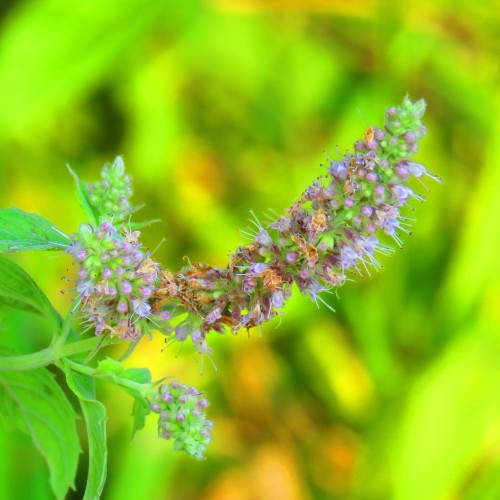
This plant spreads through creeping rhizomes, forming dense colonies of long, lance-shaped leaves with a silvery underside and strong minty aroma. In midsummer, it shoots up tall spikes of lavender to pale pink flowers, beloved by pollinators. The entire plant carries a wild, vigorous scent—sharp, herbal, and medicinal compared to the round sweetness of garden spearmint.
Botanical Name: Mentha longifolia
Family: Lamiaceae
Common Names: Wild Spearmint, Horse Mint, River Mint
Plant Type: Perennial herb
Part Used for Distillation: Aerial parts, primarily leaves
Growth Habit: Rhizomatous, spreading vigorously; upright stems reaching 2–3 feet
Flowering Season: Summer (typically July–August)
Harvest Time for Distillation: Just before or during full bloom, when oil content is at peak
Common Names: Wild Spearmint, Horse Mint, River Mint
Plant Type: Perennial herb
Part Used for Distillation: Aerial parts, primarily leaves
Growth Habit: Rhizomatous, spreading vigorously; upright stems reaching 2–3 feet
Flowering Season: Summer (typically July–August)
Harvest Time for Distillation: Just before or during full bloom, when oil content is at peak
Physical Characteristics:
-
Leaves: Long, narrow, toothed, and slightly fuzzy; strong minty scent
-
Stems: Square, upright, green to reddish, often branched
-
Flowers: Spiked, pale purple or pink; small and dense on terminal spikes
-
Roots: Spreading rhizomes that form dense colonies
Native Habitat + Growth Conditions:
-
Native To: Europe, western + central Asia, North Africa
-
Preferred Soil: Moist, well-drained, often near rivers or disturbed areas
-
Sunlight: Full sun to partial shade
-
Climate: Temperate; drought-tolerant once established, but prefers moisture
-
Ecological Notes: Pollinator-attracting, fast-spreading, and highly adaptive
Energetic Botanical Signature
Wild Spearmint doesn’t ask for permission—it grows where it wants, when it wants, even in places others overlook. Its leaves reach upward, its roots spread sideways, and its medicine moves forward. It teaches us how to move freely without becoming untethered.
Where cultivated mint was softened for the palate, wild spearmint kept her edge—cool, clear, and unafraid of her bitterness. She brings movement where there’s stagnation, focus where there’s fuzz, and clarity where things feel tangled. She’s not here to comfort. She’s here to help you remember who you are beneath the noise.
This is the plant that says: Clear the static. Speak with precision. Trust your gut.
