
Personal Use
Curcuma xanthorrhiza CO₂-select (Curcuma xanthorrhiza Root Extract) opens with a bold, earthy breath that speaks of roots buried deep in sacred volcanic soil. Its aroma is rich and grounding—slightly bitter, spicy, and medicinal—tinged with a resinous warmth and a whisper of the wild. There’s a sharp, tenacious undertone here that stirs something ancient in the blood, like fire beneath stone.
This particular extraction is a select CO₂ (not total), using supercritical carbon dioxide to capture the lipophilic fractions—yielding a potent concentrate of essential oil and active sesquiterpenes. Grown organically and ethically sourced, this extract contains a high percentage of xanthorrhizol, ar-curcumene, and β-curcumene, giving it not only its aromatic intensity but also a remarkable breadth of biological activity.
Our batch is a vivid yellow-green oil, viscous and luminous, extracted from the dried rhizomes of plants grown using sustainable methods that honor nature’s balance and preserve purity—free from synthetic chemicals, harmful additives, or pesticides.
This is not your average turmeric. This is its unapologetically bold cousin, carrying the strength of Southeast Asia’s jungles in every drop.
Therapeutic Applications
1. May support the body’s natural response to inflammation
Curcuma xanthorrhiza CO₂ extract is rich in sesquiterpenes—particularly ar-curcumene, β-curcumene, and xanthorrhizol—which have been studied for their ability to modulate inflammation. Traditionally used for pain and joint stiffness, this extract may support those dealing with musculoskeletal discomfort, particularly in cases related to swelling or inflammatory conditions like arthritis.
Curcuma xanthorrhiza CO₂ extract is rich in sesquiterpenes—particularly ar-curcumene, β-curcumene, and xanthorrhizol—which have been studied for their ability to modulate inflammation. Traditionally used for pain and joint stiffness, this extract may support those dealing with musculoskeletal discomfort, particularly in cases related to swelling or inflammatory conditions like arthritis.
2. Traditionally used for digestive complaints
In traditional Southeast Asian medicine, the root has been used to ease sluggish digestion, feelings of fullness, and flatulence. Its warming, bitter-spicy nature may help stimulate digestive fire and soothe the GI tract. This aligns with its culinary role as a spice for richer meals and curry blends—helping the body process fats and proteins more efficiently.
In traditional Southeast Asian medicine, the root has been used to ease sluggish digestion, feelings of fullness, and flatulence. Its warming, bitter-spicy nature may help stimulate digestive fire and soothe the GI tract. This aligns with its culinary role as a spice for richer meals and curry blends—helping the body process fats and proteins more efficiently.
3. Known to exhibit antimicrobial properties
Xanthorrhizol, a major component of this extract, has demonstrated antibacterial action in lab studies—especially against oral pathogens such as Streptococcus mutans and Staphylococcus aureus. This makes it a powerful ally in natural oral care blends (like mouthwash or toothpaste), supporting both gum and breath health.
Xanthorrhizol, a major component of this extract, has demonstrated antibacterial action in lab studies—especially against oral pathogens such as Streptococcus mutans and Staphylococcus aureus. This makes it a powerful ally in natural oral care blends (like mouthwash or toothpaste), supporting both gum and breath health.
4. May assist with oxidative stress and skin resilience
Its antioxidant profile, bolstered by curcumenes and phenolic compounds, may help counter oxidative stress and support the skin’s natural healing process. This suggests possible benefits in topical preparations for minor wounds or in serums aimed at revitalizing tired, environmentally stressed skin.
Its antioxidant profile, bolstered by curcumenes and phenolic compounds, may help counter oxidative stress and support the skin’s natural healing process. This suggests possible benefits in topical preparations for minor wounds or in serums aimed at revitalizing tired, environmentally stressed skin.
5. Traditionally considered calming to the nervous system
Though not sedating, this extract carries a gentle, grounding energy. It may support emotional balance during stress states and can be integrated into blends for anxiety, restlessness, or overthinking.
Though not sedating, this extract carries a gentle, grounding energy. It may support emotional balance during stress states and can be integrated into blends for anxiety, restlessness, or overthinking.
Traditional Use
Curcuma xanthorrhiza, commonly known as Temulawak in Indonesia, has held a revered place in Jamu—Indonesia’s traditional herbal medicine system—for centuries. Long before it was ever extracted in CO₂-rich golden hues, the root was steeped into bitter decoctions, ground into tonics, and mixed with tamarind or honey for vitality, digestion, and liver support.
Historically, the rhizome was used:
-
As a bitter digestive, especially for bloating, flatulence, and sluggish elimination.
-
In postpartum care for women, believed to strengthen the blood and restore balance.
-
To support bile flow and liver function—a cornerstone of its role in traditional hepatoprotective formulas.
-
In poultices for minor wounds and skin inflammation.
-
As a culinary spice, lending warmth and deep color to soups, stews, and curries.
Its vibrant hue was also used as a natural dye, and in ceremonial foods prepared for healing or ancestral offerings.
While modern extraction reveals its potent chemistry, traditional use has always recognized its “fire-in-the-belly” nature—stoking not only digestion, but also inner strength.
Botany
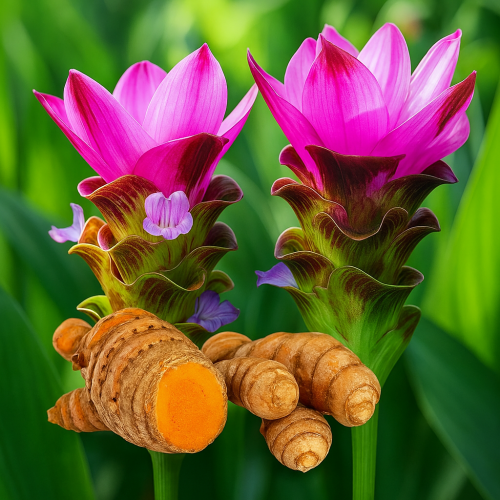
Curcuma xanthorrhiza is a perennial herbaceous plant in the Zingiberaceae family, native to the tropical rainforests of Indonesia—especially Java, where it has been used for centuries in traditional herbal medicine and ritual. It thrives in humid, shaded environments, sending up lush green leaves and storing its medicine in thick, fragrant rhizomes buried beneath the surface of fertile soil.
This plant is deeply embedded in Indonesia’s Jamu tradition, where its bitter, warming roots are revered for their power to strengthen digestion, purify the blood, and support postpartum recovery. Its rhizomes are rich in essential oil and phenolic compounds, especially xanthorrhizol, giving the plant its vibrant color and bold flavor.
Botanical Name: Curcuma xanthorrhiza
Family: Zingiberaceae
Common Names: Javanese Turmeric, Temulawak, Javanese Ginger
Plant Type: Perennial tropical herb with thick underground rhizomes
Part Used for Extraction: Dried rhizomes
Growth Habit: Low-growing with upright leafy shoots; rhizomes spread underground in horizontal clusters
Flowering Season: Late summer, though flowering is rare in cultivated specimens
Harvest Time for CO₂ Extraction: After full rhizome maturity, typically late summer to early fall
Physical Characteristics:
Leaves: Broad, lance-shaped, mid-to-deep green with long sheaths
Stems: Technically pseudostems formed by tightly wrapped leaf bases
Flowers: Pale yellow to purple, enclosed in green or reddish bracts on a short spike near the base
Rhizomes: Thick, knobby, golden-yellow inside, aromatic and bitter with a waxy surface
Family: Zingiberaceae
Common Names: Javanese Turmeric, Temulawak, Javanese Ginger
Plant Type: Perennial tropical herb with thick underground rhizomes
Part Used for Extraction: Dried rhizomes
Growth Habit: Low-growing with upright leafy shoots; rhizomes spread underground in horizontal clusters
Flowering Season: Late summer, though flowering is rare in cultivated specimens
Harvest Time for CO₂ Extraction: After full rhizome maturity, typically late summer to early fall
Physical Characteristics:
Leaves: Broad, lance-shaped, mid-to-deep green with long sheaths
Stems: Technically pseudostems formed by tightly wrapped leaf bases
Flowers: Pale yellow to purple, enclosed in green or reddish bracts on a short spike near the base
Rhizomes: Thick, knobby, golden-yellow inside, aromatic and bitter with a waxy surface
Native Habitat + Growth Conditions:
Native To: Indonesia (Java), also found in Malaysia and other parts of Southeast Asia
Preferred Soil: Moist, fertile, well-drained loam enriched with organic matter
Sunlight: Partial shade to dappled sun
Climate: Warm, humid tropics with consistent rainfall
Ecological Notes: Adapted to forest understories; spreads through rhizome division and thrives in symbiosis with shaded microclimates
Native To: Indonesia (Java), also found in Malaysia and other parts of Southeast Asia
Preferred Soil: Moist, fertile, well-drained loam enriched with organic matter
Sunlight: Partial shade to dappled sun
Climate: Warm, humid tropics with consistent rainfall
Ecological Notes: Adapted to forest understories; spreads through rhizome division and thrives in symbiosis with shaded microclimates
Energetic Botanical Signature
Curcuma xanthorrhiza grows in secret—beneath dense canopies, in the quiet, moist places of the earth. It doesn’t reach for the sky. It anchors into the unseen, drawing nourishment from darkness and decay. It teaches us that power doesn’t always blaze—it brews.
Its bright rhizome, hidden underground, holds fire in its bitterness. This is not a superficial warmth—it’s a catalytic core, one that says: “Digest your truth. Burn what no longer feeds you.”
As a plant, it lives in paradox: soft leaves, fierce roots. Gentle top, potent underbelly. It teaches discernment, digestion, boundary, and boldness—all from below.
This is root medicine for the soul’s slow burn. For those who’ve swallowed too much and need to metabolize what’s unresolved. For those ready to reclaim their gut instinct and restore their sacred "no."
