
Personal Use
This isn’t your typical rosemary oil—and it’s not meant to be. Our Rosemary Antioxidant CO₂ Extract isn’t here for scent or ritual. She’s here for stability, for strength, and for preserving the integrity of your creations. With a deep, earthy-green scent that’s more resinous than herbal, this extract carries the protective force of the rosemary plant in her most grounded, no-nonsense form.
There’s no sparkle, no top note, no intention to charm. What you’ll notice is weight—dense, sticky, and slightly bitter, like the thickened pulse of nature’s own shield. This extract doesn’t bloom in a blend. It hunkers down in the base, working behind the scenes to slow oxidation, prevent rancidity, and hold the line. Think of it as the unsung guardian of your oil-based preparations—potent, concentrated, and unapologetically functional.
Therapeutic Applications
Rosemary Antioxidant CO₂ (Rosmarinus officinalis) isn’t your typical rosemary oil. She’s not meant to be diffused or inhaled for clarity or uplift. Instead, her role is quiet but essential—she holds the integrity of your oils. Think of her as the protector, the preserver, the one who stands between oxidation and your most delicate botanicals.
Here’s what she may support:
-
Oxidative Stability for Carrier Oils + Blends
This CO₂ extract is most commonly used to extend the shelf life of sensitive oils—especially those rich in polyunsaturated fatty acids like Rosehip, Sea Buckthorn, Hemp, and Evening Primrose. A small percentage (typically 0.1–0.3%) added to your base oils or blends may help protect them from rancidity and maintain their full therapeutic and energetic value over time.
-
Natural Preservation in Aromatic Formulas
When used in custom oil blends, serums, or infused herbal oils, Rosemary Antioxidant acts as a natural stabilizer. It may help delay oxidation without disrupting the synergy of your formula. This is especially helpful in formulations that don’t include synthetic preservatives but still need a longer shelf life.
-
Skin Barrier + Cell Membrane Support
While it’s not typically used as a primary therapeutic, Rosemary Antioxidant’s high content of carnosic acid and carnosol has been associated with antioxidant and mild anti-inflammatory activity. When included at proper dilutions, it may support skin health by protecting cell membranes and maintaining lipid balance—especially in aging or environmentally stressed skin.
-
Energetic Synergy + Integrity
Though not used for energetic work directly, this oil plays a subtle role in preserving the vibrational clarity of your formulas. By preventing breakdown at the molecular level, it ensures that the energetic signature of each oil remains intact—potent, clean, and aligned.
Traditional Use
Rosemary has been a revered botanical for thousands of years, woven through folk medicine, sacred rituals, and ancestral kitchens from the Mediterranean to the Middle East. But this particular expression—standardized CO₂ extract—isn’t the rosemary of roasted potatoes or smudge bundles. It’s the distilled wisdom of the plant’s protective core.
Preserver of Oils + Sacred Fats
In traditional herbal practices, rosemary was often infused in olive oil not just for its scent or flavor, but to help the oil last longer. Long before chemistry explained oxidation, herbalists instinctively reached for rosemary to stabilize their creations. This modern CO₂ extract echoes that lineage—used to preserve the integrity of plant-based oils, prevent spoilage, and protect the subtle medicinal value of lipids.
In traditional herbal practices, rosemary was often infused in olive oil not just for its scent or flavor, but to help the oil last longer. Long before chemistry explained oxidation, herbalists instinctively reached for rosemary to stabilize their creations. This modern CO₂ extract echoes that lineage—used to preserve the integrity of plant-based oils, prevent spoilage, and protect the subtle medicinal value of lipids.
Sacred Herb of Longevity
From Ancient Greece to early European apothecaries, rosemary was seen as a symbol of memory, loyalty, and long life. Though not used in the same ceremonial ways as the whole herb or essential oil, the antioxidant-rich extract holds that thread of vitality. Its presence in a blend was believed to help maintain the life force of the formula—keeping the energy clean, potent, and free from decay.
From Ancient Greece to early European apothecaries, rosemary was seen as a symbol of memory, loyalty, and long life. Though not used in the same ceremonial ways as the whole herb or essential oil, the antioxidant-rich extract holds that thread of vitality. Its presence in a blend was believed to help maintain the life force of the formula—keeping the energy clean, potent, and free from decay.
Used in Healing Salves + Ointments
Some folk remedies included rosemary-infused salves for wounds, sore muscles, and skin inflammation. While this CO₂ extract is not used as a stand-alone therapeutic agent, its high antioxidant content reflects that same traditional understanding: rosemary supports healing by preserving what is whole and shielding it from breakdown.
Some folk remedies included rosemary-infused salves for wounds, sore muscles, and skin inflammation. While this CO₂ extract is not used as a stand-alone therapeutic agent, its high antioxidant content reflects that same traditional understanding: rosemary supports healing by preserving what is whole and shielding it from breakdown.
Ancestral Guardian in the Apothecary
Healers and perfumers alike have turned to rosemary as a guardian herb—one that fortifies, protects, and amplifies the staying power of other botanicals. The modern use of rosemary antioxidant extract in oil blends and botanical skincare mirrors that role, offering protection not through scent or ritual, but through biochemical stability.
Healers and perfumers alike have turned to rosemary as a guardian herb—one that fortifies, protects, and amplifies the staying power of other botanicals. The modern use of rosemary antioxidant extract in oil blends and botanical skincare mirrors that role, offering protection not through scent or ritual, but through biochemical stability.
Botany
Rosmarinus officinalis (now classified as Salvia rosmarinus) is an evergreen shrub in the Lamiaceae family, native to the Mediterranean basin. Known for its resilience and aromatic intensity, rosemary has long thrived in hot, dry, and often rocky environments where other plants might wither. This tenacity is mirrored in the oil itself—preserving what’s vital, protecting what’s delicate.
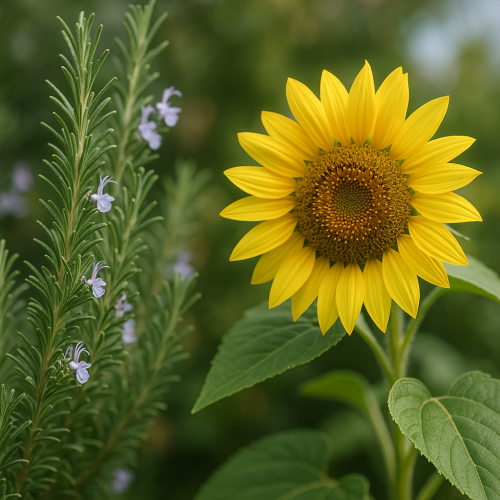
The rosemary plant features narrow, needle-like leaves with a silvery underside and pale violet-blue flowers that bloom throughout spring and summer. Its distinctive scent—sharp, herbaceous, and slightly camphoraceous—is a result of the plant's complex chemistry, though this 25% antioxidant extract is more subtle in aroma due to its selective concentration of non-volatile compounds.
Unlike rosemary essential oil, which is typically steam-distilled from the flowering tops, Rosemary Antioxidant CO₂ 25% is extracted using supercritical carbon dioxide to selectively draw out lipid-soluble antioxidant molecules—primarily carnosic acid and carnosol. To stabilize this thick, resinous extract for formulation, it is standardized in sunflower oil (Helianthus annuus) at a 25% ratio.
This version is not distilled for scent. It’s pressed for preservation—harnessing the deeper, protective essence of the plant to extend shelf life and vibrational vitality in oil-based formulations.
Botanical Name: Rosmarinus officinalis (Salvia rosmarinus)
Family: Lamiaceae
Common Names: Rosemary, Compass Plant, Dew of the Sea
Plant Type: Evergreen shrub
Part Used for Extraction: Aerial parts (primarily leaves)
Growth Habit: Woody, upright shrub reaching 3–5 feet (sometimes more)
Flowering Season: Spring through early summer
Harvest Time for CO₂ Extraction: Typically during peak leaf oil concentration
Physical Characteristics:
• Leaves: Narrow, needle-like, dark green with silvery underside
• Stems: Woody, branching, aromatic when crushed
• Flowers: Small, pale blue to violet; attract bees and pollinators
• Roots: Deep-rooted, drought-tolerant
Native Habitat + Growth Conditions:
• Native To: Mediterranean region
• Preferred Soil: Well-drained, sandy or rocky soils
• Sunlight: Full sun
• Climate: Hot, dry summers; mild, wet winters
Ecological Notes: Attracts pollinators; traditionally grown near gardens to protect and purify surrounding plants
Family: Lamiaceae
Common Names: Rosemary, Compass Plant, Dew of the Sea
Plant Type: Evergreen shrub
Part Used for Extraction: Aerial parts (primarily leaves)
Growth Habit: Woody, upright shrub reaching 3–5 feet (sometimes more)
Flowering Season: Spring through early summer
Harvest Time for CO₂ Extraction: Typically during peak leaf oil concentration
Physical Characteristics:
• Leaves: Narrow, needle-like, dark green with silvery underside
• Stems: Woody, branching, aromatic when crushed
• Flowers: Small, pale blue to violet; attract bees and pollinators
• Roots: Deep-rooted, drought-tolerant
Native Habitat + Growth Conditions:
• Native To: Mediterranean region
• Preferred Soil: Well-drained, sandy or rocky soils
• Sunlight: Full sun
• Climate: Hot, dry summers; mild, wet winters
Ecological Notes: Attracts pollinators; traditionally grown near gardens to protect and purify surrounding plants
Energetic Botanical Signature
This is rosemary without the fanfare. No wafting aroma. No invitation to inhale. Just the quiet force beneath the fragrance—the bones of the plant’s medicine. This CO₂ extract doesn’t charm you with scent. It protects you with presence.
Standardized in sunflower oil and heavy with diterpenes, this form of rosemary operates below the surface—fortifying what’s vulnerable, shielding what’s sacred, and holding the line against time and breakdown. It doesn’t shout its power. It simply doesn’t decay.
There’s a kind of holy gravity here. The wisdom of a plant that has weathered dry soil, scorching heat, and centuries of use without losing its edge. This extract carries that encoded memory—of boundaries, of resilience, of standing your ground when the elements push in.
She says:
• Safeguard your energy.
• Fortify what matters.
• Slow the erosion.
• Let what’s essential remain.
• Safeguard your energy.
• Fortify what matters.
• Slow the erosion.
• Let what’s essential remain.
