
Every order ships USPS Priority — $10.95 flat-rate USPS Priority shipping on all US orders, no minimum. Free shipping on domestic orders over $299.
Welcome to Stillpoint. Subscribe to our newsletter for sale details and new-product news · One discount code per order · Every order is hand-poured, packed with care in ceremony, and shipped as we receive it.

Sage CO₂ Extract | Salvia officinalis Leaf | Clinical + Energetic Purification

Salvia offinilais

  • Sage CO₂ Extract | Salvia officinalis Leaf | Clinical + Energetic Purification

Average Rating: (see reviews)

$10.00 Ex Tax: $10.00

Essential Facts

  • Latin Name: Salvia offinilais
  • Country of Origin: Cook Islands
  • Botanical Family: Lamiaceae
  • Plant Parts: Flowering plant/herb
  • Note Classification: Middle
  • Cultivation Method: Organically Grown
  • Method of Extraction: CO2 Select Extraction
  • Extraction Date: March 2024
  • Approx. Shelf Life: 6 - 7 years
  • Chemical Family: Ketones, Oxides
  • Batch: sgco2se
  • Aroma: Camphoraceous, Cool, Fresh, Herbaceous, Medicinal
  • Energetic Applications: 1st Chakra - survival and support, 3rd Chakra - personal power, 4th Chakra - unconditional love, 6th Chakra - perspective, 7th Chakra - higher information, Clarity, Expansive, Grounding, Protective, Purifying
  • Therapeutic Properties: Analgesic, Anti-bacterial, Anti-infectious, Anti-inflammatory, Anti-microbial, Anti-oxidant, Anti-parasitic, Anti-rheumatic, Anti-septic, Cephalic, Energizing, Nervine, Sedative, Wound healing
Notes & Use

Personal Use

(Salvia officinalis, leaf CO₂ select extract)

Sharp, medicinal, and commanding—Sage doesn’t ask for permission. Its aroma is immediately herbaceous and camphorous, with a clean bitterness that slices through fog like a blade. There’s no sweetness here, no softness. This is ancestral medicine in concentrated form—drying, clarifying, and unapologetically direct.

Stillpoint’s Sage CO₂ extract is derived from the leaves of wild-grown Salvia officinalis in the Mediterranean. Rich in α-thujone, camphor, and 1,8-cineole, this extract is not subtle—and it shouldn’t be. It is precise, protective, and energetically exacting. It resets. It refines. It refuses energetic noise.

This is an extract to work with, not against.

Therapeutic Actions

Endocrine + Menstrual System Support
Sage has a long history of use for hormonal and menstrual regulation. When used with discernment, it may support symptoms associated with PMS, irregular cycles, and perimenopausal transitions—especially when related to stagnation, fluid retention, or tension.

Astringent + Skin Balancing
The extract offers strong astringent and antimicrobial properties, making it useful in oily or acne-prone skin blends. It may also support the healing of minor cuts and reduce excess sebum when used in low dilutions.

Antimicrobial + Antifungal
With thujone and camphor as primary constituents, Sage is effective in targeting a range of pathogens—especially in topical applications for fungal overgrowth, skin infections, or cleansing blends. It’s also suitable for purifying diffusions and energetic clearing sprays.

Memory + Cognitive Stimulation
Traditionally associated with mental clarity and memory enhancement, Sage supports cognitive focus and energetic precision. It may assist with recall, mental fatigue, and fog—particularly when paired with Rosemary or Melissa in aromatic formulas.

Muscular + Circulatory Stimulation
Topically, Sage may support circulation, lymphatic movement, and relieve muscular tension—especially when tightness is related to emotional compression or energetic overexertion. It’s warming and drying in its action.

Traditional Use

Sage (Salvia officinalis) has a long, respected history in both European herbalism and Mediterranean folk medicine. Known as a plant of longevity, protection, and purification, it was a staple in monastery gardens, village apothecaries, and home remedies alike.
Internal Use (Historical/Herbal Only – Not Applicable to CO₂)

Traditionally, sage infusions and decoctions were used to support a variety of systems:
  • Digestive relief: Bloating, gas, nausea, and sluggish metabolism
  • Menstrual regulation: Bringing on delayed menses, easing cramps, and reducing excess bleeding
  • Fever and infection: Used as a febrifuge and mild immune stimulant during colds or flu
  • Cognitive support: Valued as a tea for improving memory, lifting mental fatigue, and supporting clarity in older adults
  • Oral health: Sage tea or decoctions were swished for sore gums, throat irritation, mouth ulcers, and halitosis
External Use
  • Compresses and poultices made from the leaves were used to draw out infection, reduce swelling, and tone tissue
  • Wound rinses for minor cuts and abrasions—due to its antimicrobial and astringent properties
  • Vaginal steams and sitz baths to support tissue tone, reduce irritation, and ease postpartum swelling
  • Hair and scalp treatments—sage was infused in vinegar or oil to strengthen hair, soothe scalp issues, and darken graying hair over time
Energetic + Ceremonial Use
  • Used to purify the home and body, especially during illness or seasonal transitions
  • Bundled or burned to ward off malevolent energy or clear stagnant environments
  • Considered protective, especially for sensitive or psychically open individuals
Sage wasn’t just used—it was trusted. In folk belief, “Why should a man die while sage grows in his garden?” was more than a proverb. It was a reflection of its place in longevity, clarity, and boundary.

Botany

Salvia officinalis is a woody, evergreen perennial shrub in the Lamiaceae (mint) family, long revered as both a culinary herb and medicinal ally. Its name comes from the Latin salvere, meaning “to save” or “to heal,” reflecting its deep roots in traditional medicine across the Mediterranean and Europe.

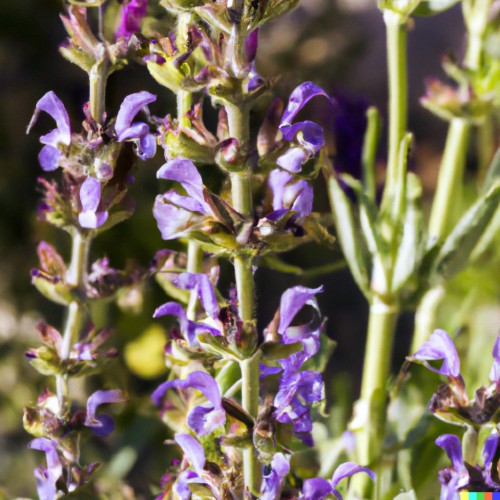
Sage thrives in dry, sunny, and well-drained soils, often along coastal or rocky landscapes. Its thick, gray-green leaves are highly aromatic, covered in soft trichomes that retain volatile oils even under intense sun. It blooms in late spring to early summer, producing pale violet to blue flowers that attract pollinators and signal the plant's peak vitality.

Botanical Name: Salvia officinalis
Family: Lamiaceae
Common Names: Common Sage, Garden Sage, True Sage (not to be confused with Salvia triloba or Salvia lavandulifolia)
Plant Type: Aromatic perennial subshrub
Part Used for Extraction: Leaves
Growth Habit: Upright, branching stems up to 60–80 cm
Flowering Season: Late spring to early summer
Harvest Time for CO₂ Extraction: After flowering, when resinous content is high and leaf oils are at peak potency

Physical Characteristics:
  • Leaves: Thick, ovate, gray-green, highly textured, covered in fine hairs
  • Stems: Square, woody at base, green to purplish in young growth
  • Flowers: Small, tubular, typically violet to purplish-blue
  • Roots: Shallow, fibrous root system suited to Mediterranean climates

Native Habitat + Growth Conditions:
  • Native To: Southern Europe and the Mediterranean basin
  • Preferred Soil: Dry, rocky, well-drained alkaline soils
  • Sunlight: Full sun
  • Climate: Hot, arid to temperate Mediterranean
  • Ecological Notes: Drought-tolerant, deer-resistant, pollinator-attracting

Energetic Botanical Signature
Sage’s square stems and sun-loving leaves reflect its structural clarity and energetic precision. Its gray-green color speaks of wisdom, discretion, and the ability to hold boundaries without shutting down. The leaves retain heat and scent in dry conditions, reminding us that resilience doesn’t mean becoming hard—it means holding potency even in scarcity.

Its upright posture, aromatic intensity, and dense trichomes signal a plant that is both protective and clarifying—not just in the body, but in the subtle field.

This is a plant that remembers what matters and releases what doesn’t.
Energetics

Energetic Properties

Sage (Salvia officinalis) is not gentle medicine—it’s sacred boundary medicine. It doesn’t soothe your emotions so much as clean them out. This CO₂ extract holds that same sharp truth: it clears, it cuts, it cleanses.
Energetically, Sage is a clarifier and protector, used to dissolve confusion, sever energetic attachments, and reinforce inner authority. It’s especially helpful when you’ve been absorbing energy that doesn’t belong to you—whether from people, places, or past versions of yourself.
It is deeply cleansing to both the physical and subtle body. Whether used in a ritual blend, anointing oil, or diffusion, it works to purify stagnant or intrusive energy, restore clarity of thought, and strengthen personal power.
This is an extract for transformation—not by softening, but by resetting.

Energetic Themes
  • Clearing energetic debris from the aura, body, and mind
  • Anchoring scattered energy back into the body
  • Establishing energetic boundaries after exposure or depletion
  • Cutting cords of attachment, especially after grief, trauma, or over-identification
  • Supporting transitions by releasing what no longer serves

Chakra Resonance
  • Root Chakra (Muladhara): Anchors energy into the body; cleanses survival-based fear and psychic static
  • Solar Plexus (Manipura): Reinforces boundaries, willpower, and energetic sovereignty
  • Third Eye (Ajna): Enhances insight, intuition, and mental clarity—especially during burnout or overwhelm
  • Crown Chakra (Sahasrara): Facilitates spiritual alignment during meditation, ritual, or connection to Source
  • Heart Chakra (Anahata): Supports emotional clarity after grief or heartbreak by helping release energetic residue

Sage does not comfort your edges—it defines them. It teaches that love isn’t always soft. Sometimes, love is a boundary.

Traditional & Folklore

Sage (Salvia officinalis) carries centuries of reverence as a plant of wisdom, longevity, and sacred protection. Across cultures and continents, it has been treated not only as a medicinal herb, but as a spiritual ally—one that clears, consecrates, and connects.

Ancient Greece and Rome
In both Greek and Roman traditions, Sage was harvested only through ritual. Roman herbalists believed it to be a sacred plant, gathered barefoot with a special knife—never touched by iron—to preserve its spiritual and medicinal potency. It was thought to be a cure-all, strengthening the mind, aiding fertility, and preserving life itself.

European Folk Medicine + Witchcraft
In the Middle Ages, Sage was one of the key ingredients in the legendary Four Thieves Vinegar, used to guard against the plague. The popular phrase, “Why should a man die whilst Sage grows in his garden?”, reflected its revered status as a symbol of health and survival. It was also included in folk magic for spells of longevity, wisdom, and protection, and used to ward off evil or ill will.

Culinary + Symbolic Traditions
Beyond its medicinal strength, Sage has been used in kitchens across Europe and the Middle East to aid digestion and preserve food—especially meats. It became synonymous with vitality and long life, and in the Victorian language of flowers, it symbolized wisdom and good health.

Chinese Herbal Trade
Sage was so highly prized in ancient China that it was reportedly traded at three to four times its weight in tea. Chinese herbalists used it to support memory and mental clarity—echoing Western traditions of Sage as a mind-sharpening, spirit-aligning plant.

Modern Ceremonial Use
While Salvia apiana (White Sage) is more widely used in North American smudging rituals, Salvia officinalis has its own lineage of ceremonial use—especially in European and Mediterranean traditions. It is still burned or diffused to cleanse energy, bless spaces, and support transitions such as moving, grief, or spiritual reorientation.
Chemistry

Chemical Components

This CO₂ select extract of Salvia officinalis is chemically complex and potent, with a profile dominated by monoterpenes, ketones, and oxides—particularly α-thujone and camphor, both of which require respectful use.

Key Chemical Families:
  • Ketones
    • α-Thujone – neuroactive, antimicrobial, energizing; contributes to Sage’s penetrating and clarifying effects
    • Camphor – mucolytic, circulatory stimulant, wound-healing, antiseptic
  • Oxides
    • 1,8-Cineole – expectorant, anti-inflammatory, antimicrobial, respiratory clearing
  • Monoterpenes
    • α- and β-Pinene – anti-inflammatory, bronchial support, mental focus
    • Limonene – immune supportive, antimicrobial, mood uplifting
  • Monoterpenols
    • Borneol, linalool – skin soothing, immune strengthening, harmonizing harsh edges of the stronger constituents
Therapeutic Implications of the Chemistry:
  • Strong antimicrobial and antifungal activity—topically appropriate in low dilutions for fungal overgrowth, acneic conditions, and wound cleansing
  • Expectorant and mucolytic—helpful for sinus congestion, bronchial tightness, or wet cough when used in vapor or steam
  • Circulatory stimulant—may assist in blends for cold limbs, lymph stagnation, or post-illness fatigue
  • Hormonal and cognitive effects—the synergy of thujone and camphor points to Sage’s traditional use in menstrual support and mental clarity blends.
Recipes & Blends

Recipes & Blends

Soothing Skin Serum

  • Jojoba oil (Simmondsia chinensis) - 60 ml
  • Lavender CO2 Select (Lavandula angustifolia) - 5 drops
  • German Chamomile CO2 Select (Matricaria recutita) - 4 drops
  • Frankincense essential oil (Boswellia carterii) - 3 drops
  • Sage CO2 Select (Salvia officinalis) - 2 drops
  • Helichrysum essential oil (Helichrysum italicum) - 1 drop

Directions: Combine all the oils in a dark glass bottle. Apply a few drops to your skin after cleansing, before bed. Remember to do a patch test before applying to a larger area.

Mental Clarity Diffuser Blend

  • Lemon essential oil (Citrus limon) - 4 drops
  • Rosemary ct. verbenone (Salvia rosmarinus ct. verbenone) - 3 drops
  • Sage CO2 Select (Salvia officinalis) - 2 drops
  • Peppermint essential oil (Mentha x piperita) - 2 drops
  • Exotic Basil essential oil (Ocimum basilicum ct. estragole) - 2 drops
  • Ginger CO2 Select (Zingiber officinale) - 2 drops

Directions: Place three to five drops of the stock blend in you diffuser...  following the manufacturer's instructions for water and oil quantities. Run the diffuser in your workspace or study area for an environment conducive to mental clarity and focus.

Harmony Bath Oil

  • Sweet Almond oil (Prunus amygdalus var. dulcis) - 15 ml
  • Ylang Ylang essential oil (Cananga odorata) - 4 drops
  • Clary Sage essential oil (Salvia sclarea) - 3 drops
  • Sage CO2 Select (Salvia officinalis) - 2 drops
  • Jasmine Absolute (Jasminum grandiflorum) - 2 drops
  • Rose Otto essential oil (Rosa damascena) - 2 drops
  • Sandalwood essential oil (Santalum album) - 2 drops

Directions: Blend the oils and pour into a warm bath. Immerse yourself in the bath for at least 15 minutes for a harmonizing and calming experience.

Elevated Awareness Meditation Diffuser Blend
  • Palo Santo essential oil (Bursera graveolens) - 4 drops
  • Rhododendron essential oil (Rhododendron anthopogon) - 3 drops
  • Sage CO2 Select (Salvia officinalis) - 2 drops
  • Frankincense essential oil (Boswellia carterii) - 2 drops
  • Lavender CO2 Select (Lavandula angustifolia) - 2 drops

Directions: Place three to five drops of the stock blend in you diffuser... following the manufacturer's instructions for water and oil quantities. Run the diffuser in your meditation space for a grounding and calming ambiance. Allow the serene aroma to elevate your awareness as you go deeper into your meditation.

As always, ensure you dilute essential oils appropriately, keep them out of reach of children, and consult a healthcare professional if you're pregnant, nursing, or have any pre-existing conditions before using essential oils. Perform a patch test when trying a new oil or blend.
Safety Etc.

Safety Information

Sage (Salvia officinalis) CO₂ extract is a potent, thujone-rich botanical that must be used with respect and precision. It is not appropriate for casual or daily use, and should only be used topically and in very low dilutions under the guidance of a qualified practitioner.
  • Dermal use should not exceed 0.4% concentration.
  • Not recommended for use during pregnancy or breastfeeding.
  • Avoid use in individuals with high blood pressure or those prone to seizures or epilepsy.
  • Do not ingest this extract. Thujone is a known neurotoxin, and ingestion may lead to serious adverse effects.
  • Always perform a patch test before use in topical blends, especially with sensitive or reactive skin.
This is a strong extract meant for clinical or ritual formulation, not for widespread diffusion or casual body application.

Reviews (0)

Write a review

Note: HTML is not translated!
    Bad           Good
Powered By OpenCart
Stillpoint Aromatics © 2026