Personal Use
Rabbitbrush is has an unique aroma. This is one of my most favoite oils from the Southwest. It is extremely effective for colds and flu especially when dealing with thick mucous.
However, my favorite use for this essential oil is in the energetic realm. Rabbitbrush connects us to our power while alowing us to reach for the unlimited. She offers protective qualities and also allows us to delve into our own psyhce to uncover and to integrate past trauma.
Traditional Use
- Respiratory Support: Like the traditional uses of the rabbitbrush plant, the essential oil may have properties that can help with respiratory conditions such as coughs, colds, and congestion.
- Skin Support: Rabbitbrush essential oil may have potential benefits for itchy skin, rashes, or other minor skin irritations.
- Aromatic and Spiritual Uses: The unique aroma of rabbitbrush essential oil may be used for its aromatic qualities, such as in diffusers or during spiritual practices to promote purification, relaxation, and connection with nature.
Botany
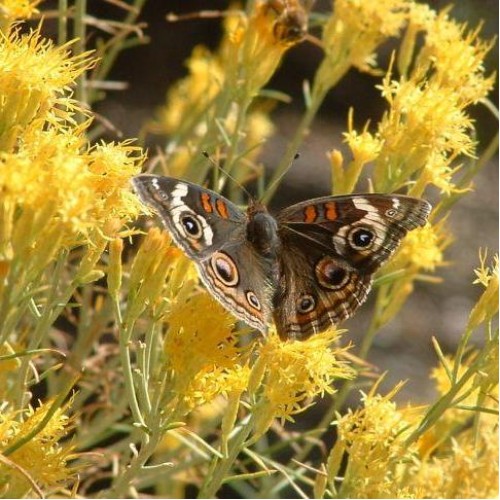
Ericameria nauseosa, commonly known as rubber rabbitbrush or gray rabbitbrush, is a flowering shrub native to western North America. It belongs to the Asteraceae family, which includes sunflowers, daisies, and asters. Rubber rabbitbrush is known for its distinct grayish-green foliage and bright yellow flowers, which appear in late summer and fall.
- Size: Rubber rabbitbrush typically grows between 2 and 5 feet (0.6-1.5 meters) tall.
- Leaves: The leaves are narrow, linear, and covered in fine hairs, giving them a grayish-green appearance.
- Flowers: The bright yellow flowers are small and clustered in dense, showy inflorescences at the end of branches. Flowering usually occurs from late summer to fall.
- Fruits: After flowering, the plant produces small, dry fruits known as achenes. Each achene contains a single seed and is dispersed by wind.