
Personal Use
Our White Lotus Absolute is a rare extraction of Nymphaea lotus—grown and distilled in India for vibrational healing, ceremony, and subtle body work.
White Lotus Absolute (Nymphaea alba) opens like a veil lifting—soft, hypnotic, and otherworldly. Its aroma is ethereal: floral and aquatic with hints of green tea, dew-covered petals, and ancient temple smoke. There’s a stillness beneath the scent, as if time itself slows down in its presence.
This absolute is extracted from the delicate flowers of Nymphaea alba, traditionally harvested at dawn when the blossoms are most fragrant. Our current batch comes from India and carries a rare clarity—clean, vibrant, and deeply sacred. It’s not heavy or overly perfumed like some absolutes; instead, it moves like light on water—subtle but undeniable.
Energetically, White Lotus doesn’t just elevate—it purifies. It’s a heart-opener and crown activator, bringing softness to grief, stillness to overwhelm, and gentle grace to those moving through transformation. It holds space without speaking. It reminds the soul who it is beneath the noise.
From a therapeutic lens, White Lotus is used in perfumery, meditation blends, ceremonial anointing oils, and subtle skin formulations. Its low volatility makes it best suited for subtle work—a drop is enough to shift the field.
Therapeutic Applications
Emotional Grounding + Grief Support
White Lotus may assist in softening sorrow, especially the kind that feels ancient, layered, or wordless. It offers quiet presence and emotional anchoring for those in loss, transition, or spiritual fatigue.
White Lotus may assist in softening sorrow, especially the kind that feels ancient, layered, or wordless. It offers quiet presence and emotional anchoring for those in loss, transition, or spiritual fatigue.
Nervous System Regulation
Used in low dilutions, White Lotus can help calm an overstimulated nervous system—particularly when paired with breathwork, meditation, or somatic release practices. It gently coaxes the body toward rest without sedation.
Used in low dilutions, White Lotus can help calm an overstimulated nervous system—particularly when paired with breathwork, meditation, or somatic release practices. It gently coaxes the body toward rest without sedation.
Subtle Skin Care
Traditionally used in sacred beauty preparations, White Lotus may support skin that holds trauma or emotional memory. Its subtle astringency and cooling energy make it a rare addition to facial serums or anointing balms for ritual cleansing.
Traditionally used in sacred beauty preparations, White Lotus may support skin that holds trauma or emotional memory. Its subtle astringency and cooling energy make it a rare addition to facial serums or anointing balms for ritual cleansing.
Energetic Cleansing + Field Reset
Applied to pulse points or the crown, it may help clear energetic debris, especially after sessions, ceremony, or emotional entanglement. Lotus works in the field more than in the flesh—moving through subtle channels with precision.
Applied to pulse points or the crown, it may help clear energetic debris, especially after sessions, ceremony, or emotional entanglement. Lotus works in the field more than in the flesh—moving through subtle channels with precision.
Ceremonial + Meditative States
White Lotus has long been used to support deep states of meditation, prayer, and sacred silence. It helps lift the frequency of a space or practice without overpowering—inviting presence, spaciousness, and spiritual receptivity.
White Lotus has long been used to support deep states of meditation, prayer, and sacred silence. It helps lift the frequency of a space or practice without overpowering—inviting presence, spaciousness, and spiritual receptivity.
Traditional Use
Traditional Uses + Folklore
White Lotus has been revered across cultures for thousands of years—not only as a medicinal plant but as a symbol of spiritual awakening, purity, and transcendence. Its roots sink deep into muddy water, while its radiant blossoms rise above the surface—untouched, untainted, fully open to the light. This duality made it a sacred emblem of inner evolution.
In Ancient Egypt, the White Lotus was associated with rebirth, the sun, and the divine feminine. It was said to bloom at dawn and close at dusk, mirroring the sun’s journey and representing the eternal return. Priests and priestesses used lotus-infused oils in ceremonial anointing, sacred bathing, and to aid in communicating with the divine during temple rites and dream work.
In Ayurveda, both the blue and white varieties of lotus have been used to soothe Pitta imbalances—cooling inflammation, calming emotional heat, and supporting the heart. White Lotus, in particular, was steeped in oils or infused in teas for nervous system support, spiritual clarity, and grief relief.
In Buddhist and Hindu traditions, the White Lotus represents the unfolding of spiritual consciousness. It is often depicted beneath the feet of deities, symbolizing divine presence and the path of enlightenment. The unopened bud represents potential; the fully bloomed flower, awakening. It’s said that where the Buddha walked, lotus flowers bloomed in his steps.
White Lotus was never just a plant—it was a threshold keeper. A guide for the soul in times of transformation. A quiet companion in the in-between.
Botany
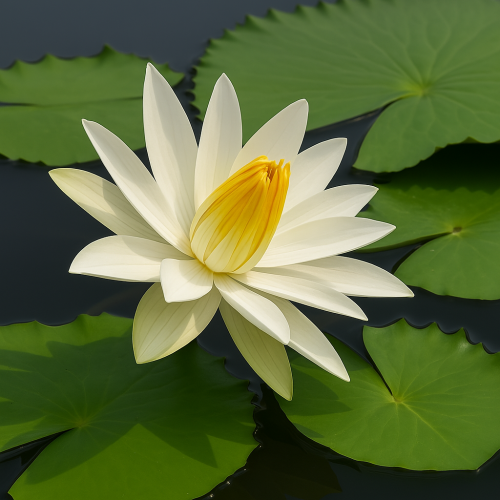
White Lotus (Nymphaea lotus) is a sacred freshwater aquatic plant in the Nymphaeaceae family, known for its luminous white blossoms that seem to emerge from another realm entirely. Though often confused with Nymphaea alba (the European white water lily) or Nelumbo nucifera (Sacred Lotus), this species carries its own distinct energy—one rooted in both ritual and resilience.
Native to parts of tropical Africa and long cultivated in India for sacred, ceremonial use, Nymphaea lotus thrives in still waters—lakes, temple ponds, and calm rivers—where its rhizomes anchor deep in the mud while its flowers stretch upward toward light.
The flower opens in the late afternoon or evening, unlike many of its cousins, and stays open into the early morning hours—a reverse rhythm that speaks to its role as a plant of dreamwork, night vision, and soul remembrance. The scent is soft, aquatic, faintly green, and quietly intoxicating. It doesn’t perform. It presides.
Botanical Name: Nymphaea lotus
Family: Nymphaeaceae
Common Names: White Lotus, Egyptian Lotus, Sacred Water Lily
Plant Type: Perennial aquatic plant
Part Used for Extraction: Fresh blossoms
Growth Habit: Floating aquatic with rooted rhizomes; upright flowering stems
Flowering Season: Late spring through autumn
Harvest Time for Extraction: Early evening or early morning, when aromatic compounds are most potent
Family: Nymphaeaceae
Common Names: White Lotus, Egyptian Lotus, Sacred Water Lily
Plant Type: Perennial aquatic plant
Part Used for Extraction: Fresh blossoms
Growth Habit: Floating aquatic with rooted rhizomes; upright flowering stems
Flowering Season: Late spring through autumn
Harvest Time for Extraction: Early evening or early morning, when aromatic compounds are most potent
Physical Characteristics
-
Leaves: Broad, rounded to slightly oval, floating on water’s surface
-
Stems: Long, flexible, emerging from rhizomes buried in silt or mud
-
Flowers: White with yellow-golden centers; open at night or early morning
-
Roots: Thick, creeping rhizomes rooted in muddy or silty beds
Native Habitat + Growth Conditions
-
Native To: Tropical Africa; cultivated throughout India
-
Preferred Soil: Silty or muddy lake and pond beds
-
Sunlight: Full sun to partial shade
-
Climate: Tropical to subtropical; thrives in warm, still water ecosystems
-
Ecological Notes: Sacred pond ecosystems where this lotus grows often host amphibians, dragonflies, and ceremonial life
Energetic Botanical Signature
White Lotus doesn’t grow to impress—it grows to remember. She rises not in spite of the mud, but because of it. Anchored in shadow, she blooms in quiet radiance, never rushing, never needing to explain.
This is a plant of night bloom and soul bloom—a companion for dreamers, seers, and those reclaiming their light after long descents. Her blossoms open when the world softens. Her medicine works through the etheric, aligning the crown, heart, and root in stillness.
She teaches that transformation doesn’t require noise. That presence is power. That healing doesn’t always mean doing—it can mean being fully seen. She clears the static. She sings the silence. She reminds you that beauty isn’t separate from the mud—it’s born from it.
She is remembrance made visible.
She is grace returned.
She is the holy root of radiance.
