
Every order ships USPS Priority — $10.95 flat-rate USPS Priority shipping on all US orders, no minimum. Free shipping on domestic orders over $299.
Welcome to Stillpoint. Subscribe to our newsletter for sale details and new-product news · One discount code per order · Every order is hand-poured, packed with care in ceremony, and shipped as we receive it.

Lilac CO₂ Total Extract | Emotional Release & Skin Nourishment

Syringa vulgaris

  • Lilac CO₂ Total Extract | Emotional Release & Skin Nourishment

Average Rating: (see reviews)

$75.00 Ex Tax: $75.00

Essential Facts

  • Latin Name: Syringa vulgaris
  • Country of Origin: American Samoa
  • Botanical Family: Oleaceae
  • Plant Parts: Flowers
  • Note Classification: Middle
  • Cultivation Method: Distiller is Certified Organic
  • Method of Extraction: CO2 Total Extraction
  • Extraction Date: May 2023
  • Approx. Shelf Life: 10 years
  • Chemical Family: Esters
  • Batch: lilac
  • Aroma: Cool, Exotic, Floral, Fresh, Rich, Sensual, Slightly sweet, Soft
  • Energetic Applications: 2nd Chakra - relationships, creation energy, 4th Chakra - unconditional love, 6th Chakra - perspective, 7th Chakra - higher information
  • Therapeutic Properties: Anti-anxiety, Anti-depressant, Calming, Cephalic, CNS tonic, Cooling, Nervine, Tonic
Notes & Use

Personal Use

Soft, nostalgic, and almost dreamlike—Lilac CO₂ Total (Syringa vulgaris) captures the fleeting magic of lilac blossoms in full bloom. Its aroma is creamy, floral, and powdery-sweet, with subtle green and waxy undertones that anchor it beautifully into the heart of any formulation. This is not your typical essential oil—this is a complete botanical expression, capturing both the essential oil and the plant’s waxes and heavier aromatic molecules.

Our Lilac CO₂ Total is a solid waxy extract at room temperature, made using supercritical carbon dioxide extraction—a clean, low-temperature process that preserves the full aromatic and therapeutic profile of the lilac flower. To work with it, gently warm the extract in a water bath around 50°C (122°F) to soften or fully liquefy it. It blends beautifully into carrier oils, butters, balms, and rich creams, adding not only scent but emollient properties.

This is a total extract, meaning it contains far more than just the volatile oils—it includes the soul of the flower in its entirety: volatile oils, plant waxes, resins, and lipophilic compounds. It is soluble in fats and oils (not water), and should be treated as both an aromatic and a functional component in skin care and perfumery.

Lilac CO₂ Total is rare, ephemeral, and deeply emotionally evocative—it stirs memory, soothes grief, and invokes beauty in a way that transcends the olfactory.


Therapeutic Applications
Lilac CO₂ Total (Syringa vulgaris) is not just a perfumery treasure—it’s a quiet ally for both the skin and psyche, with properties that support emotional healing, tension relief, and skin nourishment. While not widely studied like some essential oils, Lilac's long-standing use in herbalism, combined with the lipophilic compounds retained in the CO₂ extract, offers plenty of therapeutic insight.
Skin Health + Topical Use
  • Emollient & Nourishing: Thanks to the plant waxes and lipids retained in the CO₂ total, this extract offers a softening, protective quality to skincare blends. Ideal for dry, aging, or reactive skin when blended into balms, creams, or facial oils.
  • Gentle Astringent: Traditionally used to tone the skin, Lilac may help minimize the appearance of pores and promote a balanced, fresh complexion.
  • Soothing to Irritated Skin: May provide relief in cases of minor inflammation, itching, or sensitivity—especially in heart-centered applications like massage oils for the chest or upper back.
Muscle + Joint Relief
  • Mild Analgesic: In historical folk practice, lilac preparations were used for joint pain, rheumatism, and stiffness. While modern studies are sparse, the warming and penetrating quality of the extract (especially when combined with other anti-inflammatory oils) makes it a beautiful addition to body oils for muscle tension and stagnation.
Emotional + Nervous System Support
  • Mood Lifter: The aroma of Lilac CO₂ Total can have an almost instant effect on the spirit—bringing feelings of lightness, peace, and a sense of being held.
  • Calming Yet Clarifying: While its sweetness comforts, there’s also a clarity and quiet focus it brings—making it a good companion for grief, anxiety, emotional fog, or post-heartbreak recovery.
  • Heart Healing: Emotionally, it’s often said to “open the chest” and support the emotional body in moving stuck sorrow, especially that which is tied to memory or longing.

This is not a sharp, commanding oil—it’s a whisper. A gentle return.

Traditional Use

Though lilac essential oil is a modern rarity, the plant itself has a rich, timeworn history in folk medicine and domestic ritual, particularly throughout Europe and North America. Syringa vulgaris has been associated for centuries with *renewal, beauty, and the fleeting nature of life and love—a seasonal marker of spring’s return and a plant tied to both emotional and physical healing.

Historical Uses of Lilac Blossoms and Preparations
  • Folk Antipyretic + Detoxifier: In 19th-century American folk medicine, lilac tinctures and teas were used to help "break fevers" and stimulate elimination. Some herbalists believed lilac helped detoxify the blood and support the liver, though this was anecdotal and not widely adopted.
  • Tonic for Malaria + Digestive Troubles: A tincture of lilac flowers was sometimes used as a mild bitter to ease symptoms of malaria or digestive sluggishness, especially in rural Appalachia and early American herbalism.
  • Aromatic Grief Support: Fresh lilac flowers were often included in funeral wreaths, mourning rituals, and sacred altars, used to support the grieving heart with their sweet and haunting aroma. In Victorian England and beyond, lilacs were a symbol of first love—and lost love—carried and worn as tokens of remembrance.
Energetic & Domestic Uses
  • Springtime Purifier: In many cultures, lilac blossoms were brought into the home as part of seasonal spring cleaning—energetically believed to sweep out old energies, sadness, and stagnation accumulated over the winter months.
  • Love & Protection Magic: Lilac branches and flowers were believed to ward off unwanted spirits and protect against ill intentions, especially when placed by the door or burned as incense in ceremonial space.
While the CO₂ extract itself is a modern innovation, its therapeutic and energetic properties carry echoes of these traditional uses—gentle purification, emotional renewal, and heart-mind connection.


Botany

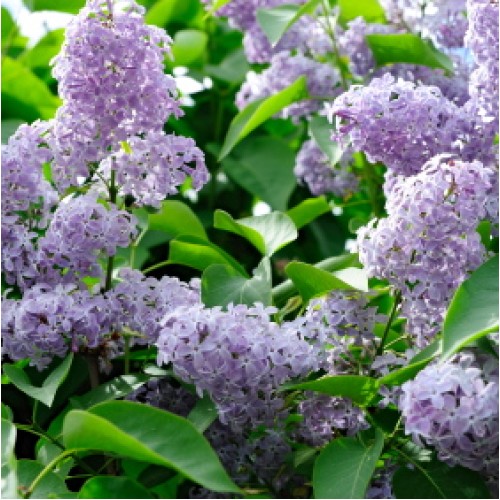
Syringa vulgaris, commonly known as Lilac, is a deciduous flowering shrub in the Oleaceae family, the same family as olive, jasmine, and osmanthus. Beloved for its iconic springtime blooms and intoxicating fragrance, lilac is native to the Balkan Peninsula but has naturalized widely across Europe and North America.

The CO₂ Total extract is obtained from the flowers—specifically their delicate petals—which are collected at peak bloom and processed through supercritical CO₂ extraction to preserve their complete aromatic profile, including essential oils, waxes, and heavier molecules often lost in traditional distillation.

Botanical Name: Syringa vulgaris
Family: Oleaceae
Common Names: Lilac, Common Lilac
Plant Type: Deciduous flowering shrub or small tree
Part Used for Extraction: Fresh flowers (petals)
Growth Habit: Upright, multi-stemmed, 8–20 feet in height
Flowering Season: Mid-to-late spring (April–May, depending on region)
Harvest Time for Extraction: Peak bloom, before wilting or discoloration of petals

Physical Characteristics
  • Leaves: Opposite, heart-shaped, smooth-edged, deep green
  • Flowers: Four-lobed, trumpet-shaped blooms arranged in dense pyramidal panicles; vary in color from lilac to white, pink, and pale purple
  • Bark: Smooth and gray-brown when young; becomes rough and furrowed with age
  • Roots: Shallow, wide-spreading; capable of forming suckers

Native Habitat & Growth Conditions
  • Native To: The Balkans (primarily Albania, Kosovo, and North Macedonia)
  • Naturalized In: Most temperate zones of Europe and North America
  • Preferred Soil: Fertile, well-drained loamy soils
  • Sunlight: Full sun (6+ hours daily)
  • Climate: Temperate zones with cold winters (chilling period needed for flower formation)
  • Ecological Notes: Pollinated by bees and butterflies; flowers provide early nectar source in spring

Energetic Botanical Signature
Lilac doesn’t compete for space—she claims it with grace.
She blooms early, offering scent before certainty.
She reminds us that beauty doesn’t need permission, only timing.

Her structure is open and reaching, yet rooted in dense, cold soil—symbolizing the ability to rise from grief, bloom through difficulty, and offer beauty that is felt before it is even seen.
  • Spiritual Imprint: Beauty that follows sorrow
  • Emotional Signature: Holding both memory and renewal
  • Physical Mirror: Aromatic flowers on stark branches—lightness born from density
Lilac teaches us that softness can be strong, and memory, when integrated, can become medicine.
Energetics

Energetic Properties

Aroma as Ancestral Memory | Syringa vulgaris
Lilac is not just scent. She is sensation, remembrance, and reverie.
To inhale her is to walk into a memory you didn’t know you still carried.

This oil touches the heart chakra with tender precision. Not to crack it open—but to loosen the sorrow that’s been sealed there too long. She’s a balm for grief that never found language, for nostalgia that clings to the chest like fog. Her energy isn’t forceful—it’s receptive, spacious, and deeply feminine in the oldest sense of the word.

Where lavender soothes and rose uplifts, Lilac listens.

Energetic Themes
  • Emotional Release of Old Grief or Regret
    Especially grief stored in the body—grief that’s shapeless, ancestral, or buried beneath a smile.
  • Heart Softening & Memory Integration
    Supports heart-centered rituals, therapy work, or any practice where remembering is part of healing.
  • Energetic Renewal After Loss
    Lilac holds space for new joy without erasing what was lost. She invites beauty back into the body.
  • Clarity Through Dream or Intuition
    May enhance dreamwork, intuitive writing, or energetic cleansing—especially of emotional residue that lingers long past its time.
  • Balancing Yin Energy
    Grounding but not heavy, Lilac helps restore soft strength to those burnt out by over-efforting or emotional labor.

Spiritual Use
Use Lilac CO₂ Total in practices of:
  • Ancestral healing
  • Grief rituals
  • Energy work around the heart, lungs, and throat chakras
  • Dream recall or oracle work
  • Beauty rituals as a form of remembrance, not vanity
Blend her into sacred balms, annointing oils, or even tincture-inspired perfumes meant for the soul, not the shelf.

Traditional & Folklore

Syringa vulgaris | The Whispering Flower of Memory and Renewal

Lilac has long held court in the realm of aromatic folklore and ancestral remembrance. While the CO₂ extract is a modern marvel, the flower’s legacy stretches centuries deep—crossing continents, cultures, and beliefs.

Greek Mythology:
The name Syringa comes from the Greek word syrinx, meaning "pipe" or "tube," tied to the myth of the nymph Syrinx who transformed into a hollow reed to escape the god Pan. This association gives Lilac a lineage of protection, transformation, and reclaiming agency—themes that still echo through its modern use in emotional and energetic healing.

Victorian Flower Symbolism:
In the Victorian language of flowers, lilac symbolized the first emotions of love—bittersweet, blooming, and fleeting. A sprig of lilac was often given as a goodbye or remembrance gift, especially after the loss of a beloved. For widows and mourners, lilac wasn’t just floral—it was emotional shorthand for devotion through time and distance.

European Rituals of Passage:
  • Hung in doorways to protect the home and clear stagnant grief after a death.
  • Woven into funeral wreaths as a symbol of soul transition and spiritual rebirth.
  • Used in May Day festivals and spring rites to call back joy, fertility, and the light.
Appalachian + American Folk Traditions:
Lilac trees were often planted near the home not just for beauty, but to:
  • Mark cycles of time, as they bloomed once a year—reminding families to pause and reflect
  • Ward off spirits or negativity with their sweet but grounding aroma
  • Serve as a healing tree—a place where one could sit beneath its blooms to remember, cry, or rest

Lilac has always been more than a scent.
She is a threshold flower—bridging seasons, hearts, and dimensions.

Whether in myth, mourning, or magic, she has always whispered:
“You are not forgotten. And it is safe to feel again.”
Chemistry

Chemical Components

Lilac CO₂ Total (Syringa vulgaris) is a unique aromatic in the natural perfumery world—it’s not a true essential oil, but a complete CO₂ extract that captures the flower’s scent far more accurately than any distillation. Its chemistry includes both aromatic volatiles and lipophilic (fat-soluble) plant components, which contribute to its deep, creamy, long-lasting scent and skin-replenishing properties.
Key Constituents (General Profile):
  • Monoterpenols: Geraniol, Linalool, Nerol
    → These offer the light, floral, and gently uplifting top notes—contributing to Lilac’s mood-lifting and antimicrobial actions.
  • Esters: Linalyl acetate, Geranyl acetate
    → These provide the soft, rounded sweetness and are known for their calming, anti-inflammatory, and skin-soothing effects.
  • Sesquiterpenes + Sesquiterpenols: Farnesol, Nerolidol
    → Grounding, skin-reparative components that give Lilac its sensual depth and heart note character.
  • Aliphatic Alcohols + Aldehydes (trace): Responsible for the green and “fresh spring morning” note. These add to the energetic clarity Lilac brings.
  • Waxes, Resins, and Fixed Oils: Naturally occurring in the flower and preserved in the CO₂ total. These add emollient texture and stability to the extract, making it ideal for skincare and perfumery.
Solubility & Formulation Notes:
  • Lipid-soluble: Blends best into carrier oils, butters, balms, and oil-based perfumes
  • Not water-soluble or diffuser-friendly
  • Melting point: Around 50°C (122°F)—gently warm to incorporate into blends
  • Use Rate: Typically 0.1–2% depending on application; more as a heart/base note than a dominant top note
This is a slow-release aromatic—not sharp, not fleeting—but quietly present, lasting longer on the skin and gently unfolding over time.
Recipes & Blends

Recipes & Blends

Syringa vulgaris | Grief Soother • Heart Softener • Soul Scent

Important Formulation Note:

Lilac CO₂ Total is a semi-solid extract at room temperature. To blend properly:
  • Gently heat the Lilac CO₂ in a warm water bath (~50°C / 122°F) until fully liquified.
  • Warm your carrier oil slightly as well before combining—this ensures even distribution and a smooth finish in your final product.
  • Suggested usage rate: 0.1%–2% depending on purpose and product type.

1. Anointing Oil for Grief + Ancestral Integration
A sacred blend for emotional release, remembrance, and honoring what still lives in the heart.
Blend into 10ml warmed Jojoba Oil (Simmondsia chinensis):
  • 2 drops warmed Lilac CO₂ Total (Syringa vulgaris)
  • 1 drop Spikenard (Nardostachys jatamansi)
  • 1 drop Cypress (Cupressus sempervirens)
  • 1 drop Frankincense (Boswellia carterii)
Use: Anoint the heart, wrists, and third eye before grief rituals, journaling, or quiet reflection. Inhale deeply. Let this blend hold space where words can’t.

2. Heart & Skin Facial Serum
For emotional tension, fragile skin, or heart-centered skincare rituals.
In 1oz slightly warmed Rosehip Seed Oil (Rosa canina):
  • 3 drops warmed Lilac CO₂ Total (Syringa vulgaris)
  • 2 drops Helichrysum italicum
  • 2 drops Sandalwood (Santalum album or spicatum)
  • Optional: 1 drop Rose Otto (Rosa damascena)
Use: Apply over clean, damp skin in the evening. Supports skin regeneration and energetic unwinding through the face, jaw, and upper chest.

3. Heart Chakra Ritual Balm
A creamy balm to soften armor, reconnect to love, and restore sweetness to the emotional field.
Into 1oz warmed shea + jojoba balm base (1:1 ratio):
  • 2 drops warmed Lilac CO₂ Total (Syringa vulgaris)
  • 1 drop Melissa (Melissa officinalis)
  • 1 drop Geranium (Pelargonium graveolens)
  • 1 drop Pink Pepper (Schinus molle)
Use: Massage into heart space, sternum, and inner wrists. Perfect for post-therapy grounding, cord cutting, or reconnecting to softness after emotional burn-out.

4. Sacred Dream Oil
For dream recall, emotional alchemy, and intuitive processing while you sleep.
In 10ml warmed Kukui Oil (Aleurites moluccanus):
  • 1 drop warmed Lilac CO₂ Total (Syringa vulgaris)
  • 2 drops Clary Sage (Salvia sclarea)
  • 1 drop Mugwort (Artemisia vulgaris)
  • 1 drop Lavender (Lavandula angustifolia)
Use: Apply to soles of feet, third eye, or base of skull before sleep or guided meditation. This blend quiets the noise and opens the subtle doors.
Safety Etc.

Safety Information

Lilac CO₂ Total Extract is generally considered safe when used properly in diluted concentrations (typically 0.1–2%) and formulated into carrier oil-based products like serums, balms, or creams.

Because this is a CO₂ Total, it contains not only volatile aromatic compounds but also waxier, heavier plant constituents, making it suitable only for oil-based applications. It is not appropriate for diffusion or undiluted topical use.

Use With Care:
  • Skin Sensitivity: Always perform a patch test before applying to larger areas, especially for those with sensitive or reactive skin.
  • Internal Use: Not for internal use.
  • Pregnancy + Breastfeeding: Use caution and consult a qualified practitioner. While there are no specific contraindications, this extract is best reserved for external use under guidance during pregnancy.
  • Avoid Mucous Membranes: Do not apply directly near eyes, inside the nose, or on broken skin.
Storage:
Keep your Lilac CO₂ Total sealed tightly, away from heat and light. Due to its semi-solid consistency, it may need gentle warming before each use to soften or liquify.


Related Products

Chamomile, Roman Essential Oil

Chamomile, Roman Essential Oil

..

$17.00 Ex Tax: $17.00

Reviews (2)

Write a review

Note: HTML is not translated!
    Bad           Good
Powered By OpenCart
Stillpoint Aromatics © 2026
