
Personal Use
May Chang is a familiar oil to many people, but it doesn’t always show up the same way. This particular May Chang is not the sharp, lemon-cleaner style. It is a greener, softer expression, with citrus brightness held inside a more herbal, rounded aroma. This profile comes from a higher presence of
citronellal in the natural chemistry of the oil.
citronellal in the natural chemistry of the oil.
When experienced through inhalation, May Chang is traditionally used in aromatherapy for its uplifting and clarifying effects. Oils rich in citral and citronellal have been studied for their effects on mood and nervous system response, particularly when absorbed through the olfactory route. All the science language aside, what this means in real life is that May Chang can help clear mental fog, lift heaviness, and support emotional steadiness without overstimulation.
We have used May Chang essential oil in formulations intended to support antibacterial, antiviral, and antifungal environments, particularly in blends designed for air purification, seasonal support, and general wellness practices.
May Chang also has notable respiratory-supportive qualities. When diffused or used in steam inhalation, it is traditionally used to help open the breath, ease sinus congestion, and support clearer respiration, especially when a sharp eucalyptus-style aroma feels too aggressive.
Traditional Use
Uplifting, Clarifying & Respiratory Support
Supporting Mental Clarity & Cognitive Function
May Chang essential oil is rich in aromatic aldehydes, including citral and citronellal, which have been studied for their effects on the nervous system when inhaled. Some research suggests that these compounds may help support mental clarity, alertness, and cognitive performance by influencing neurotransmitter activity and reducing mental fatigue. Traditionally, May Chang has been used when the mind feels dull, scattered, or weighed down.
Supporting Respiratory Comfort
May Chang has a long history of traditional use for respiratory support, particularly through inhalation. When diffused or used in steam inhalation, it may help ease feelings of congestion and support clearer breathing. Its bright but balanced citrus profile makes it a gentler alternative for those who find stronger eucalyptus or camphor-rich oils overwhelming.
Supporting Antibacterial & Antifungal Environments
Several studies have shown that Litsea cubeba essential oil exhibits antibacterial and antifungal activity against a range of microorganisms. Traditionally, May Chang has been used in blends intended to support clean environments, air purification, and seasonal wellness practices.
Supporting Inflammatory Balance
Some research suggests that constituents found in May Chang may help modulate inflammatory responses. While not a replacement for medical treatment, May Chang has traditionally been used in wellness practices aimed at supporting comfort and balance during periods of physical stress.
Supporting Emotional Balance & Stress Response
May Chang is widely used in aromatherapy for its uplifting and emotionally supportive qualities. Inhalation of citrus-aldehyde–rich oils has been associated with reduced stress markers and improved mood in various studies. Traditionally, May Chang is used to help lighten emotional heaviness, reduce tension, and support a more balanced stress response.
Supporting the Immune System
May Chang has been traditionally included in blends intended to support immune resilience, particularly during times of seasonal challenge. Its use in diffused environments is thought to support the body’s natural defenses while also contributing to emotional well-being, which plays an important role in overall immune health.
Insect Repellent
Due to its citronellal content, May Chang has traditionally been used as a natural insect deterrent. Studies have shown that citronellal-rich oils may help repel certain insects, making May Chang a useful component in natural outdoor and environmental blends.
Botany
Size:
May Chang is a small to medium-sized evergreen tree that typically grows between 5–12 meters (16–40 feet) in height. In cultivation, it is often maintained at a smaller size for harvesting.
Leaves:
The leaves are lance-shaped to elliptic, smooth-edged, and glossy, usually 6–11 cm (2.5–4.5 inches) long. They are arranged alternately along the branches and release a citrus aroma when crushed.
The leaves are lance-shaped to elliptic, smooth-edged, and glossy, usually 6–11 cm (2.5–4.5 inches) long. They are arranged alternately along the branches and release a citrus aroma when crushed.
Bark:
The bark is grayish-brown to light brown, relatively smooth when young and becoming more textured with age.
The bark is grayish-brown to light brown, relatively smooth when young and becoming more textured with age.
Flowers:
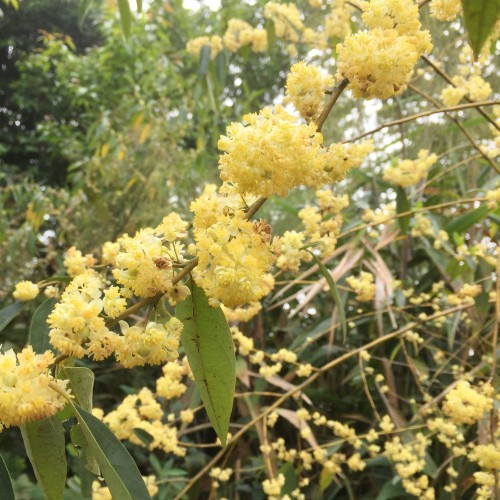
May Chang produces small, yellowish-white flowers that grow in clusters. The flowers are not showy but are highly aromatic and attractive to pollinators.
May Chang produces small, yellowish-white flowers that grow in clusters. The flowers are not showy but are highly aromatic and attractive to pollinators.
Fruit:
The plant is best known for its small, round berries, approximately 4–6 mm in diameter. The fruits are green when immature and turn dark brown to black as they ripen. These berries are the primary source of May Chang essential oil.
The plant is best known for its small, round berries, approximately 4–6 mm in diameter. The fruits are green when immature and turn dark brown to black as they ripen. These berries are the primary source of May Chang essential oil.
Seeds:
Each berry contains a single seed. The high oil content of the fruit makes it particularly suitable for steam distillation.
Each berry contains a single seed. The high oil content of the fruit makes it particularly suitable for steam distillation.
Growth Conditions:
May Chang prefers warm, humid climates and grows well in well-drained soils. It thrives in subtropical regions and is commonly cultivated in parts of China, Southeast Asia, and surrounding regions. The tree does best in full sun to partial shade.
May Chang prefers warm, humid climates and grows well in well-drained soils. It thrives in subtropical regions and is commonly cultivated in parts of China, Southeast Asia, and surrounding regions. The tree does best in full sun to partial shade.
Cultural & Agricultural Notes:
Litsea cubeba has a long history of use in traditional practices across Asia. The fruits have been used in regional cuisine and folk medicine, while the essential oil distilled from the berries has become widely valued for its aromatic and functional properties.
Litsea cubeba has a long history of use in traditional practices across Asia. The fruits have been used in regional cuisine and folk medicine, while the essential oil distilled from the berries has become widely valued for its aromatic and functional properties.
