Every order ships USPS Priority — $10.95 flat-rate USPS Priority shipping on all US orders, no minimum. Free shipping on domestic orders over $299.
Welcome to Stillpoint. Subscribe to our newsletter for sale details and new-product news · One discount code per order · Every order is hand-poured, packed with care in ceremony, and shipped as we receive it.

Kunzea Essential Oil | White Cloud | Grief, Pain + Clear Breathing

Kunzea ambigua

  • Kunzea Essential Oil | White Cloud | Grief, Pain + Clear Breathing

Average Rating: (see reviews)

$12.00 Ex Tax: $12.00
GC/MS Report
Current: Winter 2012

GC/MS Report

Batch: kunz2012 (Winter 2012)
Distilled: Fall 2012

Gas Chromatography Analysis (%)

Monoterpenes

α-pinene 46.22
d-limonene 1.24
β-pinene 0.53
para-cymene 0.47
sabinene 0.45
myrcene 0.23
γ-terpinene 0.21
trans-β-ocimene 0.19
α-thujene 0.15
terpinolene 0.10
α-terpinene 0.09
cis-β-ocimene 0.03

Monoterpenols

α-terpineol 2.06
citronellol 0.73
linalol 0.69
terpinen-4-ol 0.42
δ-terpineol 0.09
geraniol 0.08
trans-pinocarveol 0.06

Sesquiterpenols

viridiflorol 7.15
globulol 6.68
spathulenol 0.94
ledol 0.84
palustrol 0.30
isospathulenol 0.19
cubenol 0.12
α-cadinol 0.09
eudesmol isomer 0.08

Sesquiterpenes

bicyclogermacrene 3.55
viridiflorene 1.53
trans-calamenene 0.74
β-caryophyllene 0.68
allo-aromadendrene 0.57
aromadendrene 0.33
α-gurjunene 0.30
δ-cadinene 0.29
δ-elemene 0.27
trans-cadina-1,4-diene 0.13
β-elemene 0.12
α-copaene 0.11
trans-cadina-1(6),4-diene 0.09
α-humulene 0.07
γ-cadinene 0.06
α-muurolene 0.04
α-cubebene 0.04

Esters

Isopentyl isovalerate 0.53
Phenyl ethyl isobutanoate 0.06
Pentyl isobutanoate 0.04

Aliphatic Aldehydes

geranial 0.07
α-campholenal 0.04

Ketones

leptospermone 0.34

Oxides

1,8-cineole 18.71
caryophyllene oxide 0.18
cis-rose oxide 0.08

Ethers

trans-anethole 0.09

Essential Facts

  • Latin Name: Kunzea ambigua
  • Country of Origin: Afghanistan
  • Botanical Family: Myrtaceae
  • Plant Parts: Flowering plant/herb
  • Note Classification: Middle
  • Cultivation Method: Wild Harvested
  • Method of Extraction: Steam or Hydro Distillation
  • Extraction Date: September 2025
  • Approx. Shelf Life: 8 years
  • Chemical Family: Monoterpenes, Oxides, Sesquiterpenols
  • Batch: kunz
  • Aroma: Medicinal, Slightly camphoraceous, Slightly citrus, Slightly floral, Slightly sweet
  • Energetic Applications: 2nd Chakra - relationships, creation energy, 4th Chakra - unconditional love, 5th Chakra - speaking truth, Expansive, Protective, Purifying
  • Therapeutic Properties: Analgesic, Anti-anxiety, Anti-arthritic, Anti-bacterial, Anti-fungal, Anti-inflammatory, Anti-microbial, Anti-oxidant, Anti-rheumatic, Anti-spasmodic, Anti-viral, Calming, Decongestant, Immune support, Insect repellent, Strengthening, Wound healing
Notes & Use

Personal Use

Kunzea Essential Oil
Kunzea ambigua

Soft | Clearing | Restorative

Kunzea does not come in loud.
Its aroma is fresh, clean, herbaceous, gently medicinal, slightly camphoraceous, and softly woody, with a faint sweetness that makes it feel more tender than many of the sharper Australian oils. It carries that unmistakable clear-air quality, but without the hard edges of Eucalyptus or Tea Tree.
This is quiet strength medicine.

Kunzea is one of those oils that seems to understand the overlap between physical pain, nervous system strain, inflammation, grief, and exhaustion. It does not separate the body from the emotional field. It meets the whole pattern: the sore muscles, the tight chest, the foggy mind, the exhausted spirit, the joints that ache, the breath that feels restricted, and the heart that is trying to keep functioning after too much.

Stillpoint’s Kunzea essential oil is steam distilled from the aerial parts of Kunzea ambigua, an aromatic shrub native to Australia. It is traditionally valued in aromatherapy for musculoskeletal support, respiratory freshness, nervous system tension, emotional strain, and cleansing applications.
This oil is for the places where the body has been carrying too much for too long.

Not dramatic. Not pushy. Not flashy.
Kunzea says: let the body soften, let the breath open, let the burden come down one layer at a time.

Therapeutic Applications
Nervous System Tension + Emotional Strain
  • Kunzea may support the nervous system when stress, tension, overwhelm, or emotional strain have settled into the body.
  • It is especially useful when someone feels:
    • Nervous tension
    • Stress-related emotional heaviness
    • Anxiety-like unease
    • Low mood
    • Mental exhaustion
    • Mental sluggishness
    • Brain fog
    • Poor concentration
    • Emotional depletion
  • Kunzea has a soft but clearing aromatic presence, making it useful when the mind feels foggy but the body does not need a harsh stimulant.
  • It may be helpful in inhalers, diffuser blends, massage oils, bath blends, and ritual body oils when the nervous system feels tired, braced, or emotionally overburdened.
  • This is not an oil that yells, “Calm down.”
  • Kunzea feels more like: “You’ve been carrying a lot. Let’s help your body stop bracing.”
Catastrophic Grief + Loss
  • Kunzea belongs in the conversation around catastrophic grief and loss because it speaks so clearly to the body-level impact of grief.
  • Not because it fixes grief.
  • Not because any oil gets to tidy up the kind of pain that tears through a life.
  • But because grief often lands in the body:
    • The muscles ache
    • The joints hurt
    • The breath tightens
    • The nervous system stays activated
    • The mind becomes foggy
    • The body feels inflamed, heavy, and exhausted
  • Kunzea may support the body when grief has become physical.
  • It can be used in grounding massage blends, bath blends, anointing oils, inhalers, or comfort blends when someone needs support for the nervous system, breath, and body all at once.
  • Kunzea does not say, “Move on.”
  • It says, “Let me help your body carry what your heart cannot put down.”
Musculoskeletal Support + Body Pain
  • Kunzea is widely valued in aromatherapy for musculoskeletal support.
  • It may be useful in properly diluted massage blends for:
    • Sore muscles
    • Muscle tension
    • Soft-tissue discomfort
    • Sprains
    • Strains
    • Overworked areas
    • Post-exertion soreness
    • General body aches
  • Kunzea may be especially helpful when discomfort feels connected to inflammation, tension, stress, or overuse.
  • It can be used in massage oils, liniments, bath blends, compresses, and localized body-care preparations.
  • This is one of Kunzea’s strongest practical lanes: helping the body soften where it has become tight, sore, reactive, or overworked.
Joint Comfort + Inflammatory Patterns
  • Kunzea may support comfort in joints and tissues where stiffness, inflammation, or achiness are part of the pattern.
  • It may be useful in blends for:
    • Arthritis-type discomfort
    • Rheumatoid arthritis-type discomfort
    • Joint stiffness
    • Joint pain after surgery
    • Areas that feel swollen, tender, or reactive
    • Chronic body discomfort patterns
  • Kunzea is not a replacement for medical care, especially with diagnosed inflammatory or post-surgical conditions.
  • But it can be a thoughtful aromatic support in massage and body-care blends where comfort, ease, and mobility are the goal.
  • This oil has a “please stop fighting yourself” quality in the tissue.
Respiratory Support + Clear Breathing
  • Kunzea’s fresh, gently medicinal aroma may support respiratory freshness and easier breathing.
  • It may be useful in blends for:
    • Colds and flu-season support
    • Nasal congestion
    • Sinus pressure
    • Throat irritation
    • Coughs
    • Bronchial heaviness
    • Inflamed-feeling respiratory passages
  • Kunzea can be used in diffuser blends, shower blends, personal inhalers, chest rubs at appropriate dilution, and steam-style aromatic practices.
  • It does not have the sharp respiratory force of Eucalyptus.
  • Kunzea feels softer, rounder, and more emotionally supportive while still helping clear the air.
Asthma + Respiratory Sensitivity
  • Kunzea may be considered in respiratory support blends where someone wants a softer aromatic alternative to sharper oils.
  • However, people with asthma or respiratory sensitivity should use caution with any essential oil.
  • Start low.
  • Use good ventilation.
  • Avoid heavy diffusion.
  • Discontinue use if breathing feels irritated or restricted.
  • The medicine is not in overpowering the room. The medicine is in giving the breath a little more space.
Oral + Dental Comfort
  • Kunzea has traditional aromatherapy use in oral and dental discomfort patterns, especially where pain and inflammation are involved.
  • It may be considered in professionally guided oral-care formulations for:
    • Dental discomfort
    • Gum tenderness
    • Oral inflammation patterns
  • Internal or direct oral use should only be done under the guidance of a qualified practitioner trained in aromatic medicine.
  • This is not a “drop essential oil in your mouth and hope for the best” situation. That is not medicine. That is chaos with a minty aftertaste.
Cleansing + Immune-Season Support
  • Kunzea may be useful in cleansing aromatic blends where microbial concerns, seasonal crud, or environmental freshness are part of the focus.
  • It has been explored for activity against bacterial, fungal, and viral organisms, including organisms such as:
    • Staphylococcus aureus
    • Pseudomonas aeruginosa
    • Escherichia coli
    • Candida albicans
  • In practical aromatherapy, this supports Kunzea’s use in:
    • Diffuser blends
    • Room sprays
    • Skin-cleansing blends
    • Respiratory blends
    • Immune-season support formulas
    • Environmental clearing blends
  • Keep the language clean: Kunzea may support cleansing and freshness, but it is not a substitute for medical treatment for infection.
General Therapeutic Personality
  • Kunzea’s therapeutic personality is broad but cohesive.
  • It may support:
    • Nervous tension
    • Emotional stress
    • Grief held in the body
    • Muscular pain
    • Joint discomfort
    • Inflammatory patterns
    • Respiratory heaviness
    • Mental fog
    • Cleansing and immune-season blends
  • Its gift is that it works where multiple systems overlap.
  • Body pain and grief.
  • Breath and anxiety.
  • Inflammation and exhaustion.
  • Mental fog and nervous strain.
Kunzea is not one-note medicine. It is a whole-body support oil for when the system is tired, sore, braced, foggy, and carrying too damn much.

Traditional Use

Kunzea ambigua
Pain Relief | Respiratory Support | Skin + Insect Protection

Kunzea, Kunzea ambigua, is an aromatic Australian shrub traditionally associated with practical bush medicine. Commonly known as Tick Bush, White Kunzea, Poverty Bush, and White Cloud, it has been used for body discomfort, respiratory complaints, skin concerns, insect protection, and general cleansing support.

This is plant medicine with a very direct purpose. Kunzea was used where the body hurt, where the breath felt congested, where the skin needed tending, or where insects were a problem.

Pain Relief + Inflammatory Discomfort
  • Kunzea has a traditional reputation for supporting pain relief and inflammatory discomfort.
  • Crushed leaves and stems were traditionally applied to the skin for:
    • Aches
    • Pains
    • Arthritis-type discomfort
    • Sore muscles
    • Injuries
    • Sprains and strains
    • Insect bites and stings
  • The crushed plant material was applied directly to areas where the body needed comfort and relief.
  • This traditional use aligns with Kunzea’s modern aromatherapy reputation as a support oil for muscles, joints, soft tissue, and inflammation-related discomfort.
  • Kunzea’s medicine here is body-based and practical: soften the ache, tend the tissue, and help the body settle.
Muscles, Joints + Body Aches
  • Kunzea has been traditionally connected with musculoskeletal discomfort, especially where pain, stiffness, swelling, or overuse are part of the pattern.
  • Traditional and modern bush-medicine uses include support for:
    • Muscle aches
    • Joint pain
    • Rheumatic discomfort
    • Arthritis-type discomfort
    • Soft-tissue injuries
    • Post-exertion soreness
    • General body soreness
  • The plant’s leaves and stems were used externally, often crushed and applied as a poultice-like preparation.
  • This is one of Kunzea’s strongest traditional lanes: the body hurts, so the plant is brought directly to the body.
Respiratory Conditions + Congestion
  • Kunzea leaves were also used traditionally for respiratory complaints.
  • Traditional respiratory uses include:
    • Coughs
    • Colds
    • Congestion
    • Stuffy breathing
    • Influenza-type seasonal symptoms
    • Heavy or irritated respiratory passages
  • The smoke or vapors from the plant were inhaled, and poultice-style preparations were also used.
  • This fits the larger Australian aromatic plant tradition, where fragrant leaves and branches were often used for clearing the breath and opening congested airways.
  • Kunzea’s respiratory medicine is softer than Eucalyptus, but still clear and direct.
Skin, Wounds + Topical Cleansing
  • Kunzea has been used topically for skin concerns and wound care.
  • Traditional uses include:
    • Cuts
    • Wounds
    • Skin irritation
    • Insect bites
    • Stings
    • Infected or irritated skin
    • General topical cleansing
  • The plant was applied externally in crushed or poultice-like form.
  • In this traditional-use section, the cleanest wording is this: Kunzea was used topically where the skin needed cleansing, soothing, and tending.
Insect Repellent + Tick Bush Use
  • One of Kunzea’s common names is Tick Bush, which points directly to its traditional and practical relationship with insects.
  • Kunzea has been used as a natural insect repellent.
  • Traditional and anecdotal uses include:
    • Repelling insects
    • Protecting against bites
    • Reducing discomfort from bites and stings
    • Using aromatic leaves around the body or environment
  • The name Tick Bush is also linked to observations that animals would rest under the plant, possibly seeking relief from biting insects.
  • That does not mean Kunzea magically creates an insect-free force field, because life is not a cartoon.
  • But it does speak to the plant’s strong aromatic protective quality.
Cleansing + Antimicrobial Plant Character
  • Kunzea has a strong aromatic profile, and modern research has explored its antimicrobial activity.
  • Traditional use points to a plant used where cleansing and protection were needed:
    • Skin
    • Wounds
    • Bites
    • Respiratory passages
    • Stagnant or irritated tissue
    • Seasonal illness patterns
  • Kunzea has been discussed in relation to bacterial, fungal, and viral concerns, but it should not be presented as a substitute for medical care.
  • In traditional plant terms, Kunzea’s role is clear: cleanse, protect, soothe, and support the body where irritation, pain, insects, or seasonal sickness are present.
Emotional + Nervous System Benefits
  • Kunzea’s traditional use is primarily physical and practical, but its emotional benefits make sense through the body.
  • When pain softens, breath opens, and inflammation calms, the nervous system often gets a little more room.
  • Kunzea may support:
    • Nervous tension
    • Stress-related body holding
    • Emotional exhaustion
    • Mental fatigue
    • A sense of being physically and emotionally worn down
  • This is especially relevant when discomfort, stress, and grief are tangled together.
  • Kunzea does not offer dramatic emotional fireworks.
  • It offers relief through the body — and sometimes that is exactly where the soul needs to be met.

Botany

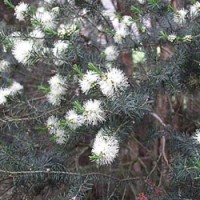
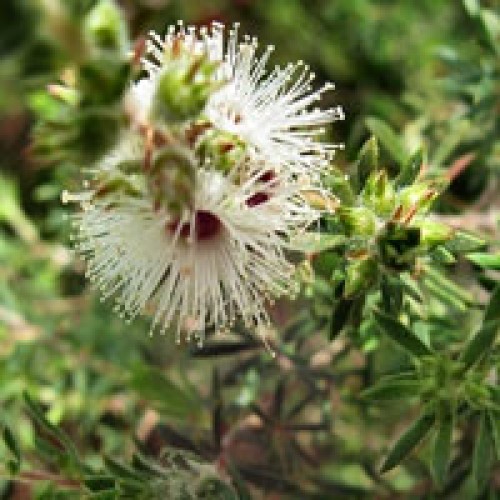
Kunzea ambigua, commonly known as White Cloud, Tick Bush, or White Kunzea, is an aromatic shrub or small tree in the Myrtaceae family. This is the same family that includes Eucalyptus, Tea Tree, Myrtle, Clove, and many other aromatic plants known for strong essential oil-bearing leaves.
 
The essential oil is steam distilled from the leaves, flowers, and terminal branches. Native to eastern and southeastern Australia, including Tasmania, New South Wales, and Victoria, Kunzea grows in coastal heathlands, woodland margins, forest edges, and exposed environments where resilience is not optional. Its medicine reflects that: soft on the surface, but tough as hell underneath.
 
Botanical Profile
  • Botanical Name: Kunzea ambigua
  • Family: Myrtaceae
  • Common Names: Kunzea, White Kunzea, White Cloud, Tick Bush, Poverty Bush
  • Plant Type: Aromatic shrub or small tree
  • Part Used for Distillation: Leaves, flowers, and terminal branches
  • Growth Habit: Bushy, upright, woody shrub or small tree with dense branching and aromatic foliage
  • Height: Commonly grows up to about 5 meters tall, depending on habitat and growing conditions
  • Flowering Season: Spring to early summer
  • Harvest Time for Distillation: Aerial flowering material is typically harvested when the plant is in active aromatic expression, often during flowering
Physical Characteristics
  • Leaves: Small, aromatic, linear to narrow-elliptical leaves; often slightly curved
  • Oil Glands: Leaves contain visible oil glands that may appear as translucent dots when held up to the light, a common Myrtaceae trait
  • Flowers: Profuse small white flowers, sometimes pale pink, with a brush-like appearance
  • Flowering Pattern: Flowers cluster densely along the branches, giving the plant its soft “white cloud” appearance when in bloom
  • Stems: Woody, branching stems that support dense foliage and flowering clusters
  • Aroma: Fresh, clean, herbaceous, slightly medicinal, softly camphoraceous, and gently woody when the aromatic parts are crushed or distilled
Native Habitat + Growth Conditions
  • Native To: Eastern and southeastern Australia, including Tasmania, New South Wales, and Victoria
  • Preferred Habitat: Coastal heathlands, dunes, woodland margins, forest edges, and open scrubland
  • Preferred Soil: Adaptable to sandy, rocky, poor, or well-drained soils
  • Sunlight: Full sun to partial sun
  • Climate: Coastal to temperate Australian climates; tolerant of wind, exposure, and challenging conditions
  • Ecological Notes: Kunzea supports pollinators such as bees and butterflies and is valued in habitat restoration and erosion control because of its hardy growth and ability to establish in poor soils
Energetic Botanical Signature
Kunzea teaches through softness that survives exposure. It grows in coastal winds, poor soils, scrubland, dunes, and rough edges — yet when it flowers, it becomes covered in a cloud of white blossoms. That is the doctrine: strength does not always look hard. Sometimes resilience looks soft, open, and quietly blooming in a place that tried to wear it down.
 
Its dense branching speaks to protection and endurance. Its aromatic leaves speak to clearing, breath, and the release of what has become stagnant. Its white cloud of flowers reflects the way Kunzea moves through grief, tension, pain, and exhaustion — not by forcing the body to break open, but by helping it soften enough to breathe again. This is a plant that teaches: you can be tender and still be strong. You can be weathered and still bloom.
Energetics

Energetic Properties

Emotional Release • Clear Mind • Grief-Body Support

Kunzea is an oil of soft release and deep restoration.
It does not come in like a lightning bolt. It comes in like a hand on the shoulder after the body has been holding too much for too long. Fresh, clean, softly medicinal, slightly woody, and gently clearing, Kunzea has a way of reaching the places where tension, grief, pain, inflammation, and exhaustion have all started speaking through the same body.

Energetically, Kunzea works where the system has become overburdened.
The mind is foggy.
The heart is heavy.
The muscles ache.
The breath feels shallow.

The emotions are stuck somewhere between “I can’t feel this” and “I can’t keep carrying this.”

Kunzea helps create movement without forcing release. That matters. Some oils push. Kunzea does not. It supports the system in softening enough that what has been blocked, suppressed, or frozen can begin to move in its own time.

This is why Kunzea belongs in the emotional conversation around grief, loss, trauma, chronic stress, and body-level exhaustion. It may support emotional catharsis, but not in a dramatic or performative way. More like the body finally says, “I am tired of clenching around this,” and something begins to loosen.

Kunzea is especially helpful when emotional pain has settled into the physical body — sore muscles, tight chest, inflamed-feeling tissue, aching joints, poor concentration, mental fatigue, and the kind of exhaustion that is not solved by one good night of sleep.

She says
You do not have to force the release.
You do not have to explain the ache.
Let the body soften.
Let the breath come back.
Let one layer come down.

Energetic Themes
  • Clears mental fog and supports concentration
  • Helps reduce emotional heaviness connected to stress, grief, or overwhelm
  • Supports the release of suppressed emotions held in the body
  • Brings softness to nervous tension and emotional bracing
  • Helps the body unwind where pain and emotion are tangled together
  • Supports emotional stability when the system feels scattered, overloaded, or fragile
  • Uplifts the spirit during mental exhaustion, low mood, or emotional fatigue
  • Encourages courage to let go of old pain, old holding, and old survival tension
  • Supports heart-centered healing without forcing vulnerability
  • Helps restore harmony between the body, mind, emotional field, and spirit
  • Supports decision-making when brain fog or emotional confusion makes everything feel muddy
  • Helps transform stuck emotional patterns into movement, breath, and integration
  • Supports shape-shifting energy — not escape, but real transformation through softness, release, and embodied change
Chakra Connections

Heart Chakra
Kunzea has a strong affinity for the heart chakra, especially when grief, shock, stress, or emotional pain has become physical.
  • Supports emotional release without forcing vulnerability
  • Helps soften the protective bracing around the heart
  • May assist when grief is held in the chest, shoulders, breath, and body
  • Encourages compassion for the self during deep emotional exhaustion
  • Supports heart-centered healing after loss, disappointment, or long-term stress
  • Helps create space around old wounds without demanding instant forgiveness
  • Supports emotional balance when the heart feels guarded, heavy, or shut down
  • Helps the body feel safe enough to soften around pain
Kunzea does not tell the heart to move on. It helps the heart breathe.

Third Eye Chakra
Kunzea supports the third eye through mental clearing, focus, and the release of cognitive fog.
  • Helps clear mental sluggishness and brain fog
  • Supports concentration when grief, pain, or stress has scattered the mind
  • May assist with decision-making when everything feels emotionally muddy
  • Encourages clear perception without disconnecting from the body
  • Supports intuition by helping reduce mental static
  • Helps bring awareness back to what is true, present, and manageable
  • Supports mental clarity without becoming sharp, harsh, or overstimulating
  • Helps the mind sort what belongs in this moment from what belongs to old pain
Kunzea does not create mystical fireworks. It cleans the glass so you can see what is actually there.

Throat Chakra
Kunzea connects with the throat chakra through emotional release and honest expression.
  • Supports the release of suppressed emotions
  • Helps clear the channel between breath, body, and truth
  • May assist when grief or stress has tightened the throat, jaw, chest, or shoulders
  • Encourages expression that is honest but not explosive
  • Supports communication from the body instead of panic
  • Helps move emotions that have been swallowed or silenced
  • Supports the courage to name pain without becoming consumed by it
  • Helps soften the pressure that builds when truth has been held too long
Kunzea helps the truth move without needing to tear the whole damn house down.

Solar Plexus Chakra
Kunzea may support the solar plexus when emotional exhaustion, pain, or stress has weakened motivation and personal power.
  • Supports confidence when the system feels depleted
  • Helps clear stress-related fog around action and direction
  • May assist when pain or grief has collapsed the will
  • Encourages gentle restoration of energy and motivation
  • Supports personal power through relief rather than force
  • Helps reconnect clarity, courage, and embodied strength
  • Supports movement after long periods of bracing, shutdown, or overwhelm
  • Helps restore the sense of “I can take one next step”
Kunzea does not whip the solar plexus into action. It helps strength return because the body finally has a little room.

Spiritual Use
  • Useful in rituals for grief, loss, emotional release, and body-based healing
  • Supportive when emotional pain has become physical tension, inflammation, or exhaustion
  • Helpful for heart chakra work when the heart is guarded, tired, or carrying old wounds
  • Useful in third eye work when grief, stress, or pain have created brain fog and confusion
  • Supportive in throat chakra work when suppressed emotions need a clear, safe pathway
  • Helpful before journaling, breathwork, bodywork, somatic release, or grief integration
  • Useful in massage or anointing rituals focused on letting the body release what the mind cannot solve
  • Supportive after shock, heavy emotional processing, caregiving, conflict, or long-term stress
  • Helpful when someone needs transformation but cannot tolerate being pushed
  • Useful in rituals of shape-shifting, transition, and reclaiming the self after loss or depletion
Energetic Cautions
Kunzea is generally soft in its emotional tone, but its depth can still bring material to the surface.
  • Use gently when someone is raw, actively grieving, dissociated, or emotionally overwhelmed
  • Allow space for emotion to move if release begins
  • Pair with grounding practices when the body feels tender or unsteady
  • Avoid using it as a way to force emotional catharsis
  • Use with breath, slow touch, journaling, bath ritual, or body-based integration
  • Support the nervous system with containment: quiet space, blanket, warm drink, soft music, poodle nearby if available, obviously
Kunzea may support release, but release is not always comfortable. Sometimes the body loosens and the tears finally come. That is not failure. That is the system moving.

This oil is not here to bypass the pain.
It is here to help the body carry it differently.
Kunzea is not dramatic medicine.
It is release medicine.

It helps clear the mind, soften the body, open the breath, and support the heart when grief, stress, and pain have become too heavy to keep locked inside.
It reminds us that transformation does not always begin with power.
Sometimes it begins with relief.

Affirmation
I allow my body to soften and release what it has carried for too long. My heart opens at the pace of truth, my mind clears with compassion, and I transform without forcing myself to break.

Traditional & Folklore

Kunzea does not carry a big Greek or Roman mythology trail, and we are not going to slap borrowed mythology on it just to make it sound fancy. Kunzea ambigua is Australian plant medicine. Its folklore lives closer to the ground — in bush medicine, aromatic smoke, insect protection, animal behavior, white flowering thickets, and the practical magic of a plant that helps bodies hurt less and breathe easier.
For Kunzea ambigua, the strongest folklore thread is Australian. New Zealand has related Kunzea species, especially kānuka, but this profile is for Kunzea ambigua, commonly known as White Kunzea, White Cloud, Tick Bush, or Poverty Bush, which is native to eastern and southeastern Australia, including Tasmania, New South Wales, and Victoria. 

Tick Bush + Insect Protection
  • One of Kunzea’s most important folk names is Tick Bush.
  • The name is connected to the belief that the plant helped protect against ticks, mites, and biting insects.
  • Traditional and folk uses include:
    • Repelling insects
    • Protecting the body from bites
    • Soothing bites and stings
    • Using the aromatic leaves around the body or environment
    • Observing animals sheltering beneath the plant, possibly for relief from biting insects
  • Some Australian plant education sources note that people originally believed the shrubs provided protection from ticks and mites, which led to the common name Tick Bush. (Field of Mars EEC)
  • That gives Kunzea a clear protective folklore: this is a plant of the boundary.
  • It says: keep the biting things off me, keep the irritation down, keep the body guarded without locking the spirit away.
Aboriginal Bush Medicine + Body Relief
  • Kunzea has a traditional reputation in Australian bush medicine for supporting the body where pain, inflammation, bites, skin irritation, and respiratory discomfort were present.
  • Traditional uses include:
    • Tired or sore muscles
    • Aches and pains
    • Arthritis-type discomfort
    • Insect bites
    • Skin irritation
    • Cold and flu-season discomfort
    • Respiratory complaints
  • Some modern Australian and New Zealand sources describe Kunzea as traditionally used by Aboriginal communities for tired muscles, wounds, insect protection, skin support, and respiratory or cold-season complaints. 
  • This is not ornamental folklore.
  • This is “the body hurts, the insects are relentless, the breath is tight, and the plant helps” folklore.
  • Sacred does not always wear robes. Sometimes sacred is crushed leaves, sore knees, and enough relief to keep going.
White Cloud + Flower Medicine
  • The name White Cloud comes from the way Kunzea can become covered in masses of small white flowers.
  • When in full bloom, the plant can look soft, misty, and cloud-like across the landscape.
  • Its flowers are also known to attract insects and pollinators, including bees, flies, butterflies, wasps, and beetles. 
  • Folklorically, that white flowering presence gives Kunzea a different kind of medicine:
    • Softness after hardship
    • Beauty after exposure
    • Gentleness that still survives rough ground
    • Pollinator abundance
    • The return of life through tiny white blossoms
  • White Cloud is not weak medicine.
  • It is the medicine of softness that still shows up after the body has been weathered.
Shelter, Thickets + Protection
  • Kunzea often grows as a dense, branching shrub and can form thickets, especially in suitable coastal or heathland environments.
  • This gives the plant a sheltering quality in the landscape.
  • Sources describe Kunzea ambigua as a hardy shrub used in windbreaks, dune stabilization, gardens, and wildlife-supportive plantings; it can also provide shelter for small birds and animals. 
  • Folklorically, dense shrubs like this carry protective energy:
    • Shelter from exposure
    • Boundary protection
    • Cover for small life
    • Holding the land together
    • Stabilizing disturbed places
    • Creating refuge at the edge
  • Kunzea’s protective medicine is not fortress energy.
  • It is thicket energy.
  • Not “shut the world out forever.”
  • More like: create enough cover so the tender thing can survive.
Fire, Regeneration + Disturbed Land
  • Kunzea is part of the Australian bush ecology where fire, disturbance, regrowth, and resilience shape the land.
  • Botanical sources describe Kunzea ambigua as able to regenerate from seed after fire and colonize sunny, disturbed sites. 
  • This gives Kunzea a strong transformation thread.
  • Folklorically, it speaks to:
    • Recovery after upheaval
    • Life returning after disturbance
    • Regrowth from seed
    • Strength after being burned back
    • The ability to inhabit rough edges
    • The courage to re-enter life after loss
  • This is where Kunzea’s emotional medicine gets deep.
  • It is not just “feel better” medicine.
  • It is “something burned through me, and still something in me can grow again” medicine.
Poverty Bush + Humble Medicine
  • One of Kunzea’s common names is Poverty Bush.
  • That name has a different feeling than White Cloud or Tick Bush.
  • It suggests rough land, poor soil, overlooked places, and plants that grow where conditions are not especially generous.
  • Folklorically, Poverty Bush carries the medicine of humility and endurance:
    • Making do
    • Growing anyway
    • Surviving poor conditions
    • Offering medicine without glamour
    • Finding value in what others overlook
  • This is part of Kunzea’s spirit.
  • It is not polished, dramatic, or precious.
  • It is the plant that grows at the edge, helps the land hold, gives shelter, supports pollinators, repels pests, and offers medicine from the rough places.
Healing Through the Body
  • Kunzea’s folklore is deeply body-based.
  • It is associated with pain, bites, breathing, skin, tension, and relief.
  • That matters because some plants enter spiritual work through visions or dreams.
  • Kunzea enters through the body saying: I hurt.
  • Its folk medicine is practical:
    • Ease the muscles
    • Calm the bite
    • Clear the breath
    • Tend the skin
    • Protect the body
    • Help the system recover after stress
  • This gives Kunzea a grief-body signature as well.
  • Not because old folklore necessarily named it that way, but because the plant’s traditional uses point toward the places where suffering lands physically.
  • Pain is not only physical.
  • Grief is not only emotional.
  • Kunzea sits right at that crossroads.
The Folklore Medicine
Kunzea’s folklore is Australian bush medicine: Tick Bush protection, White Cloud softness, Poverty Bush endurance, insect-repelling aromatic leaves, body relief, breath support, sheltering thickets, and regrowth after disturbance.

It is not a plant of borrowed gods or grand temple stories.
It is a plant of the rough edge.

The sore body.
The bitten skin.
The congested breath.
The tired spirit.
The animal seeking shelter.
The land recovering after fire.

Kunzea says: soften where you can, protect what is tender, and trust that even after disturbance, life can come back through the body.
Chemistry

Chemical Components

Kunzea essential oil has a complex chemistry that helps explain why it is traditionally valued for muscles, joints, respiratory support, skin cleansing, and emotional tension.

It is not a one-note Australian “clearing” oil. Kunzea has a softer, rounder, more layered profile than Eucalyptus or Tea Tree. It carries fresh monoterpene brightness, respiratory-opening oxides, and deeper sesquiterpene alcohols that may support comfort, grounding, and inflammation-related patterns.

Kunzea essential oil is often associated with constituents such as α-pinene, 1,8-cineole, globulol, viridiflorol, spathulenol, ledol, bicyclogermacrene, and related compounds. The exact chemistry can vary depending on source, harvest, growing conditions, and distillation.

That’s Kunzea’s chemistry: clear enough to support breath, deep enough to support the body, and soft enough to meet the nervous system without kicking the door in.

Main Chemical Families

Sesquiterpene Alcohols
  • Kunzea contains several sesquiterpene alcohols, including globulol, viridiflorol, spathulenol, and ledol.
  • These deeper, heavier constituents help give Kunzea some of its body-supportive, grounding, and anti-inflammatory-leaning character.
  • Sesquiterpene alcohols may contribute to:
    • Muscular comfort
    • Joint support
    • Soft-tissue ease
    • Inflammation-related discomfort
    • Skin-cleansing applications
    • Emotional steadiness
    • Nervous system softening
  • This is part of what makes Kunzea feel less sharp than some other Australian oils.
  • It has clearing power, but it also has depth.
Energetically, the sesquiterpene alcohols are the “hold the body gently” part of Kunzea. They give the oil its ability to meet pain, grief, inflammation, and exhaustion without becoming harsh.

Globulol
  • Globulol is one of Kunzea’s important sesquiterpene alcohols.
  • It may contribute to the oil’s anti-inflammatory and calming profile.
  • Globulol may support:
    • Muscular discomfort
    • Joint aches
    • Inflammation-related patterns
    • Nervous tension
    • Stress held in the body
  • This constituent helps explain why Kunzea feels so appropriate for massage blends, body oils, and grief-body support formulas.
Globulol is part of Kunzea’s quiet strength — not dramatic, but steady.

Viridiflorol
  • Viridiflorol is another sesquiterpene alcohol found in Kunzea.
  • It is often associated with anti-inflammatory and antimicrobial activity.
  • Viridiflorol may contribute to:
    • Tissue comfort
    • Skin-cleansing support
    • Musculoskeletal blends
    • Wound-care-adjacent aromatic support
    • General antimicrobial-oriented formulas
  • In Kunzea, viridiflorol helps bridge the body-care and cleansing sides of the oil.
This is part of why Kunzea can feel both soothing and protective.

Spathulenol
  • Spathulenol contributes to Kunzea’s deeper, softer aromatic foundation.
  • It is associated with anti-inflammatory and potentially anti-allergic activity.
  • Spathulenol may support:
    • Inflamed-feeling tissue
    • Skin discomfort patterns
    • Muscular and joint blends
    • Respiratory irritation support
    • Overall body ease
  • It helps round the oil out, giving Kunzea a more restorative feel than a purely sharp respiratory oil.
Spathulenol is part of the “please stop bracing” chemistry.

Ledol
  • Ledol may contribute antimicrobial and anti-inflammatory qualities.
  • It may support Kunzea’s use in:
    • Skin-cleansing blends
    • Body-care formulations
    • Musculoskeletal support
    • Environmental cleansing blends
    • Insect-bite and irritation-focused applications
  • Because ledol can be a powerful constituent, Kunzea should still be used thoughtfully and moderately.
Ledol adds a protective edge to Kunzea’s softer profile.

Bicyclogermacrene
  • Bicyclogermacrene is a sesquiterpene hydrocarbon that may contribute to Kunzea’s anti-inflammatory-leaning and grounding qualities.
  • It may support:
    • Body comfort
    • Soft-tissue support
    • Joint and muscle blends
    • Emotional grounding
    • The deeper, less volatile side of the aroma
  • This helps Kunzea stay in the body rather than flying off as only a top-note respiratory oil.
Energetically, bicyclogermacrene helps anchor the medicine.

Monoterpenes
Alpha-Pinene
  • Alpha-pinene is one of Kunzea’s important monoterpenes.
  • It brings a fresh, clean, pine-like brightness to the oil.
  • Alpha-pinene may contribute to:
    • Respiratory openness
    • Clear breathing
    • Mental clarity
    • Anti-inflammatory support
    • Antimicrobial-oriented applications
    • A sense of alertness and freshness
  • Alpha-pinene is often associated with bronchodilating and respiratory-supportive effects, which helps explain Kunzea’s traditional use for breath, congestion, and respiratory heaviness.
  • It may also support a clearer mental state when the mind feels foggy, sluggish, or overloaded.
Energetically, alpha-pinene is the fresh-air doorway in Kunzea. It opens space without making the oil feel cold or severe.

Oxides
1,8-Cineole
  • 1,8-cineole, also known as eucalyptol, contributes to Kunzea’s respiratory-supportive character.
  • It may support:
    • Clear breathing
    • Mucus clearance
    • Respiratory freshness
    • Bronchial ease
    • Sinus and nasal openness
    • Seasonal wellness blends
    • Antimicrobial-oriented formulas
  • 1,8-cineole is one of the constituents that connects Kunzea to the broader Australian respiratory-support oil family.
  • But Kunzea does not feel exactly like Eucalyptus.
  • The sesquiterpene alcohols and softer aromatic layers give it a more rounded, body-supportive, emotionally gentle profile.
This is why Kunzea can be so valuable when someone needs respiratory support, but also needs tenderness.

Therapeutic Implications of This Chemistry
Respiratory support:
  • The combination of alpha-pinene and 1,8-cineole helps explain Kunzea’s traditional use in respiratory blends.
  • Kunzea may support:
    • Colds and flu-season blends
    • Congestion
    • Sinus pressure
    • Coughs
    • Bronchial heaviness
    • Respiratory passages that feel tight or inflamed
  • It offers breath support without the same sharp force as some Eucalyptus oils.
Pain relief + inflammation-related discomfort:
  • Kunzea’s sesquiterpene alcohols, including globulol, viridiflorol, spathulenol, and ledol, may support its use in massage blends for discomfort related to inflammation, overuse, injury, stiffness, and soreness.
  • This supports Kunzea’s role in blends for:
    • Sore muscles
    • Joint pain
    • Arthritis-type discomfort
    • Sprains and strains
    • Soft-tissue injuries
    • Post-exertion body aches
Nervous system ease:
  • Kunzea’s chemistry gives it a unique emotional profile.
  • It can feel clearing and calming at the same time.
  • The fresher monoterpenes may support mental clarity, while the deeper sesquiterpene alcohols may help soften stress held in the body.
  • This makes Kunzea useful when nervous tension, mental fatigue, grief, and physical pain are tangled together.
Mental clarity + brain fog:
  • Alpha-pinene and the fresh aromatic profile may support mental clarity when the mind feels dull, foggy, or sluggish.
  • Kunzea is not a harsh stimulant.
  • It clears gently, like opening the door to let air back into a room where grief and exhaustion have been sitting too long.
Skin cleansing + topical support:
  • Kunzea’s antimicrobial-oriented chemistry may support properly diluted topical blends for skin cleansing, insect bites, minor irritation, and body-care applications.
  • It should still be diluted properly and used with respect, especially on sensitive or compromised skin.
Immune-season + cleansing blends:
  • Kunzea’s combined respiratory and antimicrobial profile makes it useful in seasonal wellness blends, diffuser blends, room sprays, and body-care formulas where cleansing and freshness are desired.
This chemistry does not make Kunzea aggressive.
It makes it deeply useful.

Kunzea is fresh air, soft tissue support, and nervous system relief in one oil — clear enough to help the breath, deep enough to support the body, and gentle enough to sit beside grief without trying to fix it.
Recipes & Blends

Recipes & Blends

Sore Body Relief Blend
Physical Support | Muscles, Joints + Overworked Tissue
  • Kunzea Essential Oil (Kunzea ambigua): 10 drops
  • Plai Essential Oil (Zingiber cassumunar): 8 drops
  • Sweet Marjoram Essential Oil (Origanum majorana): 8 drops
  • Copaiba Balsam Essential Oil (Copaifera officinalis / Copaifera langsdorffii): 7 drops
  • German Chamomile Essential Oil (Matricaria recutita): 2 drops
  • Juniper Berry Essential Oil (Juniperus communis): 5 drops
This blend is designed for sore muscles, tight tissue, joint discomfort, post-exertion aches, and areas of the body that feel inflamed, overworked, or reactive.
  • Kunzea supports body comfort, soft-tissue ease, and inflammation-related discomfort
  • Plai brings strong muscular support and helps ease overworked tissue
  • Sweet Marjoram softens muscular tension and nervous system holding
  • Copaiba Balsam brings warm, resinous body support and grounding
  • German Chamomile supports irritated, reactive, or inflamed-feeling tissue
  • Juniper Berry helps move heaviness and stagnation in the body
Dilute in a suitable carrier oil before topical use. A 1–2% dilution is generally appropriate for adult body massage. Apply to shoulders, neck, low back, hips, knees, legs, feet, or any area that feels sore, tight, or overused. Avoid broken or irritated skin.


Clear Breath Support Blend
Physical Support | Respiratory Ease + Seasonal Clearing
  • Kunzea Essential Oil (Kunzea ambigua): 8 drops
  • Eucalyptus Radiata Essential Oil (Eucalyptus radiata): 7 drops
  • Ravintsara Essential Oil (Cinnamomum camphora ct. 1,8-cineole): 8 drops
  • Hyssop Decumbens Essential Oil (Hyssopus officinalis var. decumbens): 4 drops
  • Fragonia Essential Oil (Agonis fragrans): 7 drops
  • Lemon Essential Oil (Citrus limon): 6 drops
This blend is designed for respiratory freshness, seasonal crud, nasal congestion, chest heaviness, sinus pressure, and that “I need to breathe like a human again” feeling.
  • Kunzea brings soft respiratory clearing and body-level support
  • Eucalyptus Radiata supports clear breathing and open airways
  • Ravintsara supports immune-season and respiratory blends
  • Hyssop Decumbens brings gentle respiratory support without the harsher edge of common hyssop
  • Fragonia supports breath, emotional balance, and whole-system harmony
  • Lemon adds brightness, clarity, and freshness
Use in a diffuser, personal inhaler, shower steam blend, or properly diluted chest rub. For topical use, dilute well. If using expressed Lemon, avoid sun or UV exposure on the area of application after topical use unless the oil is steam distilled or otherwise non-phototoxic.


Solace and Resilience Blend
Energetic Support | Catastrophic Grief + Body-Based Comfort
  • Kunzea Essential Oil (Kunzea ambigua): 7 drops
  • Lavender Essential Oil (Lavandula angustifolia): 8 drops
  • Rose Absolute (Rosa damascena): 2 drops
  • Roman Chamomile Essential Oil (Chamaemelum nobile): 5 drops
  • Agarwood Essential Oil (Aquilaria subintegra): 2 drops
  • Laurel Leaf Essential Oil (Laurus nobilis): 4 drops
  • Mandarin Essential Oil (Citrus reticulata): 12 drops
This blend is for grief that has landed in the body — the tight chest, aching muscles, nervous system collapse, foggy mind, and exhausted heart that come after profound loss.
  • Kunzea supports the body where grief, tension, pain, and exhaustion meet
  • Lavender helps calm nervous system stress and emotional overload
  • Rose supports the wounded heart without forcing it open
  • Roman Chamomile brings softness when grief has made the body feel raw
  • Agarwood supports deep spiritual grounding and inner stillness
  • Laurel Leaf brings courage, dignity, and the strength to keep standing
  • Mandarin brings gentle warmth, tenderness, and a small thread of light
Use in ritual body oil, grief anointing, bath oil, breathwork, journaling, prayer, or quiet integration. Dilute well before topical use. Apply to the heart, back of neck, feet, shoulders, or anywhere the body is holding grief. This blend is not meant to “fix” grief. It is meant to help the body feel less alone inside it.


Shape-Shift the Grief Blend
Energetic Support | Emotional Release + Transformation
  • Kunzea Essential Oil (Kunzea ambigua): 7 drops
  • Blue Tansy Essential Oil (Tanacetum annuum): 3 drops
  • Helichrysum Essential Oil (Helichrysum italicum): 5 drops
  • Cedarwood Himalayan Essential Oil (Cedrus deodara): 7 drops
  • Clary Sage Essential Oil (Salvia sclarea): 6 drops
  • Sweet Basil Essential Oil (Ocimum basilicum ct. linalool): 5 drops
  • Neroli Essential Oil (Citrus aurantium var. amara): 2 drops
  • Pink Pepper Essential Oil (Schinus molle): 5 drops
This blend is for the threshold where something old is loosening, but the new shape has not fully arrived yet.
  • Kunzea supports emotional release through the body
  • Blue Tansy brings cooling, compassionate support when emotions feel inflamed
  • Helichrysum supports deep repair, old wounds, and the places that still ache
  • Cedarwood Himalayan grounds the spirit and steadies the nervous system
  • Clary Sage helps loosen emotional holding and support inner movement
  • Sweet Basil clears mental fog and supports decision-making
  • Neroli brings tenderness, heart support, and the courage to stay open
  • Pink Pepper brings spark, warmth, and gentle movement without pushing too hard
Use before journaling, grief work, ritual, somatic release, meditation, or any threshold practice where the body is ready to let one layer shift. Dilute before applying to the heart, solar plexus, feet, spine, or pulse points. Use Clary Sage cautiously; avoid during pregnancy unless guided by a qualified practitioner.


Affirmation
I let my body soften around what it has carried. I release one layer at a time, breathe into the space that opens, and trust that transformation can come through tenderness, not force.
Safety Etc.

Safety Information

Kunzea essential oil is generally considered well tolerated when properly diluted, but it is still a potent aromatic oil and should be used with respect. Its fresh, clearing chemistry makes it useful in respiratory, muscular, and emotional-support blends, but sensitive skin, respiratory sensitivity, children, pets, and pregnancy all need thoughtful care.

Topical Use
  • Dilute before applying to the skin.
  • General adult dilution: 1–2%.
  • For sensitive skin: 0.5–1%.
  • For short-term localized body use: up to 3% may be appropriate for healthy adult skin.
  • Avoid applying undiluted.
  • Avoid broken, irritated, inflamed, or freshly shaved skin.
  • Patch testing is recommended.
Skin Sensitivity
  • Kunzea is often considered gentle compared with sharper Australian oils, but sensitivity is still possible.
  • Use lower dilution for people with:
    • Sensitive skin
    • Reactive skin
    • Eczema-prone skin
    • Fragrance sensitivity
    • History of essential oil reactions
  • Discontinue use if redness, burning, itching, rash, irritation, or discomfort occurs.
Phototoxicity
  • Kunzea essential oil is not known to be phototoxic.
Diffusion + Inhalation
  • Use in a well-ventilated space.
  • Diffuse in short intervals.
  • Avoid heavy or prolonged diffusion.
  • Use caution around people with asthma, respiratory sensitivity, migraines, or scent-triggered symptoms.
  • If coughing, tightness, headache, nausea, or discomfort occurs, stop use and increase fresh air.
Respiratory Conditions
  • Kunzea may be useful in respiratory-support blends, but anyone with asthma, chronic respiratory disease, or significant breathing issues should use caution.
  • Start with very low exposure.
  • Avoid direct steam inhalation if the respiratory system is reactive.
  • Do not use essential oils as a replacement for medical care during asthma attacks, bronchitis, pneumonia, severe cough, or breathing difficulty.
Internal Use
  • Internal use is not recommended unless supervised by a qualified practitioner trained in aromatic medicine.
  • Do not add Kunzea essential oil to water, tea, capsules, food, or oral-care preparations without professional guidance.
Oral + Dental Use
  • Kunzea may appear in professionally formulated oral-care products, but direct oral use is not recommended for home use.
  • Do not apply directly to gums, teeth, or mouth tissue unless guided by a qualified practitioner.
Pregnancy & Lactation
  • Use cautiously during pregnancy and lactation.
  • Avoid heavy or frequent use.
  • Use low dilution only.
  • Avoid use during the first trimester unless guided by a qualified practitioner.
  • For pregnancy-related pain, inflammation, or respiratory concerns, professional guidance is best.
Pediatric Use
  • Use cautiously with children.
  • Avoid use with infants unless guided by a qualified practitioner.
  • Use very low dilution for children.
  • Avoid applying near the face, mouth, nose, eyes, or hands.
  • Diffuse only with good ventilation, short timing, and the ability for the child to leave the space.
Medical Considerations
Use caution with:
  • Very sensitive skin
  • Asthma or respiratory sensitivity
  • Migraine triggered by strong scents
  • Active skin inflammation
  • Serious infection
  • Post-surgical wounds or healing tissue
  • Chronic inflammatory disease
  • Pregnancy or lactation
  • Individuals under medical care or taking multiple medications
Pets
  • Use thoughtful care around animals.
  • Do not apply directly to pets unless guided by a qualified animal aromatherapy professional.
  • Use good ventilation if diffusing.
  • Allow animals to leave the room.
  • Avoid diffusing around birds.
  • Keep bottles out of reach of pets.
Storage
  • Store in a cool, dark place.
  • Keep away from heat, light, and oxygen.
  • Keep the cap tightly closed.
  • Keep out of reach of children and pets.
General Safety Note

Kunzea is soft-spoken, but it is still medicine. Use it diluted, use it thoughtfully, and respect the body’s response. Its gift is support without harshness — but even gentle oils need boundaries. More is not more. More is just the nervous system saying, “Could we not?”There are no documented safety concerns specific to Kunzea Ambigua Essential Oil when used according to recommended guidelines

References

  • Australian Native Plants Society Australia.Kunzea ambigua.”
    Useful for botany, plant form, flowers, habitat, and Australian native plant context.
  • Barillot, C., et al.Kunzea ambigua (Sm.) Druce and Kunzea flavescens C.T. White Essential Oils and Hydrosols: Chemical Composition and Antimicrobial Activity.” Griffith University research repository, 2021.
    Useful for Kunzea chemistry, hydrosol/essential oil comparison, and antimicrobial activity. 
  • Battaglia, Salvatore. The Complete Guide to Aromatherapy, 3rd ed., Vol. I: Foundations & Materia Medica. Black Pepper Creative, 2018.
  • Brophy, J. J., Craven, L. A., & Doran, J. C. Melaleucas: Their Botany, Essential Oils and Uses. Australian Centre for International Agricultural Research, 2013.
    Useful for Australian Myrtaceae context, especially essential oil-bearing shrubs and related aromatic plants.
  • Drugs.com. “Kunzea Oil Uses, Benefits & Dosage.”
    Useful as a cautious clinical-style overview, especially for antimicrobial and topical-use discussion. It notes in vitro antimicrobial activity for K. ambigua essential oil against organisms associated with oral cavity and skin concerns. 
  • Field of Mars Environmental Education Centre. “Kunzea Fact Sheet.” NSW Department of Education.
    Useful for Australian educational context, Tick Bush naming, plant identification, and folk association with ticks/mites. 
  • Holmes, Peter. Aromatica: A Clinical Guide to Essential Oil Therapeutics, Volumes 1 and 2. Singing Dragon.
  • IndigiGrow.Kunzea ambigua.”
    Useful for Australian native plant context and traditional-use framing around arthritis-type discomfort, rheumatism, muscular aches and pains, insect bites, and cold/flu symptom support. 
  • Lawless, Julia. The Encyclopedia of Essential Oils. Conari Press.
  • Patents.Google.com. “Essential Oil of Kunzea ambigua and Methods of Use.” U.S. Patent documentation.
    Useful for historical and technical claims around Kunzea ambigua oil, antimicrobial discussion, and topical-use applications. Use carefully because patent documents are not the same as clinical proof. 
  • Rhind, Jennifer Peace. Essential Oils: A Handbook for Aromatherapy Practice. Singing Dragon.
  • Rhind, Jennifer Peace. Fragrance and Wellbeing: Plant Aromatics and Their Influence on the Psyche. Singing Dragon.
  • Thomas, J. “Kunzea Oil: Investigation of Composition, Bioactivity and Therapeutic Potential.” University of Tasmania thesis, 2012.
    Important Kunzea-specific source for composition, bioactivity, antimicrobial/antifungal activity, and therapeutic potential. 
  • Tisserand, Robert, and Rodney Young. Essential Oil Safety: A Guide for Health Care Professionals. 2nd ed., Churchill Livingstone Elsevier, 2014.
  • Tucker Bush. “White Kunzea — Kunzea ambigua ‘Prostrate.’”
    Useful for Australian plant-use context, including Indigenous medicine references, skin and respiratory applications, insect bites, perfumery, and aromatherapy. 
  • Warndu. “White Kunzea Flower.”
    Useful for Australian bush-food/native plant context, Tasmania references, and the White Kunzea / Tick Bush identity in contemporary Australian plant writing.
  • Zea Relief. “Australian Kunzea Usage & Benefits.”
    Useful for Tasmanian Kunzea industry context, modern Australian use, and common therapeutic positioning around anti-inflammatory, antimicrobial, soothing, and decongesting properties. Use as industry support, not as the only scientific backbone. 

Related Products

Angelica Root Essential Oil

Angelica Root Essential Oil

..

$25.00 Ex Tax: $25.00

Rosalina Essential Oil - WIld Harvested

Reviews (4)

Write a review

Note: HTML is not translated!
    Bad           Good
Powered By OpenCart
Stillpoint Aromatics © 2026