Personal Use
Jamarosa Essential Oil (Cymbopogon jwarancusa × Cymbopogon nardus var. confertiflorus)
Jamarosa doesn’t play by the usual rules. A rare hybrid of Cymbopogon jwarancusa and C. nardus var. confertiflorus, this oil carries the lemongrass family’s clarity, but with something deeper—more floral, more rooted, more unexpected.
Stillpoint’s Jamarosa opens with a sharp, rosy-citrus top note, grounded by an herbal complexity that lingers in the air and on the skin. It feels like a cross between palmarosa, lemongrass, and rose geranium—but with its own attitude. Uplifting but not flighty. Bright but not sharp. It's a clarifier with presence.
This particular batch has a freshly cut grass meets vintage rose energy that’s hard to describe but easy to feel. It offers emotional lift without dissociation and energetic cleansing without overwhelm. Grown and distilled in India, it’s traditionally revered for its skin-healing, insect-repelling, and spiritually purifying actions.
Jamarosa is what you reach for when you want to feel clearer without losing heart.
Therapeutic Applications
Jamarosa is like a secret weapon in the skin and emotional care toolkit. Its high geraniol and citronellol content gives it a strong antimicrobial, antifungal, and skin-restorative edge—making it a go-to oil for blends that need both gentle beauty and serious support.
Skin Healing + Cell Regeneration
-
Supports the healing of minor wounds, abrasions, and blemishes
-
May help reduce the appearance of scars and promote healthy skin regeneration
-
Balancing for both oily and dry skin types—especially helpful for acne-prone or inflamed skin
-
Often used in fungal and anti-itch blends, especially where skin integrity is compromised
Antimicrobial + Insect Repellent
-
Strong antibacterial, antifungal, and antiviral activity
-
Excellent in natural bug repellent blends—offers protection without harshness
-
Useful in foot sprays, deodorants, and scalp-cleansing formulas
Nervous System Support
-
May help ease nervous tension, irritability, and energetic agitation
-
Brings a sense of clarity without stimulation—useful in focus blends
-
Can be calming for those who feel scattered, overstimulated, or emotionally “buzzed”
Digestive & Circulatory Support
-
Mildly carminative—may assist in blends for abdominal massage or bloating
-
Supports lymphatic movement and gentle detox through topical application
Jamarosa bridges the gap between therapy and beauty, making it a rare gem in both skin care and emotional support formulas.
Traditional Use
While Jamarosa is a relatively recent botanical hybrid, its parent plants—Cymbopogon jwarancusa and C. nardus var. confertiflorus—have long histories in Ayurvedic, tribal, and folk healing traditions across India, Nepal, and Sri Lanka.
The creation of Jamarosa was intentional: blending the medicinal strength of jwarancusa with the softer, aromatic grace of citronella, to yield a plant that could be both therapeutic and aromatic.
The creation of Jamarosa was intentional: blending the medicinal strength of jwarancusa with the softer, aromatic grace of citronella, to yield a plant that could be both therapeutic and aromatic.
Traditional Applications:
-
Skin + Wound Healing: Traditionally used in pastes and oils to treat minor wounds, skin eruptions, and fungal conditions like athlete’s foot and ringworm
-
Insect Protection: Jamarosa is well-known in rural Indian communities as a natural insect repellent—used in home sprays, on clothing, and around livestock
-
Aromatic Garlands & Ritual Baths: The grass itself was sometimes woven into ritual offerings or added to cleansing baths to purify the body and spirit
-
Respiratory Relief: The leaves of its parent plants were used in steam tents and herbal teas to ease coughs, sore throats, and congestion
-
Uplifting the Mood: Folk perfumery traditions valued its rosy-citrus scent to uplift heavy moods and clear negative energy from the space and body
Jamarosa is an example of plant lineage innovation—born from ancient species, refined for modern needs, but still carrying the heartbeat of its origins: protection, purification, and soft resilience.
Botany
Jamarosa is a hybrid grass species in the Poaceae family, created by crossing two aromatic Cymbopogon species: Cymbopogon jwarancusa and Cymbopogon nardus var. confertiflorus. This intentional hybrid was developed in India for its high geraniol content and soft, rose-like aroma—bringing together the therapeutic grit of wild citronella with the floral tenderness of palmarosa.
It grows as a tall, fragrant grass and thrives in warm, semi-arid conditions. The oil is extracted through steam distillation of the aerial parts, particularly when the plant reaches full maturity and its volatile compounds peak.
Botanical Name: Cymbopogon jwarancusa × Cymbopogon nardus var. confertiflorus
Family: Poaceae (Gramineae)
Common Names: Jamarosa, Rose-Scented Grass
Plant Type: Aromatic perennial grass
Part Used for Distillation: Aerial parts—leaves and stems
Growth Habit: Clump-forming, tall and upright; grows up to 4–6 feet
Flowering Season: Rarely flowers due to its hybrid nature; vegetative growth is the focus
Harvest Time for Distillation: Typically harvested during peak vegetative maturity when essential oil content is highest
Common Names: Jamarosa, Rose-Scented Grass
Plant Type: Aromatic perennial grass
Part Used for Distillation: Aerial parts—leaves and stems
Growth Habit: Clump-forming, tall and upright; grows up to 4–6 feet
Flowering Season: Rarely flowers due to its hybrid nature; vegetative growth is the focus
Harvest Time for Distillation: Typically harvested during peak vegetative maturity when essential oil content is highest
Physical Characteristics:
-
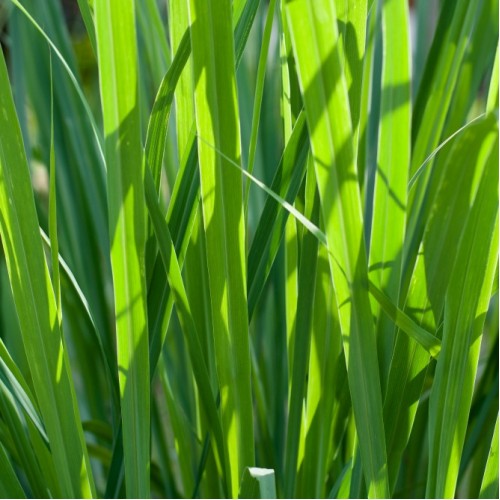
Leaves: Long, narrow, and arching with a distinct rosy-citrus aroma when crushed
-
Stems: Sturdy, fibrous, and upright—similar in structure to citronella and lemongrass
-
Color: Vibrant green during active growth, turning slightly yellow at maturity
-
Roots: Dense and fibrous—anchoring well in loose, sandy soils
Native Habitat + Growth Conditions:
-
Native To: Developed in India through cultivation
-
Preferred Soil: Well-drained, loamy or sandy soils with good sun exposure
-
Sunlight: Full sun
-
Climate: Warm, tropical to subtropical; drought-tolerant once established
-
Ecological Notes: Often grown as a rotational crop due to its pest-repellent nature and soil-enriching root system
Energetic Botanical Signature
Jamarosa doesn’t bloom for attention—it thrives by blending strength with softness. Its tall, upright stature speaks to vertical power and grounded clarity, while its rosy-green scent reflects emotional grace and vibrational alignment.
Born of two potent parents—one known in Sanskrit as the “fever breaker”—this plant carries within it the lineage of healers, protectors, and purifiers. Its hybrid nature makes it uniquely adaptive: a plant that knows how to hold duality and make it sing.