
Every order ships USPS Priority — $10.95 flat-rate USPS Priority shipping on all US orders, no minimum. Free shipping on domestic orders over $299.
Welcome to Stillpoint. Subscribe to our newsletter for sale details and new-product news · One discount code per order · Every order is hand-poured, packed with care in ceremony, and shipped as we receive it.

Gingergrass Essential Oil

Cymbopogon martini var sofia

  • Gingergrass Essential Oil

Average Rating: (see reviews)

$9.00 Ex Tax: $9.00
GC/MS Report
Current: Spring 2013

GC/MS Report

Batch: ginggr2013 (Spring 2013)
Distilled: Spring 2013

Gas Chromatography Analysis (%)

Monoterpenes

d-limonene 6.90
camphene 6.53
α-pinene + α-thujene 2.53
tricyclene 1.42
cis-β-ocimene 0.85
trans-β-ocimene 0.63
terpinolene 0.34
β-myrcene 0.30
other monoterpenes 0.23
para-cymene 0.15
sabinene 0.15

Monoterpenols

geraniol 26.10
borneol 4.59
linalol 1.82
citronellol 1.42
α-terpineol 1.05
other monoterpenols 0.49
isopulegol 0.25
myrtenol 0.22
trans-verbenol 0.21
nerol 0.19
p-cymene-8-ol 0.14
neoisopulegol 0.10

Sesquiterpenols

other sesquiterpenols 1.45
elemol 0.97
cubebol 0.66
Epi-cubebol 0.41
β-eudesmol 0.30
cubenol 0.22
farnesol 0.20
γ-Eudesmol 0.17
epi-cubenol 0.15
α-Eudesmol 0.10

Sesquiterpenes

β-caryophyllene + terpinene-4-ol 4.85
δ-cadinene 1.24
β-elemene 0.93
other sesquiterpenes 0.83
cyclosativene 0.64
α-humulene 0.54
γ-cadinene 0.44
germacrene D 0.32
E-cadinene 0.32
α-trans-bergamotene 0.30
β-bourbonene 0.28
calamenene 0.20
zonarene 0.15
β-cubebene 0.12
α-muurolene 0.12
γ-muurolene 0.11
α-cubebene 0.11
α-copaene 0.11
cadina-3,5-diene 0.09

Esters

geranyl acetate 2.99
other esters 0.41
bornyl acetate 0.35
citronellyl acetate 0.28
Geranyl Caproate 0.12
camphene hydrate 0.12

Aliphatic Aldehydes

geranial 3.23
citronellal 2.04
neral 1.56
other aldehyde 0.10

Ketones

other ketones 1.33
camphor 0.26
camphenilone 0.19

Oxides

Caryophyllen Epoxyde 0.93
other oxides 0.36
1,8 cineole & β-phellandrene 0.17

Ethers

elemicin 11.13
trans-isoelemicin 0.09

Essential Facts

  • Latin Name: Cymbopogon martini var sofia
  • Country of Origin: Bahamas
  • Botanical Family: Poaceae
  • Plant Parts: Grass
  • Note Classification: Middle
  • Cultivation Method: Unsprayed
  • Method of Extraction: Steam or Hydro Distillation
  • Extraction Date: Spring 2025
  • Approx. Shelf Life: 6 years
  • Chemical Family: Monoterpenes, Monoterpenols
  • Batch: gingr
  • Aroma: Astringent, Exotic, Fresh, Sensual, Slightly citrus, Spicy, Strong, Warm
  • Energetic Applications: 1st Chakra - survival and support, 2nd Chakra - relationships, creation energy, 3rd Chakra - personal power, 4th Chakra - unconditional love, Energizing, Grounding, Meditative, Purifying
  • Therapeutic Properties: Analgesic, Anti-bacterial, Anti-depressant, Anti-inflammatory, Anti-septic, Anti-viral, Expectorant, Tonic
Notes & Use

Personal Use

Gingergrass Essential Oil
Cymbopogon martinii var. sofia

Green | Warm | Unwinding

Gingergrass does not come in soft and rosy like Palmarosa. It has a wilder edge. Greener. Sharper. More field than flower.
Its aroma is fresh, grassy, herbaceous, slightly spicy, and warm, with a dry green brightness that feels both clearing and grounding.

There is a faint rosy undertone because Gingergrass shares some aromatic territory with Palmarosa, but Gingergrass is less floral, less sweet, and more untamed. It feels like sun-warmed grass crushed between your hands — alive, direct, and full of movement.

This is an oil for tension that has gotten too tight. For emotional heaviness that needs air. For the nervous system when it feels irritated, braced, or overworked. Gingergrass brings warmth, but not the heavy heat of Ginger. It brings movement, but not the sharp push of Lemongrass. It works in that middle place — where the body needs softening, the breath needs space, and the energy needs to stop gripping so damn hard.

Gingergrass has a beautiful dual nature. It is stimulating without being frantic. Calming without being sedating. Bright without being brittle. It helps clear the emotional field while still keeping the body connected to the ground.
Stillpoint’s Gingergrass essential oil is steam distilled from the grass of Cymbopogon martinii var. sofia, a perennial aromatic grass in the Poaceae family. Closely related to Palmarosa, Gingergrass has been traditionally valued for its aromatic, cleansing, skin-supportive, and emotionally clarifying qualities.

This oil is for unwinding what has been held too long. For clearing the static. For finding warmth without overwhelm. For remembering that softness can still have a backbone.


Therapeutic Applications
Skin Support + Cleansing Care
  • Gingergrass essential oil is traditionally used in skincare for its cleansing, toning, and balancing qualities.
  • Its fresh, herbaceous aroma makes it useful in properly diluted blends for skin that feels dull, congested, oily, or energetically stale.
  • It may support a sense of freshness and clarity in topical formulations when used with appropriate dilution.
  • Gingergrass may be especially helpful in:
    • Body oils
    • Cleansing blends
    • Scalp preparations
    • Massage oils
    • Skin-refreshing formulations
  • Because it contains geraniol and related aromatic constituents, it should be used thoughtfully on sensitive skin.
Emotional Tension + Nervous System Support
  • Gingergrass is one of those oils that can help when the emotional body feels wound too tight.
  • Its aroma may support a calmer, more spacious state when someone feels:
    • Tense
    • Irritated
    • Restless
    • Emotionally cluttered
    • Energetically overstimulated
  • It does not flatten the system. It helps loosen the grip.
  • Gingergrass may be useful in:
    • Personal inhalers
    • Room sprays
    • Meditation blends
    • Body oils
    • Anointing blends
  • It is especially appropriate when stress has become physical:
    • Tight shoulders
    • Held breath
    • Shallow breathing
    • Jaw tension
    • That “everything is too much” feeling
Muscular Tension + Body Unwinding
  • Gingergrass may be useful in properly diluted massage blends for muscular tension, stiffness, and areas of the body that feel contracted or over-held.
  • It does not have the fierce warming intensity of Ginger or Black Pepper, but it brings a softer mobilizing quality that may help the body release tension gradually.
  • Gingergrass may be helpful in massage blends for:
    • Neck
    • Shoulders
    • Back
    • Legs
    • Feet
  • This is not a bulldozer oil. It does not force the gates open. It reminds the body that it can unclench.
Deodorizing + Clearing Blends
  • Gingergrass has a fresh, grassy, herbaceous aroma that works well in deodorizing and cleansing aromatic blends.
  • It may be useful in:
    • Natural deodorants
    • Foot blends
    • Cleansing sprays
    • Linen sprays
    • Diffuser blends
    • Room-clearing formulas
  • It may help shift the feel of a space when the atmosphere feels:
    • Heavy
    • Stale
    • Closed-in
    • Emotionally congested
    • Overloaded with too much human intensity
  • Its green warmth can help clear a space without making it smell medicinal or harsh.
  • Gingergrass brings the kind of clearing that feels alive — like opening the windows after too much has been trapped in the room.
Emotional Clarity + Energetic Reset
  • Energetically, Gingergrass may support emotional clarity, release of stagnant feelings, and the restoration of inner movement.
  • It is especially helpful when someone feels stuck in:
    • Irritation
    • Resentment
    • Mental noise
    • Emotional tightness
    • Energetic static
  • Gingergrass does not bypass the feeling. It helps move air through it.
  • This oil has a way of saying: loosen your grip, my friend. The whole damn world does not need to be held in your shoulders.
  • Gingergrass clears, warms, and unwinds.
  • It helps the body exhale, the field reset, and the spirit remember that grounded does not have to mean heavy.

Traditional Use

Gingergrass has been traditionally used in aromatic, household, and body-care practices across regions where Cymbopogon grasses grow, especially in India and parts of Southeast Asia. Like other aromatic grasses in this genus, Gingergrass was valued for its fresh green scent, cleansing qualities, skin-supportive use, and ability to refresh the body, atmosphere, and emotional field.
 
Gingergrass is closely related to Palmarosa, but it carries a different personality. Palmarosa tends to be softer, sweeter, and more floral. Gingergrass is greener, drier, sharper, and more herbaceous. It feels less like a flower opening and more like grass being crushed in the heat — clearing, bright, warm, and alive.

Traditionally, this is a plant connected with freshness, movement, cleansing, and release. It belongs to the world of aromatic grasses that were used practically: for the body, the skin, the home, the atmosphere, and the places where life got a little too stagnant.

Aromatic Cleansing + Freshening
  • Gingergrass has traditionally been valued for its fresh, grassy, herbaceous aroma.
  • Like other aromatic grasses, it was used to help freshen spaces, support cleanliness, and shift the feeling of air that had become heavy, stale, or stagnant.
  • Traditional and practical uses include:
    • Room freshening
    • Cleansing aromatic blends
    • Deodorizing preparations
    • Linen and household sprays
    • Body-refreshing oils
    • Foot care blends
    • Atmospheric clearing
  • Gingergrass carries a sharper green note than Palmarosa, making it especially useful when the goal is freshness rather than sweetness.
  • This is not a delicate floral oil. It has field energy. It clears the air and tells the funk to move along.
Skin + Body Care
  • Gingergrass has traditionally been used in body-care and skin-care preparations for its cleansing and toning qualities.
  • Its aromatic profile makes it useful in properly diluted oils, washes, massage blends, and topical preparations where the skin needs freshness, clarity, and balance.
  • Traditional skin and body-care uses include:
    • Cleansing the skin
    • Refreshing oily or congested-feeling skin
    • Supporting scalp and body freshness
    • Massage preparations
    • Deodorizing body blends
    • Foot oils or foot powders
    • Bath and body formulations
  • Because Gingergrass contains aromatic constituents such as geraniol, it has often been associated with skin-supportive applications, though it should always be properly diluted.
  • Traditionally, this is the kind of plant used when the body needed to feel cleaner, lighter, and less burdened by heat, heaviness, or stagnation.
Massage + Physical Unwinding
  • Gingergrass has a long-standing place in massage and body oil traditions, especially where aromatic grasses were used to refresh the body and support ease in the tissues.
  • Traditional uses include:
    • Massage oils
    • Body rubs
    • Post-work body blends
    • Preparations for tired legs and feet
    • Blends for stiffness or over-held muscles
    • Warm, green body oils for general tension
  • Gingergrass does not bring the heavy, fiery warmth of Ginger root.
  • Its warmth is lighter, greener, and more diffusive.
  • It may be especially useful when the body feels:
    • Tense
    • Clenched
    • Tired
    • Stagnant
    • Irritated
    • Overworked
    • In need of movement without force
  • This is the plant ally for “I do not need to be pushed harder. I need to unclench.”
Emotional Clearing + Nervous System Support
  • Aromatic grasses have traditionally been used not only for the physical body, but for the emotional and energetic atmosphere around the body.
  • Gingergrass carries a scent that may support emotional clearing, nervous system settling, and release of stagnant mental or emotional energy.
  • Traditional and energetic uses include:
    • Clearing emotional heaviness
    • Refreshing the spirit
    • Supporting calm focus
    • Helping release irritability
    • Softening tension held in the body
    • Bringing warmth to emotionally cold or shut-down places
    • Encouraging movement when energy feels stuck
  • Gingergrass is especially helpful when the emotional field feels sharp, crowded, tense, or overfull.
  • It does not sedate the system into silence.
  • It helps create space.
  • The message is simple: breathe, loosen your grip, and stop carrying the whole damn sky on your shoulders.
Deodorizing + Household Use
  • Gingergrass has been used in practical household contexts because of its fresh, green, deodorizing aroma.
  • Traditional household uses include:
    • Freshening rooms
    • Clearing musty spaces
    • Supporting cleanliness in body-care products
    • Deodorizing feet or shoes
    • Refreshing linens
    • Adding a clean green note to soaps and washes
    • Supporting an overall sense of freshness in the home
  • Its aroma is strong enough to shift a space, but softer than Lemongrass and less floral than Palmarosa.
  • This makes Gingergrass useful when you want the room to feel clean and alive without smelling like you attacked it with lemon furniture polish.
Perfumery + Aromatic Blending
  • Gingergrass has been traditionally used in perfumery and aromatic blending as a green, herbaceous, rosy-grassy note.
  • It shares some aromatic chemistry and character with Palmarosa, but it is generally less sweet and more grassy.
  • Traditional aromatic uses include:
    • Natural perfumery
    • Soap-making
    • Body oils
    • Hair oils
    • Deodorizing blends
    • Green floral accords
    • Herbaceous aromatic blends
    • Masculine, earthy, or fresh scent profiles
  • Gingergrass brings a bridge quality to blends.
  • It can connect green, floral, herbaceous, citrus, resinous, and woody notes without taking over the whole room.
  • It has enough brightness to lift a blend and enough warmth to keep it from floating away.
Traditional Plant Identity
  • Gingergrass belongs to the Cymbopogon genus, a group of aromatic grasses that includes Lemongrass, Citronella, Palmarosa, and other fragrant grasses.
  • These plants have long been valued for their:
    • Aromatic leaves
    • Cleansing qualities
    • Use in body care
    • Household freshness
    • Insect-repelling associations
    • Emotional and atmospheric clearing
    • Practical use in perfumery and soap-making
  • Gingergrass carries the same grass-family intelligence: flexible, rooted, fragrant, resilient, and able to move with wind, heat, and pressure.
  • Its traditional message is not complicated.
  • Clear the air.
  • Refresh the body.
  • Loosen the tension.
  • Come back to yourself.
Gingergrass is practical green medicine. It freshens, clears, softens, and unwinds. It belongs to the body after too much holding, the room after too much heaviness, and the spirit after too much noise.

It is not precious. It is not fragile. It is the aromatic grass that says: open the window, unclench your jaw, and let the stagnant crap move.

Botany

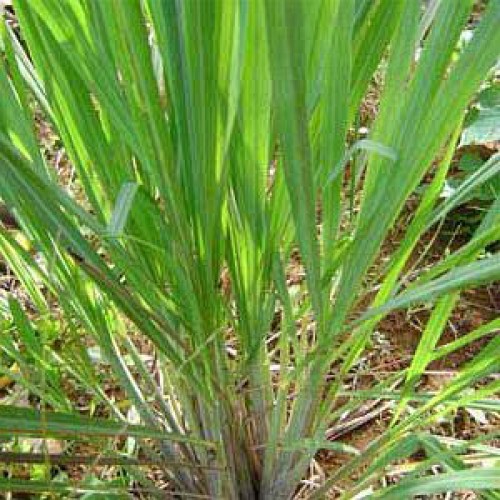
Gingergrass, Cymbopogon martinii var. sofia, is a tall aromatic perennial grass in the Poaceae family. It belongs to the same genus as Palmarosa, Lemongrass, and Citronella — plants known for their fragrant leaves, strong aromatic chemistry, and practical use in body care, perfumery, cleansing preparations, and traditional plant medicine.

Gingergrass essential oil is steam distilled from the aerial grass — primarily the leaves and flowering tops. This matters, because Gingergrass is not a root oil, even though the name can make people think of Ginger. Its medicine rises through blade, stem, leaf, and flowering grass. It is green, herbaceous, warm, slightly spicy, and grassy, with a faint rosy undertone that reflects its relationship to Palmarosa.

Where Palmarosa, Cymbopogon martinii var. motia, is usually softer, sweeter, and more floral, Gingergrass is Cymbopogon martinii var. sofia — greener, drier, more herbaceous, and more untamed. Same family line. Different expression. Different field. Different teaching. Gingergrass oil is commonly described as steam distilled from the grass of Cymbopogon martinii var. sofia, a perennial grass in the Poaceae family, and it is differentiated from Palmarosa by its variety and aromatic profile.

Botanical Profile
  • Botanical Name: Cymbopogon martinii var. sofia
  • Family: Poaceae
  • Common Names: Gingergrass, Ginger Grass, Sofia Grass, Rosha Grass
  • Plant Type: Aromatic perennial grass
  • Part Used for Distillation: Aerial grass, leaves, and flowering tops
  • Growth Habit: Upright, clumping, densely growing grass with long aromatic leaves
  • Height: Commonly tall-growing, often several feet high depending on climate, soil, and growing conditions
  • Flowering Season: Varies by region and climate; flowering generally occurs after the plant has established strong vegetative growth
  • Harvest Time for Distillation: Usually harvested when the aromatic compounds are well developed in the grass and flowering tops
Physical Characteristics
  • Leaves: Long, narrow, blade-like green leaves with a strong aromatic scent when crushed
  • Stems: Upright grass stems arising from dense clumps
  • Flowering Tops: Slender flowering panicles typical of aromatic grasses in the Cymbopogon genus
  • Root System: Fibrous grass root system that anchors the plant and supports dense clump growth
  • Overall Form: Tall, tufted, field-like grass with a resilient, wind-moving structure
  • Aroma of the Plant: Fresh, grassy, herbaceous, warm, slightly spicy, woody, and faintly rosy
  • Essential Oil Appearance: Often described as yellow to brownish-yellow, depending on origin, distillation, and storage conditions
Native Habitat + Growth Conditions
  • Native Range: Associated primarily with India and surrounding tropical to subtropical regions; Cymbopogon martinii is widely connected with India and Indochina, with broader cultivation in warm regions. (Wikipedia)
  • Growing Regions: India, Pakistan, parts of Southeast Asia, and other warm climates where aromatic grasses are grown for essential oil production
  • Preferred Soil: Well-drained soil; Gingergrass is noted as not tolerating acidic soils well
  • Moisture: More tolerant of wet or imperfectly drained conditions than some related aromatic grasses, though it still benefits from appropriate drainage and healthy growing conditions
  • Sunlight: Warm, bright growing conditions; long days may support oil production and geraniol content
  • Climate: Tropical to subtropical climates with warmth, seasonal moisture, and enough heat to support aromatic development
  • Ecological Notes: Gingergrass grows in dense clumps and reflects the resilience of grass-family plants — flexible, rooted, aromatic, and able to regenerate after cutting when grown in suitable conditions.
Energetic Botanical Signature
Gingergrass teaches through the blade.

This plant does not store its primary medicine in a thick rhizome like Ginger, or in a resinous wound like Frankincense, or in a lush flower like Rose. Gingergrass rises as grass — long, narrow, flexible, aromatic, and alive to wind, sun, rain, and pressure.
That is the doctrine.

Grass survives by bending. It does not need to become rigid to be strong. It does not hold its power by locking itself in place. It moves with the weather, takes the heat, drinks the rain, grows back after cutting, and keeps rising from the root.

Gingergrass carries that teaching directly into the body and energy field. It knows how to soften what has become too tight without collapsing the system. It brings movement without drama. Freshness without fragility. Warmth without heaviness.

Its dense clumping growth speaks to containment and resilience. Its long aromatic leaves speak to release, breath, and circulation through the field. Its green, grassy-spicy scent feels like tension being combed out of the nervous system — not ripped out, not forced, but gradually loosened until the body remembers it does not have to grip so hard.

Where Ginger teaches through subterranean fire, Gingergrass teaches through flexible strength.

It says: bend before you break. Clear what has gone stale. Let the wind move through you. Your softness is not weakness. Your ability to keep rising is the medicine.
Energetics

Energetic Properties

Clearing • Flexible Strength • Emotional Unwinding

Gingergrass is an oil of release.

It does not come in like a soft lullaby. It comes in like wind moving through tall grass after the room has been closed too long. Fresh. Green. Slightly wild. Warm enough to bring the body back, sharp enough to clear the static, and flexible enough to keep the system from feeling forced.

Energetically, Gingergrass speaks to the places where tension has become a habit.
The shoulders that stay lifted.
The jaw that doesn’t know it’s clenched.
The emotional field that keeps saying, “I’m fine,” while every cell is holding a clipboard, a flashlight, and a survival plan.
This oil helps loosen the grip.

Not by knocking the door down. Not by flooding the system with sweetness. Gingergrass works more like breath through grass — clearing, moving, untangling, opening space where things have gotten tight, stale, irritated, or emotionally congested.

Gingergrass is especially helpful when the nervous system feels overstimulated but tired, irritated but depleted, restless but stuck. It has that strange and beautiful dual nature: warming and clearing, stimulating and calming, bright and grounding.

It says:
Bend.
Breathe.
Let the wind move through.
You do not have to hold the whole damn field together by force.

Energetic Themes
  • Clearing emotional heaviness, static, and stale energy
  • Supporting release when tension has been held too long
  • Helping the nervous system unwind without collapsing
  • Encouraging flexibility, adaptability, and resilience
  • Softening irritability, frustration, and emotional tightness
  • Supporting grounded clarity when the mind feels crowded
  • Helping release resentment or energy that has become sharp and stuck
  • Bringing warmth to emotionally cold or guarded places
  • Supporting transition after stress, conflict, overwhelm, or burnout
  • Helping the body remember that strength does not have to mean rigidity
  • Encouraging breath, movement, and emotional circulation
  • Supporting the release of “I have to manage everything” energy
Chakra Connections
Root Chakra
Gingergrass supports the root chakra through its grass-family medicine: rootedness, flexibility, survival intelligence, and resilience.
When the root chakra is imbalanced, the body may feel braced, unsafe, rigid, jumpy, or unable to soften. Gingergrass helps bring awareness back into the body without making the energy heavy or dull.

It is especially useful when someone is trying to stay grounded but keeps confusing grounded with clenched.

Gingergrass says:
I can root without hardening.
I can bend without breaking.
I can stay with myself while life moves around me.

Solar Plexus Chakra
Gingergrass has a meaningful relationship with the solar plexus because it supports clarity, direction, and the release of irritated tension.

When the solar plexus is overworked, the energy can become sharp: controlling, impatient, defensive, over-responsible, or mentally overactive. Gingergrass helps clear the heat and static without extinguishing the fire.

This is not an oil that says, “Take charge harder.”
It says, “Stop gripping the wheel like your soul depends on it.”

Gingergrass can support a more flexible kind of confidence — the kind that still has a backbone, but no longer needs to fight every invisible enemy in the room.

Heart Chakra
Gingergrass touches the heart in a quieter way.
It is not lush and floral like Rose. It does not wrap the heart in velvet. It opens space around the heart by clearing the tension that has gathered around it.

This can be especially helpful when the heart feels guarded, irritated, disappointed, or tired from carrying too much emotional weather.

Gingergrass does not demand instant forgiveness or fake peace.
It simply helps the field loosen enough that breath can return.

Throat Chakra
Gingergrass may also support the throat chakra when expression has become tight, clipped, or held back by irritation.
Its green, airy quality can help move energy upward and outward, especially when someone needs to clear resentment, speak more honestly, or stop swallowing words that are turning into body tension.

This is not the oil of dramatic confession.

It is the oil of clearing the channel so the truth can move without getting tangled in old static.

Spiritual Use
  • Useful before rituals focused on clearing, release, renewal, and emotional reset
  • Supportive in practices where the body needs to soften before deeper work can begin
  • Helpful in grounding rituals when someone needs flexibility rather than heaviness
  • Useful in solar plexus work when control, over-responsibility, or frustration need to loosen
  • Supportive in heart-centered work when the emotional field feels guarded, stale, or irritated
  • Helpful before meditation when the mind feels noisy but the body does not want a sedative oil
  • Useful in space-clearing blends when the room feels emotionally loaded, stagnant, or dense
  • Supportive after conflict, overstimulation, teaching, caregiving, or too much people-energy
  • Helpful in blends for transitions, especially when someone needs to release the old pattern without forcing the new one
  • Useful for breath-based ritual, movement, stretching, journaling, or body unwinding practices
Energetic Cautions
Gingergrass can feel too sharp or too clearing when someone is already raw, fragile, grieving heavily, or emotionally exposed.
That does not make it harsh. It means the timing matters.

If the field is already cracked open, Gingergrass may need to be used lightly, or softened with more tender oils such as Rose, Sandalwood, Vetiver, Neroli, or Sweet Orange.

It is best when there is tension, stagnation, irritability, emotional clutter, or held stress.
It may be less ideal when someone needs deep comfort, containment, or mothering. Gingergrass clears the room. It does not tuck you into bed.

This oil is not here to erase what happened.
It is here to move the air around it.

Gingergrass is green strength. Flexible strength. The kind of strength that bends, releases, rises, and keeps moving with life.
It helps the body remember that unclenching is not the same as giving up. Softening is not collapse. And sometimes the most powerful thing you can do is stop holding your breath.

Affirmation
I release what I no longer need to hold. I root, I bend, I breathe, and I trust the strength that moves through softness.

Traditional & Folklore

Gingergrass does not have the same enormous mythic footprint as Ginger, Rose, Frankincense, or Myrrh.
And we are not going to pretend it does.

Its folklore is quieter, more practical, and deeply tied to the living world of aromatic grasses: fields, body oils, household freshness, perfumery, cleansing, heat, wind, and the resilient intelligence of plants that bend and grow back.

Gingergrass belongs to the Cymbopogon genus, the same broader grass lineage that includes Palmarosa, Lemongrass, and Citronella. Cymbopogon martinii is native to India and Indochina and has been widely grown for aromatic oil; the traditional Indian distinction between the motia form and sofia form later became recognized botanically, with sofia associated with Gingergrass.

This is not temple mythology.
This is field medicine.

It is the folklore of grass cut under sun, distilled into oil, added to soap, body preparations, perfumery, household blends, and practical remedies. It carries the kind of sacredness that does not need a crown. It has work to do.

Grass Medicine + Resilience
In the symbolic language of plants, grasses carry the medicine of resilience.
  • They bend under wind.
  • They grow in groups.
  • They return after cutting.
  • They root into the earth without needing to become hard.
  • That is Gingergrass folklore at the energetic level.
It is not the lone tree on the mountaintop. It is the field that survives because it knows how to move.

Gingergrass teaches strength through flexibility. It is connected to adaptation, recovery, breath, and the ability to keep growing after pressure, heat, pruning, and change.

This is not fragile medicine.
This is “I got knocked down, give me a minute, I’m coming back” medicine.

Indian Aromatic Grass Tradition
Gingergrass has strong ties to India’s aromatic grass traditions, where Cymbopogon species have been grown and distilled for essential oils used in perfumery, cosmetics, household products, and traditional applications. Gingergrass oil specifically comes from Cymbopogon martinii var. sofia, while Palmarosa oil comes from the related motia form; modern aromatic crop literature continues to distinguish these two oil-producing forms.

That matters because Gingergrass sits in a lineage of useful aromatic plants.
Not ornamental for the sake of being pretty.

Not mystical because someone needed marketing copy.
Useful.
Used for scent.
Used for cleansing.
Used for body care.
Used for atmosphere.
Used for practical aromatic work.
Its sacredness comes through usefulness, which is one of the oldest forms of plant magic there is.


Perfumery, Soap + Body Fragrance
Gingergrass has long been valued as an aromatic material for perfumery and cosmetic use. Cymbopogon martinii oils are known for fragrant constituents such as geraniol, and the plant has been used in soaps, cosmetics, and rose-like perfume materials; Gingergrass carries a greener, spicier, grassier expression than Palmarosa.

This gives Gingergrass a folklore thread of personal presence.
The way a body is scented.
The way a room is freshened.
The way soap carries plant memory.
The way a person leaves the house with a little more clarity in their field.
It is not seductive in the heavy floral sense.
It is clean, green, warm, and alive.

Gingergrass says: clear your skin, clear your space, clear your damn energy before you carry everyone else’s mood into the next room.

Clearing + Household Freshness
Aromatic grasses have always had a practical relationship with the home.
They freshen.
They deodorize.
They repel.
They cleanse.
They change the atmosphere.

Gingergrass carries this same household magic. Its scent is green, warm, slightly spicy, and clearing. It belongs in the category of plants that help a space feel less stale, less dense, less emotionally clogged.

This is broom magic, window-opening magic, wash-the-floor-and-change-your-life-a-little magic.
Not dramatic.
Real.

The kind of magic that says: sometimes the ritual is cleaning the room, changing the sheets, washing your hands, lighting the diffuser, and deciding the old energy does not get to live here rent-free anymore.

Wind, Field + Emotional Movement
Because Gingergrass is grass medicine, its folklore naturally belongs to the element of air moving through the field.
Wind teaches grass how to bend.

Grass teaches the body how to release without collapse.

Energetically, Gingergrass carries the story of movement through tension. It helps shift what has become stale, fixed, or over-held.
Its folklore is not about domination.

It is about circulation.
Letting air move through the room.
Letting breath move through the chest.
Letting emotion move through the body.
Letting the spirit stop gripping the same old story like it is the only damn script available.
Gingergrass is the plant of “move the air and see what changes.
The Sofia Signature
The sofia form of Cymbopogon martinii is Gingergrass — distinct from Palmarosa’s motia form — and it produces an oil that is generally understood as greener, spicier, and more grass-forward. The distinction between motia and sofia has long been recognized in Indian aromatic plant tradition, even though the plants can be difficult to distinguish morphologically in early growth stages.

That gives Gingergrass its own energetic identity.
It is the less polished sibling.
The wilder one.
The one with grass stains on its knees and no interest in pretending to be Rose.
Palmarosa softens through floral sweetness.
Gingergrass clears through green heat.

Both have beauty. But Gingergrass has a sharper honesty. It is not here to make everything pretty. It is here to move what is stale, freshen what is heavy, and help the body stop bracing against life.

The Folklore Medicine
Gingergrass’s folklore is the story of grass that refuses to become rigid.
It is the medicine of fields and fragrance, body oils and soap, household clearing and emotional reset. It belongs to the places where the sacred is practical: washing, clearing, breathing, softening, starting again.

It does not carry the old mythic drama of gods, temples, and epic battles.

It carries something quieter and maybe more useful:
The wisdom of bending.
The cleansing of green scent.
The resilience of grass.
The warmth that does not overwhelm.
The clearing that makes space for breath.

Gingergrass says:
Open the window.
Loosen your shoulders.
Stop gripping what already wants to move.
You can be rooted and still let the wind pass through.
Chemistry

Chemical Components

Gingergrass essential oil has a green, warm, grassy chemistry that explains why it feels clearing, herbaceous, slightly spicy, and emotionally unwinding.

It is not simply “grassy.” It has warmth, lift, a faint rosy-floral thread, and a dry green edge that gives it a very different personality from Palmarosa.

Gingergrass essential oil is typically shaped by oxygenated monoterpenes and monoterpene alcohols, especially geraniol, along with constituents such as geranyl acetate, linalool, limonene, and other trace components depending on origin, harvest, growing conditions, and distillation.

Compared with Palmarosa, Gingergrass often feels less sweet, less floral, and more green-herbaceous. The chemistry explains that difference: similar family, related aromatic territory, but Gingergrass carries a rougher field note and a drier, more clearing edge.

That’s the chemistry of Gingergrass’s gift: green warmth with movement. Softening without sedation. Clearing without harshness. A plant that helps the system loosen its grip and let the air move again.

Main Chemical Families

Monoterpene Alcohols
  • Gingergrass essential oil is strongly influenced by monoterpene alcohols, especially geraniol.
  • These constituents help give Gingergrass its warm, green, faintly rosy, skin-supportive aromatic profile.
  • Monoterpene alcohols are generally associated with:
    • Skin-supportive qualities
    • Gentle cleansing impressions
    • Emotional balancing
    • Freshness and clarity
    • A softer aromatic presence than sharper aldehyde-rich grasses
  • This is one reason Gingergrass can feel clearing without feeling as aggressive as Lemongrass.
  • It has strength, but it does not come in swinging a machete.
Energetically, the monoterpene alcohols are the softening intelligence in the oil. They help tension loosen without making the system feel flattened or forced.

Geraniol
  • Geraniol is one of the key constituents associated with Gingergrass essential oil.
  • Geraniol contributes a rosy, green, slightly sweet, floral-herbaceous note.
  • In Gingergrass, that rosy quality is usually less lush and floral than Palmarosa.
  • Geraniol may help explain Gingergrass’s traditional use in:
    • Skin-care blends
    • Body oils
    • Cleansing preparations
    • Deodorizing blends
    • Emotional balancing formulas
  • Geraniol is also one of the constituents that requires thoughtful dilution for sensitive skin.
This is the molecule that gives Gingergrass its bridge quality — part grass, part warmth, part faint rose, part field medicine.

Esters
  • Gingergrass may contain esters, including geranyl acetate, depending on the oil.
  • Esters often soften and round out an essential oil’s aroma.
  • In Gingergrass, this can contribute to:
    • A smoother drydown
    • A gentler emotional feel
    • A subtle sweetness beneath the grassy note
    • A calming impression without heaviness
  • This helps Gingergrass avoid becoming too sharp or medicinal.
Energetically, the ester portion is the exhale. It helps the oil say, “You can stop bracing now,” without sounding like a sleepy bedtime blend.

Monoterpenes
  • Gingergrass may also contain lighter monoterpenes, such as limonene and related compounds, depending on the sample.
  • These lighter molecules contribute to the oil’s brightness, lift, and diffusion.
  • Monoterpenes may support:
    • A fresh aromatic impression
    • Atmospheric clearing
    • Deodorizing blends
    • A sense of movement through heaviness
    • The bright green edge of the oil
  • This is part of what makes Gingergrass useful when a room, body, or emotional field feels stale.
Energetically, the monoterpenes bring the air. They lift the green warmth and help move it through the field instead of letting it sit heavy.

Trace Components + Aromatic Complexity
  • Gingergrass is not defined by one single molecule.
  • Its character comes from the interaction of geraniol, esters, monoterpenes, and smaller trace constituents.
  • These trace compounds help create its:
    • Dry green edge
    • Slight spicy warmth
    • Herbaceous body
    • Grassy field note
    • Subtle floral undertone
    • Warm, clearing finish
  • This complexity is why Gingergrass does not smell like a simple green oil.
  • It has layers: grass, warmth, rose, dryness, and movement.
That’s the part that makes Gingergrass interesting. It does not try to be pretty in the polished sense. It smells alive.

Gingergrass vs. Palmarosa Chemistry
Gingergrass and Palmarosa are closely related, but they are not the same aromatic experience.

Gingergrass tends to feel:
  • Greener
  • Drier
  • Grassier
  • More herbaceous
  • Slightly spicy
  • Less floral
  • More clearing
  • More field-like
Palmarosa tends to feel:
  • Softer
  • Sweeter
  • More floral
  • More rosy
  • More emotionally tender
  • More skin-nourishing in feel
  • More heart-centered
Neither is better. They are different expressions of the same broader plant lineage.

Palmarosa says: soften into the heart.
Gingergrass says: clear the field and unclench your body.

Therapeutic Implications of This Chemistry

Skin support:
  • The geraniol-rich, monoterpene alcohol profile helps explain Gingergrass’s traditional use in properly diluted skin-care and body-care blends.
  • It may be useful where the skin feels dull, oily, congested, stale, or in need of freshness.
Cleansing + deodorizing:
  • The green, herbaceous chemistry supports Gingergrass’s use in deodorizing blends, foot oils, scalp preparations, sprays, and cleansing formulas.
  • It helps shift funk without smelling like a harsh disinfectant.
Emotional tension:
  • The balance of green brightness, warmth, and subtle softness makes Gingergrass useful when emotional tension is held in the body.
  • It may support release when someone feels irritated, clenched, restless, or energetically crowded.
Nervous system unwinding:
  • Gingergrass can feel both clearing and calming.
  • This comes from its balance of bright, diffusive notes and softer alcohol/ester chemistry.
  • It does not sedate the body. It helps the body loosen.
Muscular tension:
  • Gingergrass may be helpful in massage blends when the body feels tight, overworked, or contracted.
  • It does not bring the heavy heat of Ginger or Black Pepper.
  • It brings green warmth and gentle movement.
Energetic clearing:
  • The chemistry supports the energetic impression of air moving through the field.
  • Gingergrass helps clear stale emotional residue, loosen static, and create space for breath.
This chemistry does not bulldoze the system.
It clears, softens, warms, and moves.

Gingergrass is green warmth with backbone — bright enough to freshen the field, soft enough to help the body unwind, and strong enough to remind the spirit that bending is not breaking.
Recipes & Blends

Recipes & Blends

Green Skin Reset Blend
Physical Support | Skin Freshness + Cleansing Body Care
  • Gingergrass Essential Oil (Cymbopogon martinii var. sofia): 8 drops
  • Lavender Essential Oil (Lavandula angustifolia): 8 drops
  • Manuka Essential Oil (Leptospermum scoparium): 5 drops
  • Carrot Seed Essential Oil (Daucus carota): 6 drops
  • Rosalina Essential Oil (Melaleuca ericifolia): 7 drops
  • Sweet Orange Essential Oil (Citrus sinensis): 6 drops
This blend is designed for body oils, cleansing massage blends, scalp oils, or skin-refreshing formulas when the skin feels dull, congested, oily, tired, or in need of a clean green reset.
  • Gingergrass brings green freshness, cleansing energy, and a toning aromatic quality
  • Lavender supports skin comfort and overall balance
  • Manuka brings deep cleansing support without making the blend feel harsh
  • Carrot Seed supports skin renewal and earthy restoration
  • Rosalina brings gentle cleansing support with a softer, more skin-friendly aromatic feel
  • Sweet Orange adds warmth, brightness, and emotional ease
Dilute in a suitable carrier oil before topical use. A 1% dilution is generally appropriate for facial or sensitive skin applications; a 1–2% dilution may be appropriate for adult body care. Avoid applying to broken or irritated skin.


Unclench the Body Blend
Physical Support | Muscular Tension + Overheld Tissue
  • Gingergrass Essential Oil (Cymbopogon martinii var. sofia): 9 drops
  • Sweet Marjoram Essential Oil (Origanum majorana): 10 drops
  • Plai Essential Oil (Zingiber cassumunar): 7 drops
  • Roman Chamomile Essential Oil (Chamaemelum nobile): 4 drops
  • Cypress Essential Oil (Cupressus sempervirens): 6 drops
  • Cardamom Essential Oil (Elettaria cardamomum): 4 drops
This blend is for muscles that feel tight, tired, tense, or emotionally overheld — especially when the body is asking for warmth, softness, and movement rather than aggressive heat.
  • Gingergrass brings green warmth and helps the body loosen its grip
  • Sweet Marjoram softens muscular and nervous tension
  • Plai supports muscular comfort and ease
  • Roman Chamomile brings comfort when tension has an emotional edge
  • Cypress supports movement through held, stagnant places
  • Cardamom adds gentle warmth, breath, and body-centered comfort
Dilute before topical use. Apply to the shoulders, neck, back, legs, feet, or anywhere the body feels clenched and tired. A 1–2% dilution is generally appropriate for adult massage use. Use a lower dilution for sensitive skin.


Clear the Static Blend
Energetic Support | Emotional Clutter + Field Reset
  • Gingergrass Essential Oil (Cymbopogon martinii var. sofia): 8 drops
  • Fragonia Essential Oil (Agonis fragrans): 7 drops
  • Lime Essential Oil (Citrus aurantifolia): 8 drops
  • Siberian Fir Essential Oil (Abies sibirica): 6 drops
  • Clary Sage Essential Oil (Salvia sclarea): 5 drops
  • Patchouli Essential Oil (Pogostemon cablin): 2 drops
  • Spearmint Essential Oil (Mentha spicata): 4 drops
This blend is for the days when your field feels full of noise — too many people, too much input, too much emotional residue, too many invisible tabs open in the nervous system.
  • Gingergrass clears stagnant energy and helps the body unclench
  • Fragonia supports emotional balance, softness, and energetic harmony
  • Lime cuts through heaviness with bright, clean movement
  • Siberian Fir brings breath, uprightness, and forest-clearing energy
  • Clary Sage helps soften mental tension and emotional over-control
  • Patchouli anchors the blend so the clearing does not become floaty
  • Spearmint brings clarity, freshness, and a cleaner mental field
Use before meditation, journaling, teaching, client work, space clearing, or after too much people-energy. Dilute before applying to the chest, back of neck, feet, solar plexus, or pulse points. If using expressed Lime, avoid sun or UV exposure on the area of application after topical use unless the oil is steam distilled or otherwise non-phototoxic.


Bend Without Breaking Blend
Energetic Support | Flexible Strength + Emotional Unwinding
  • Gingergrass Essential Oil (Cymbopogon martinii var. sofia): 7 drops
  • Ho Wood Essential Oil (Cinnamomum camphora ct. linalool): 8 drops
  • Neroli Essential Oil (Citrus aurantium var. amara): 3 drops
  • Green Mandarin Essential Oil (Citrus reticulata): 9 drops
  • Copaiba Balsam Essential Oil (Copaifera officinalis / Copaifera langsdorffii): 5 drops
  • Ylang Ylang Extra Essential Oil (Cananga odorata): 3 drops
  • Cedarwood Virginia Essential Oil (Juniperus virginiana): 5 drops
This blend is for the place inside that has been trying so hard to stay strong that it forgot how to bend.
  • Gingergrass brings flexible strength and helps release overholding
  • Ho Wood brings softness, emotional steadiness, and a gentle linalool-rich calm
  • Neroli supports the heart and nervous system when strength has become guarded
  • Green Mandarin brings lightness, hope, and fresh emotional movement
  • Copaiba Balsam anchors the body with warm, resinous steadiness
  • Ylang Ylang Extra helps soften control and reconnect the body with feeling
  • Cedarwood Virginia brings grounded backbone and quiet endurance
Use in ritual body oil, breathwork, threshold work, emotional integration, or after conflict, overstimulation, or shutdown. Dilute well before topical use. Use Ylang Ylang conservatively; it can be overwhelming for some people in higher amounts.

Affirmation
I release what I no longer need to hold. I root, I bend, I breathe, and I trust the strength that moves through softness.
Safety Etc.

Safety Information

Gingergrass essential oil is generally considered safe when properly diluted, but it contains constituents such as geraniol and linalool, which can irritate or sensitize the skin in some individuals if used too strong or on compromised skin. Gingergrass oil is commonly associated with Cymbopogon martinii var. sofia, and published GC-MS work confirms geraniol as an important constituent in this oil profile.

Topical Use
  • Dilute before applying to the skin.
  • General adult dilution: 1–2%.
  • For sensitive skin: 0.5–1%.
  • For facial use: 0.5–1% is usually more appropriate.
  • For short-term localized body use: up to 2–3% may be appropriate for healthy adult skin.
  • Avoid applying undiluted.
  • Avoid broken, irritated, inflamed, or freshly shaved skin.
  • Patch testing is recommended.
Skin Sensitivity
  • Gingergrass contains naturally occurring fragrance allergens, including geraniol and linalool.
  • Use lower dilution for sensitive individuals.
  • Use extra care with people who have:
    • Fragrance sensitivity
    • Reactive skin
    • Eczema-prone skin
    • History of essential oil sensitivity
    • Allergic contact dermatitis
  • Discontinue use if redness, burning, itching, rash, or discomfort occurs.
Phototoxicity
  • Gingergrass essential oil is not known to be phototoxic.
Internal Use
  • Internal use is not recommended unless supervised by a qualified practitioner trained in aromatic medicine.
Pregnancy & Lactation
  • Use cautiously during pregnancy and lactation.
  • Avoid heavy or frequent use.
  • Use low dilution only.
  • Avoid use during pregnancy if there is a history of sensitivity, complications, or if professional guidance has not been received.
Pediatric Use
  • Use cautiously with children.
  • Avoid use with infants unless guided by a qualified practitioner.
  • Use very low dilution for children.
  • Avoid applying near the face, mouth, nose, eyes, or hands.
Medical Considerations
Use caution with:
  • Very sensitive skin
  • Fragrance allergies
  • Eczema, dermatitis, or reactive skin conditions
  • Asthma or strong scent sensitivity
  • Pregnancy or lactation
  • Individuals on multiple medications or under medical care
Pets
  • Use thoughtful care around animals.
  • Do not apply directly to pets unless guided by a qualified animal aromatherapy professional.
  • Use good ventilation if diffusing.
  • Allow animals to leave the room.
  • Avoid diffusing around birds.
  • Keep bottles out of reach.
Storage
  • Store in a cool, dark place.
  • Keep away from heat, light, and oxygen.
  • Keep the cap tightly closed.
  • Keep out of reach of children and pets.
General Safety Summary
Gingergrass is green, clearing, and generally well tolerated when used properly. Its main safety consideration is skin sensitivity, especially because of geraniol and related aromatic constituents. Use it diluted, use it thoughtfully, and respect the skin. More is not more. More is often just a rash with ambition.

References

  • Battaglia, Salvatore. The Complete Guide to Aromatherapy, 3rd ed., Vol. I: Foundations & Materia Medica. Black Pepper Creative, 2018.
  • Tisserand, Robert, and Rodney Young. Essential Oil Safety: A Guide for Health Care Professionals. 2nd ed., Churchill Livingstone Elsevier, 2014.
  • Baser, K. Hüsnü Can, and Gerhard Buchbauer, editors. Handbook of Essential Oils: Science, Technology, and Applications. CRC Press.
  • Rhind, Jennifer Peace. Essential Oils: A Handbook for Aromatherapy Practice. Singing Dragon.
  • Holmes, Peter. Aromatica: A Clinical Guide to Essential Oil Therapeutics, Volume 1 and Volume 2. Singing Dragon.
  • Singh, S., et al. “p-Menthadienols-Rich Essential Oil from Cymbopogon martinii Variety sofia and Its Possible Pharmacological Profile Against Skin Inflammation.” PubMed, 2022. 
  • Sen, S., et al. “Cymbopogon martinii: A Potential Industrial Aromatic Crop.” Industrial Crops and Products, 2023. This review discusses C. martinii as an aromatic crop and notes the industrial distinction between var. motia and var. sofia
  • Kaur, I., et al. “Underutilized Plant Cymbopogon martinii Derived Essential Oil: Source of Geraniol and Its Biological Potential.” Plants, 2023. Useful for broader C. martinii context, especially geraniol-rich Palmarosa-type material.
  • Santamarta, S., Aldavero, A. Cristina, and Roja, M. Angeles. “Essential Oil of Cymbopogon martinii, Source of Geraniol, as a Potential Antibacterial Agent Against Bacillus subtilis.” F1000Research, 2023. This is more Palmarosa/geraniol-focused, so use it carefully rather than pretending it proves Gingergrass chemistry directly.
  • Andrade, B. F. M. T., et al. “Cymbopogon martinii Essential Oil and Geraniol at Noncytotoxic Concentrations Exerted Immunomodulatory/Anti-Inflammatory Effects.” PubMed, 2014. Useful for broader C. martinii and geraniol discussion, but again, not a Gingergrass-specific stand-in. 
  • Cebollada, P., et al. “Antibacterial Activity of Palmarosa (Cymbopogon martinii) Essential Oil Against Human Clinical Bacterial Isolates.” PubMed Central, 2025. Useful for current antimicrobial research on C. martinii oils, with the same caution about Palmarosa vs. Gingergrass identity. 
  • Dangol, S., et al. “Essential Oil Composition Analysis of Cymbopogon Species and Antimicrobial Activity of Major Components.” Molecules, 2023. Useful for broader Cymbopogon chemistry and constituent-level context. 
  • ScienceDirect Topics. “Cymbopogon martinii.” Notes the distinction that commercial Palmarosa oil is generally associated with var. motia, while Gingergrass oil from var. sofia may be p-menthadienol-rich.
  • Tisserand Institute. “How to Use Essential Oils Safely.” General essential oil safety guidance for dilution, irritation, and responsible topical use. 

Reviews (4)

Write a review

Note: HTML is not translated!
    Bad           Good
Powered By OpenCart
Stillpoint Aromatics © 2026