
Personal Use
Ginger CO₂ Total Extract (Zingiber officinale) presents a robust, full-spectrum aroma that reflects her complete phytochemical profile—capturing both the volatile and non-volatile compounds absent in steam-distilled oils. The result is an aroma that is denser, rounder, and more pharmacologically active.
This extract opens with a warm, spicy root note—immediately recognizable as ginger, but without the sharp top note found in distilled varieties. Instead, the scent is deeper, more resinous, and slightly sweet, reflecting the presence of non-volatile sesquiterpenes and pungent constituents like gingerols and shogaols.
Medicinally speaking, this is the ginger that speaks directly to the gut-brain axis. Her aroma suggests digestive support, circulatory stimulation, and anti-inflammatory potential—all confirmed by the chemistry she carries.
You may detect:
-
Warm, spicy root with a slightly sweet and balsamic finish
-
Subtle peppery and musky undertones
-
A smooth, grounded warmth without sharpness or volatility
This CO₂ extract offers a more complete aromatic experience—closer to the fresh root itself—ideal for therapeutic formulations targeting inflammation, digestive stagnation, or cold, damp systemic states.
Therapeutic Applications
Ginger CO₂ Total Extract isn’t just warming—it’s deeply vitalizing. She moves the blood, stokes the digestive fire, and speaks directly to inflammation in the body. Unlike distilled ginger oil, which captures mostly the volatile top notes, this extract offers the full biochemical range—gingerols, shogaols, and sesquiterpenes—making her a potent ally for deeper therapeutic work.
Here’s what she may support:
1. Digestive Stimulation + Nausea Relief
Rich in gingerols and shogaols, this extract has been traditionally used to help ease nausea, motion sickness, and morning sickness. She stimulates saliva, bile, and digestive enzyme secretion—making her ideal for sluggish digestion, bloating, and flatulence. The CO₂ form enhances her grip on the gut-brain axis, offering fast-acting relief and long-term support.
Rich in gingerols and shogaols, this extract has been traditionally used to help ease nausea, motion sickness, and morning sickness. She stimulates saliva, bile, and digestive enzyme secretion—making her ideal for sluggish digestion, bloating, and flatulence. The CO₂ form enhances her grip on the gut-brain axis, offering fast-acting relief and long-term support.
2. Anti-Inflammatory + Pain Support
The non-volatile compounds in this CO₂—particularly 6-gingerol and 6-shogaol—have demonstrated anti-inflammatory properties in both traditional and modern research. Topically, she may be used in warming salves for arthritis, muscle stiffness, and joint pain. Internally (with proper guidance), she has shown promise in reducing systemic inflammation and improving mobility.
The non-volatile compounds in this CO₂—particularly 6-gingerol and 6-shogaol—have demonstrated anti-inflammatory properties in both traditional and modern research. Topically, she may be used in warming salves for arthritis, muscle stiffness, and joint pain. Internally (with proper guidance), she has shown promise in reducing systemic inflammation and improving mobility.
3. Circulatory Stimulation + Cold Constitution
This extract is a circulatory stimulant through and through. Ginger’s warming nature helps increase peripheral circulation, making her beneficial for those who run cold, feel sluggish, or experience poor extremity blood flow. She supports warmth, movement, and metabolic activation.
This extract is a circulatory stimulant through and through. Ginger’s warming nature helps increase peripheral circulation, making her beneficial for those who run cold, feel sluggish, or experience poor extremity blood flow. She supports warmth, movement, and metabolic activation.
4. Respiratory Support
Ginger CO₂ may help break up congestion and stimulate expectoration. Though not as pungent as eucalyptus or thyme, her warming and mucolytic properties make her supportive in chest rubs or blends aimed at dry, stuck coughs and cold-related respiratory discomfort.
Ginger CO₂ may help break up congestion and stimulate expectoration. Though not as pungent as eucalyptus or thyme, her warming and mucolytic properties make her supportive in chest rubs or blends aimed at dry, stuck coughs and cold-related respiratory discomfort.
5. Immune Support + Antimicrobial Action
Studies show that ginger’s constituents—especially the gingerols—possess antimicrobial activity. This extract may be beneficial in immune-boosting blends or used topically to support skin resilience. While not a broad-spectrum antimicrobial, she brings heat and movement to stagnation—a crucial part of immune defense.
Studies show that ginger’s constituents—especially the gingerols—possess antimicrobial activity. This extract may be beneficial in immune-boosting blends or used topically to support skin resilience. While not a broad-spectrum antimicrobial, she brings heat and movement to stagnation—a crucial part of immune defense.
6. Menstrual + Hormonal Support
Traditionally used to relieve menstrual cramps and support reproductive warmth, Ginger CO₂ may assist in uterine tonic blends, especially where stagnation or cold-type menstrual discomfort is present. Her antispasmodic and circulation-boosting qualities can ease cramping and promote healthy blood flow.
Traditionally used to relieve menstrual cramps and support reproductive warmth, Ginger CO₂ may assist in uterine tonic blends, especially where stagnation or cold-type menstrual discomfort is present. Her antispasmodic and circulation-boosting qualities can ease cramping and promote healthy blood flow.
7. Nervous System Tonic (Grounding + Revitalizing)
Ginger doesn’t sedate—she steadies. This extract may help address emotional fatigue, mental fog, or depressive states linked to stagnation or cold. Her warming, stabilizing presence supports vitality without overstimulation.
Ginger doesn’t sedate—she steadies. This extract may help address emotional fatigue, mental fog, or depressive states linked to stagnation or cold. Her warming, stabilizing presence supports vitality without overstimulation.
Traditional Use
Ginger has been one of humanity’s most widely used healing plants for over 5,000 years—woven into the medicinal, culinary, and spiritual traditions of nearly every culture it touched. In its CO₂-extracted form, we get a more complete snapshot of that legacy: the pungency of the root, the vitality of its resins, and the deep warmth of its circulatory fire.
Ayurvedic Medicine
In Ayurveda, fresh ginger (adrak) is warming, stimulating, and considered one of the most sattvic herbs—purifying and balancing for the mind and body. It’s been traditionally used to ignite agni (digestive fire), dispel ama (toxins), and balance vata and kapha doshas. Dry ginger, known as shunthi, is considered even more heating and is often used for respiratory congestion, joint pain, and fatigue.
In Ayurveda, fresh ginger (adrak) is warming, stimulating, and considered one of the most sattvic herbs—purifying and balancing for the mind and body. It’s been traditionally used to ignite agni (digestive fire), dispel ama (toxins), and balance vata and kapha doshas. Dry ginger, known as shunthi, is considered even more heating and is often used for respiratory congestion, joint pain, and fatigue.
Traditional Chinese Medicine (TCM)
Ginger (sheng jiang) has long been used to warm the lungs and stomach, disperse cold, and invigorate Yang energy. It’s often prescribed to move stagnant Qi and blood, alleviate nausea, and resolve phlegm in the respiratory tract. The dried form (gan jiang) is used to deeply warm the interior, especially in conditions of cold limbs, fatigue, or menstrual stagnation.
Ginger (sheng jiang) has long been used to warm the lungs and stomach, disperse cold, and invigorate Yang energy. It’s often prescribed to move stagnant Qi and blood, alleviate nausea, and resolve phlegm in the respiratory tract. The dried form (gan jiang) is used to deeply warm the interior, especially in conditions of cold limbs, fatigue, or menstrual stagnation.
Middle Eastern + Greco-Arabic Herbalism
In Unani medicine and medieval Islamic herbal texts, ginger was described as a “cardiac tonic,” “aphrodisiac,” and “digestive stimulant.” It was added to warming pastes and oils to treat cold-related joint and muscle stiffness and used in foods to strengthen vitality and mood.
In Unani medicine and medieval Islamic herbal texts, ginger was described as a “cardiac tonic,” “aphrodisiac,” and “digestive stimulant.” It was added to warming pastes and oils to treat cold-related joint and muscle stiffness and used in foods to strengthen vitality and mood.
African and Caribbean Folk Medicine
Ginger is often used in infusions, steams, and topical preparations for colds, fevers, menstrual discomfort, and energy stagnation. In Afro-Caribbean traditions, ginger root baths and teas are seen as spiritually cleansing—stimulating movement of stuck energy and restoring clarity to the body and mind.
Ginger is often used in infusions, steams, and topical preparations for colds, fevers, menstrual discomfort, and energy stagnation. In Afro-Caribbean traditions, ginger root baths and teas are seen as spiritually cleansing—stimulating movement of stuck energy and restoring clarity to the body and mind.
European Herbal Traditions
Nicholas Culpeper and other Western herbalists referred to ginger as a remedy to “expel wind,” promote digestion, and warm cold constitutions. It was commonly used in cordials, tonics, and warming poultices for conditions involving sluggishness, poor circulation, or damp congestion.
Nicholas Culpeper and other Western herbalists referred to ginger as a remedy to “expel wind,” promote digestion, and warm cold constitutions. It was commonly used in cordials, tonics, and warming poultices for conditions involving sluggishness, poor circulation, or damp congestion.
Spiritual and Ritual Uses
Ginger has been used symbolically and ritually for protection, clarity, and fire activation. Some traditions burn dried ginger root in incense or add it to ritual baths to awaken life force, strengthen boundaries, and dispel lethargy or emotional heaviness.
Ginger has been used symbolically and ritually for protection, clarity, and fire activation. Some traditions burn dried ginger root in incense or add it to ritual baths to awaken life force, strengthen boundaries, and dispel lethargy or emotional heaviness.
Botany
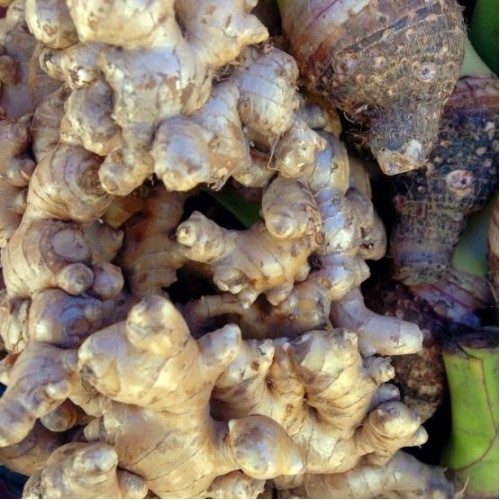
Zingiber officinale, commonly known as Ginger, is a flowering perennial in the Zingiberaceae family. Though often referred to as a root, the part we distill and extract is the rhizome—the underground stem that holds the fire of this plant’s medicine. Native to Southeast Asia, Ginger has been cultivated for thousands of years for both its culinary heat and profound therapeutic power.
She grows in lush, tropical regions with fertile, loamy soil and consistent warmth. Ginger spreads horizontally just beneath the surface, sending up tall, reed-like stalks with lance-shaped leaves and pale yellow-green flowers tinged with purple. While her foliage is graceful, it’s the thick, knobby rhizomes that store her strength—dense, aromatic, and brimming with volatile oils and pungent compounds.
Unlike aerial plants that stretch toward the sun, Ginger holds her wisdom in the dark, damp earth. She teaches us that heat doesn’t always come from fire—it can rise from deep within.
Botanical Name: Zingiber officinale
Family: Zingiberaceae
Common Names: Ginger Root, Adrak (Hindi), Sheng Jiang (Chinese)
Plant Type: Perennial rhizomatous herb
Part Used for Extraction: Rhizome
Growth Habit: Horizontal rhizomes, vertical leafy stems reaching 3–4 feet
Flowering Season: Mid to late summer, depending on climate
Harvest Time for CO₂ Extraction: Typically 8–10 months after planting, once rhizomes mature and essential oil concentration peaks
Family: Zingiberaceae
Common Names: Ginger Root, Adrak (Hindi), Sheng Jiang (Chinese)
Plant Type: Perennial rhizomatous herb
Part Used for Extraction: Rhizome
Growth Habit: Horizontal rhizomes, vertical leafy stems reaching 3–4 feet
Flowering Season: Mid to late summer, depending on climate
Harvest Time for CO₂ Extraction: Typically 8–10 months after planting, once rhizomes mature and essential oil concentration peaks
Physical Characteristics
-
Leaves: Long, narrow, bright green blades growing alternately on the stem
-
Stems: Upright pseudostems formed from rolled leaf bases
-
Flowers: Delicate, orchid-like blooms in pale yellow with purple accents
-
Rhizomes: Thick, aromatic, tan on the outside and golden-yellow within; deeply warming scent and flavor
Native Habitat + Growth Conditions
-
Native To: India, Southeast Asia
-
Preferred Soil: Rich, loamy, well-drained with high organic content
-
Sunlight: Partial shade to full sun
-
Climate: Tropical to subtropical; warm and humid
-
Ecological Notes: Cultivated globally; thrives in monsoon-fed regions with steady warmth and moisture
Energetic Botanical Signature
Ginger doesn’t stretch for the sky—she roots. Deep. Her medicine is not showy or floral—it’s anchored, internal, felt. She teaches us that transformation begins below the surface, in the unseen fires that fuel movement, clarity, and restoration.
Where some plants float or clear, Ginger grounds and ignites. Her rhizomes snake through the soil like arteries, storing heat, storing memory, storing the wisdom of when to move and when to stand strong. She brings warmth to cold places—physically, emotionally, and energetically. And she does it without apology.
This is the plant that says: Come back to your body. Reclaim your strength. Light your own way forward.
