
Personal Use
Dwarf Juniper Essential Oil (Juniperus communis var. nana)
Crisp. Clean. Cutting through the noise. Dwarf Juniper from Corsica smells like high-altitude wind moving through ancient rock—sharp, piney, slightly balsamic, and just a little wild. It carries the aromatic profile of common juniper, but softened by its alpine terrain—less aggressive, more refined. Think dry mountain air after rain, with crushed needles underfoot and a whisper of resin in the distance.
This small-batch oil was steam distilled from the needles of low-growing shrubs high in the Corsican landscape, where the plants cling close to the earth yet remain intensely alive. There's something paradoxical here—this oil grounds and clears. It detoxifies without depletion. It protects without constriction.
The Stillpoint “nose” on this one notes a bright top layer of citrus-pine, underlaid by dry forest floor, clean spice, and a subtle camphoraceous lift. Not sweet. Not floral. Just true.
It’s a breath of clarity in the fog. A sacred broom for both the body and the field.
Dwarf Juniper offers classic juniper benefits—but with a cleaner, more subtle touch. Its high-altitude origin and distillation from the needles (not berries) give it a fresher, more elegant therapeutic profile that’s ideal for cleansing, grounding, and detoxification—both physical and emotional.
Lymphatic + Urinary Support
-
Traditionally used to stimulate lymphatic flow, reduce water retention, and support detox pathways
-
May assist with urinary tract health and cleansing blends—especially when combined with cypress, lemon, or celery seed
-
Helpful in post-illness or post-medication body resets
Muscle + Joint Relief
-
Gently anti-inflammatory and warming
-
Can ease sore muscles, stiffness, or overworked joints—especially when tension is held in the body post-stress
-
Blends beautifully with Black Spruce, Ginger CO₂, or Copaiba for deep tissue massage work
Respiratory Support
-
Clears congestion and supports breath, especially in cold, damp conditions
-
Less aggressive than eucalyptus or rosemary—ideal for sensitive systems or evening blends
-
Can be used in steam, diffuser, or chest rub formulas for upper respiratory relief
Skin + Scalp Care
-
Gently astringent and antimicrobial
-
May assist with acne-prone, oily, or congested skin
-
Useful in scalp oils or shampoos for flakiness or fungal imbalance
Emotional Detox + Nervous System Regulation
-
Excellent in burnout, overstimulation, or energetic “gunk” blends
-
Can bring grounding without sedation, clarity without sharpness
-
Works well in post-ritual body oils, grief blends, or energy boundary resets
This oil walks the line between protection and movement—a cleansing ally that knows when to stay quiet and when to step in.
Traditional Use
While Juniperus communis var. nana is a dwarf mountain variant, its lineage traces back to the deep healing traditions of Juniperus communis—a plant revered for centuries as a protector, purifier, and restorer. Across Europe, particularly in the Alps, Pyrenees, and Corsican highlands, juniper was considered sacred.
This variety, hugging the rocky ground and thriving in harsh alpine conditions, was often viewed as a symbol of endurance, survival, and elemental wisdom—and its aromatic presence was used in both practical medicine and ceremonial work.
Historical and Folk Applications:
-
Fever, Infection & Plague: Juniper branches were burned in homes and sick rooms to purify the air and protect against illness—especially during epidemics
-
Detoxification & Digestion: Berries and needle infusions were used traditionally to stimulate digestion, relieve bloating, and flush the system
-
Kidney & Urinary Support: Folk medicine regarded juniper as a kidney tonic and diuretic—taken internally (in whole plant form) to reduce retention and support renal function
-
Ritual Protection & Spiritual Hygiene: Juniper was bundled and burned in smoke rituals to clear evil spirits, grief, and unwanted energy from the home or the body
-
Mountain Healing Baths: In alpine regions, juniper needle baths were used to treat sore muscles, joint stiffness, and emotional coldness or depression—especially in winter
Juniper—especially the dwarf, high-altitude kind—isn’t just a healer. It’s a witness. It stands where little else can grow. And from that place, it gives us what we need: strength, clarity, protection, and release.
Botany
Juniperus communis var. nana, commonly known as Dwarf Juniper or Alpine Juniper, is a low-growing, evergreen shrub in the Cupressaceae family. It is a naturally occurring subspecies of common juniper, adapted to thrive in high-elevation, rocky terrain across Europe—including the rugged, wind-sculpted landscapes of Corsica.
This variety grows close to the earth—compact, resilient, and exposed to the elements. It is shaped not by ease, but by endurance. While the standard Juniperus communis can reach several meters tall, var. nana stays small, rarely exceeding 50 cm in height, sprawling in soft mounds over alpine ridges and dry hillsides.
Botanical Name: Juniperus communis var. nana
Family: Cupressaceae
Common Names: Dwarf Juniper, Alpine Juniper
Plant Type: Evergreen shrub
Part Used for Distillation: Needles (not berries)
Growth Habit: Low, spreading mats or domes up to 0.5 meters high and 1 meter across
Flowering Season: Spring
Fruit (Cones): Female plants bear small berry-like cones that mature over 2 years
Harvest Time for Distillation: Late fall to early winter (typically October–November), when the volatile oils are concentrated in the foliage
Common Names: Dwarf Juniper, Alpine Juniper
Plant Type: Evergreen shrub
Part Used for Distillation: Needles (not berries)
Growth Habit: Low, spreading mats or domes up to 0.5 meters high and 1 meter across
Flowering Season: Spring
Fruit (Cones): Female plants bear small berry-like cones that mature over 2 years
Harvest Time for Distillation: Late fall to early winter (typically October–November), when the volatile oils are concentrated in the foliage
Physical Characteristics:
-
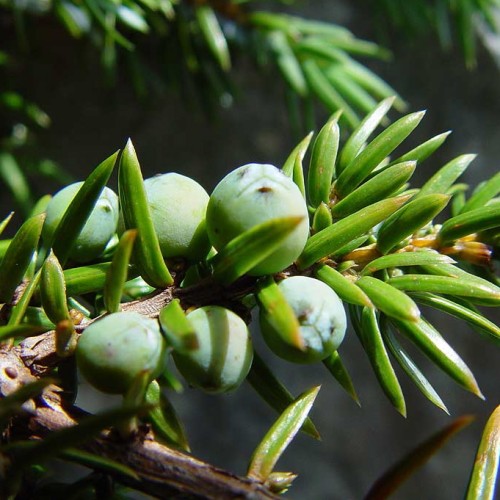
Leaves: Sharp, needle-like in whorls of three, with prominent white stomatal lines
-
Form: Dense and hugging the ground—adapted to wind, drought, and rocky soils
-
Cones: Deep bluish-purple to black when mature; only produced on female plants
-
Root System: Shallow and widespread, anchoring the plant in alpine scree and thin soils
Native Habitat + Growth Conditions:
-
Native To: High-altitude regions of Europe, including the Alps, Pyrenees, and Corsica
-
Soil Needs: Well-drained, rocky, or sandy soils; tolerates poor nutrients
-
Sunlight: Full sun
-
Climate: Cold-hardy; thrives in harsh, wind-exposed, and snowy climates
-
Ecological Role: Provides cover and food for birds and small mammals; contributes to the ecological balance of subalpine scrublands
Energetic Botanical Signature
This is a ground-hugging plant that faces the sky. It lives where few others do, rooting into barren rock and enduring storms without losing itself. Its low profile and strong constitution speak of inner strength, protection, and purification—but without aggression. It’s not here to dominate. It’s here to hold space.
In plant energetics, such growth forms represent containment, resilience, and quiet power—making Dwarf Juniper a spiritual ally for those needing clarity without force, detox without depletion, and strength without armor.
