
Personal Use
Eucalyptus globulus Crude Essential Oil (Unrefined) - MY FAVORITE ONE
This is not your average eucalyptus. This is the crude, unrefined version—thicker, deeper, and wildly more complex than the fractionated versions most people are used to. It’s resinous, grounding, and almost balsamic—like Eucalyptus and Earth had a baby with a backbone.
Stillpoint’s unrefined Eucalyptus globulus is steam distilled from the leaves of mature trees, but unlike commercial versions, nothing’s been stripped or softened. This oil still carries its waxes, resins, and heavier molecular weight compounds—making it richer in aroma and heavier in energetic presence.
The scent is unmistakable: clean and camphoraceous at first breath, but then it settles into something wetter, greener, slightly smoky, with a hint of sweet decay. This oil doesn’t just open the lungs—it demands presence. It doesn’t whisper. It clears the damn room—energetically and physically.
Use it when you need clarity with gravity, when lighter eucalyptus chemotypes feel too sterile, or when you want your blends to actually mean something.
This one? My favorite for a reason.
Therapeutic Applications
This unrefined Eucalyptus globulus isn’t just therapeutic—it’s medicinal in the old sense: strong, effective, and energetically honest. It works on the body and the field, and you feel it the moment it hits your lungs.
Respiratory Powerhouse
This oil is well-known for its ability to open the lungs, ease congestion, and support the bronchial system. The crude version goes even deeper—it feels almost weighted in the chest in a good way, like it’s drawing tension down and out. Use it for wet coughs, phlegmy colds, and that stuck feeling in the sinuses that’s equal parts physical and emotional.
Anti-Microbial & Immune Support
Rich in 1,8 cineole, this oil offers strong antiviral, antibacterial, and antifungal properties. Use it in immune blends, diffusion, or DIY surface cleaners when you want something potent and unfiltered backing your system or space.
Muscle + Joint Relief
Eucalyptus globulus has a natural analgesic and anti-inflammatory profile. The crude oil is especially useful in blends for stiffness, aches, overexertion, or chronic pain with energetic stagnation.
Energetic Clearing + Mental Focus
Because of its full-spectrum nature, this version of eucalyptus offers deeper energetic clearing. It doesn’t just brighten—it dislodges. Useful when you feel “foggy,” energetically gunked up, or stuck in overthinking. Inhalation can support mental clarity, focus, and a return to the body when the mind is spinning.
Topical Skin Use (with caution)
Due to its unrefined strength, use in lower dilutions—especially with sensitive skin. That said, when used appropriately, it may support fungal issues, acneic conditions, or skin that needs strong purification.
Traditional Use
Eucalyptus globulus has a long history of use in traditional medicine systems across Australia, Southeast Asia, and Europe. The crude, unrefined version holds closer to that traditional lineage—offering a fuller, more complex healing experience than the highly processed fractions used in modern commercial products.
Aboriginal Australian Medicine
The Eucalyptus tree is sacred to many Aboriginal cultures. The leaves were used in steam baths, infusions, and poultices for fever, wounds, infections, and muscle pain. The smoke from burning eucalyptus leaves was (and still is) used in ceremonial clearing—spiritual purification through breath and fire.
This crude oil carries that same energy: clearing, protective, and boundary-restoring—physically and psychically.
Early Western Herbalism
By the 19th century, Eucalyptus was adopted into Western medicine as a “fever tree.” It was used to treat malaria, influenza, and respiratory infection, and gained a reputation as a powerful antiseptic and expectorant. The crude oil, richer in heavier sesquiterpenes and waxes, was prized for topical applications, chest rubs, and fumigation.
European Folk Medicine
In Europe, eucalyptus was often hung in sick rooms or added to warm compresses to purify the air and prevent illness. The unrefined oil has historically been favored for making salves, liniments, and inhalation blends for those recovering from bronchitis, pneumonia, or immune collapse.
The crude version of Eucalyptus globulus is what early healers would’ve recognized—resinous, medicinal, earthy. This isn’t eucalyptus for the spa. This is eucalyptus for the soul and the system.
Botany
Eucalyptus globulus, commonly known as Blue Gum Eucalyptus, is a fast-growing evergreen tree native to southeastern Australia and Tasmania. Now naturalized in many parts of the world, especially California, Spain, and North Africa, it’s one of the most commercially cultivated and medicinally respected eucalyptus species.
Botanical Name: Eucalyptus globulus
Family: Myrtaceae
Common Names: Blue Gum, Tasmanian Blue Gum, Southern Blue Gum
Plant Type: Evergreen tree
Part Used for Distillation: Mature leaves and small twigs
Growth Habit: Tall, upright, and rapid-growing—can reach up to 200–300 feet in ideal climates
Flowering Season: Mid to late summer
Harvest Time for Distillation: Often late summer to early winter, depending on the climate and desired chemical profile
Family: Myrtaceae
Common Names: Blue Gum, Tasmanian Blue Gum, Southern Blue Gum
Plant Type: Evergreen tree
Part Used for Distillation: Mature leaves and small twigs
Growth Habit: Tall, upright, and rapid-growing—can reach up to 200–300 feet in ideal climates
Flowering Season: Mid to late summer
Harvest Time for Distillation: Often late summer to early winter, depending on the climate and desired chemical profile
Physical Characteristics
-
Leaves: Long, curved, leathery, and blue-green; rich in volatile oils, especially as they mature
-
Bark: Smooth and blue-gray, often peeling in strips; gives the tree its distinctive pale trunk
-
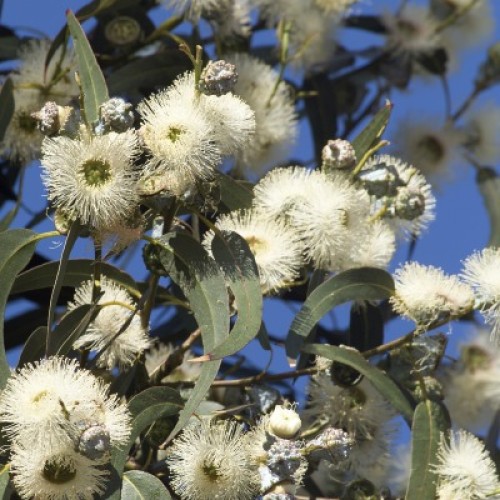
Flowers: Creamy white with many stamens; nectar-rich and attractive to pollinators
-
Roots: Deep taproot with aggressive lateral spread—contributes to water competition in its environment
Native Habitat + Growth Conditions
-
Native To: Tasmania and southeastern Australia
-
Preferred Soil: Well-drained, neutral to slightly acidic soil
-
Sunlight: Full sun
-
Climate: Thrives in Mediterranean and subtropical climates; drought-tolerant once established
-
Ecological Notes: Can dominate ecosystems; valued for carbon absorption, but also controversial due to water consumption and allelopathic tendencies
Energetic Botanical Signature
This tree is unapologetically expansive—a vertical force with an intense growth drive. Its blue-hued leaves reflect its cooling, clarifying energy, while its aggressive root system mirrors its ability to cut through stagnation, both physical and energetic.
Eucalyptus doesn’t gently persuade—it asserts. It clears space. It brings air. It reclaims territory, especially where there's been confusion, congestion, or collapse. In this crude form, it carries that signature with even more presence and weight—medicine for people who need clarity with teeth.
