
Personal Use
(Thymus zygis L. – White Thyme)
This isn’t your subtle, whispering thyme. White Thyme announces itself—bold, phenolic, and full-bodied, with an aromatic sharpness that cuts through noise like a sword of clarity. The scent opens with herbaceous heat and phenolic weight, then settles into a warm, spicy undercurrent that energizes the senses and demands attention.
Stillpoint’s White Thyme essential oil is steam distilled from the flowering tops of Thymus zygis plants grown in the sun-rich soils of the Mediterranean. This thymol-rich chemotype offers powerful respiratory, immune, and energetic clearing actions—tempered by nuanced supporting constituents like limonene, linalool, and beta-caryophyllene.
It’s not a gentle oil—but it is an effective one. Best used with intention, and always with proper dilution.
Therapeutic Applications
Respiratory Support + Mucolytic Action
White Thyme’s high thymol content makes it a potent mucolytic and expectorant. It’s historically used to support bronchial function, relieve deep, stuck coughs, and help open breathing pathways—especially during colds, flus, or congestive chest infections.
White Thyme’s high thymol content makes it a potent mucolytic and expectorant. It’s historically used to support bronchial function, relieve deep, stuck coughs, and help open breathing pathways—especially during colds, flus, or congestive chest infections.
Antibacterial, Antiviral + Antifungal Defense
Thymol and carvacrol give this oil strong antimicrobial properties. It may support immune resilience, reduce bacterial load, and help defend against environmental threats. Often used in cleaning blends or during seasonal immune challenges.
Thymol and carvacrol give this oil strong antimicrobial properties. It may support immune resilience, reduce bacterial load, and help defend against environmental threats. Often used in cleaning blends or during seasonal immune challenges.
Anti-inflammatory + Analgesic
May support local inflammation and minor aches when diluted and used in compresses, salves, or muscle blends—especially when pain is combined with infection or lymphatic stagnation.
May support local inflammation and minor aches when diluted and used in compresses, salves, or muscle blends—especially when pain is combined with infection or lymphatic stagnation.
Digestive Support
Traditionally used to calm gas, cramping, and sluggish digestion. Its carminative action supports relief from bloating and gut tension—though external use is best for sensitive systems.
Traditionally used to calm gas, cramping, and sluggish digestion. Its carminative action supports relief from bloating and gut tension—though external use is best for sensitive systems.
Traditional Use
White Thyme (Thymus zygis) has long been used in traditional Mediterranean and North African healing systems, where it was prized for its powerful cleansing, immune-boosting, and digestive-supporting properties. Folk medicine traditions often turned to thyme infusions, steam baths, and poultices in times of illness, especially for respiratory conditions and gut-related ailments.
Historical & Traditional Applications:
-
Respiratory Remedy: Used in herbal steams and teas to treat bronchitis, stubborn coughs, and sinus infections. Its aromatic oils were inhaled to relieve congestion and break up phlegm.
-
Digestive Aid: Taken as a tea or tonic for indigestion, bloating, and intestinal cramping—especially in colder months.
-
Antiseptic Wash: Employed topically in diluted decoctions for wound care, skin infections, and even mouth rinses for oral health.
-
Immune Tonic: Used preventatively in households during seasonal outbreaks. Sometimes added to honey or vinegar-based formulas.
-
Women’s Health: In some folk traditions, it was included in warming abdominal compresses to ease menstrual cramps and postpartum stagnation.
White Thyme’s strength has always been in its ability to shift stagnation—in the body, the breath, and the subtle energy field.
Botany
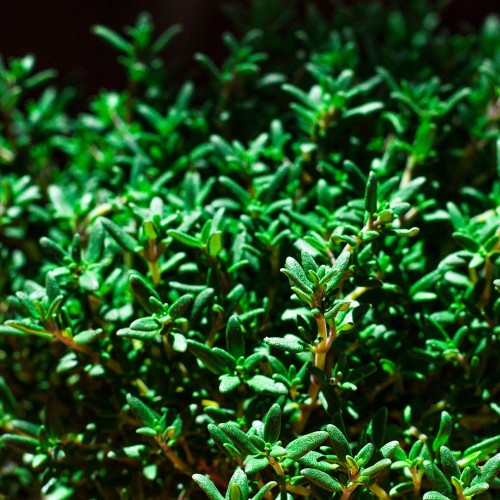
White Thyme (Thymus zygis L.) is a low-growing, aromatic evergreen shrub in the Lamiaceae family—native to the sun-soaked hillsides and rocky plains of Spain, Portugal, and North Africa. It’s one of several wild thyme species prized for both culinary and medicinal use, with a strong tradition of local distillation and folk healing.
This species thrives in calcareous soils with excellent drainage and full sunlight, producing tiny but powerfully aromatic leaves and clusters of purple, lavender, or white flowers. Unlike some of the gentler thymes (like Thymus linalooliferum), T. zygis is robust in chemistry and stature—capable of withstanding drought, heat, and wind.
It’s typically harvested in late spring to early summer, just before or during full bloom, when thymol levels peak and its therapeutic potency is at its strongest.
Botanical Name: Thymus zygis L.
Family: Lamiaceae
Common Names: White Thyme, Spanish Thyme
Plant Type: Aromatic evergreen shrub
Part Used for Distillation: Flowering aerial parts
Growth Habit: Low-growing woody shrub, up to 30 cm tall
Flowering Season: Mid-spring through summer
Harvest Time for Distillation: May–July, during full bloom
Family: Lamiaceae
Common Names: White Thyme, Spanish Thyme
Plant Type: Aromatic evergreen shrub
Part Used for Distillation: Flowering aerial parts
Growth Habit: Low-growing woody shrub, up to 30 cm tall
Flowering Season: Mid-spring through summer
Harvest Time for Distillation: May–July, during full bloom
Physical Characteristics:
-
Leaves: Tiny, lance-shaped, gray-green, and highly aromatic
-
Stems: Square and semi-woody, characteristic of the mint family
-
Flowers: White to light violet, forming dense terminal spikes
-
Roots: Fibrous and shallow—perfect for clinging to rocky soils
Native Habitat + Growth Conditions:
-
Native To: Spain, Portugal, North Africa
-
Preferred Soil: Dry, rocky, alkaline soils
-
Sunlight: Full sun
-
Climate: Mediterranean, drought-tolerant
-
Ecological Notes: Attracts pollinators; holds soil well in erosion-prone terrain
Energetic Botanical Signature
White Thyme grows low and close to the earth—but its chemistry and energy rise like a flame. That contrast is its medicine: a grounded base with an ascending, clarifying force. Its tiny leaves and compact growth hold powerful oils—teaching that strength isn’t about size, it’s about essence.
Its square stems offer structural resilience. Its spicy, phenolic scent reveals fire. And its ability to root in tough soil reminds us that clarity often comes from the very terrain we think will break us.
This plant teaches discernment, breath, and energetic sovereignty.
