
Personal Use
When it comes to picking between Thyme Co2 and its sister essential oil, Thyme thymol, I'm all in for the former. Sure, Thyme thymol has its merits, but its medicinal vibe can sometimes feel like a bit much.
On the other hand, Thyme Co2 hits the spot just right. It trades in the medicinal punch for a woody and herbaceous aroma that feels like a breath of fresh air, like taking a stroll in a lush forest. The steam distilled oil simply doesn't have that kind of earthy charm.
And let's not forget about its warming, stimulating effect. It's like a perfect cup of herbal tea for the soul - soothing, reviving, and just the right amount of invigorating without going overboard. To me, Thyme Co2 is more than an essential oil; it's my go-to companion for when I need that uplifting, nature-infused pick-me-up.
Traditional Use
-
Antimicrobial Properties: Thymol, one of the primary compounds in thyme extract, has well-documented antimicrobial properties. It's effective against a wide range of bacteria and fungi, which makes thyme extract a useful ingredient in natural disinfectants and cleaning products.
-
Respiratory Health: Thyme has traditionally been used for respiratory health, assisting with conditions like bronchitis, whooping cough, and sore throat. The 1,8 Cineol (Eucalyptol) present in thyme is known for its ability to support the respiratory system.
-
Immune Support: Thyme is known for its immune-boosting properties, helping to strengthen the body's natural defenses. It may help stimulate white blood cells, and its antioxidant properties can neutralize free radicals in the body.
-
Antioxidant Properties: Thyme CO2 extract is packed with antioxidants, compounds that help protect the body from oxidative stress and inflammation. The presence of components like Thymol and Carvacrol contributes to its potent antioxidant properties.
-
Digestive Health: Traditionally, thyme has been used to improve digestion, alleviate gastrointestinal discomfort, and decrease gas and bloating. It may also promote healthy gut flora due to its antimicrobial effects.
-
Skin Health: Thyme extract has been used in skincare due to its antibacterial and anti-inflammatory properties. It may help in managing conditions like acne and eczema, and its antioxidants may have anti-aging effects.
-
Pain Relief: There's some evidence that thyme may have analgesic (pain-relieving) properties, making it potentially useful in managing pain from conditions like arthritis.
Botany
Thyme, known scientifically as Thymus vulgaris, is a perennial shrub belonging to the Lamiaceae or mint family. It's native to the southern Europe and Mediterranean regions, but is now widely cultivated all over the world due to its culinary, medicinal, and ornamental uses.
Physically, thyme is a compact, bushy plant that typically grows up to 15-30 cm in height. It's characterized by a woody, fibrous root and a multi-branched stem that’s somewhat woody at the base but turns softer and more herbaceous towards the top. The stems are usually somewhat square-shaped, a common trait in the mint family.
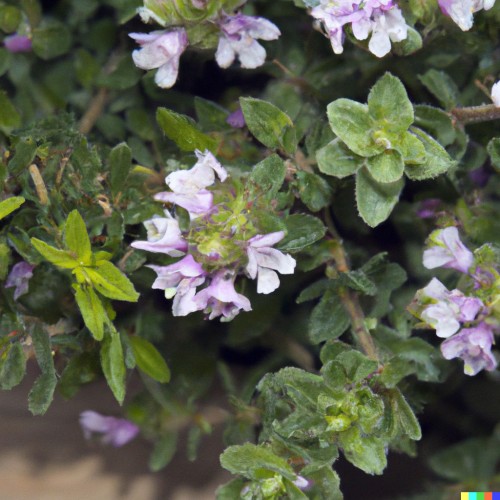
The leaves of thyme are small, approximately 4-10mm long, and are elliptical or oblong in shape. They are usually grayish-green to green in color, and they're notable for their pungent, aromatic fragrance. The upper surface of the leaves is usually smooth, while the underside has densely packed glands filled with essential oils.
Thyme flowers are tiny, typically lilac or purple, and are borne in small clusters at the end of the stems. The plant generally flowers in the late spring and early summer. These flowers are very attractive to bees, and thyme honey from bee-keeping areas where thyme is abundant is considered a delicacy.
The fruits of thyme are small nutlets. Each flower produces four of these in a single cluster.
Overall, thyme is a hardy plant that prefers well-drained soil and a sunny location. It's resistant to drought and can thrive in poor soil conditions. The plant’s lifespan is typically two to five years, but it can live longer in ideal conditions.
