
Personal Use
Rosemary ct. Camphor Essential Oil (Salvia rosmarinus / formerly Rosmarinus officinalis)
Sharp | Stimulating | Muscular
Rosemary ct. Camphor comes in with focus, heat, and a clear medicinal edge. This is the Rosemary that wakes the body up, clears the head, and speaks directly to muscles, joints, circulation, and places where the system feels cold, heavy, tired, or stuck.
Its aroma is strong, herbaceous, camphoraceous, penetrating, and green, with that unmistakable Rosemary brightness sharpened by a muscular, almost medicinal backbone. It feels less soft than Rosemary ct. Verbenone and less purely respiratory than Rosemary ct. 1,8-cineole. Rosemary ct. Camphor is more body-forward. More structural. More “move the tissue, clear the fog, get the blood going.”
This is an oil for cold, stiff muscles. For sluggish circulation. For mental fatigue. For the body that feels heavy, achy, or slow to respond. For the moments when the mind needs clarity and the physical body needs momentum.
There is something bracing about Rosemary ct. Camphor. It doesn’t coddle the system, but it also doesn’t scatter it. It brings alertness, warmth, and direction. It helps the body remember tone, movement, and uprightness.
Stillpoint’s Rosemary ct. Camphor essential oil is steam distilled from the flowering tops and leaves of Salvia rosmarinus, a Mediterranean aromatic shrub long valued for memory, circulation, muscular support, respiratory freshness, digestion, and energetic protection.
This oil is for movement. For clarity. For muscles that need waking. For circulation that needs encouragement. For the mind that needs to come back into sharp, clean focus.
Therapeutic Applications
Muscular Support + Stiffness
-
Rosemary ct. Camphor is traditionally used in massage blends for sore muscles, stiffness, tension, and overworked tissue.
-
Its camphoraceous profile makes it especially useful when discomfort feels cold, stuck, tight, or slow to loosen.
-
May support blends for muscle aches, post-exertion soreness, physical fatigue, low back tension, shoulder tightness, and general body stiffness.
-
Useful in massage oils, balms, liniments, sports blends, and pre-movement body formulas when the goal is warmth, movement, and tissue activation.
Circulatory Support + Coldness
-
Rosemary ct. Camphor is known for its stimulating and warming nature.
-
May support healthy circulation when used appropriately in topical blends.
-
Useful when the body feels cold, sluggish, heavy, or under-stimulated.
-
Often chosen for cold hands, cold feet, tired limbs, and winter body blends where the tissue needs encouragement and movement.
Joint Comfort + Body Aches
-
Rosemary ct. Camphor may be useful in blends for joint stiffness, arthritis-type discomfort, rheumatic patterns, and general achiness.
-
Its warming, moving character makes it appropriate when discomfort feels stagnant or contracted.
-
Combines well with oils such as Plai, Black Pepper, Juniper Berry, Ginger, Sweet Marjoram, and Lavender in properly diluted massage blends.
-
Best used with respect, especially for sensitive skin or medically fragile individuals.
Mental Clarity + Focus
-
Rosemary has a long traditional association with memory, concentration, and mental sharpness.
-
Rosemary ct. Camphor may support alertness when the mind feels foggy, tired, dull, or scattered.
-
Useful in diffuser blends, inhalers, study blends, morning formulas, and workroom sprays when clear focus is needed.
-
This chemotype brings a sharper, more stimulating presence than softer Rosemary types.
Respiratory Freshness
-
Rosemary ct. Camphor may support respiratory freshness when the breath feels heavy, sluggish, or congested.
-
Its camphoraceous aroma can be useful in diffuser blends, shower blends, chest rubs at low dilution, and seasonal wellness formulas.
-
It is more stimulating and muscular than gentle respiratory oils, so use thoughtfully around sensitive lungs, children, elders, and anyone with asthma or reactive airways.
-
Helpful when the body needs both clear air and physical activation.
Hair + Scalp Support
-
Rosemary has a long-standing place in scalp and hair-care traditions.
-
Rosemary ct. Camphor may be useful in properly diluted scalp oils, hair tonics, and cleansing scalp blends.
-
May support formulas for scalp freshness, oily scalp, dull hair, and circulation-oriented scalp massage.
-
Use low dilution and avoid contact with eyes, irritated scalp, or broken skin.
Digestive + Liver-Tonic Tradition
-
Rosemary has traditional use as a digestive and liver-supportive herb.
-
Rosemary ct. Camphor may be used aromatically or topically in low dilution where sluggish digestion, heaviness, or low vitality are part of the pattern.
-
It is more stimulating than soothing, so it fits best when the digestive picture feels cold, slow, or stagnant.
-
For internal use, work only with a qualified practitioner trained in aromatic medicine.
Energetic Strength + Protection
-
Energetically, Rosemary ct. Camphor supports clarity, boundaries, courage, and uprightness.
-
Useful when someone feels foggy, depleted, collapsed, or too affected by other people’s energy.
-
Helps bring the system back into direction and clean focus.
-
This oil has a “stand up straight and remember who you are” quality — sharp, protective, and strengthening.
Stimulation
Its stimulating qualities can also support:
-
Poor peripheral circulation
-
Fluid stagnation
-
Lymphatic movement (especially in body oils or dry brushing blends)
Traditional Use
Medicinal & Herbal Roots:
Rosemary has been revered since antiquity—not just as a culinary staple, but as a potent medicinal plant. In traditional European herbalism, it was used to:
Rosemary has been revered since antiquity—not just as a culinary staple, but as a potent medicinal plant. In traditional European herbalism, it was used to:
-
Stimulate blood flow and ease joint pain
-
Revive weak digestion and clear internal "dampness"
-
Strengthen memory and prevent age-related decline
-
Reduce cold, phlegmatic conditions—especially in elders or the infirm
Camphor-Rich Lineage:
The camphor chemotype in particular has long been prized for topical applications related to:
The camphor chemotype in particular has long been prized for topical applications related to:
-
Gout, rheumatism, arthritis
-
Respiratory support via chest rubs and compresses
-
Muscular fatigue in manual laborers and warriors
It was often infused in vinegars or oils and used in warming poultices and circulatory elixirs.
Spiritual and Folk Magic:
In folk tradition, rosemary has always been a plant of memory, protection, and purification. It was burned as incense in sickrooms and laid on graves to honor the dead and to protect the living. Camphor-heavy rosemary was especially used to:
In folk tradition, rosemary has always been a plant of memory, protection, and purification. It was burned as incense in sickrooms and laid on graves to honor the dead and to protect the living. Camphor-heavy rosemary was especially used to:
-
Ward off evil spirits and mental confusion
-
Cleanse energetic spaces and auras
-
Aid in rituals of remembrance and release
This isn’t just a "wake-up" oil—it’s an oil of legacy, protection, and sharpening the edges of the self.
Back in the day, Rosemary was burned in sick chambers, sometimes burned with Juniper berries to purify the air and prevent infection. It was placed in the dock of courts of justice to prevent infection from the contagion. It was also used in linaments and rubs for muscular and joint conditions.
Botany
Rosemary ct. Camphor (Salvia rosmarinus, formerly Rosmarinus officinalis) is a hardy evergreen shrub native to the Mediterranean region, though this particular chemotype thrives in higher altitudes with cooler climates, where camphor content tends to develop more strongly. It's a member of the Lamiaceae (mint) family, known for its square stems, aromatic foliage, and prolific flowering—hallmarks of intelligent, adaptive plants.
What sets this camphor chemotype apart is its growing environment: increased elevation, mineral-rich soil, and wider temperature swings. These conditions result in a stronger production of camphor and 1,8-cineole, which contribute to the oil’s brisk, penetrating scent and sharper energetic profile.
Botanical Name: Salvia rosmarinus ct. camphor
Family: Lamiaceae
Common Names: Rosemary, Camphor Rosemary
Plant Type: Evergreen shrub
Part Used for Distillation: Leaves and flowering tops
Growth Habit: Bushy, woody perennial, 3–5 feet tall
Flowering Season: Late winter to early spring in warmer regions; late spring in temperate climates
Harvest Time for Distillation: Just before full bloom, when oil content is highest
Family: Lamiaceae
Common Names: Rosemary, Camphor Rosemary
Plant Type: Evergreen shrub
Part Used for Distillation: Leaves and flowering tops
Growth Habit: Bushy, woody perennial, 3–5 feet tall
Flowering Season: Late winter to early spring in warmer regions; late spring in temperate climates
Harvest Time for Distillation: Just before full bloom, when oil content is highest
Physical Characteristics:
-
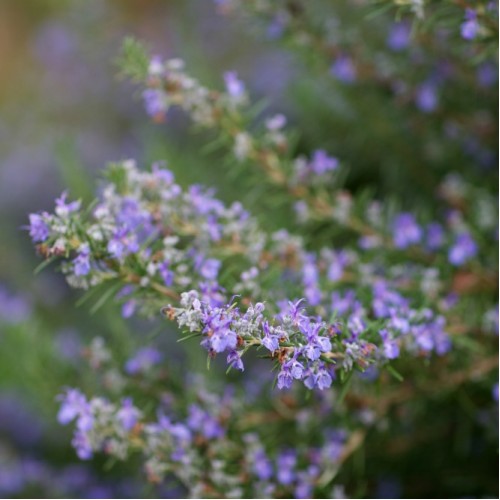
Leaves: Needle-like, dark green with silvery undersides, highly aromatic
-
Flowers: Pale blue to lavender, small, two-lipped, and arranged in terminal spikes
-
Stems: Woody at the base, square in cross-section (a Lamiaceae family trait)
-
Root System: Deep and fibrous, anchoring it through drought and wind
Native Habitat + Growth Conditions:
-
Native To: Mediterranean basin
-
Preferred Soil: Well-drained, sandy to rocky soils; tolerates poor nutrients
-
Sunlight: Full sun
-
Climate: Hot, dry summers and mild, wet winters
-
Ecological Notes: Drought-tolerant; attracts bees and pollinators; sometimes used in xeriscaping and erosion control
Energetic Botanical Signature
Everything about camphor-type Rosemary screams penetration and precision. It thrives on the edge of stress—rocky soils, high UV, and wind-exposed hillsides—and channels that into a volatile chemistry that cuts through stagnation like a blade.
Its square stems and upright, resin-rich growth show its alignment with structure and energetic resilience. It doesn’t seduce—it activates. This is a plant that doesn’t lose focus, even in harsh terrain. Its essential oil echoes that: alert, sharp, and unshakably present.
