
Personal Use
(Thymus mastichina, ct. 1,8-cineole)
Bright, sharp, and boldly herbal—Spanish Marjoram doesn’t whisper; it clears the air and cuts through the fog. This oil has a clean, eucalyptus-like presence with an herbaceous warmth that gives it more personality than your average cineole-rich oil. It opens the breath, sharpens the mind, and awakens the system from the inside out.
Stillpoint’s Spanish Marjoram essential oil is steam distilled from the flowering tops of wild Thymus mastichina plants grown in the dry, sun-drenched hills of Spain. Though commonly referred to as “marjoram,” this species is actually a wild thyme—a hardy Mediterranean native with a distinctive chemical profile that’s high in 1,8-cineole, giving it its signature respiratory-clearing punch.
Unlike the sweet softness of Origanum majorana, this oil is forthright, invigorating, and clarifying—an ally when you need to breathe deeply, focus clearly, or support your immune defenses with a bit of herbal muscle.
Respiratory Support + Mucolytic Action
With its high 1,8-cineole content, Spanish Marjoram is a powerful expectorant and mucolytic. It helps to break up congestion, open the sinuses, and support deeper breathing—especially in cases of cold, flu, sinusitis, or bronchitis. It's less aggressive than Eucalyptus globulus but still strong enough to make a real difference in respiratory blends.
Antimicrobial + Antiviral Defense
This oil offers broad-spectrum antimicrobial activity, supporting immune health during seasonal threats or acute infections. It’s particularly useful in diffuser blends or steam inhalations during the onset of colds, coughs, or flu-like symptoms.
Mental Clarity + Focus
Spanish Marjoram’s cineole-rich profile also gives it cognitive benefits. It may assist with mental fatigue, lack of focus, and mental fog, especially when used via direct inhalation or in a diffuser. It stimulates without overstimulating—a great choice for mid-day sluggishness or post-illness recovery.
Muscle and Joint Comfort
When diluted and applied topically, Spanish Marjoram may help relieve muscle stiffness, minor joint pain, and fatigue—particularly where tension is compounded by respiratory strain or systemic inflammation.
Mild Nervine + Sleep Support (in lower doses)
While stimulating in higher doses, in lower dilutions, this oil may calm racing thoughts and assist with relaxation before bed—especially when congestion or physical discomfort is interfering with sleep.
Traditional Use
Though often overshadowed by its sweeter cousin (Origanum majorana), Spanish Marjoram has a rich ethnobotanical history across the Iberian Peninsula, especially in rural Spain and Portugal where it has long been revered as a “mountain medicine.”
Folk Respiratory Remedy:
Historically, Thymus mastichina was used in infusions and steams to support bronchial health, clear phlegm, and soothe deep lung tension. Village herbalists would brew it for colds and use it in fumigation rituals to cleanse the air during times of illness.
Immune and Febrile Support:
The leaves and flowering tops were infused into teas or applied as poultices to help sweat out fevers, support recovery from viral infections, and stimulate immune function during the change of seasons.
Digestive and Circulatory Aid:
Traditionally taken as a warming herb, Spanish Marjoram was used to stimulate sluggish digestion, ease gas and cramping, and gently encourage circulation—particularly in people who felt “cold and heavy” or stuck in recovery.
Sacred + Purifying Plant:
In rural spiritual traditions, this species of marjoram was also burned as incense or included in ritual bundles to cleanse stagnant spaces, protect against illness, and reconnect to clarity—both mental and spiritual.
Botany
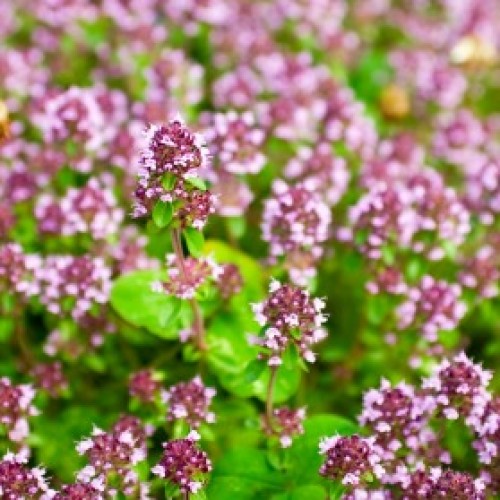
Thymus mastichina, commonly known as Spanish Marjoram or Wild Marjoram, is a hardy, aromatic perennial herb belonging to the Lamiaceae (mint) family. Though its name suggests kinship with sweet marjoram (Origanum majorana), Spanish Marjoram is actually a wild-growing thyme species, native to the dry, rocky hillsides of central and southern Spain.
This Mediterranean plant thrives in sun-drenched, limestone-rich soils where heat and wind shape its resilience. Unlike its more common thyme cousins, it carries a distinct chemotype—high in 1,8-cineole—that influences both its aroma and its medicine.
Botanical Name: Thymus mastichina
Family: Lamiaceae
Common Names: Spanish Marjoram, Marjoram Cineole, Wild Marjoram
Plant Type: Aromatic evergreen subshrub
Part Used for Distillation: Flowering aerial parts
Growth Habit: Low-growing, bushy herb up to 60–80 cm in height
Flowering Season: Late spring to early summer
Harvest Time for Distillation: Just before or at full bloom, when cineole content is highest
Common Names: Spanish Marjoram, Marjoram Cineole, Wild Marjoram
Plant Type: Aromatic evergreen subshrub
Part Used for Distillation: Flowering aerial parts
Growth Habit: Low-growing, bushy herb up to 60–80 cm in height
Flowering Season: Late spring to early summer
Harvest Time for Distillation: Just before or at full bloom, when cineole content is highest
Physical Characteristics:
-
Leaves: Small, narrow, gray-green, and highly aromatic
-
Stems: Square and woody at the base, typical of the mint family
-
Flowers: Tiny, pale pink to white; grow in tight clusters along the upper stems
-
Roots: Shallow, suited to rocky and well-drained soils
Native Habitat + Growth Conditions:
-
Native To: Central and southern Spain
-
Preferred Soil: Dry, calcareous, rocky terrain
-
Sunlight: Full sun
-
Climate: Hot, arid Mediterranean; drought tolerant
-
Ecological Notes: Loved by bees and native pollinators; thrives in disturbed and well-drained landscapes
Energetic Botanical Signature
Spanish Marjoram grows close to the earth, spreading outward in open terrain—but its chemistry rises. That duality is written into its action: it clears the upper chakras while grounding the nervous system. The square stems point to a stable structure, while the small aromatic leaves burst with volatile oils—showing us that even the smallest container can hold powerful medicine.
This plant doesn’t demand attention—it brings precision. It teaches boundaries. It teaches breath.
