
Every order ships USPS Priority — $10.95 flat-rate USPS Priority shipping on all US orders, no minimum. Free shipping on domestic orders over $299.
Welcome to Stillpoint. Subscribe to our newsletter for sale details and new-product news · One discount code per order · Every order is hand-poured, packed with care in ceremony, and shipped as we receive it.

Rosemary CO₂ Plus Extract | Whole-Plant Clarity

Salvia rosmarinus ct cineole

  • Rosemary CO₂ Plus Extract | Whole-Plant Clarity

Average Rating: (see reviews)

$16.00 Ex Tax: $16.00

Essential Facts

  • Latin Name: Salvia rosmarinus ct cineole
  • Country of Origin: Cuba
  • Botanical Family: Lamiaceae
  • Plant Parts: Flowering plant/herb
  • Note Classification: Top
  • Cultivation Method: Distiller is Certified Organic
  • Method of Extraction: CO2 Select Extraction
  • Extraction Date: Spring 2025
  • Approx. Shelf Life: 5 to 7 years
  • Chemical Family: Oxides
  • Batch: rosmco2
  • Aroma: Camphoraceous, Cool, Fresh, Spicy, Sweet
  • Energetic Applications: 3rd Chakra - personal power, 4th Chakra - unconditional love, 6th Chakra - perspective, 7th Chakra - higher information, Clarity, Energizing, Expansive, Protective, Purifying, Uplifting
  • Therapeutic Properties: Anti-arthritic, Anti-asthmatic, Anti-infectious, Anti-microbial, Anti-rheumatic, Anti-septic, Anti-spasmodic, Cephalic, Energizing, Expectorant
Notes & Use

Personal Use

(Salvia rosmarinus, cineole type, CO₂-se-plus extract)

Why it's called "CO₂-se-plus":
The “plus” refers to the use of an entrainer—in this case, ethanol—during the supercritical CO₂ extraction process. This method allows for the capture of both volatile and semi-volatile compounds that wouldn’t be fully extracted with CO₂ alone.

So what does that mean practically?
  • You get a richer, broader-spectrum extract—not just the aromatic components (like 1,8-cineole and camphor), but also non-volatile constituents like carnosic acid, rosmarinic acid, and other phenolic diterpenes.
  • These compounds contribute to antioxidant, anti-inflammatory, and skin-repairing properties—which you wouldn’t get from a steam-distilled essential oil alone.
  • It also gives the extract a slightly thicker, resinous texture and longer-lasting scent profile.

You can think of it as a "whole-plant whisper"—not just the breath, but the blood and bones of Rosemary, all in one potent drop.

This Rosemary CO₂ extract is nothing like the brittle-shelved herbs in your pantry. It’s deep, sharp, and medicinal—but also full-bodied and commanding. The scent blends eucalyptus-like clarity with warm camphoraceous spice and an undercurrent of resinous, woody depth. It moves up and out—cutting through distraction, stagnation, and congestion like a scalpel of presence.

Stillpoint’s CO₂-select-plus extract is sourced from organically grown Rosemary leaf and produced using supercritical carbon dioxide extraction with ethanol as an entrainer. The result is a complete extract with high levels of 1,8-cineole and camphor, balanced by trace verbenone, borneol, alpha-pinene, and phenolic diterpenes (like carnosic acid). This is not just a fragrance—it’s medicine in molecular form.

Therapeutic Actions
Respiratory + Immune Support
With its rich 1,8-cineole and camphor content, this extract may support lung function by opening the bronchi, thinning mucus, and offering strong antiviral, antibacterial, and antifungal action. Ideal for steam blends, chest salves, or diffusers during cold and flu season.

Circulation + Muscle Recovery
Traditionally used to stimulate blood flow, relieve muscle tension, and assist in post-exertion recovery. May ease minor joint and rheumatic pain when diluted and massaged into sore areas.

Cognitive Clarity + Alertness
Rosemary has a long-standing reputation for enhancing memory, focus, and mental clarity. It stimulates the mind without overloading the nervous system, making it excellent for midday slumps, study support, or emotional fatigue.

Antioxidant + Skin Defense
Contains carnosic acid, a phenolic compound known for its potent antioxidant effects, making this extract a powerful addition to skin-supportive blends that address environmental exposure or inflammation.

Traditional Use

Rosemary has been used as a tonic herb for centuries—invigorating the mind, warming the body, and stimulating circulation. As far back as the first century CE, it was included in herbal texts for its ability to “comfort the brain,” cleanse internal stagnation, and protect the spirit.

Cognitive + Mental Support
Rosemary leaf was traditionally steeped as a tea or used in ritual baths to enhance memory, lift mental fatigue, and sharpen focus. It was especially valued for older adults and students alike, believed to “revive the senses” and prevent forgetfulness.

Circulation + Muscular Support
Compresses, salves, and infusions made from Rosemary were commonly used for cold extremities, poor blood flow, and rheumatic conditions. It was applied topically to relieve muscle tension, stimulate movement in sluggish systems, and energize “cold” constitutions.

Digestive + Liver Stimulation
Internally, Rosemary was used to support digestion, bile production, and liver vitality. It was seen as a warming herb, helpful for indigestion, flatulence, and feelings of heaviness or food stagnation.

Immune Fortification + Protective Use
The aromatic leaves were brewed into steams or decoctions to support immunity, ease respiratory complaints, and prevent seasonal illness. In times of epidemic, it was burned with other herbs to cleanse air and ward off contagion—a practice continued in households for generations.

Hair + Scalp Care
Rosemary infusions were long used in traditional beauty rituals to stimulate hair growth, darken greys, and improve scalp health. Applied as a rinse or vinegar, it supported clarity at the crown—physically and energetically.

Botany

Salvia rosmarinus (formerly Rosmarinus officinalis) is an aromatic evergreen shrub in the Lamiaceae family, native to the Mediterranean basin. It thrives in sun-drenched, rocky soils, often along the coastline where salt air and heat shape its resilient nature.

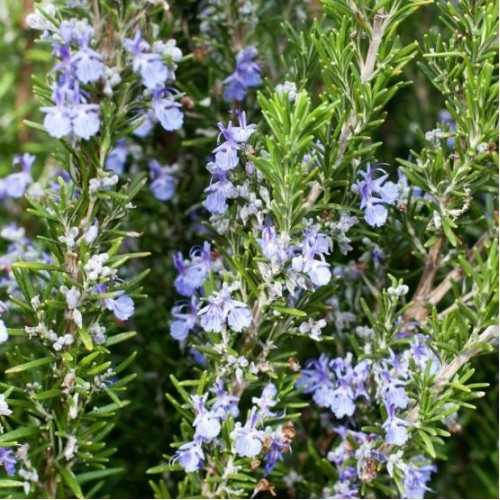
Known for its needle-like leaves and sharp, camphoraceous scent, Rosemary has long been cultivated for its culinary, medicinal, and ceremonial properties. It blooms in late winter through early spring, producing small pale blue to violet flowers that attract bees and pollinators, signaling renewal and mental vitality.

Botanical Name: Salvia rosmarinus
Family: Lamiaceae
Common Names: Rosemary, Rosmarinus, Anthos
Plant Type: Aromatic evergreen shrub
Part Used for Extraction: Leaves
Growth Habit: Upright, woody perennial shrub up to 1.5–2 meters tall
Flowering Season: Late winter to spring (depending on climate)
Harvest Time for CO₂ Extraction: When foliage is rich in aromatic oils—typically early spring to late summer, before flowering peaks

Physical Characteristics:
  • Leaves: Narrow, leathery, dark green on top, silvery-white beneath; highly aromatic
  • Stems: Woody and upright with square cross-sections
  • Flowers: Small, tubular, pale blue to violet; arranged in clusters along upper stems
  • Roots: Deep and fibrous—anchoring the plant in rocky or dry conditions

Native Habitat + Growth Conditions:
  • Native To: Mediterranean basin
  • Preferred Soil: Rocky, calcareous, well-drained soils
  • Sunlight: Full sun
  • Climate: Arid to temperate Mediterranean
  • Ecological Notes: Drought-tolerant; thrives in wind-exposed, nutrient-poor environments; deeply loved by pollinators

Energetic Botanical Signature
Rosemary’s upright growth and needle-like leaves reflect clarity, direction, and focus. It grows in exposed, sun-filled environments—thriving where other plants wither. That tells us it endures, clears, and sharpens.

Its scent is piercing yet clean, speaking to vision, vigilance, and spiritual strength. The dual color of its leaves—dark green and silvery-white—reminds us that Rosemary bridges the worlds of earth and insight.

This is a plant of remembrance, resilience, and renewal.
Energetics

Energetic Properties

Rosemary is a clarifier of the mind and a protector of spirit. This CO₂ extract carries the archetypal energy of the plant in full strength—sharpening awareness, dissolving stagnation, and bringing a clear “yes” or “no” when we’re energetically fogged or pulled in too many directions.

Its energy is direct, vertical, and awakening. Not in a caffeinated way—but in a return-to-yourself way. It cuts through distraction, fatigue, grief-fog, and over-identification with others. It’s especially useful when you’ve taken on thoughts, energy, or emotional weight that’s not yours.

Where steam-distilled Rosemary can feel bracing or brittle, this CO₂ version holds more depth and body—it grounds the insight it brings, helping you act on what you know without spinning in loops.

Energetic Themes
  • Energetic clarity after mental or emotional overwhelm
  • Reclaiming your mental space when others’ energy is intrusive
  • Sharpening intuition when clouded by fear, fatigue, or burnout
  • Restoring spiritual discipline and the will to act on insight
  • Clearing fog from the third eye and crown chakras
  • Protection during grief, study, or energetic transition

Chakra Resonance
  • Third Eye (Ajna): Clears mental fog, restores inner vision, supports spiritual focus
  • Crown (Sahasrara): Opens connection to higher guidance with discernment
  • Solar Plexus (Manipura): Restores will, motivation, and energetic sovereignty
  • Heart (Anahata): Offers clarity during emotional confusion or energetic entanglement


This is plant ally energy for those doing deep soul work, supporting others, or navigating loss, fatigue, or transition. Rosemary reminds us that remembrance isn’t just about the past—it’s about remembering who we are when the world pulls us apart.

Traditional & Folklore

Rosemary has long been a symbol of memory, fidelity, and spiritual protection—woven into nearly every layer of Mediterranean and European folk tradition. For centuries, it has been carried in bridal bouquets, laid on graves, burned in ritual fires, and brewed into sacred medicine.

In ancient Greece, students wore garlands of Rosemary to enhance memory and learning. It was said to “quicken the senses and strengthen the mind,” and later became a symbol of remembrance in funeral rites—placed in the hands of the dead or cast into graves to honor the continuity of spirit.

In Roman traditions, Rosemary was believed to bring courage and clarity. It was burned in temples, used to purify homes, and offered in protection rituals. This thread of energetic cleansing continued through the Middle Ages, when it was hung in sickrooms to ward off plague and evil spirits.

In folk magic, Rosemary was one of the few herbs that crossed both domestic and sacred realms. It was used in love spells, dream work, and psychic protection. Planted near the front door, it was said to keep harmful influences out and draw strength and loyalty in.

Even today, Rosemary is often used to bless new spaces, clear ancestral heaviness, or prepare the mind for meditation and ceremony. It is one of the few botanicals equally honored for its physical potency and metaphysical wisdom.
Chemistry

Chemical Components

This CO₂-se-plus extract of Salvia rosmarinus contains a chemotype high in 1,8-cineole and camphor, but thanks to the “plus” extraction method using ethanol, it also retains non-volatile components not typically found in steam-distilled oils—like carnosic acid and other phenolic diterpenes. These additions deepen the extract’s antioxidant, anti-inflammatory, and skin-protective potential.

Key Chemical Families:
  • Oxides
    • 1,8-Cineole – strong expectorant, mucolytic, and respiratory support
  • Ketones
    • Camphor – circulatory stimulant, mucolytic, analgesic
  • Monoterpenes
    • α-Pinene, β-Pinene, Limonene – anti-inflammatory, bronchodilating, immune-supportive
  • Monoterpenols
    • Borneol, Linalool – calming, immune-modulating, mildly antimicrobial
  • Phenolic Diterpenes (unique to CO₂)
    • Carnosic acid, Carnosol, Rosmarinic acid – antioxidant, skin-protective, UV defense, anti-inflammatory

Therapeutic Implications of the Chemistry:
  • Respiratory Relief: Cineole + camphor offer strong mucolytic and decongestant action—ideal for sinus and bronchial blends.
  • Circulation + Muscle Recovery: Camphor + pinene compounds help stimulate blood flow, ease stiffness, and reduce inflammation.
  • Cognitive Clarity + Focus: Cineole and borneol work synergistically to enhance mental clarity and reduce fatigue.
  • Skin Repair + Defense: Thanks to carnosic acid, this extract supports antioxidant protection and inflammatory modulation for the skin—making it ideal for salves or repair blends.
  • Microbial Support: Antibacterial, antifungal, and antiviral activity—particularly helpful in immune, cleaning, and wound care blends
Recipes & Blends

Recipes & Blends

Lung + Sinus Steam Bowl (Respiratory Clarity Blend)
Perfect for head colds, congestion, or foggy mornings.
  • 1 drop Rosemary CO₂-se-plus (Salvia rosmarinus)
  • 1 drop Ravintsara (Cinnamomum camphora ct. cineole)
  • 1 drop Laurel Leaf (Laurus nobilis)
How to use: Add to a bowl of hot water, cover head with a towel, and inhale deeply for 5–7 minutes. Use with caution in children or those sensitive to camphoraceous oils.

Muscle + Circulation Recovery Rub
For post-workout tension, slow circulation, or cold extremities.
  • 10 mL carrier oil (Arnica-infused Jojoba or Fractionated Coconut)
  • 2 drops Rosemary CO₂-se-plus
  • 2 drops Black Spruce (Picea mariana)
  • 1 drop Ginger CO₂ (Zingiber officinale)
How to use: Massage into sore muscles or apply to hands/feet in low circulation moments. Avoid broken skin or use during pregnancy.

Mental Clarity Inhaler (Focus + Third Eye Activation)
A daytime ally for study, ritual prep, or energy work.
  • 5 drops Rosemary CO₂-se-plus
  • 3 drops Basil linalol (Ocimum basilicum ct. linalol)
  • 2 drops Lemon (Citrus limon)
How to use: Add to a blank inhaler and inhale as needed when focus drifts or your energy feels “cloudy.”

Spiritual Reset Anointing Oil
For clearing energetic noise and reclaiming sacred space.
  • 5 mL carrier oil (like Moringa or Camellia)
  • 2 drops Rosemary CO₂-se-plus
  • 1 drop Myrrh CO₂ (Commiphora myrrha)
  • 1 drop Palo Santo (Bursera graveolens)
How to use: Apply to third eye, crown, and back of neck before meditation, ritual, or emotional release. Can also be used for clearing after client sessions or intense interactions.
Safety Etc.

Safety Information

Rosemary CO₂-se-plus extract is rich in 1,8-cineole and camphor, making it a powerful and stimulating extract—best used intentionally and in low to moderate dilutions.
  • Not recommended for children under 5 years of age, especially via steam or inhalation, due to the cineole content.
  • Avoid during pregnancy and breastfeeding unless under the guidance of a qualified practitioner.
  • May cause skin irritation in sensitive individuals or at high concentrations. Always perform a patch test and dilute properly (typically ≤2% for general use).
  • Do not apply undiluted, and avoid use near the eyes, mucous membranes, or broken skin.
  • Not for internal use. While Rosemary is a culinary herb, this concentrated extract is not intended for ingestion without clinical supervision.
Use with care around those with asthma, epilepsy, or high blood pressure. Though Rosemary is generally considered safe in aromatic use, its camphor and cineole content can be overstimulating for sensitive populations.

References

  • Battaglia, S. (2018). The complete guide to aromatherapy( 3rd ed., Vol. 1). Australia: Black Pepper Creative Pty.
  • Davis P. Aromatherapy an A-Z. New revised edition C.W. Daniel Company Limited, England, 1999 |
  • Grieve, M. A Modern Herbal ... Tiger Books International, 1994.
  •  Holmes, Peter, et al. Aromatica: a Clinical Guide to Essential Oil Therapeutics. Singing Dragon, an Imprint of Jessica Kingsley Publishers, 2016.
  • Mojay G. Aromatherapy for Healing the Spirit, Henry Holt and Company Inc., England, 1996
  • Price S. Aromatherapy for Health Professionals, 2nd edition, Churchill Livingstone, 1999
  • Schnaubelt K. Advanced Aromatherapy, The Science of Essential Oil Therapy, Healing Arts Press, USA, 1998
  • Tisserand, Robert, et al. Essential Oil Safety: a Guide for Health Care Professionals. Churchill Livingstone/Elsevier, 2014.

Reviews (2)

Write a review

Note: HTML is not translated!
    Bad           Good
Powered By OpenCart
Stillpoint Aromatics © 2026