
Traditional Use
Patchouli is a tropical plant native to Asia, renowned for its numerous medicinal applications. It has antibacterial, antidepressant, and antifungal properties. It's also been used as an aphrodisiac, a substance that can help with gas problems (carminative), a substance promoting urine production (diuretic), a substance to stimulate menstruation (emmenagogue), a fever reducer (febrifuge), a general stimulant, and a tonic. Notably, patchouli has also been employed as an antidote for venomous snakebites and insect stings.
In Ayurvedic medicine, an ancient holistic healing system from India, patchouli is used to balance two of the body's energy types, or doshas: vata and pitta. Vata, associated with air and water, is involved in functions like blood circulation and waste elimination. Pitta, combining fire and water, controls metabolic systems, including digestion and temperature regulation. Thus, patchouli is utilized for conditions like inflammation, arthritis, cough, loss of appetite, and digestive disorders, which can be tied to imbalances in these doshas.
In Traditional Chinese Medicine (TCM), where patchouli is known as "guanghuoxiang", its medicinal uses date back to the Han Dynasty. The leaves, flowering spikes, and roots of the plant, all rich in essential oils and flavonoids, are used to treat a range of health issues. These include mood disorders, bacterial infections, fevers, malaria, headaches, colds, and coughs, as well as digestive and liver conditions. Recent Chinese studies have shown patchouli can have a cytotoxic effect, damaging certain cancer cells, and can prevent blood platelets from sticking together.
In various Asian medical traditions, patchouli is also used for conditions such as nervousness, bile problems, insufficient urination, menstrual pain, joint pain, and rheumatism.
Modern research corroborates these traditional uses and expands upon them. Scientists have found that patchouli extracts have potent antioxidant activity, which could be beneficial in diseases caused by oxidative stress.
It has also shown promise in treating pain, flu, sore throat, and inflammation of the middle ear. As such, the scientific interest in patchouli's potential medicinal uses continues to grow.
Botany
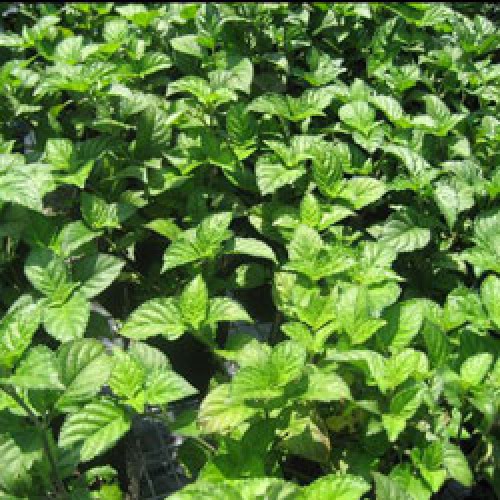
Patchouli (Pogostemon cablin) is a unique aromatic plant that belongs to the Lamiaceae family, commonly known as the mint or deadnettle family. This family is known for its aromatic members that are characterized by square stems and opposite leaf arrangement. Originally native to tropical regions of Asia such as the Philippines and Malaysia, patchouli has now become a staple in many tropical climates around the globe.
As a perennial plant, patchouli lives for more than two years, growing to heights of about 2 to 3 feet. Structurally, it is considered a subshrub due to its mixed woody and herbaceous tissue. The soft yet erect stems, covered in fine hair, exhibit a square-shaped cross-section, a trait often associated with the mint family.
The leaves of patchouli are broadly egg-shaped, ovate, and sizable, measuring between 7–12 cm in length and 4–6 cm in width. They are especially fragrant when dried, owing to the essential oils they contain. The plant also produces small, pale pink-white flowers that have bilateral symmetry and grow in inflorescence spikes.
Suited to warm, tropical climates, patchouli is not frost-tolerant and prefers well-drained soil for optimal growth. In terms of its utility, the leaves are typically harvested two to three times a year to extract the highly valued patchouli oil through a process known as steam distillation. This oil, known for its strong, earthy scent, is commonly used in perfumes, soaps, incense, and a variety of other cosmetic and household products.
Within the larger classification of angiosperms or flowering plants, patchouli is a part of the eudicots clade, encompassing a significant number of flowering plant groups. The plant reproduces via several methods, including seeds, stem cuttings, and root division, with stem cuttings being the preferred method for commercial cultivation.
However, patchouli cultivation is not without its challenges, as the plant is susceptible to various fungal diseases and pests, including aphids and spider mites, which can have a significant impact on crop yield.
Despite these challenges, patchouli has maintained its popularity, not just for its commercial uses but also for its medicinal properties. Used for centuries in traditional Asian medicine, patchouli has potential medicinal properties, including acting as an anti-inflammatory, antimicrobial, antifungal, and insecticidal agent.
