
Every order ships USPS Priority — $10.95 flat-rate USPS Priority shipping on all US orders, no minimum. Free shipping on domestic orders over $299.
Welcome to Stillpoint. Subscribe to our newsletter for sale details and new-product news · One discount code per order · Every order is hand-poured, packed with care in ceremony, and shipped as we receive it.

Niaouli Essential Oil ct. 1,8-Cineole | Madagascar

Melaleuca quinquenervia ct 1,8 cineole

  • Niaouli Essential Oil ct. 1,8-Cineole | Madagascar

Average Rating: (see reviews)

$9.00 Ex Tax: $9.00

GC/MS Report

Gas Chromatography Analysis (%)

Monoterpenes

α-pinene 7.99
d-limonene 7.25
β-pinene 2.83
γ-terpinene 1.35
para-cymene 1.29
β-myrcene 0.82
terpinolene 0.70
α-terpinene 0.37
α-thuyene 0.20

Monoterpenols

α-terpineol 6.27
terpinen-4-ol 0.99
linalol 0.28
δ-terpineol 0.26
citronellol 0.10
isopulegol 0.08

Sesquiterpenols

viridiflorol 4.32
nerolidol 2.09

Sesquiterpenes

β-caryophyllene 1.43
δ-cadinene 0.23
α-humulene 0.22
β-selinene 0.21
γ-cadinene 0.19
α-selinene 0.15

Esters

terpinyl acetate 0.95

Oxides

1,8-cineole 59.92
Caryophyllen Epoxyde 0.40

Essential Facts

  • Latin Name: Melaleuca quinquenervia ct 1,8 cineole
  • Country of Origin: Belize
  • Botanical Family: Myrtaceae
  • Plant Parts: Leaves, Twigs/Branches
  • Note Classification: Middle
  • Cultivation Method: Distiller is Certified Organic
  • Method of Extraction: Steam or Hydro Distillation
  • Extraction Date: October 2025
  • Approx. Shelf Life: 5 years
  • Chemical Family: Monoterpenes, Oxides
  • Batch: niamad
  • Aroma: Camphoraceous, Fresh, Lemony, Medicinal, Strong
  • Energetic Applications: 2nd Chakra - relationships, creation energy, 4th Chakra - unconditional love, 5th Chakra - speaking truth, Expansive, Protective, Purifying
  • Therapeutic Properties: Anti-allergenic, Anti-asthmatic, Anti-bacterial, Anti-fungal, Anti-histamine, Anti-infectious, Anti-inflammatory, Anti-microbial, Anti-septic, Anti-viral, Decongestant, Expectorant, Immuno-stimulant
Notes & Use

Personal Use

Niaouli Essential Oil — South Africa (Melaleuca quinquenervia)
Fresh | Camphoraceous | Clearing

Niaouli comes in like clean air moving through a room that has been closed too long. Its aroma is fresh, camphoraceous, green, slightly sweet, and medicinal, with a clear respiratory brightness that feels opening without being too sharp.

This is an oil for congestion, stale air, skin that needs cleansing, and the heavy, foggy feeling that can come with seasonal crud, too much indoor air, or too much energetic residue hanging around the field. Niaouli has the classic Melaleuca family signature — aromatic leaves, practical cleansing support, respiratory freshness, and skin care — but it carries its own clean, steady presence.

Stillpoint’s South African Niaouli essential oil is steam distilled from the leaves of Melaleuca quinquenervia, an aromatic tree in the Myrtaceae family. Niaouli has long been valued in traditional and aromatic use for respiratory support, skin cleansing, immune-season blends, deodorizing formulas, and atmospheric freshness.

This oil is for breath. For clarity. For skin. For clearing the room when the air, body, or energy field feels loaded.

Therapeutic Applications
Respiratory Support + Clear Breathing
  • Niaouli is traditionally used in respiratory blends when the breath feels heavy, stuffy, congested, or restricted.
  • Its fresh, camphoraceous aroma may support easier breathing during cold-season discomfort, sinus pressure, nasal congestion, or chest heaviness.
  • Useful in diffuser blends, personal inhalers, shower steam blends, chest rubs, room-clearing formulas, and seasonal wellness blends.
  • Especially helpful when someone wants clear respiratory support with a softer edge than many Eucalyptus oils.
Immune-Season + Cleansing Support
  • Niaouli is a strong choice for immune-season aromatic care and household wellness blends.
  • May support formulas for stale indoor air, sickroom freshness, seasonal crud, shared spaces, and cold-season body-care blends.
  • Useful in room sprays, diffuser blends, shower blends, hand-cleansing formulas, and low-dilution chest or back rubs.
  • Its fresh, medicinal profile makes it especially appropriate when the body and room both need a clean reset.
Skin-Cleansing + Topical Support
  • Niaouli has a long-standing place in skin-cleansing and topical support blends.
  • May be useful in properly diluted formulas for blemish-prone skin, oily skin, minor irritation, foot care, deodorizing body blends, and first-aid-style aromatic support.
  • A good choice when the skin needs freshness, clarity, and cleansing support.
  • Best used diluted and thoughtfully, especially on sensitive, irritated, or reactive skin.
Muscular + Body Support
  • Niaouli may be useful in massage blends when the body feels tired, heavy, achy, or weighed down by seasonal illness.
  • Can support blends for general body aches, cold-season discomfort, tired muscles, heavy limbs, post-illness recovery massage, and body-clearing formulas.
  • Its action is more clearing and freshening than deeply heating.
  • Helpful when the body feels sluggish, bogged down, or in need of clean movement.
Mental Clarity + Fatigue
  • Niaouli’s fresh, camphoraceous aroma may help clear mental fog and support alertness.
  • Useful when the mind feels dull, tired, stuffy, sluggish, mentally congested, or flattened by too much indoor air.
  • Can be helpful in diffuser blends, personal inhalers, study blends, morning resets, workroom sprays, and focus-support formulas.
  • Niaouli clears the mind through the breath — when the air opens, the thinking often follows.
Deodorizing + Atmospheric Freshness
  • Niaouli is excellent in deodorizing and room-freshening blends.
  • Useful in bathroom sprays, sickroom sprays, linen sprays, shoe sprays, foot sprays, cleaning blends, and treatment-room clearing formulas.
  • Its green medicinal freshness helps shift spaces that feel stale, heavy, musty, closed-in, or emotionally congested.
  • This is the oil for rooms that need to breathe again.
Emotional + Energetic Clearing
  • Niaouli may support emotional and energetic clearing when the field feels heavy, foggy, congested, or overloaded.
  • Useful after illness, conflict, too much people-energy, emotional heaviness, stagnant indoor air, or long periods of feeling dull and energetically coated.
  • Brings a sense of clean space, fresh breath, renewed clarity, energetic protection, and emotional freshness.
  • Energetically, Niaouli feels like opening the windows inside the body — breath first, then the rest of the system starts to follow.

Traditional Use

Traditional Use and Benefits of Niaouli
Melaleuca quinquenervia

Respiratory Support | Skin Cleansing | Practical Paperbark Medicine
Niaouli belongs to the old Melaleuca plant line — aromatic leaves, papery bark, strong cleansing presence, and practical plant medicine. This is the same broader family current as Tea Tree, Cajeput, Rosalina, and other Australian aromatic trees, but Niaouli has its own clear, green, respiratory medicine.

Traditionally, Melaleuca species were used by Indigenous Australians for everyday body care, respiratory support, skin tending, shelter, wrapping, and practical household needs. With Niaouli specifically, the leaves and flowers have been used as infusions or teas, and the cineole-rich chemotype is the one most associated with Niaouli oil production and medicinal aromatic use. 

Respiratory Support + Colds
  • Niaouli and related Melaleuca leaf preparations have traditional use for coughs, colds, congestion, feverish states, influenza-type discomfort, and heavy breathing.
  • Leaf infusions, inhalations, baths, and aromatic preparations were traditionally used when the head, chest, or breath felt congested.
  • This traditional use makes sense with Niaouli’s fresh, camphoraceous leaf aroma — it is plant medicine for opening the breath and clearing what feels heavy.
  • In the body, Niaouli’s old medicine is direct: help the air move again.
Headache + Heavy-Headedness
  • Niaouli’s traditional use includes support for headaches and general sickness, especially when connected to congestion, colds, or a heavy head.
  • Leaf preparations were used in ways that brought the aromatic plant compounds close to the breath, skin, and upper body.
  • This is not “headache cure” language. It is traditional-use language: Niaouli was reached for when the head felt full, the breath felt blocked, and the body needed clearing.
  • It belongs to that practical herbal lane where clearing the air can help the whole system feel less trapped.
Skin Cleansing + Wound Tending
  • Niaouli has a strong traditional and aromatic relationship with skin cleansing, skin freshness, and topical support.
  • Traditional and modern plant uses include skin-cleansing preparations, aromatic washes, and topical blends where the skin needs fresh, clean support.
  • Related Melaleuca plants have long been used for skin ailments and cleansing purposes, and Niaouli carries that same practical family signature: aromatic leaves, strong cleansing presence, and skin-supportive use. (PMC)
  • This is one of Niaouli’s clearest traditional lanes: clean the skin, tend the surface, and support the body where things feel irritated, stale, or vulnerable.
Tea, Infusions + Leaf Medicine
  • Niaouli’s plant medicine is rooted in the leaves and flowers.
  • Traditional preparations include infusions, teas, inhalations, baths, and aromatic leaf use.
  • The “tea tree” name itself is connected to the broader Melaleuca tradition of preparing leaf infusions as herbal teas.
  • This matters because Niaouli is not only an essential oil story. The essential oil is one concentrated expression of a broader plant tradition: leaf, vapor, water, breath, skin, and household care.
Household + Practical Paperbark Use
  • Melaleuca quinquenervia is also known as Broad-Leaved Paperbark or Coastal Paperbark.
  • Paperbark trees were traditionally valued not only for medicine, but also for practical daily use.
  • The bark of related paperbark species was used for shelter, bedding, containers, wrapping, food preparation, fire tinder, and other household needs.
  • That gives Niaouli a deeper plant identity: this is not just an aromatic tree. It is a useful tree.
  • Bark for protection. Leaves for breath. Aroma for cleansing. A whole plant that knows how to help people live.
Immune-Season + Cleansing Plant Character
  • Niaouli’s traditional use sits strongly in the cold-season, respiratory, and cleansing lane.
  • It has been used where the body needed help with congestion, sickness, heavy air, and skin-cleansing support.
  • The cineole-rich Niaouli chemotype is associated with medicinal aromatic use and has been compared to Cajeput in composition and use. 
  • In traditional plant language, Niaouli supports the places where the body needs freshness: breath, skin, room, and field.
Emotional + Nervous System Benefits
  • Niaouli’s traditional use is mostly physical and practical, but the emotional benefit comes through the breath.
  • When the chest clears, the mind often clears.
  • When the room smells fresher, the nervous system can stop feeling so buried.
  • When the skin feels clean and the body feels less heavy, the spirit has more room to come back online.
  • Niaouli’s emotional medicine is clean air medicine: simple, green, practical, and deeply needed when everything feels stale, foggy, or overloaded.

Botany

Botany
Melaleuca quinquenervia, commonly known as Niaouli, Broad-Leaved Paperbark, Paperbark Tea Tree, or Punk Tree, is a small to medium-sized evergreen tree in the Myrtaceae family. This is the same aromatic plant family that includes Tea Tree, Cajeput, Rosalina, Myrtle, Clove, and Eucalyptus. Niaouli is native to coastal eastern Australia, New Caledonia, Papua New Guinea, and nearby regions, where it often grows in wetlands, swampy ground, floodplains, and coastal lowlands.

The essential oil is steam distilled from the leaves. The tree carries its medicine in broad, aromatic leaves, thick papery bark, and a strong relationship with water, breath, and resilience. Niaouli grows where land and water meet — swamps, floodplains, river edges, estuaries, and seasonally wet ground. Its medicine reflects that: clearing, protective, breathable, and deeply practical.

Botanical Profile
  • Botanical Name: Melaleuca quinquenervia
  • Family: Myrtaceae
  • Common Names: Niaouli, Broad-Leaved Paperbark, Paperbark Tea Tree, Punk Tree
  • Plant Type: Evergreen aromatic tree
  • Part Used for Distillation: Leaves
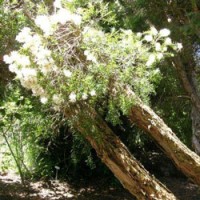
  • Growth Habit: Small to medium-sized spreading tree with a sturdy trunk, papery bark, aromatic leaves, and bottlebrush-like flower spikes
  • Height: Commonly 8–20 meters tall, though height varies by habitat and growing conditions
  • Flowering Season: Spring through early autumn in Australia, often September through March depending on region and conditions
  • Harvest Time for Distillation: Leaves are harvested when aromatic compounds are well developed
Physical Characteristics
  • Leaves: Broad, leathery, grey-green to dull green leaves; lance-shaped to egg-shaped; usually marked with prominent longitudinal veins
  • Bark: Thick, pale, layered, papery bark that peels in soft sheets or strips
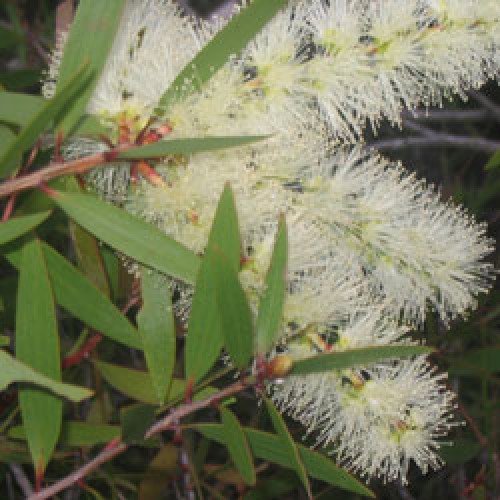
  • Flowers: Cream, white, or greenish bottlebrush-like flower spikes arranged at branch tips or upper leaf axils
  • Fruit: Small woody capsules clustered along the branches after flowering
  • Aroma: Fresh, camphoraceous, green, medicinal, slightly sweet, and clearing when the leaves are crushed or distilled
  • Overall Form: Strong, spreading, resilient, and water-adapted, with a protective bark structure and highly aromatic foliage
Native Habitat + Growth Conditions
  • Native To: Coastal eastern Australia, New Caledonia, Papua New Guinea, and nearby regions
  • Preferred Habitat: Swamps, floodplains, coastal lowlands, river margins, estuary edges, and seasonally wet areas
  • Preferred Soil: Moist, silty, swampy, or seasonally waterlogged soils; can tolerate challenging wetland conditions
  • Sunlight: Full sun to bright open conditions
  • Climate: Tropical to subtropical coastal climates with warmth and moisture
  • Water Relationship: Strong affinity for wet ground, seasonal flooding, and low-lying coastal environments
  • Ecological Notes: Niaouli supports pollinators and wildlife through its nectar-rich flowers and can resprout strongly after disturbance or fire, reflecting the resilience common to many Australian paperbark trees
Energetic Botanical Signature
Niaouli teaches through bark, breath, and wetland resilience. It grows where water collects, where the ground can become heavy, saturated, and unstable — yet the tree rises with structure, aromatic clarity, and thick protective bark. That is the doctrine: Niaouli knows how to live in the damp places without losing its ability to clear, breathe, and stand.

Its papery bark speaks to protection, layering, and release. Its aromatic leaves speak to breath, cleansing, and fresh air. Its wetland habitat speaks to emotional and energetic congestion — the places where things collect, sit, and begin to feel heavy. Niaouli’s medicine is the clean breath that moves through that heaviness. It teaches: protect your structure, clear the air, and let what has gone stagnant begin to move again.
Energetics

Energetic Properties

Energetic, Spiritual, and Emotional Qualities of Niaouli
Clear Breath • Protective Layers • Fresh Air Renewal

Niaouli is an oil of clearing through the breath.

It moves like clean air through a crowded room, not loud, not dramatic, just unmistakably fresh. Green. Camphoraceous. Direct. It has that paperbark medicine — layered, protective, practical — and that leaf medicine that knows how to open what has gotten heavy, stale, congested, or emotionally coated.

Energetically, Niaouli speaks to the places where the system feels burdened by buildup.

The room that still feels full after everyone has left.
The chest that wants a deeper breath.
The mind that feels fogged over.
The emotional body that has been breathing the same old air for too long.

Niaouli helps clear the atmosphere around the body and inside the field. It supports the release of emotional stagnation, energetic residue, sickroom heaviness, and the kind of dullness that comes when the spirit has been sitting in stale air — literally or metaphorically.

This oil is especially helpful when the body and energy field feel congested at the same time. When the breath is shallow, the mind is foggy, the skin feels burdened, and the whole system says, “I need space.”

Niaouli says:
Breathe.
Clear the air.
Let the old heaviness lift.
You are allowed to take up fresh space again.

Energetic Themes
  • Supports energetic clearing when the field feels heavy, foggy, or overloaded
  • Helps open the breath when emotional heaviness has settled into the chest
  • Encourages mental clarity when the mind feels dull, stuffy, or crowded
  • Supports protection through energetic layering rather than hard shutdown
  • Helps release stagnant room energy after illness, conflict, caregiving, or too much people-energy
  • Encourages emotional freshness after periods of heaviness, fatigue, or seasonal depletion
  • Supports the feeling of clean boundaries without becoming rigid
  • Helps clear the “coated” feeling that can come from stress, illness, or emotional residue
  • Brings a sense of renewed air to the body, mind, and spirit
  • Supports practical spiritual hygiene: clear the room, clear the field, open the breath
  • Helps the body feel less burdened and more able to come back online
  • Encourages resilience in damp, heavy, emotionally saturated places
Chakra Connections

Root Chakra
Niaouli supports the root chakra through its paperbark medicine: protection, shelter, resilience, and layered support.
  • Helps the body feel protected without becoming locked down
  • Supports grounding after illness, stress, or energetic depletion
  • Encourages a sense of safety through clean space and clear boundaries
  • Helps stabilize the field when the environment feels crowded or heavy
  • Supports recovery after the body has felt vulnerable, exposed, or drained
  • Brings the feeling of standing rooted, even when the ground feels emotionally wet or unstable
Niaouli’s root medicine is not heavy. It grounds through protection, breath, and the feeling that the space around you has been cleared enough to stand in.

Heart Chakra
Niaouli touches the heart through breath.
When the heart is heavy, the breath often gets smaller. When the emotional field is congested, the chest can feel full of things that were never fully exhaled. Niaouli helps create space around the heart by clearing the air around it.
  • Supports emotional clearing when the heart feels burdened or stale
  • Helps make room for grief, stress, or old heaviness to move through the breath
  • Encourages the heart to feel protected without shutting down
  • Supports recovery after caregiving, conflict, illness, or emotional overload
  • Helps clear the residue of rooms, relationships, and conversations that linger too long
  • Brings fresh air around the heart without forcing emotional exposure
Niaouli does not pry the heart open. It clears the atmosphere around it so the heart can breathe again.

Throat Chakra
Niaouli has a strong relationship with the throat chakra because of its clear respiratory and air-moving quality.
  • Helps clear energetic congestion around the throat and upper chest
  • Supports expression when words feel stuck behind fatigue, fog, or emotional residue
  • Encourages clean communication without overexplaining
  • Helps release the feeling of swallowed air, swallowed words, or swallowed stress
  • Supports breath-based practices, chanting, prayer, and spoken intention
  • Clears the channel between breath and voice
Niaouli helps the throat remember that expression begins with breath. Before the words come, the airway needs space.

Third Eye Chakra
Niaouli supports the third eye by clearing mental fog and helping the mind feel less crowded.
  • Helps lift dullness, confusion, and stuffy-headed energy
  • Supports clearer perception when the field feels energetically loaded
  • Encourages practical discernment instead of mental spinning
  • Helps reduce the sense of being coated by other people’s energy
  • Supports focus after illness, fatigue, or long periods indoors
  • Brings clean air to the intuitive field so perception feels sharper and less muddy
Niaouli’s third eye medicine is simple and useful: clear the static, open the air, and see what is actually in front of you.

Spiritual Use
  • Useful in rituals for clearing, protection, breath renewal, and energetic hygiene
  • Supportive after illness, caregiving, conflict, or emotionally heavy conversations
  • Helpful in room sprays, diffuser blends, and threshold rituals when a space needs to feel clean again
  • Useful before meditation, prayer, or breathwork when the mind feels foggy or the room feels stale
  • Supportive in throat chakra work when breath, voice, and truth need more space
  • Helpful in heart work when grief or stress has made the chest feel heavy
  • Useful in root chakra practices when protection, grounding, and energetic boundary are needed
  • Supportive after client work, teaching, public interaction, or too much people-energy
  • Helpful in rituals for releasing old room energy, sickroom heaviness, or emotional residue
  • Useful when the spirit needs freshness, but not stimulation for the sake of stimulation
Energetic Cautions
Niaouli is clearing, camphoraceous, and respiratory in its energetic tone, so it may feel too sharp or too medicinal when someone is emotionally raw, deeply grieving, or in need of soft containment.
  • Use lightly when the emotional body feels cracked open or overly exposed
  • Pair with softer oils when comfort is needed alongside clearing
  • Avoid overusing it when the nervous system is already overstimulated or scent-sensitive
  • Use with gentler oils like Lavender, Rosalina, Sweet Orange, Sandalwood, Cedarwood, or Neroli when the field needs tenderness
  • Best used when there is heaviness, fog, congestion, stale energy, or a need for clean protection
Niaouli clears the air. It does not do the emotional work for you, and it does not pretend the heaviness was never there.
It simply helps move the atmosphere around it.

Niaouli is clean breath medicine. Paperbark protection. Green clearing. It helps the body remember that fresh air can be a spiritual reset, that protection can be layered instead of rigid, and that sometimes the first step back to yourself is one honest breath in a cleared room.

Affirmation
I clear the stale air from my body, mind, and spirit. I breathe into fresh space, protect what is tender, and allow clarity to return one breath at a time.

Traditional & Folklore

Niaouli’s folklore belongs to the paperbark trees — plants of shelter, wrapping, protection, smoke, water, and breath.
This is not a plant with a big Greek or Roman mythology trail. Its old story is tied to Indigenous Australian relationships with paperbark trees, especially the way the bark was used to protect, cover, wrap, shelter, and hold what was vulnerable. Paperbark was traditionally used for shelter, bedding, bandages, food wrapping, and carrying materials; some sources also describe paperbark being used in funeral and spiritual ceremonies, where bodies were wrapped in the bark. 

Paperbark Protection + Wrapping
Paperbark carries the old magic of protection through layers.

The bark peels in soft sheets, and in traditional life it was used to wrap, cover, line, shelter, bandage, and hold. That gives Niaouli a deep folklore signature of protection that is not hard or armored. It protects by layering. It protects by holding. It protects by creating a breathable boundary between the tender thing and the outside world.

In folklore terms, this is shielding medicine.
Not a wall.
A wrap.
A covering.
A sacred layer between the body and what is too much.

Shelter + Home Protection
Paperbark was used to build and reinforce shelters, including huts, roofing, bedding, and protective structures. In Noongar plant knowledge, paperbark was used for huts and women’s birthing huts, which gives the tree a strong association with shelter, birth, protection, and the holding of vulnerable thresholds. 

That matters.
Niaouli’s old magic is not decorative. It is the magic of keeping people dry, warm, covered, and protected.
In the symbolic field, Niaouli becomes a plant for the home boundary — the roof, the bed, the doorway, the place where the body can rest without being exposed.

Birth, Death + Thresholds
Paperbark has been associated with major human thresholds: birth, sheltering, healing, and death.
Some sources describe paperbark being used in funeral and spiritual ceremonies, with bodies wrapped in bark. Other traditional uses include birthing shelters and bedding. 

That gives Niaouli a deep threshold medicine.

It belongs to the places where life changes form:
Birth.
Illness.
Recovery.
Death.
Rest.
Protection.
Return.

This is not “pretty plant folklore.” This is serious old human medicine: wrap what is vulnerable, shelter what is transitioning, and protect the body as it crosses from one state to another.

Smoke, Vapor + Clearing
Aromatic paperbark leaves were burned, boiled, crushed, or inhaled in traditional contexts, which places Niaouli in the old folklore of smoke and vapor clearing. The plant’s scent moves through air and breath, so its magic is connected to clearing what has become heavy, stale, or intrusive. 

In folk practice, aromatic plants like this often become plants of spiritual hygiene.

They clear the room.
They shift the air.
They move heaviness out of the body and space.
They help the unseen atmosphere feel cleaner.
Niaouli carries that kind of clearing: green, camphoraceous, practical, and direct.

Wetland Edge + Liminal Magic
Niaouli grows naturally in coastal wetlands, swamps, floodplains, and low-lying watery places. Plants that grow where land and water meet often carry liminal folklore because they live at thresholds — between solid ground and water, movement and stagnation, shelter and exposure. 

Niaouli’s magic is wetland-edge magic.
It knows the places where things collect.

Water.
Emotion.
Sickness.
Old air.
Human residue.

And still, the tree rises with aromatic leaves and protective bark.
Its folklore says: you can stand in the heavy place and still clear the air.

Bees, Nectar + Sweetness
Paperbark forests are also associated with bees, honey, and nectar. Some sources note that honey and “bee bread” were collected from native stingless bee hives in melaleuca forests. 

This gives Niaouli a softer folklore thread: sweetness in the wet places.

The tree is protective and clearing, but it also feeds pollinators. It grows in damp, heavy ground and still offers nectar.

Symbolically, that is powerful.
Niaouli does not only clear heaviness.
It makes room for sweetness to return.

The Folklore Medicine
Niaouli’s folklore is the old magic of paperbark: protection, wrapping, shelter, birth, death, smoke, breath, wetland thresholds, and sweetness after heaviness.

It is the bark that wraps the vulnerable.
The shelter that keeps the body covered.

The aromatic leaves that clear the air.
The wetland tree that stands where things collect.
The nectar-bearing branches that remind us life re
turns after the heaviness lifts.

Niaouli says:

Wrap what is tender.
Clear what is stale.
Protect the threshold.
Let the breath move again.
Chemistry

Chemical Components

Aroma-Chemistry of Niaouli
Respiratory Freshness, Skin Cleansing + Clear Air Medicine

Niaouli is primarily a monoterpene oxide- and monoterpene-rich oil, and its aroma tells you that right away: fresh, camphoraceous, green, medicinal, slightly sweet, and clearing. It has that clean leaf-breath quality that moves through the nose, chest, and room like fresh air finding the places that have gone stale.

Niaouli essential oil is most commonly associated with the 1,8-cineole chemotype, though the exact chemistry can vary depending on origin, harvest, chemotype, growing conditions, and distillation. Commonly discussed constituents include 1,8-cineoleα-pinenelimoneneα-terpineolviridiflorollinalool, and related trace components.

Its chemistry gives it a strong respiratory and cleansing identity. Niaouli clears without feeling as forceful as some Eucalyptus oils. It supports breath, skin, air, and energetic freshness with a practical, green, steady presence.
This is clean air medicine in chemical form.

Main Chemical Families

Oxides
Niaouli is often rich in 1,8-cineole, also known as eucalyptol. This is one of the major constituents responsible for its fresh, camphoraceous, respiratory-supportive aroma.
  • Known for respiratory-supportive, expectorant, and clearing qualities
  • Gives Niaouli its fresh, medicinal, breath-opening character
  • Supports its traditional use in blends for congestion, coughs, colds, sinus heaviness, and chest tightness
  • Helps explain why Niaouli is useful in diffuser blends, inhalers, shower steam blends, and chest rubs
  • Contributes to the oil’s clean-air, immune-season, and room-clearing applications
Energetically, 1,8-cineole is the open window in Niaouli. It moves through heaviness, clears the head, and helps the body remember breath.

1,8-Cineole
1,8-cineole deserves its own moment because it is one of Niaouli’s defining constituents.
It contributes to:
  • Respiratory freshness
  • Clear breathing support
  • Mucus-clearing aromatic action
  • Sinus and nasal openness
  • Immune-season blends
  • Mental clarity and alertness
  • Atmospheric cleansing
This is the part of Niaouli that makes it feel so useful when the air, chest, or head feels congested. It brings a clean, direct movement through the respiratory field.
In Niaouli, 1,8-cineole feels clear and practical — less like a blast of cold air and more like a steady clearing current.

Monoterpenes
Niaouli also contains monoterpenes such as α-pinenelimonene, and related constituents. These lighter molecules contribute brightness, diffusion, movement, and fresh-air lift.
  • Support the oil’s fresh, green, clearing top note
  • Help Niaouli move quickly through the aromatic field
  • Contribute to respiratory freshness and mental clarity
  • Add brightness and movement to cleansing blends
  • Support use in room sprays, diffuser blends, and immune-season formulas
  • Help keep the aroma from feeling too heavy or flat
Energetically, the monoterpenes are the first breeze through the room. They move quickly, clear the surface, and help the deeper medicine travel.

α-Pinene
α-pinene contributes a fresh, pine-like, airy quality to Niaouli’s aroma.
It may support:
  • Clear breathing
  • Respiratory openness
  • Mental clarity
  • Fresh-air feeling
  • Cleansing and purifying blends
  • Alertness when the mind feels foggy or dull
α-Pinene helps give Niaouli that clean, outdoor quality — the sense that the air has more space in it. It supports the oil’s ability to clear both the breath and the mental field.
Energetically, α-pinene is uprightness. It helps the body lift, breathe, and come back into clearer presence.

Limonene
Limonene appears in smaller amounts in many Niaouli oils and contributes brightness, lift, and a subtle citrus-like freshness.
  • Adds lightness to the camphoraceous profile
  • Supports mood-brightening and fresh-air impressions
  • Helps Niaouli feel cleaner and more open
  • Contributes to deodorizing and room-freshening blends
  • Supports the emotional sense of clearing heaviness
This is part of why Niaouli does not feel flat or purely medicinal. There is brightness inside the green clearing.

Monoterpenols
Niaouli may contain monoterpenols such as α-terpineol and sometimes linalool, depending on the oil. These constituents help soften the sharper edges and add skin-supportive, cleansing, and emotionally balancing qualities.
  • Support skin-cleansing and topical care blends
  • Help round the aroma so it feels less piercing
  • Contribute to antimicrobial-oriented aromatic support
  • Add a softer, more balanced feel to the respiratory profile
  • Help Niaouli work well in skin, chest, foot, and body-care formulas
Energetically, the monoterpenols are the softer hand in Niaouli’s medicine. They help the clearing feel usable, not harsh.

α-Terpineol
α-terpineol brings a fresh, slightly floral, clean quality to Niaouli and supports its skin-cleansing and respiratory applications.
It may contribute to:
  • Skin freshness
  • Respiratory support
  • Gentle cleansing action
  • Deodorizing blends
  • Emotional steadiness
  • A smoother finish beneath the cineole brightness
This constituent helps bridge Niaouli’s breath medicine and skin medicine. It makes the oil feel useful for both the chest and the surface of the body.

Sesquiterpene Alcohols
Some Niaouli oils may contain sesquiterpene alcohols such as viridiflorol. These deeper constituents add body, grounding, and a more rounded therapeutic profile.
  • Support tissue and skin-care applications
  • Add depth beneath the brighter cineole and monoterpene lift
  • Help make the aroma feel more complete and less fleeting
  • Contribute to the oil’s usefulness in body-clearing and recovery blends
  • Bring a grounded undertone to an otherwise fresh, airy profile
Energetically, the sesquiterpene alcohols are the anchor under the breath. They keep Niaouli from becoming all air and no body.

Viridiflorol
Viridiflorol is a notable constituent in some Melaleuca oils, including certain Niaouli profiles.
It may support:
  • Skin-care blends
  • Tissue comfort
  • Cleansing formulas
  • Anti-inflammatory-leaning aromatic support
  • A softer, more grounded base beneath the respiratory brightness
Viridiflorol gives Niaouli a deeper layer. It helps explain why Niaouli can feel useful for skin and body care, not only breath and air.

Minor Components
Trace constituents may include additional monoterpenes, alcohols, esters, sesquiterpenes, and other aromatic molecules depending on origin, chemotype, growing conditions, harvest, and distillation.
These minor components help shape the final aroma: the sweetness, the green leaf note, the camphoraceous lift, the medicinal clarity, and the softer edges underneath.

Niaouli is not impressive because of one molecule alone. Its usefulness comes from the relationship between cineole-driven breath support, monoterpene brightness, monoterpenol softness, and deeper grounding trace constituents.

Therapeutic Implications of This Chemistry

Respiratory support:
The 1,8-cineole-rich profile makes Niaouli especially useful in blends for clear breathing, congestion, sinus heaviness, chest tightness, coughs, and cold-season respiratory support.

Immune-season freshness:
The oxide, monoterpene, and monoterpenol chemistry supports Niaouli’s role in diffuser blends, room sprays, shower blends, and chest rubs when the body or home needs seasonal aromatic support.

Skin-cleansing support:
The monoterpenol and cineole components help explain Niaouli’s use in properly diluted blends for oily skin, blemish-prone skin, minor irritation, foot care, deodorizing body blends, and first-aid-style aromatic support.

Mental clarity:
The fresh camphoraceous chemistry may help clear mental fog, dullness, and stuffy-headed fatigue. Niaouli helps the mind through the breath.

Deodorizing and atmospheric clearing:
Niaouli’s green medicinal aroma makes it excellent for bathroom sprays, sickroom sprays, treatment-room clearing, shoe sprays, and stale-air blends.

Body-clearing support:
Niaouli may support massage blends when the body feels heavy, sluggish, tired, or affected by seasonal illness. Its action is clearing and freshening rather than deeply warming.

Energetic clearing:
The cineole and monoterpene brightness gives Niaouli a clean, breath-opening energetic signature. It helps move fog, heaviness, stale emotion, and room residue.

Niaouli’s chemistry is practical, green, and clear.
It opens the breath, freshens the room, supports the skin, clears the mind, and helps the whole system feel less burdened. It is the chemistry of clean air moving through places that have been holding too much.
Recipes & Blends

Recipes & Blends

Clear Breath Chest Blend
Physical Support | Respiratory Freshness + Clear Breathing
 
Niaouli Essential Oil (Melaleuca quinquenervia): 8 drops
Rosalina Essential Oil (Melaleuca ericifolia): 8 drops
Eucalyptus Radiata Essential Oil (Eucalyptus radiata): 6 drops
Siberian Fir Essential Oil (Abies sibirica): 7 drops
Sweet Orange Essential Oil (Citrus sinensis): 11 drops

This blend is designed for chest rubs, diffuser blends, shower steam blends, and seasonal wellness formulas when the breath feels heavy, stuffy, or congested.
  • Niaouli brings fresh, camphoraceous respiratory support and clean air medicine
  • Rosalina offers gentle Melaleuca support with a softer, more skin-friendly feel
  • Eucalyptus Radiata supports clear breathing and open-air movement
  • Siberian Fir brings forest-like respiratory freshness and energetic steadiness
  • Sweet Orange softens the medicinal edge and adds warmth, brightness, and comfort
Dilute in a suitable carrier oil before topical use. For chest or back rubs, a 1% dilution is generally appropriate for adults; use lower dilution for sensitive individuals. Avoid applying near the eyes, nose, mouth, or broken skin.


Fresh Skin + Foot Blend
Physical Support | Skin Cleansing + Deodorizing Body Care

Niaouli Essential Oil (Melaleuca quinquenervia): 7 drops
Tea Tree Essential Oil (Melaleuca alternifolia): 6 drops
Palmarosa Essential Oil (Cymbopogon martinii var. motia): 8 drops
Cedarwood Virginia Essential Oil (Juniperus virginiana): 7 drops
Lavender Essential Oil (Lavandula angustifolia): 8 drops
Spearmint Essential Oil (Mentha spicata): 4 drops

This blend is designed for foot oils, deodorizing body blends, cleansing massage oils, and topical formulas when the skin needs fresh, clean, green support.
  • Niaouli brings skin-cleansing freshness and practical topical support
  • Tea Tree adds classic cleansing strength for skin and foot-care formulas
  • Palmarosa supports skin balance and brings a softer floral-green body
  • Cedarwood Virginia adds dry, grounding, deodorizing depth
  • Lavender supports skin comfort and helps round the stronger cleansing oils
  • Spearmint brings cool freshness and a clean mental lift
Dilute before topical use. A 1% dilution is generally appropriate for frequent body or foot use; 1–2% may be appropriate for short-term adult body care. Avoid broken, irritated, inflamed, or freshly shaved skin.


Open the Windows Blend
Energetic Support | Field Clearing + Fresh Air Renewal
Niaouli Essential Oil (Melaleuca quinquenervia): 8 drops
Fragonia Essential Oil (Agonis fragrans): 7 drops
Lemon Tea Tree Essential Oil (Leptospermum petersonii): 4 drops
Ho Wood Essential Oil (Cinnamomum camphora ct. linalool): 8 drops
Green Mandarin Essential Oil (Citrus reticulata): 9 drops
Copaiba Balsam Essential Oil (Copaifera officinalis / Copaifera langsdorffii): 4 drops

This blend is for rooms, bodies, and energy fields that feel stale, heavy, foggy, or overloaded — the kind of energy that needs fresh air, not more analysis.
  • Niaouli clears stale energy and helps open the breath
  • Fragonia supports emotional harmony and whole-system balance
  • Lemon Tea Tree strengthens the bright clearing action
  • Ho Wood softens the nervous system and keeps the blend from feeling too sharp
  • Green Mandarin brings fresh emotional movement and gentle hope
  • Copaiba Balsam anchors the clearing into the body
Use before meditation, breathwork, journaling, client work, space clearing, or after illness, conflict, or too much people-energy. Dilute before applying to the chest, back of neck, feet, solar plexus, or pulse points. Because Lemon Tea Tree can be skin-sensitive for some people, keep topical dilution low.


Paperbark Protection Blend
Energetic Support | Boundaries + Layered Protection

Niaouli Essential Oil (Melaleuca quinquenervia): 7 drops
Black Spruce Essential Oil (Picea mariana): 8 drops
Frankincense Essential Oil (Boswellia carterii): 6 drops
Laurel Leaf Essential Oil (Laurus nobilis): 5 drops
Rhododendron Essential Oil (Rhododendron anthopogon): 5 drops
Patchouli Essential Oil (Pogostemon cablin): 3 drops
Bergamot Essential Oil (Citrus bergamia): 6 drops

This blend is for the moments when your field needs a clean perimeter, your breath needs space, and your body needs to feel protected without hardening.
  • Niaouli brings paperbark protection, clear breath, and energetic freshness
  • Black Spruce restores energetic backbone after stress, illness, or depletion
  • Frankincense steadies the breath and deepens spiritual focus
  • Laurel Leaf supports courage, dignity, and clean boundaries
  • Rhododendron opens spaciousness around the breath and upper field
  • Patchouli anchors the body and helps the protection stay grounded
  • Bergamot brings lightness and emotional lift without weakening the boundary
Use in ritual body oil, room clearing, threshold work, client-work preparation, or after emotionally heavy spaces. Dilute well before topical use. If using Bergamot that is not FCF/bergapten-free, avoid sun or UV exposure on the area of application after topical use.

Affirmation
I clear the air around me and within me. I breathe into fresh space, protect what is tender, and return to myself one clean breath at a time.
Safety Etc.

Safety Information

Niaouli essential oil is generally considered a useful and well-tolerated respiratory and skin-cleansing oil when properly diluted, but it is still a strong aromatic oil and should be used with care.

Its fresh, camphoraceous profile is commonly associated with 1,8-cineole-rich chemistry, so the main cautions are around respiratory sensitivity, children, pets, and proper dilution.

Topical Use
  • Dilute before applying to the skin.
  • General adult dilution: 1–2%.
  • For sensitive skin: 0.5–1%.
  • For facial use or very delicate skin: 0.25–0.5%.
  • For short-term localized adult use: up to 3% may be appropriate when properly formulated.
  • Avoid applying undiluted.
  • Avoid broken, irritated, inflamed, or freshly shaved skin.
  • Patch testing is recommended.
Skin Sensitivity
  • Niaouli is often considered gentler than some sharper antimicrobial oils, but irritation is still possible.
  • Use lower dilution for people with:
    • Sensitive skin
    • Reactive skin
    • Eczema-prone skin
    • Fragrance sensitivity
    • History of essential oil reactions
    • Very young or fragile skin
  • Discontinue use if redness, burning, itching, rash, irritation, headache, nausea, or discomfort occurs.
Diffusion + Inhalation
  • Use in a well-ventilated space.
  • Diffuse in short intervals.
  • Avoid heavy or prolonged diffusion.
  • Use caution around people with asthma, respiratory sensitivity, migraines, or scent-triggered symptoms.
  • If coughing, chest tightness, headache, nausea, dizziness, or discomfort occurs, stop use and bring in fresh air.
Respiratory Sensitivity
  • Niaouli’s cineole-rich profile can be very helpful in respiratory blends, but it can also be too strong for some people.
  • Use caution with:
    • Asthma
    • Reactive airways
    • Chronic respiratory conditions
    • Strong scent sensitivity
    • Migraine triggered by aroma
  • Avoid direct steam inhalation if the respiratory system is reactive.
  • Essential oils should not replace medical care for asthma attacks, bronchitis, pneumonia, severe cough, breathing difficulty, or infection.
Internal Use
  • Internal use is not recommended unless supervised by a qualified practitioner trained in aromatic medicine.
  • Do not add Niaouli essential oil to water, tea, capsules, food, or the mouth without professional guidance.
Pregnancy & Lactation
  • Use cautiously during pregnancy and lactation.
  • Avoid heavy or frequent use.
  • Use low dilution only.
  • Avoid use during the first trimester unless guided by a qualified practitioner.
  • For pregnancy-related respiratory, immune, or skin concerns, professional guidance is best.
Pediatric Use
  • Use cautiously with children.
  • Avoid use with infants and very young children unless guided by a qualified practitioner.
  • Use very low dilution for children.
  • Avoid applying near the face, mouth, nose, eyes, or hands.
  • Diffuse only with good ventilation, short timing, and the ability for the child to leave the space.
  • Cineole-rich oils need extra respect with children. Clear breathing support is wonderful; overwhelming tiny airways is not the goal.
Medical Considerations

Use caution with:
  • Very sensitive skin
  • Fragrance allergies
  • Asthma or respiratory sensitivity
  • Migraine triggered by scent
  • Active dermatitis, eczema, or irritated skin
  • Serious infection
  • Open wounds or deep wounds
  • Fever or acute illness requiring medical care
  • Pregnancy or lactation
  • Children, elders, or medically fragile individuals
  • People taking multiple medications or under medical care
Pets
  • Use thoughtful care around animals.
  • Do not apply directly to pets unless guided by a qualified animal aromatherapy professional.
  • Use good ventilation if diffusing.
  • Allow animals to leave the room.
  • Avoid diffusing around birds.
  • Keep bottles out of reach of pets.
Storage
  • Store in a cool, dark place.
  • Keep away from heat, light, and oxygen.
  • Keep the cap tightly closed.
  • Keep out of reach of children and pets.
  • Discard if the aroma changes significantly, becomes harsh, oxidized, or unpleasant.
General Safety Note

Niaouli is clear, green, practical medicine — beautiful for breath, skin, room clearing, and immune-season blends when used well.
Use it diluted.
Use it with ventilation.
Use it thoughtfully around children, elders, pets, and sensitive lungs.
A little clean air medicine goes a long way.

References

  • Battaglia, Salvatore. The Complete Guide to Aromatherapy, 3rd ed., Vol. I: Foundations & Materia Medica. Black Pepper Creative, 2018.
  • Brophy, Joseph J., Lyndley A. Craven, and John C. Doran. Melaleucas: Their Botany, Essential Oils and Uses. Australian Centre for International Agricultural Research, 2013.
  • CSIRO. “Broad-Leaved Paperbark / Niaouli — Melaleuca quinquenervia.” Australian Essential Oil Woody-Plant Species Profile.
  • Fikry, Esraa, et al. “Chemical Composition and Anti-Lung Cancer Activities of Melaleuca quinquenervia Leaf Essential Oil.” Molecules, 2025.
  • Holmes, Peter. Aromatica: A Clinical Guide to Essential Oil Therapeutics, Volumes 1 and 2. Singing Dragon.
  • Lawless, Julia. The Encyclopedia of Essential Oils. Conari Press.
  • NSW PlantNET — Royal Botanic Garden Sydney.Melaleuca quinquenervia.” National Herbarium of New South Wales.
  • Rhind, Jennifer Peace. Essential Oils: A Handbook for Aromatherapy Practice. Singing Dragon.
  • Rhind, Jennifer Peace. Fragrance and Wellbeing: Plant Aromatics and Their Influence on the Psyche. Singing Dragon.
  • Shakeel, Faiyaz, et al. “Nanoemulsification Improves the Pharmaceutical Properties and Therapeutic Efficacy of Niaouli Essential Oil in Acne Vulgaris.” Pharmaceutics, 2021.
  • Tisserand, Robert, and Rodney Young. Essential Oil Safety: A Guide for Health Care Professionals. 2nd ed., Churchill Livingstone Elsevier, 2014.
  • USDA Forest Service.Melaleuca quinquenervia.” Fire Effects Information System.
  • Valková, Veronika, et al. “Assessment of Chemical Composition and Anti-Penicillium Activity of Niaouli Essential Oil.” Plants, 2022.
  • Wrigley, John W., and Murray Fagg. Bottlebrushes, Paperbarks & Tea Trees, and All Other Plants in the Leptospermum Alliance. Angus & Robertson, 1993.

Related Products

Cajeput Essential Oil

Cajeput Essential Oil

..

$10.00 Ex Tax: $10.00

Reviews (1)

Write a review

Note: HTML is not translated!
    Bad           Good
Powered By OpenCart
Stillpoint Aromatics © 2026