
Personal Use
Lodgepole Pine Essential Oil (Pinus contorta)
This oil smells like a forest exhale. Lodgepole Pine (Pinus contorta), distilled from wild-harvested needles and twigs in the remote Northeast, carries a scent that is resinous, fresh, slightly smoky, and deeply grounding—a pine with both strength and stillness.
Unlike sharper pines, this distillation opens with a woody green clarity and finishes with a soft, balsamic drydown. There’s a quiet depth in this oil—a medicine that grounds without hardening and awakens without overstimulating.
Stillpoint’s Lodgepole Pine essential oil is a limited batch distillation, gathered and steam distilled from freshly harvested material in pristine, high-altitude conditions. It's a rare offering that embodies the wild, wind-shaped resilience of the trees it comes from.
Therapeutic Applications
Respiratory + Lung Support
Lodgepole Pine’s high monoterpene content gives it powerful mucolytic, expectorant, and bronchodilating properties. It's especially effective for congested, heavy lungs—the kind that come with grief, infection, or chronic stagnation. It opens the breath without the bite of more aggressive pines.
Muscle + Joint Relief
Warming, anti-inflammatory, and gently analgesic, this oil may help ease chronic pain, arthritis, and muscular tension. It pairs beautifully in salves or massage blends for those who are achy, cold, or energetically weighed down.
Fatigue + Low Vitality
Energetically and physically, this pine acts as a nervous system stimulant and tonic—without being jarring. It may help increase stamina, especially in cases of emotional exhaustion, burnout, or adrenal depletion.
Immune System Support
Traditionally used to help ward off seasonal colds and flu, Lodgepole Pine can be diffused or applied in dilution to support the body's resilience and immunity, especially during colder months.
Skin + Circulation
With mild rubefacient and antimicrobial effects, this oil may assist with circulatory sluggishness, minor skin infections, and as a warming addition to chest rubs or immune blends.
Traditional Use
Lodgepole Pine has a long-standing relationship with the Indigenous peoples of North America, particularly in the Western and Northern regions where the tree grows abundantly. Its name reflects one of its most important cultural roles—supplying the tall, straight poles used in tipi construction. But its medicine went far deeper than that.
-
Needles and resin were traditionally used for respiratory ailments, including coughs, colds, bronchitis, and sinus congestion. The fresh needles were often brewed into teas or steamed as a decongestant inhalant.
-
The bark and sap were applied to wounds and infections, valued for their antiseptic, drawing, and healing properties.
-
Burned ceremonially or simmered in water, pine helped purify indoor spaces, both physically and energetically.
-
As a tree that thrives in disturbed or burned areas, Lodgepole was also viewed as a resilient regenerator—a symbol of rebirth after destruction.
In energetic folk practice, pine has long been associated with cleansing, grounding, and ancestral connection—used to clear lingering energy, strengthen emotional boundaries, and connect the living to the wisdom of the land and those who came before.
Botany
Lodgepole Pine (Pinus contorta), also known as Shore Pine or Black Pine (in some coastal forms), is a resilient evergreen conifer native to North America. It thrives in a wide range of ecosystems—from subalpine forests in the Rockies to coastal regions and high desert plateaus. In the northeastern U.S., where this small-batch distillation comes from, it grows in rugged, often wind-swept conditions and poor soils, adapting to both cold and drought with ease.
A member of the Pinaceae family, Lodgepole Pine is named for its traditional use: the long, straight trunks were prized by Indigenous peoples as structural poles for lodges and tipis. But beyond its structural use, this tree has long offered energetic and medicinal support to those needing strength through transition.
Botanical Name: Pinus contorta
Family: Pinaceae
Common Names: Lodgepole Pine, Shore Pine, Black Pine (coastal types)
Plant Type: Evergreen conifer
Part Used for Distillation: Needles and twigs
Family: Pinaceae
Common Names: Lodgepole Pine, Shore Pine, Black Pine (coastal types)
Plant Type: Evergreen conifer
Part Used for Distillation: Needles and twigs
Physical Characteristics
-
Height: 9–25 meters (30–80 feet), depending on variety and environment
-
Trunk: Slender, often twisted or contorted in form—especially in harsher climates
-
Bark: Thin, flaky, and reddish-brown to dark gray
-
Needles: Slender, slightly twisted, in bundles of two
-
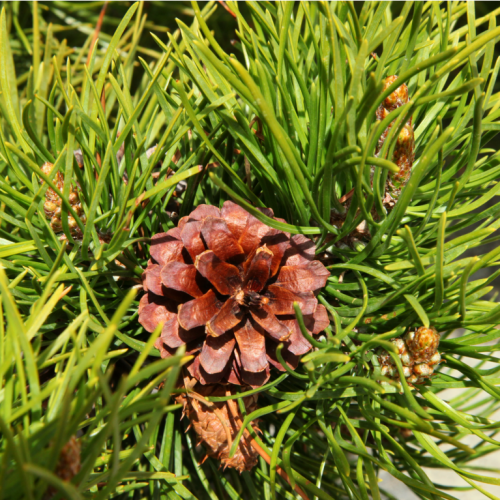
Cones: Small, ovoid, often serotinous (require heat or fire to open)
-
Lifespan: Moderate; many live 100–200 years, though some grow longer in protected zones
Native Habitat and Growth Conditions
-
Region: Native to western and northern North America; this batch is wild-harvested and distilled in the northeastern U.S.
-
Soil: Prefers well-drained, sandy or rocky soils; thrives in nutrient-poor or disturbed areas
-
Climate: Tolerant of wind, cold, and drought; grows at elevations from sea level up to 3,000 meters
-
Ecological Role: Pioneer species—quick to repopulate after fire or disturbance; stabilizes soil and creates wildlife shelter
Energetic Botanical Signature
Lodgepole Pine is a story of resilience through challenge. Its slender, often twisted trunk adapts to high winds and poor soil with quiet strength. It doesn’t seek attention—but it endures, upright and enduring where others fall. As a pioneer species, it reclaims burned or devastated landscapes, holding space for regeneration to begin.
Energetically, this plant offers the same gift: it shows us how to stand again after being leveled, how to root into what remains, and how to rebuild presence and breath—not with force, but with aligned persistence. This is the essence woven into the oil: anchored, adaptable, and fiercely alive.
