Personal Use
Here are some different and fun uses- give them a try
1. Mindful Eating Aid: Therapeutic Application: Add a drop of Bay Laurel essential oil to a bowl of steaming water. Inhale deeply before meals. The unique aroma can help in grounding and centering oneself, promoting mindful eating habits and fostering a deeper connection with food.
2. Memory Retrieval Meditation: Emotional Application: Diffuse Bay Laurel essential oil during meditation sessions aimed at retrieving forgotten memories or past life regressions. Its ancient connection to wisdom and the past can serve as a bridge to long-lost moments.
3. Artistic Expression Catalyst: Therapeutic & Emotional Application: For artists experiencing blockages, using Bay Laurel essential oil in a warm bath might open up unexplored avenues of creativity. Its invigorating aroma can stimulate the senses, encouraging unconventional artistic expressions.
4. Nature Connection Ritual: Emotional Application: On nature walks, carry a small vial of Bay Laurel essential oil. Occasionally inhaling it can deepen the bond with nature, as the tree's essence reminds us of our connection to the earth and ancient forests.
5. Energetic Space Cleansing for Digital Devices: Therapeutic Application: In today's digital age, our devices often become sources of stress and negative energy. While smudging electronics directly isn't feasible, diffusing Bay Laurel essential oil nearby can energetically cleanse the space, promoting a more harmonious interaction with our devices.
6. Emotional Armor for Challenging Conversations: Emotional Application: Before heading into a challenging conversation or a potentially confrontational situation, apply a diluted blend of Bay Laurel essential oil to the wrists. Its properties can act as an emotional shield, fostering strength and clarity.
7. Plant Growth Enhancer: Therapeutic Application: For indoor plants that seem stagnant in their growth, place a bowl of water with a few drops of Bay Laurel essential oil nearby. The evaporating essence, symbolizing growth and vitality, might resonate with the plants, encouraging them to thrive.
Traditional Use
- Pain Alleviation: The analgesic properties of Laurus nobilis make it effective in reducing pain. Its components can interact with pain receptors, offering temporary relief. This makes it a potential alternative for conventional painkillers for conditions like arthritis, muscle pain, or even headaches.
- Defensive Barrier: The essential oil's antibacterial and antifungal traits offer a frontline defense against common skin pathogens. By inhibiting the growth of these microorganisms, it aids in wound recovery and reduces the risk of infections, particularly in minor cuts and abrasions.
- Muscle Relaxant: Laurus nobilis has antispasmodic properties, which means it can help to alleviate involuntary muscle contractions. This can be particularly beneficial for those experiencing muscle cramps or spasms, providing relaxation and relief.
- Respiratory Aid: As an expectorant, the oil assists in the expulsion of mucus and phlegm from the respiratory tracts. This not only aids in clearing congestion but also helps in soothing conditions like bronchitis, making breathing easier.
- Digestive Support: Laurus nobilis can help to regulate and enhance digestive processes. It may alleviate symptoms of indigestion, reduce gas formation, and soothe upset stomachs, creating a more harmonious digestive environment.
- Anti-Inflammatory: Chronic inflammation can lead to various health issues. The anti-inflammatory nature of Laurus nobilis essential oil works by targeting inflammatory pathways, providing relief and potentially aiding in conditions like arthritis.
- System Stimulant: While it can soothe and calm, Laurus nobilis also has the ability to stimulate certain bodily systems. This can lead to enhanced alertness, improved digestion, and an overall sense of revitalization.
- Tonic for the Skin: The astringent properties of the oil mean it can help tighten and tone the skin. This can lead to a more youthful appearance, reduced pore size, and an overall healthier complexion.
- Detox Aid: Its diuretic nature promotes the production and expulsion of urine. This assists in eliminating excess salts, water, and toxins from the body, ensuring better kidney function and overall detoxification.
Botany
Scientific Classification:
- Kingdom: Plantae
- Order: Laurales
- Family: Lauraceae
- Genus: Laurus
- Species: L. nobilis
Description:
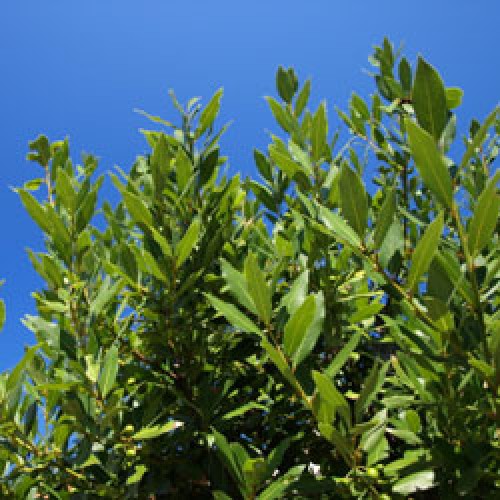
- Growth Form: The Bay Laurel is an evergreen tree or shrub. Depending on its growing conditions and environment, it can grow anywhere from 10 to 60 feet in height.
- Leaves: The leaves are glossy, dark green, and leathery. They are lanceolate (shaped like a lance head) and can measure 3 to 4 inches in length. The leaf margins are smooth, and the leaves release a distinct aromatic fragrance when crushed.
- Stem: The stem is woody and can become quite thick and gnarled in older trees. Young stems may have a smooth bark, which becomes rougher and more textured with age.
- Flowers: The Bay Laurel produces small, pale yellow-green flowers. It's dioecious, meaning individual trees are either male or female. Male flowers produce pollen, while female flowers produce fruit once pollinated.
- Fruit: After pollination, the female trees produce small, oval, black or deep purple berries. Each berry contains a single seed.
Habitat: The Bay Laurel is native to the Mediterranean region. It thrives in well-draining soil and prefers a mix of sun and shade. While it's tolerant of drought once established, it prefers regular moisture. It's commonly found in woodlands, on hillsides, and near coastal areas in its native range.
Cultivation:
- Soil: Prefers well-draining soil with a slightly acidic to neutral pH.
- Water: Moderate watering needs. It's drought-tolerant once established but benefits from regular watering during dry spells.
- Temperature: Thrives in mild climates. While it can handle cooler temperatures, it's sensitive to severe frost.
- Propagation: Typically propagated by seeds, but cuttings can also be used.