Personal Use
Niaouli Essential Oil — South Africa (Melaleuca quinquenervia)
Fresh | Camphoraceous | Clearing
Niaouli comes in like clean air moving through a room that has been closed too long. Its aroma is fresh, camphoraceous, green, slightly sweet, and medicinal, with a clear respiratory brightness that feels opening without being too sharp.
This is an oil for congestion, stale air, skin that needs cleansing, and the heavy, foggy feeling that can come with seasonal crud, too much indoor air, or too much energetic residue hanging around the field. Niaouli has the classic Melaleuca family signature — aromatic leaves, practical cleansing support, respiratory freshness, and skin care — but it carries its own clean, steady presence.
Stillpoint’s South African Niaouli essential oil is steam distilled from the leaves of Melaleuca quinquenervia, an aromatic tree in the Myrtaceae family. Niaouli has long been valued in traditional and aromatic use for respiratory support, skin cleansing, immune-season blends, deodorizing formulas, and atmospheric freshness.
This oil is for breath. For clarity. For skin. For clearing the room when the air, body, or energy field feels loaded.
Therapeutic Applications
Respiratory Support + Clear Breathing
-
Niaouli is traditionally used in respiratory blends when the breath feels heavy, stuffy, congested, or restricted.
-
Its fresh, camphoraceous aroma may support easier breathing during cold-season discomfort, sinus pressure, nasal congestion, or chest heaviness.
-
Useful in diffuser blends, personal inhalers, shower steam blends, chest rubs, room-clearing formulas, and seasonal wellness blends.
-
Especially helpful when someone wants clear respiratory support with a softer edge than many Eucalyptus oils.
Immune-Season + Cleansing Support
-
Niaouli is a strong choice for immune-season aromatic care and household wellness blends.
-
May support formulas for stale indoor air, sickroom freshness, seasonal crud, shared spaces, and cold-season body-care blends.
-
Useful in room sprays, diffuser blends, shower blends, hand-cleansing formulas, and low-dilution chest or back rubs.
-
Its fresh, medicinal profile makes it especially appropriate when the body and room both need a clean reset.
Skin-Cleansing + Topical Support
-
Niaouli has a long-standing place in skin-cleansing and topical support blends.
-
May be useful in properly diluted formulas for blemish-prone skin, oily skin, minor irritation, foot care, deodorizing body blends, and first-aid-style aromatic support.
-
A good choice when the skin needs freshness, clarity, and cleansing support.
-
Best used diluted and thoughtfully, especially on sensitive, irritated, or reactive skin.
Muscular + Body Support
-
Niaouli may be useful in massage blends when the body feels tired, heavy, achy, or weighed down by seasonal illness.
-
Can support blends for general body aches, cold-season discomfort, tired muscles, heavy limbs, post-illness recovery massage, and body-clearing formulas.
-
Its action is more clearing and freshening than deeply heating.
-
Helpful when the body feels sluggish, bogged down, or in need of clean movement.
Mental Clarity + Fatigue
-
Niaouli’s fresh, camphoraceous aroma may help clear mental fog and support alertness.
-
Useful when the mind feels dull, tired, stuffy, sluggish, mentally congested, or flattened by too much indoor air.
-
Can be helpful in diffuser blends, personal inhalers, study blends, morning resets, workroom sprays, and focus-support formulas.
-
Niaouli clears the mind through the breath — when the air opens, the thinking often follows.
Deodorizing + Atmospheric Freshness
-
Niaouli is excellent in deodorizing and room-freshening blends.
-
Useful in bathroom sprays, sickroom sprays, linen sprays, shoe sprays, foot sprays, cleaning blends, and treatment-room clearing formulas.
-
Its green medicinal freshness helps shift spaces that feel stale, heavy, musty, closed-in, or emotionally congested.
-
This is the oil for rooms that need to breathe again.
Emotional + Energetic Clearing
-
Niaouli may support emotional and energetic clearing when the field feels heavy, foggy, congested, or overloaded.
-
Useful after illness, conflict, too much people-energy, emotional heaviness, stagnant indoor air, or long periods of feeling dull and energetically coated.
-
Brings a sense of clean space, fresh breath, renewed clarity, energetic protection, and emotional freshness.
-
Energetically, Niaouli feels like opening the windows inside the body — breath first, then the rest of the system starts to follow.
Traditional Use
Traditional Use and Benefits of Niaouli
Melaleuca quinquenervia
Respiratory Support | Skin Cleansing | Practical Paperbark Medicine
Niaouli belongs to the old Melaleuca plant line — aromatic leaves, papery bark, strong cleansing presence, and practical plant medicine. This is the same broader family current as Tea Tree, Cajeput, Rosalina, and other Australian aromatic trees, but Niaouli has its own clear, green, respiratory medicine.
Traditionally, Melaleuca species were used by Indigenous Australians for everyday body care, respiratory support, skin tending, shelter, wrapping, and practical household needs. With Niaouli specifically, the leaves and flowers have been used as infusions or teas, and the cineole-rich chemotype is the one most associated with Niaouli oil production and medicinal aromatic use.
Respiratory Support + Colds
-
Niaouli and related Melaleuca leaf preparations have traditional use for coughs, colds, congestion, feverish states, influenza-type discomfort, and heavy breathing.
-
Leaf infusions, inhalations, baths, and aromatic preparations were traditionally used when the head, chest, or breath felt congested.
-
This traditional use makes sense with Niaouli’s fresh, camphoraceous leaf aroma — it is plant medicine for opening the breath and clearing what feels heavy.
-
In the body, Niaouli’s old medicine is direct: help the air move again.
Headache + Heavy-Headedness
-
Niaouli’s traditional use includes support for headaches and general sickness, especially when connected to congestion, colds, or a heavy head.
-
Leaf preparations were used in ways that brought the aromatic plant compounds close to the breath, skin, and upper body.
-
This is not “headache cure” language. It is traditional-use language: Niaouli was reached for when the head felt full, the breath felt blocked, and the body needed clearing.
-
It belongs to that practical herbal lane where clearing the air can help the whole system feel less trapped.
Skin Cleansing + Wound Tending
-
Niaouli has a strong traditional and aromatic relationship with skin cleansing, skin freshness, and topical support.
-
Traditional and modern plant uses include skin-cleansing preparations, aromatic washes, and topical blends where the skin needs fresh, clean support.
-
Related Melaleuca plants have long been used for skin ailments and cleansing purposes, and Niaouli carries that same practical family signature: aromatic leaves, strong cleansing presence, and skin-supportive use. (PMC)
-
This is one of Niaouli’s clearest traditional lanes: clean the skin, tend the surface, and support the body where things feel irritated, stale, or vulnerable.
Tea, Infusions + Leaf Medicine
-
Niaouli’s plant medicine is rooted in the leaves and flowers.
-
Traditional preparations include infusions, teas, inhalations, baths, and aromatic leaf use.
-
The “tea tree” name itself is connected to the broader Melaleuca tradition of preparing leaf infusions as herbal teas.
-
This matters because Niaouli is not only an essential oil story. The essential oil is one concentrated expression of a broader plant tradition: leaf, vapor, water, breath, skin, and household care.
Household + Practical Paperbark Use
-
Melaleuca quinquenervia is also known as Broad-Leaved Paperbark or Coastal Paperbark.
-
Paperbark trees were traditionally valued not only for medicine, but also for practical daily use.
-
The bark of related paperbark species was used for shelter, bedding, containers, wrapping, food preparation, fire tinder, and other household needs.
-
That gives Niaouli a deeper plant identity: this is not just an aromatic tree. It is a useful tree.
-
Bark for protection. Leaves for breath. Aroma for cleansing. A whole plant that knows how to help people live.
Immune-Season + Cleansing Plant Character
-
Niaouli’s traditional use sits strongly in the cold-season, respiratory, and cleansing lane.
-
It has been used where the body needed help with congestion, sickness, heavy air, and skin-cleansing support.
-
The cineole-rich Niaouli chemotype is associated with medicinal aromatic use and has been compared to Cajeput in composition and use.
-
In traditional plant language, Niaouli supports the places where the body needs freshness: breath, skin, room, and field.
Emotional + Nervous System Benefits
-
Niaouli’s traditional use is mostly physical and practical, but the emotional benefit comes through the breath.
-
When the chest clears, the mind often clears.
-
When the room smells fresher, the nervous system can stop feeling so buried.
-
When the skin feels clean and the body feels less heavy, the spirit has more room to come back online.
-
Niaouli’s emotional medicine is clean air medicine: simple, green, practical, and deeply needed when everything feels stale, foggy, or overloaded.
Botany
Botany
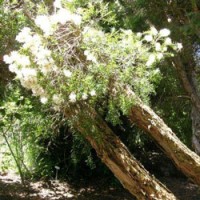
Melaleuca quinquenervia, commonly known as Niaouli, Broad-Leaved Paperbark, Paperbark Tea Tree, or Punk Tree, is a small to medium-sized evergreen tree in the Myrtaceae family. This is the same aromatic plant family that includes Tea Tree, Cajeput, Rosalina, Myrtle, Clove, and Eucalyptus. Niaouli is native to coastal eastern Australia, New Caledonia, Papua New Guinea, and nearby regions, where it often grows in wetlands, swampy ground, floodplains, and coastal lowlands.
The essential oil is steam distilled from the leaves. The tree carries its medicine in broad, aromatic leaves, thick papery bark, and a strong relationship with water, breath, and resilience. Niaouli grows where land and water meet — swamps, floodplains, river edges, estuaries, and seasonally wet ground. Its medicine reflects that: clearing, protective, breathable, and deeply practical.
Botanical Profile
-
Botanical Name: Melaleuca quinquenervia
-
Family: Myrtaceae
-
Common Names: Niaouli, Broad-Leaved Paperbark, Paperbark Tea Tree, Punk Tree
-
Plant Type: Evergreen aromatic tree
-
Part Used for Distillation: Leaves
-
Growth Habit: Small to medium-sized spreading tree with a sturdy trunk, papery bark, aromatic leaves, and bottlebrush-like flower spikes
-
Height: Commonly 8–20 meters tall, though height varies by habitat and growing conditions
-
Flowering Season: Spring through early autumn in Australia, often September through March depending on region and conditions
-
Harvest Time for Distillation: Leaves are harvested when aromatic compounds are well developed
Physical Characteristics
-
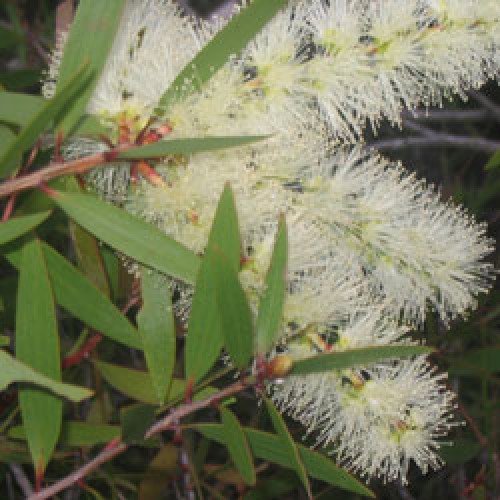
Leaves: Broad, leathery, grey-green to dull green leaves; lance-shaped to egg-shaped; usually marked with prominent longitudinal veins
-
Bark: Thick, pale, layered, papery bark that peels in soft sheets or strips
-
Flowers: Cream, white, or greenish bottlebrush-like flower spikes arranged at branch tips or upper leaf axils
-
Fruit: Small woody capsules clustered along the branches after flowering
-
Aroma: Fresh, camphoraceous, green, medicinal, slightly sweet, and clearing when the leaves are crushed or distilled
-
Overall Form: Strong, spreading, resilient, and water-adapted, with a protective bark structure and highly aromatic foliage
Native Habitat + Growth Conditions
-
Native To: Coastal eastern Australia, New Caledonia, Papua New Guinea, and nearby regions
-
Preferred Habitat: Swamps, floodplains, coastal lowlands, river margins, estuary edges, and seasonally wet areas
-
Preferred Soil: Moist, silty, swampy, or seasonally waterlogged soils; can tolerate challenging wetland conditions
-
Sunlight: Full sun to bright open conditions
-
Climate: Tropical to subtropical coastal climates with warmth and moisture
-
Water Relationship: Strong affinity for wet ground, seasonal flooding, and low-lying coastal environments
-
Ecological Notes: Niaouli supports pollinators and wildlife through its nectar-rich flowers and can resprout strongly after disturbance or fire, reflecting the resilience common to many Australian paperbark trees
Energetic Botanical Signature
Niaouli teaches through bark, breath, and wetland resilience. It grows where water collects, where the ground can become heavy, saturated, and unstable — yet the tree rises with structure, aromatic clarity, and thick protective bark. That is the doctrine: Niaouli knows how to live in the damp places without losing its ability to clear, breathe, and stand.
Its papery bark speaks to protection, layering, and release. Its aromatic leaves speak to breath, cleansing, and fresh air. Its wetland habitat speaks to emotional and energetic congestion — the places where things collect, sit, and begin to feel heavy. Niaouli’s medicine is the clean breath that moves through that heaviness. It teaches: protect your structure, clear the air, and let what has gone stagnant begin to move again.