Personal Use
Muhuhu (African Sandalwood) Essential Oil
Brachylaena hutchinsii
Brachylaena hutchinsii
Dry | Smoky | Ancestral | Subterranean
Muhuhu doesn’t come in soft. It walks in like an old ancestor — slow, deliberate, carrying the weight of memory and the endurance of forests that have survived more than we like to imagine. Its aroma is deep and dry, with smoky undertones, a leathery resinous body, and that quiet, steady hum you only get from woods that have grown under pressure.
There’s no “perfume” here. No polite sweetness.
Muhuhu is the opposite of seduction — it’s truth.
It smells like earth that has weathered fire. Like roots gripping ancient soil. Like the patient strength of something that refuses to break.
Muhuhu is the opposite of seduction — it’s truth.
It smells like earth that has weathered fire. Like roots gripping ancient soil. Like the patient strength of something that refuses to break.
Aromatically, it sits lower than most woods:
-
smoky, almost incense-like
-
woody, but not warm — more mineral, bone-like
-
dry, like cured bark or sunbaked timber
-
slightly balsamic, with a faint, nearly medicinal desert-cleansing edge
Its presence is grounding in a way that feels structural, not emotional. It doesn’t console you — it recalibrates you. There’s a “coming back into your axis” quality that hits immediately, like your energy drops an inch or two into your hips and lower belly.
Muhuhu is steam distilled from the heartwood of Brachylaena hutchinsii, a tree native to East Africa, where it has been valued for generations as a sacred building wood and a protective presence. Its slow growth, dense wood, and resistance to decay translate directly into the oil’s vibration — this is a stabilizer, a fortifier, a long-haul ally.
This oil is for steadiness.
For spine.
For the moments when you need to remember your own depth and not get blown off your damn center by life’s noise.
For spine.
For the moments when you need to remember your own depth and not get blown off your damn center by life’s noise.
It’s the wood you turn to when you need to rebuild your footing from the inside out.
Traditional Use
Therapeutic Applications
Musculoskeletal Support + Deep Tissue Grounding
Traditionally used in East Africa for body aches, structural fatigue, and post-labor recovery, Muhuhu may help ease muscular tension and chronic “bone-deep” soreness.
-
Useful in blends addressing long-standing stiffness or joint discomfort
-
Supports massage formulations for overworked tendons, repetitive strain, or tension held in the spine and hips
-
Best for pain that feels dense, tight, or chronic, rather than sharp or inflamed
Anti-Inflammatory + Heat-Regulating Support
While research is limited, its sesquiterpene-rich profile suggests potential anti-inflammatory benefits.
Traditionally, the wood was used to reduce heat and swelling in localized areas. Muhuhu may:
Traditionally, the wood was used to reduce heat and swelling in localized areas. Muhuhu may:
-
Assist in calming chronic, slow-burning inflammation
-
Help ease discomfort from overuse injuries
-
Support topical blends for post-exertion heat, swelling, or “heavy” muscle fatigue
Skin Fortification + Environmental Repair
Traditionally used to strengthen and protect skin exposed to harsh climates, Muhuhu may:
-
Support barrier repair for dry, cracked, or weather-exposed skin
-
Help restore resilience after sun, wind, or environmental stress
-
Assist in formulations for rough heels, hands, elbows, or overworked feet
Its grounding, resinous quality makes it ideal for balms, butters, and repair salves.
Nervous System Stability
Muhuhu doesn’t sedate — it stabilizes.
It offers a slow, descending calm that may help regulate the nervous system when the body feels scattered, overstimulated, or energetically “leaky.”
It offers a slow, descending calm that may help regulate the nervous system when the body feels scattered, overstimulated, or energetically “leaky.”
-
May assist in reducing agitation, overthinking, and restlessness
-
Useful in recovery blends after burnout, anxiety spikes, or emotional depletion
-
Combines beautifully with Vetiver (Chrysopogon zizanioides), Cedarwood (Cedrus atlantica), and Patchouli (Pogostemon cablin) for deep grounding and reintegration
Respiratory Support (Traditional Use)
In some regional practices, the wood smoke was used for respiratory cleansing.
The essential oil may help:
The essential oil may help:
-
Support easier breathing during seasonal discomfort
-
Ease chest tightness due to stress or emotional congestion
-
Provide grounding aromatics in steam or diffusion rituals
Muhuhu is an oil that doesn’t rush healing — it rebuilds it.
Structurally, emotionally, and energetically.
Structurally, emotionally, and energetically.
Botany
Botany
Brachylaena hutchinsii, commonly known as Muhuhu or African Sandalwood, is an evergreen hardwood native to the coastal and montane forests of East Africa—primarily Kenya and Tanzania. A member of the Asteraceae family (yes, the same family as chamomile and Artemisia), it carries none of the “lightness” you’d expect from a daisy relative. Muhuhu is dense, resinous, and slow-growing, with heartwood that concentrates its deep, smoky aroma over decades.
The essential oil is steam distilled from the heartwood, not the bark. This is where the tree stores its protective, antimicrobial, and grounding constituents. In its native ecosystem, Muhuhu is renowned for its durability—resistant to rot, insects, time, and the elements. Furniture makers praise it for the same reasons aromatherapists do: it endures, and that endurance becomes its medicine.
Botanical Name:
Brachylaena hutchinsii
Family:
Asteraceae
Common Names:
Muhuhu, African Sandalwood, Muhugu, Mungua
Plant Type:
Evergreen hardwood tree
Part Used for Distillation:
Heartwood (occasionally roots or wood chips)
Growth Habit:
Typically 10–20 meters tall; slow-growing with a strong, upright form
Flowering Season:
Small, inconspicuous cream-colored flowers; blooms vary by region but often occur during dry seasons
Harvest Time for Distillation:
Mature wood harvested year-round, though distillers prefer older trees with more developed heartwood oil concentrations
Physical Characteristics
Leaves:
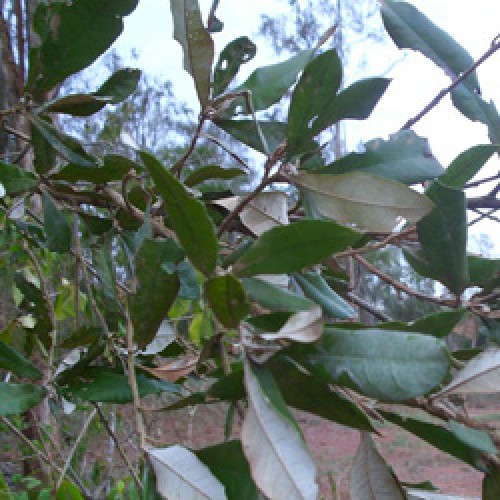
Simple, oval-shaped, deep green, often slightly glossy; alternately arranged
Simple, oval-shaped, deep green, often slightly glossy; alternately arranged
Bark:
Dark brown to gray; rough, deeply fissured; the aromatic constituents are not in the bark but in the heartwood beneath
Dark brown to gray; rough, deeply fissured; the aromatic constituents are not in the bark but in the heartwood beneath
Wood:
Exceptionally dense, fine-grained, aromatic, with a natural resistance to pests and decay; highly valued in carving, furniture, and ceremonial tools
Exceptionally dense, fine-grained, aromatic, with a natural resistance to pests and decay; highly valued in carving, furniture, and ceremonial tools
Flowers:
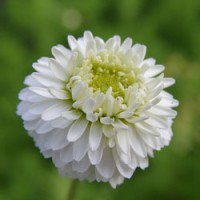
Small, pale, daisy-like but understated; not a significant aromatic contributor
Small, pale, daisy-like but understated; not a significant aromatic contributor
Roots:
Strong, fibrous, and wide-spreading — adapted to both coastal wind exposure and rocky mountain soils
Strong, fibrous, and wide-spreading — adapted to both coastal wind exposure and rocky mountain soils
Native Habitat + Growth Conditions
Native To:
Coastal and mountain regions of Kenya and Tanzania
(especially the East African coastal forests and the Kilimanjaro foothills)
Coastal and mountain regions of Kenya and Tanzania
(especially the East African coastal forests and the Kilimanjaro foothills)
Preferred Soil:
Well-drained sandy, loamy, or rocky soils; tolerates nutrient-poor terrain
Well-drained sandy, loamy, or rocky soils; tolerates nutrient-poor terrain
Sunlight:
Full sun to partial shade
Full sun to partial shade
Climate:
Tropical to subtropical climates; thrives in both humid coastal air and drier inland elevations
Tropical to subtropical climates; thrives in both humid coastal air and drier inland elevations
Ecological Notes:
Muhuhu contributes to forest stability by resisting rot and anchoring shallow, erosion-prone soils. It also provides habitat and shade within mixed-species forests and is considered locally valuable for sustainable timber use when responsibly harvested.
Muhuhu contributes to forest stability by resisting rot and anchoring shallow, erosion-prone soils. It also provides habitat and shade within mixed-species forests and is considered locally valuable for sustainable timber use when responsibly harvested.
Energetic Botanical Signature
Muhuhu grows slowly and with intention — and it shows. Its heartwood develops density, weight, and inner resin only after years of weathering wind, heat, salt air, and uneven soils. The medicine lives deep inside, not on the surface. You don’t get Muhuhu’s scent until you cut into what’s been compressed, strengthened, and layered over time.
This tree teaches boundaries in their truest form: the kind created by structure, not defensiveness. It shows us how to hold firm without rigidity, how to root without clinging, and how to stay present in our own body even when life pulls in ten different directions.
Muhuhu’s energetic signature speaks to deep anchoring, reclamation of inner space, and the slow rebuilding of one’s foundation.
It’s not an oil of quick shifts — it’s an oil of long-term recalibration.
It’s not an oil of quick shifts — it’s an oil of long-term recalibration.
It reminds you:
Strength isn’t loud.
It’s steady.
And it lives in the core, not the surface.
Strength isn’t loud.
It’s steady.
And it lives in the core, not the surface.