Personal Use
Kunzea Essential Oil
Kunzea ambigua
Soft | Clearing | Restorative
Kunzea does not come in loud.
Its aroma is fresh, clean, herbaceous, gently medicinal, slightly camphoraceous, and softly woody, with a faint sweetness that makes it feel more tender than many of the sharper Australian oils. It carries that unmistakable clear-air quality, but without the hard edges of Eucalyptus or Tea Tree.
This is quiet strength medicine.
Kunzea is one of those oils that seems to understand the overlap between physical pain, nervous system strain, inflammation, grief, and exhaustion. It does not separate the body from the emotional field. It meets the whole pattern: the sore muscles, the tight chest, the foggy mind, the exhausted spirit, the joints that ache, the breath that feels restricted, and the heart that is trying to keep functioning after too much.
Stillpoint’s Kunzea essential oil is steam distilled from the aerial parts of Kunzea ambigua, an aromatic shrub native to Australia. It is traditionally valued in aromatherapy for musculoskeletal support, respiratory freshness, nervous system tension, emotional strain, and cleansing applications.
This oil is for the places where the body has been carrying too much for too long.
Not dramatic. Not pushy. Not flashy.
Kunzea says: let the body soften, let the breath open, let the burden come down one layer at a time.
Therapeutic Applications
Nervous System Tension + Emotional Strain
-
Kunzea may support the nervous system when stress, tension, overwhelm, or emotional strain have settled into the body.
-
It is especially useful when someone feels:
-
Nervous tension
-
Stress-related emotional heaviness
-
Anxiety-like unease
-
Low mood
-
Mental exhaustion
-
Mental sluggishness
-
Brain fog
-
Poor concentration
-
Emotional depletion
-
-
Kunzea has a soft but clearing aromatic presence, making it useful when the mind feels foggy but the body does not need a harsh stimulant.
-
It may be helpful in inhalers, diffuser blends, massage oils, bath blends, and ritual body oils when the nervous system feels tired, braced, or emotionally overburdened.
-
This is not an oil that yells, “Calm down.”
-
Kunzea feels more like: “You’ve been carrying a lot. Let’s help your body stop bracing.”
Catastrophic Grief + Loss
-
Kunzea belongs in the conversation around catastrophic grief and loss because it speaks so clearly to the body-level impact of grief.
-
Not because it fixes grief.
-
Not because any oil gets to tidy up the kind of pain that tears through a life.
-
But because grief often lands in the body:
-
The muscles ache
-
The joints hurt
-
The breath tightens
-
The nervous system stays activated
-
The mind becomes foggy
-
The body feels inflamed, heavy, and exhausted
-
-
Kunzea may support the body when grief has become physical.
-
It can be used in grounding massage blends, bath blends, anointing oils, inhalers, or comfort blends when someone needs support for the nervous system, breath, and body all at once.
-
Kunzea does not say, “Move on.”
-
It says, “Let me help your body carry what your heart cannot put down.”
Musculoskeletal Support + Body Pain
-
Kunzea is widely valued in aromatherapy for musculoskeletal support.
-
It may be useful in properly diluted massage blends for:
-
Sore muscles
-
Muscle tension
-
Soft-tissue discomfort
-
Sprains
-
Strains
-
Overworked areas
-
Post-exertion soreness
-
General body aches
-
-
Kunzea may be especially helpful when discomfort feels connected to inflammation, tension, stress, or overuse.
-
It can be used in massage oils, liniments, bath blends, compresses, and localized body-care preparations.
-
This is one of Kunzea’s strongest practical lanes: helping the body soften where it has become tight, sore, reactive, or overworked.
Joint Comfort + Inflammatory Patterns
-
Kunzea may support comfort in joints and tissues where stiffness, inflammation, or achiness are part of the pattern.
-
It may be useful in blends for:
-
Arthritis-type discomfort
-
Rheumatoid arthritis-type discomfort
-
Joint stiffness
-
Joint pain after surgery
-
Areas that feel swollen, tender, or reactive
-
Chronic body discomfort patterns
-
-
Kunzea is not a replacement for medical care, especially with diagnosed inflammatory or post-surgical conditions.
-
But it can be a thoughtful aromatic support in massage and body-care blends where comfort, ease, and mobility are the goal.
-
This oil has a “please stop fighting yourself” quality in the tissue.
Respiratory Support + Clear Breathing
-
Kunzea’s fresh, gently medicinal aroma may support respiratory freshness and easier breathing.
-
It may be useful in blends for:
-
Colds and flu-season support
-
Nasal congestion
-
Sinus pressure
-
Throat irritation
-
Coughs
-
Bronchial heaviness
-
Inflamed-feeling respiratory passages
-
-
Kunzea can be used in diffuser blends, shower blends, personal inhalers, chest rubs at appropriate dilution, and steam-style aromatic practices.
-
It does not have the sharp respiratory force of Eucalyptus.
-
Kunzea feels softer, rounder, and more emotionally supportive while still helping clear the air.
Asthma + Respiratory Sensitivity
-
Kunzea may be considered in respiratory support blends where someone wants a softer aromatic alternative to sharper oils.
-
However, people with asthma or respiratory sensitivity should use caution with any essential oil.
-
Start low.
-
Use good ventilation.
-
Avoid heavy diffusion.
-
Discontinue use if breathing feels irritated or restricted.
-
The medicine is not in overpowering the room. The medicine is in giving the breath a little more space.
Oral + Dental Comfort
-
Kunzea has traditional aromatherapy use in oral and dental discomfort patterns, especially where pain and inflammation are involved.
-
It may be considered in professionally guided oral-care formulations for:
-
Dental discomfort
-
Gum tenderness
-
Oral inflammation patterns
-
-
Internal or direct oral use should only be done under the guidance of a qualified practitioner trained in aromatic medicine.
-
This is not a “drop essential oil in your mouth and hope for the best” situation. That is not medicine. That is chaos with a minty aftertaste.
Cleansing + Immune-Season Support
-
Kunzea may be useful in cleansing aromatic blends where microbial concerns, seasonal crud, or environmental freshness are part of the focus.
-
It has been explored for activity against bacterial, fungal, and viral organisms, including organisms such as:
-
Staphylococcus aureus
-
Pseudomonas aeruginosa
-
Escherichia coli
-
Candida albicans
-
-
In practical aromatherapy, this supports Kunzea’s use in:
-
Diffuser blends
-
Room sprays
-
Skin-cleansing blends
-
Respiratory blends
-
Immune-season support formulas
-
Environmental clearing blends
-
-
Keep the language clean: Kunzea may support cleansing and freshness, but it is not a substitute for medical treatment for infection.
General Therapeutic Personality
-
Kunzea’s therapeutic personality is broad but cohesive.
-
It may support:
-
Nervous tension
-
Emotional stress
-
Grief held in the body
-
Muscular pain
-
Joint discomfort
-
Inflammatory patterns
-
Respiratory heaviness
-
Mental fog
-
Cleansing and immune-season blends
-
-
Its gift is that it works where multiple systems overlap.
-
Body pain and grief.
-
Breath and anxiety.
-
Inflammation and exhaustion.
-
Mental fog and nervous strain.
Kunzea is not one-note medicine. It is a whole-body support oil for when the system is tired, sore, braced, foggy, and carrying too damn much.
Traditional Use
Kunzea ambigua
Pain Relief | Respiratory Support | Skin + Insect Protection
Kunzea, Kunzea ambigua, is an aromatic Australian shrub traditionally associated with practical bush medicine. Commonly known as Tick Bush, White Kunzea, Poverty Bush, and White Cloud, it has been used for body discomfort, respiratory complaints, skin concerns, insect protection, and general cleansing support.
This is plant medicine with a very direct purpose. Kunzea was used where the body hurt, where the breath felt congested, where the skin needed tending, or where insects were a problem.
Pain Relief + Inflammatory Discomfort
-
Kunzea has a traditional reputation for supporting pain relief and inflammatory discomfort.
-
Crushed leaves and stems were traditionally applied to the skin for:
-
Aches
-
Pains
-
Arthritis-type discomfort
-
Sore muscles
-
Injuries
-
Sprains and strains
-
Insect bites and stings
-
-
The crushed plant material was applied directly to areas where the body needed comfort and relief.
-
This traditional use aligns with Kunzea’s modern aromatherapy reputation as a support oil for muscles, joints, soft tissue, and inflammation-related discomfort.
-
Kunzea’s medicine here is body-based and practical: soften the ache, tend the tissue, and help the body settle.
Muscles, Joints + Body Aches
-
Kunzea has been traditionally connected with musculoskeletal discomfort, especially where pain, stiffness, swelling, or overuse are part of the pattern.
-
Traditional and modern bush-medicine uses include support for:
-
Muscle aches
-
Joint pain
-
Rheumatic discomfort
-
Arthritis-type discomfort
-
Soft-tissue injuries
-
Post-exertion soreness
-
General body soreness
-
-
The plant’s leaves and stems were used externally, often crushed and applied as a poultice-like preparation.
-
This is one of Kunzea’s strongest traditional lanes: the body hurts, so the plant is brought directly to the body.
Respiratory Conditions + Congestion
-
Kunzea leaves were also used traditionally for respiratory complaints.
-
Traditional respiratory uses include:
-
Coughs
-
Colds
-
Congestion
-
Stuffy breathing
-
Influenza-type seasonal symptoms
-
Heavy or irritated respiratory passages
-
-
The smoke or vapors from the plant were inhaled, and poultice-style preparations were also used.
-
This fits the larger Australian aromatic plant tradition, where fragrant leaves and branches were often used for clearing the breath and opening congested airways.
-
Kunzea’s respiratory medicine is softer than Eucalyptus, but still clear and direct.
Skin, Wounds + Topical Cleansing
-
Kunzea has been used topically for skin concerns and wound care.
-
Traditional uses include:
-
Cuts
-
Wounds
-
Skin irritation
-
Insect bites
-
Stings
-
Infected or irritated skin
-
General topical cleansing
-
-
The plant was applied externally in crushed or poultice-like form.
-
In this traditional-use section, the cleanest wording is this: Kunzea was used topically where the skin needed cleansing, soothing, and tending.
Insect Repellent + Tick Bush Use
-
One of Kunzea’s common names is Tick Bush, which points directly to its traditional and practical relationship with insects.
-
Kunzea has been used as a natural insect repellent.
-
Traditional and anecdotal uses include:
-
Repelling insects
-
Protecting against bites
-
Reducing discomfort from bites and stings
-
Using aromatic leaves around the body or environment
-
-
The name Tick Bush is also linked to observations that animals would rest under the plant, possibly seeking relief from biting insects.
-
That does not mean Kunzea magically creates an insect-free force field, because life is not a cartoon.
-
But it does speak to the plant’s strong aromatic protective quality.
Cleansing + Antimicrobial Plant Character
-
Kunzea has a strong aromatic profile, and modern research has explored its antimicrobial activity.
-
Traditional use points to a plant used where cleansing and protection were needed:
-
Skin
-
Wounds
-
Bites
-
Respiratory passages
-
Stagnant or irritated tissue
-
Seasonal illness patterns
-
-
Kunzea has been discussed in relation to bacterial, fungal, and viral concerns, but it should not be presented as a substitute for medical care.
-
In traditional plant terms, Kunzea’s role is clear: cleanse, protect, soothe, and support the body where irritation, pain, insects, or seasonal sickness are present.
Emotional + Nervous System Benefits
-
Kunzea’s traditional use is primarily physical and practical, but its emotional benefits make sense through the body.
-
When pain softens, breath opens, and inflammation calms, the nervous system often gets a little more room.
-
Kunzea may support:
-
Nervous tension
-
Stress-related body holding
-
Emotional exhaustion
-
Mental fatigue
-
A sense of being physically and emotionally worn down
-
-
This is especially relevant when discomfort, stress, and grief are tangled together.
-
Kunzea does not offer dramatic emotional fireworks.
-
It offers relief through the body — and sometimes that is exactly where the soul needs to be met.
Botany
Kunzea ambigua, commonly known as White Cloud, Tick Bush, or White Kunzea, is an aromatic shrub or small tree in the Myrtaceae family. This is the same family that includes Eucalyptus, Tea Tree, Myrtle, Clove, and many other aromatic plants known for strong essential oil-bearing leaves.
The essential oil is steam distilled from the leaves, flowers, and terminal branches. Native to eastern and southeastern Australia, including Tasmania, New South Wales, and Victoria, Kunzea grows in coastal heathlands, woodland margins, forest edges, and exposed environments where resilience is not optional. Its medicine reflects that: soft on the surface, but tough as hell underneath.
Botanical Profile
-
Botanical Name: Kunzea ambigua
-
Family: Myrtaceae
-
Common Names: Kunzea, White Kunzea, White Cloud, Tick Bush, Poverty Bush
-
Plant Type: Aromatic shrub or small tree
-
Part Used for Distillation: Leaves, flowers, and terminal branches
-
Growth Habit: Bushy, upright, woody shrub or small tree with dense branching and aromatic foliage
-
Height: Commonly grows up to about 5 meters tall, depending on habitat and growing conditions
-
Flowering Season: Spring to early summer
-
Harvest Time for Distillation: Aerial flowering material is typically harvested when the plant is in active aromatic expression, often during flowering
Physical Characteristics
-
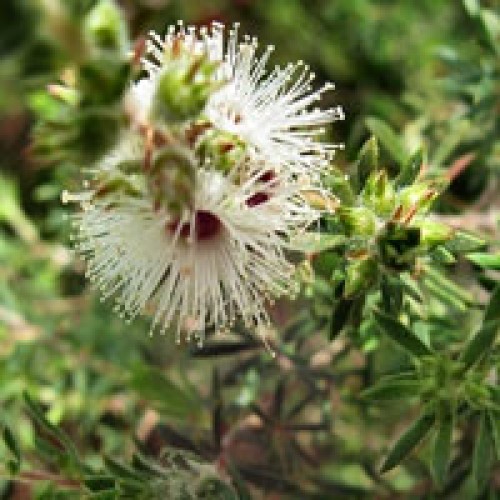
Leaves: Small, aromatic, linear to narrow-elliptical leaves; often slightly curved
-
Oil Glands: Leaves contain visible oil glands that may appear as translucent dots when held up to the light, a common Myrtaceae trait
-
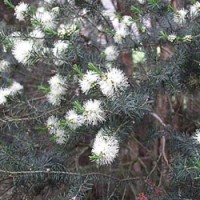
Flowers: Profuse small white flowers, sometimes pale pink, with a brush-like appearance
-
Flowering Pattern: Flowers cluster densely along the branches, giving the plant its soft “white cloud” appearance when in bloom
-
Stems: Woody, branching stems that support dense foliage and flowering clusters
-
Aroma: Fresh, clean, herbaceous, slightly medicinal, softly camphoraceous, and gently woody when the aromatic parts are crushed or distilled
Native Habitat + Growth Conditions
-
Native To: Eastern and southeastern Australia, including Tasmania, New South Wales, and Victoria
-
Preferred Habitat: Coastal heathlands, dunes, woodland margins, forest edges, and open scrubland
-
Preferred Soil: Adaptable to sandy, rocky, poor, or well-drained soils
-
Sunlight: Full sun to partial sun
-
Climate: Coastal to temperate Australian climates; tolerant of wind, exposure, and challenging conditions
-
Ecological Notes: Kunzea supports pollinators such as bees and butterflies and is valued in habitat restoration and erosion control because of its hardy growth and ability to establish in poor soils
Energetic Botanical Signature
Kunzea teaches through softness that survives exposure. It grows in coastal winds, poor soils, scrubland, dunes, and rough edges — yet when it flowers, it becomes covered in a cloud of white blossoms. That is the doctrine: strength does not always look hard. Sometimes resilience looks soft, open, and quietly blooming in a place that tried to wear it down.
Its dense branching speaks to protection and endurance. Its aromatic leaves speak to clearing, breath, and the release of what has become stagnant. Its white cloud of flowers reflects the way Kunzea moves through grief, tension, pain, and exhaustion — not by forcing the body to break open, but by helping it soften enough to breathe again. This is a plant that teaches: you can be tender and still be strong. You can be weathered and still bloom.