
Personal Use
This isn’t the dry, sharp juniper of your average detox blend or cologne. Stillpoint’s Juniper Berry CO₂ Select is soft, round, and clean—like pine needles warmed by sunlight and earth still holding the memory of snowmelt. There’s a quiet clarity here—fresh and coniferous, but with a gentle balsamic sweetness and a touch of bitter green. It doesn’t stab—it clears with grace.
This extract is obtained from dried berries of Juniperus communis using select supercritical CO₂ extraction, which captures both volatile and heavier aromatic compounds while preserving the plant’s full integrity. The result is a pale yellow oil that’s deeply aromatic, with a sweet-woody and resinous conifer profile unlike the sharper steam-distilled version.
Where traditional juniper essential oil can feel harsh or bracing, this CO₂ carries a rooted, protective softness. It uplifts without overstimulating. Grounds without flattening. Purifies without stripping.
There’s a reason it’s been used across cultures to banish spiritual heaviness and call the soul back from fog or fear. This is not just botanical hygiene—it’s an energetic boundary restorer in liquid form.
Therapeutic Applications
1. Detoxification + Diuretic Support
Juniper berry has long been used to support kidney and urinary system function, with traditional use in blends for fluid retention, edema, and cellulite. The CO₂ extract is known to have mild diuretic action and may help the body eliminate waste products, particularly after excess food, drink, or emotional overwhelm.
Juniper berry has long been used to support kidney and urinary system function, with traditional use in blends for fluid retention, edema, and cellulite. The CO₂ extract is known to have mild diuretic action and may help the body eliminate waste products, particularly after excess food, drink, or emotional overwhelm.
2. Musculoskeletal Relief (Anti-inflammatory + Analgesic)
Juniper CO₂ may ease pain and inflammation associated with arthritis, rheumatism, or gout. It is often used in massage oils or compresses to help reduce swelling, promote circulation, and relieve stiffness—especially when paired with St. John’s Wort or Tamanu oil.
Juniper CO₂ may ease pain and inflammation associated with arthritis, rheumatism, or gout. It is often used in massage oils or compresses to help reduce swelling, promote circulation, and relieve stiffness—especially when paired with St. John’s Wort or Tamanu oil.
3. Respiratory Cleansing + Immune Support
With gentle antimicrobial and expectorant properties, Juniper may assist in clearing congestion, especially in cases of seasonal cold, respiratory infection, or lingering dampness. Inhalation or chest rubs are ideal for this purpose.
With gentle antimicrobial and expectorant properties, Juniper may assist in clearing congestion, especially in cases of seasonal cold, respiratory infection, or lingering dampness. Inhalation or chest rubs are ideal for this purpose.
4. Skin Balancing (Astringent + Antimicrobial)
Traditionally used to support acne-prone, oily, or congested skin, Juniper CO₂ may help reduce oiliness, clear blackheads, and support skin purification without over-drying. Excellent in steams, facial oils, or spot treatment blends.
Traditionally used to support acne-prone, oily, or congested skin, Juniper CO₂ may help reduce oiliness, clear blackheads, and support skin purification without over-drying. Excellent in steams, facial oils, or spot treatment blends.
5. Nervous System Regulation
Emotionally, this oil supports clarity, protection, and grounded uplift. It may help ease anxiety, fear, energetic vulnerability, and emotional fatigue—especially when caused by psychic overwhelm or boundary erosion.
Emotionally, this oil supports clarity, protection, and grounded uplift. It may help ease anxiety, fear, energetic vulnerability, and emotional fatigue—especially when caused by psychic overwhelm or boundary erosion.
6. Digestive Reset (Carminative + Gentle Bitter)
Historically used to stimulate digestion and bile flow, Juniper CO₂ may help ease sluggish digestion, bloating, or post-indulgence discomfort. This extract can be used topically over the abdomen or in aromatic support formulas for digestive clarity.
Historically used to stimulate digestion and bile flow, Juniper CO₂ may help ease sluggish digestion, bloating, or post-indulgence discomfort. This extract can be used topically over the abdomen or in aromatic support formulas for digestive clarity.
Traditional Use
Juniper has been used for thousands of years as a cleansing, protective, and purifying plant—physically, emotionally, and spiritually. Its berries were burned, boiled, crushed, and brewed in every part of the world where it grew, and always with intention: to clear what didn’t belong.
In Ancient Egypt, juniper berries were used in temple incense and offerings to the gods, believed to help guide the soul after death and protect against malevolent spirits. They were also used in fumigation rituals to purify spaces and ward off disease.
In Greek and Roman medicine, juniper berries were used to stimulate digestion, ease bloating, and promote urinary flow. The physician Galen used them in herbal infusions to treat everything from snake bites to cramps. Roman soldiers are said to have chewed them for stamina and strength.
In European folk medicine, juniper was a central plant in smoke cleansing, boundary setting, and energetic banishment. Berries were carried in pockets or tied into sachets for protection during travel or grief, and branches were burned to ward off plague or negative influences during seasonal transitions.
In Ayurveda, juniper (known as hapusha) has been used to stimulate Agni (digestive fire), reduce Kapha accumulation (especially water retention and mucous), and promote clarity of mind and subtle body detoxification.
In Traditional Chinese Medicine, juniper berries were valued for their warming and moving nature—used to dispel cold and damp, support the Lung and Kidney meridians, and move stagnation from the middle burner.
Across these systems, juniper was trusted for:
-
Digestive, kidney, and liver support
-
Energetic and ritual purification
-
Emotional protection and boundary restoration
-
Warming the system and moving what’s stuck—physical or psychic
Juniper doesn’t just treat symptoms. It restores space—within the body, around the body, and through the energetic field. A true botanical ally for reset and return.
Botany
Juniperus communis is a hardy evergreen shrub or small tree in the Cupressaceae family, native to temperate zones across Europe, Asia, and North America. It’s one of the most widespread conifers in the world and thrives in dry, rocky, or sandy soils where other plants fail. It’s slow-growing, wind-hardened, and extremely resilient—adapted to poor soils and harsh climates.
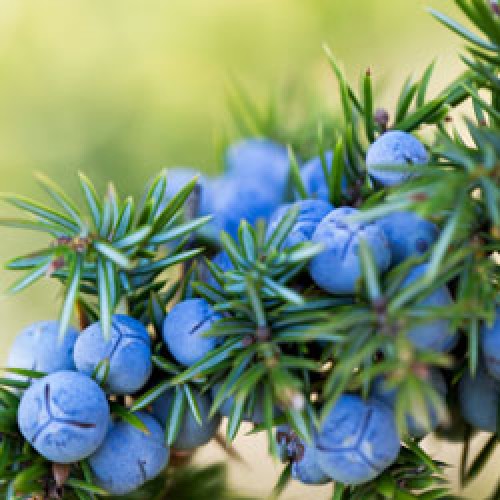
This dioecious plant (meaning male and female flowers grow on separate plants) produces small, berry-like cones. What we call “juniper berries” are actually fleshy seed cones, maturing over 2–3 years and turning from green to deep blue-black. These berries are harvested when fully ripe, typically by hand or with a gentle combing technique.
Juniper berries contain a rich array of essential oils, waxes, and bitter compounds, concentrated in the soft, resinous flesh of the berry and the protective outer skin. These are captured beautifully in CO₂ extraction, offering a rounder, more complete profile than steam distillation.
Botanical Name: Juniperus communis
Family: Cupressaceae
Common Names: Juniper Berry, Common Juniper
Plant Type: Evergreen coniferous shrub or small tree
Part Used for Extraction: Ripe berries (fleshy cones)
Growth Habit: Upright, slow-growing, spreading form; often gnarled with age
Flowering Season: Spring
Harvest Time for CO₂ Extraction: Autumn, once berries are fully ripened (2nd–3rd year)
Physical Characteristics:
Family: Cupressaceae
Common Names: Juniper Berry, Common Juniper
Plant Type: Evergreen coniferous shrub or small tree
Part Used for Extraction: Ripe berries (fleshy cones)
Growth Habit: Upright, slow-growing, spreading form; often gnarled with age
Flowering Season: Spring
Harvest Time for CO₂ Extraction: Autumn, once berries are fully ripened (2nd–3rd year)
Physical Characteristics:
-
Leaves: Needle-like, sharp, arranged in whorls of three
-
Berries (cones): Green when immature, blue-black when ripe; aromatic and sticky
-
Stems/Bark: Thin, reddish-brown to gray, often twisted or cracked with age
Native Habitat + Growth Conditions:
-
Native To: Europe, Asia, North America
-
Preferred Soil: Dry, sandy, rocky, or well-drained slopes
-
Sunlight: Full sun
-
Climate: Cold- and drought-tolerant; grows in alpine to subarctic regions
-
Ecological Notes: Provides food and shelter to birds and small mammals; supports biodiversity in sparse or eroded landscapes
Energetic Botanical Signature
Juniper is forged by extremes. It grows where the wind strips the soil bare, where the cold burns the skin, and where survival depends on stillness. It doesn’t spread wildly—it waits, concentrates, and endures.
-
It teaches us how to hold our ground without hardening our hearts.
-
How to be sharp without wounding, and clear without cruelty.
-
Its slow-growing, needle-covered body teaches discernment and protection.
-
Its berries—resinous, complex, and years in the making—teach patience, potency, and precision.
- This is a plant that knows what’s worth keeping—and what needs to be let go.
Juniper shows us how to be fierce and soft at once—how to clear without collapse, and stand tall in our own sacred space.
