Personal Use
Helichrysum Essential Oil (Helichrysum italicum) – Albania
This Helichrysum is different. You feel it the moment it meets your nose—warm hay, honeyed resin, sunlit stone, and something more... something ancient. Stillpoint’s Helichrysum italicum from Albania is the real vibrational medicine, gathered from a small wild-growing population in the mineral-rich soils of the Balkans. It's not mass-produced. It's not muted. It carries the soul of the land it comes from—wild, medicinal, and softly defiant.
The aroma opens with a dry, herbaceous whisper, but then unfurls into something deeper: sweet, earthy, and almost sacred. Like memory wrapped in sunlight. Like gold that knows pain. This oil holds paradox beautifully—grief and healing, trauma and recovery, stillness and regeneration.
Where so many essential oils aim to fix, Helichrysum just holds. It’s the oil that says: I won’t rush your process. But I’ll stay with you through it.
Our Helichrysum italicum is steam-distilled from wildcrafted flowering tops in Albania, where the plant thrives on rocky hillsides under relentless sun. And you can feel that fire in its resilience. This is not a background oil. This is a healer in a bottle.
Therapeutic Applications
Helichrysum italicum is one of the most profoundly regenerative oils in aromatherapy—physically, emotionally, and energetically. This Albanian distillation offers a rare vibrational clarity, with high levels of key ketones and esters that make it a powerhouse for tissue repair, trauma recovery, and long-term healing.
Skin & Tissue Regeneration
-
One of the best oils for wound healing, scar reduction, and bruising
-
Supports capillary repair, especially in blends for spider veins, rosacea, or hematomas
-
Used in protocols for post-surgical healing, burns, and inflammation-related skin conditions
Anti-inflammatory & Circulatory Support
-
Deeply anti-inflammatory; helpful in blends for arthritis, joint pain, and muscular injury
-
Improves microcirculation and supports detoxification in stagnant tissues
-
Used to reduce swelling, congestion, and tenderness following trauma or overuse
Emotional Trauma & Nervous System Regulation
-
Often called the “oil for the wounded soul”—known to help release shock, stored grief, and emotional pain
-
Supports the nervous system in integration after trauma or emotional overwhelm
-
Can help soften patterns of dissociation, hypervigilance, or freeze response
Respiratory Support
-
Gently mucolytic and expectorant—supports lung health and releases grief stored in the chest
-
Especially helpful in blends for lingering coughs or respiratory tension following illness or loss
Immune & Liver Support
-
Traditionally used to support the liver and gallbladder, especially when detoxification or trauma recovery is part of the picture
-
May be useful in blends for chronic immune dysregulation, adrenal fatigue, or hormonal imbalance linked to emotional holding
Traditional Use
Helichrysum italicum has a long and respected history of use throughout the Mediterranean—especially in southern Italy, the Balkans, Corsica, and North Africa—where it was known not only as a skin and wound remedy, but as a plant of spirit, grief, and resilience. Its bright, golden blossoms were often called Immortelle or Everlasting, reflecting both their physical longevity and their healing legacy across generations.
Southern Italian + Balkan Traditions
In traditional southern Italian herbal medicine, Helichrysum italicum was macerated into oils or steeped in decoctions to treat bruises, sprains, scars, and skin trauma. It was applied topically to soothe inflammatory conditions such as eczema or rashes, and was also used to reduce swelling after injury.
In the Balkans, the flowering tops were infused in olive oil to create a potent salve for wounds, sunburn, and joint pain. Folk healers also burned the dried flowers to energetically cleanse spaces after death or illness—believing the plant helped the soul transition and the living release their grief.
In traditional southern Italian herbal medicine, Helichrysum italicum was macerated into oils or steeped in decoctions to treat bruises, sprains, scars, and skin trauma. It was applied topically to soothe inflammatory conditions such as eczema or rashes, and was also used to reduce swelling after injury.
In the Balkans, the flowering tops were infused in olive oil to create a potent salve for wounds, sunburn, and joint pain. Folk healers also burned the dried flowers to energetically cleanse spaces after death or illness—believing the plant helped the soul transition and the living release their grief.
Corsican + North African Herbalism
In Corsica, wild Helichrysum is considered a national treasure. Herbalists used it to calm the liver, ease digestion, and support the body during seasonal transitions. It was also given after childbirth to support emotional grounding and physical repair.
In North African folk traditions, the plant was added to ceremonial baths to clear sorrow and invite renewal, especially after emotional or spiritual trauma.
In Corsica, wild Helichrysum is considered a national treasure. Herbalists used it to calm the liver, ease digestion, and support the body during seasonal transitions. It was also given after childbirth to support emotional grounding and physical repair.
In North African folk traditions, the plant was added to ceremonial baths to clear sorrow and invite renewal, especially after emotional or spiritual trauma.
Spiritual + Ritual Use
Helichrysum italicum was traditionally burned or crushed into incense for rituals of healing, grief, and spiritual purification. Often associated with the sun, it was believed to hold protective qualities and was used in rites of passage—birth, death, and rebirth alike. Some traditions regarded it as a plant that could "hold memory"—called on to help connect with ancestors, release inherited sorrow, and move through inner alchemy.
Helichrysum italicum was traditionally burned or crushed into incense for rituals of healing, grief, and spiritual purification. Often associated with the sun, it was believed to hold protective qualities and was used in rites of passage—birth, death, and rebirth alike. Some traditions regarded it as a plant that could "hold memory"—called on to help connect with ancestors, release inherited sorrow, and move through inner alchemy.
Its Legacy
Before it was ever distilled, Helichrysum was known for its ability to touch what lives underneath the skin. This is a plant that doesn’t just repair wounds—it teaches us how to carry them, soften them, and eventually, let them go.
Before it was ever distilled, Helichrysum was known for its ability to touch what lives underneath the skin. This is a plant that doesn’t just repair wounds—it teaches us how to carry them, soften them, and eventually, let them go.
Botany
Helichrysum italicum, also known as Immortelle or Everlasting, is a woody perennial herb in the Asteraceae (daisy) family. Native to the Mediterranean basin, this small, resilient plant thrives in sun-drenched, rocky soils where many plants cannot survive.
It’s the flowering tops—harvested in full bloom during summer—that yield the essential oil. The Albanian variety is known for its particularly vibrant aromatic profile and high diketone content, due to the mineral-rich, limestone-heavy soils of its native terrain.
Botanical Name: Helichrysum italicum
Family: Asteraceae
Common Names: Immortelle, Everlasting, Curry Plant (due to its scent—not culinary use)
Plant Type: Perennial herbaceous shrub
Part Used for Distillation: Flowering tops
Growth Habit: Upright, branching; 12–24 inches in height
Flowering Season: Late spring to midsummer
Harvest Time for Distillation: During full bloom—typically late June to July
Common Names: Immortelle, Everlasting, Curry Plant (due to its scent—not culinary use)
Plant Type: Perennial herbaceous shrub
Part Used for Distillation: Flowering tops
Growth Habit: Upright, branching; 12–24 inches in height
Flowering Season: Late spring to midsummer
Harvest Time for Distillation: During full bloom—typically late June to July
Physical Characteristics:
-
Leaves: Silvery-gray, linear to lance-shaped, covered in fine hairs
-
Stems: Woody at the base, soft and fragrant in the upper growth
-
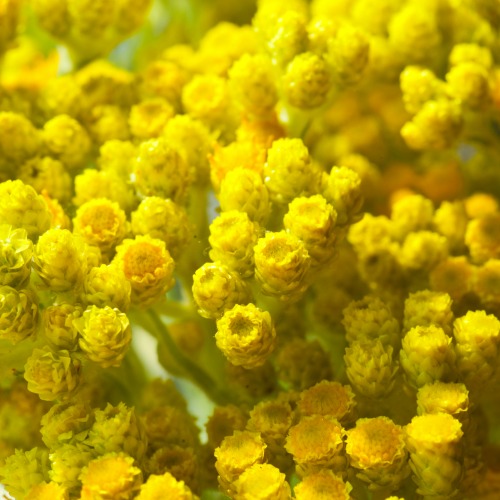
Flowers: Tiny, bright yellow button-like blooms that retain their color when dried
-
Roots: Shallow but well anchored in stony soil
Native Habitat & Growth Conditions:
-
Native To: Mediterranean regions—especially Albania, Corsica, Italy, and the Balkans
-
Preferred Soil: Well-drained, poor or rocky soils (limestone, calcareous)
-
Sunlight: Full sun
-
Climate: Hot, dry summers; drought tolerant
-
Ecological Notes: Thrives in stressed environments; attracts beneficial pollinators
Energetic Botanical Signature
This plant survives where others burn out. Its silver leaves reflect light, protecting it from the harsh sun, just as its oil reflects light back into wounded spaces without forcing growth. Its small, golden flowers don’t wilt easily—they hold on. Even dried, they keep their form.
Helichrysum teaches us how to endure without hardening, to heal without forgetting. It grows out of rock, windswept and exposed, and still offers something soft, golden, and whole.