Personal Use
I know that this Green Myrtle is a bit pricey for a myrtle oil, but it is worth every penny. I import this green myrtle from Corsica, the same distiller that I get the Corsican Helichrysum from and it is exquisite and very very powerful. BTW, the description below is a bit more formal in writing style and this is because i also wrote this profile for an aromatherapy journal :)
Myrtle oil is used in aromatherapy mainly for its expectorant qualities, where it can be of value in asthma, bronchitis, catarrh and chronic coughs. It also has applications for skin care, colds and flu. According to our Corsican distiller Myrtle is Anticatarrhal and an expectorant, Anti-infective, Liver Stimulant, Decongestant venous and prostate, Antispasmodic, Sedative, Skin Tonic and astringent and a Hormone balancer (thyroid, ovary).
Respiratory System
According to Kurt Schnaubelt, Green Myrtle is of high therapeutic value. It is most useful for all respiratory conditions, especially those involving not just the bronchial tracts but also the lungs themselves. It is extremely gentle and can be used liberally. Schnaubelt (1999) suggests that it can be used with cypress in cases of pleurisy. According to Patricia Davis this oils is well tolerated by young children because of its unobtrusive odor. It is slightly sedative so it is great in a chest rub at night instead of Eucalyptus, which can be stimulating.
Skin Care
Green Myrtle is effective in skin care for the treatment of acne, oily skin and open pores. It is astringent yet gentle and anti allergenic as well as skin regenerating. (Schnaubelt, 1998). It is also gentle enough, so that it can be used in the treatment of Hemorrhoids. (Davis, 2005).
Urinary System
Green Myrtle is very effective as an antiseptic for UTIs (urinary tract infections). According to Salvatore Batagglia, Green Myrtle is effective for bladder infections or infections of the ureter.
TCM perspective
Myrtus communis (1) Clears lung heat and heat in the upper orifices Prostate decongestant, hypothyroidism (2) Astringes leakage of qi and blood (e.g. sweating, bleeding, hemorrhoids) (Schnaubelt, 2011)
Other Applications
Green Myrtle is also helpful for hypothyroidism. (Schnaubelt, 1998)
Green Myrtle has also been reported to be effective for treating head lice and their eggs (Gauthier et al, 2000)
Traditional Use
The leaves and fruit of myrtle have had many uses in the Mediterranean and Middle East.
- Myrtle berries were nibbled as a breath freshener in ancient Greece
- The wood of myrtle as well as the leaves were used in cooking fires to add the food in areas of Sardinia and Italy.
- Myrtle leaves were macerated in wine to treat infections and fevers in Ancient Egypt. It was also used to treat nervous afflictions by the Egyptians.
- Myrtle wine was also used to treat urinary and respiratory infectio
- The roots and bark of Myrtle were used to tan leather in Russia.
- Women drank tea made from crushed myrtle leaves to preserve the youthfulness of their appearance and their overall vigor in France
- It has long been viewed by traditional healers as a useful herb for diabetes in the Middle East.
Botany
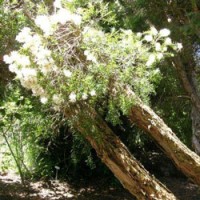
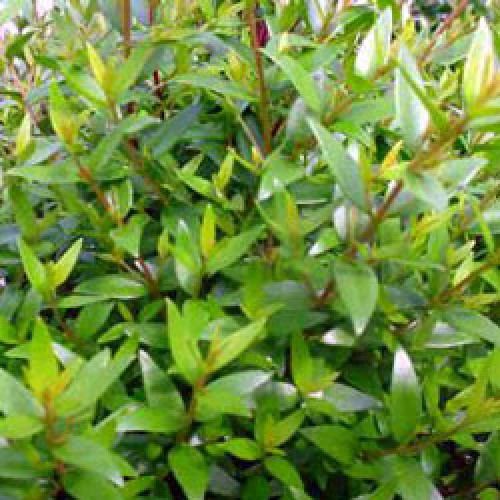
Myrtus communis is native to southern Europe and North Africa. It is a delicate and aromatic evergreen shrub or small tree that is generally 3-7 meters in height. It has elegant, narrow oval and dark green leaves. The flowers bloom from early summer to autumn and are white or pinkish and very fragrant. The flowers gradually turn into the fruit of the bush, blue-black berries, and provide a tasty treat for birds. (Wikepedia)
Green Myrtle is native to the Mediterranean region and Western Asia. Countries that produce the essential oil of Green Myrtle are Tunisia, France, Corsica, Spain, Morocco and Italy.