
Personal Use
(Abies alba, needle)
Cool, clean, and gently expansive—Silver Fir carries the crisp breath of alpine forests. Its scent is coniferous but not sharp, with soft, camphoraceous tones that open the chest without overwhelming the senses. There’s a quiet clarity to this oil—like early morning air after snowfall—restorative, refreshing, and steady.
Stillpoint’s Silver Fir essential oil is steam distilled from the freshly harvested needles of wild Abies alba trees growing in the mountainous regions of Austria. This species is known for its high bornyl acetate content, giving it a distinctive sweetness and grounding presence that sets it apart from other firs.
Silver Fir supports respiratory function, energetic resilience, and nervous system recovery—making it a steady companion for breathwork, convalescence, and emotional recalibration.
Respiratory Support + Gentle Expectorant
Silver Fir is traditionally used to help ease congestion, support open airways, and calm irritated breathing. Its effects are gentler than Eucalyptus, making it a solid option for long-term respiratory care, especially in blends for chronic or lingering issues.
Silver Fir is traditionally used to help ease congestion, support open airways, and calm irritated breathing. Its effects are gentler than Eucalyptus, making it a solid option for long-term respiratory care, especially in blends for chronic or lingering issues.
Nervous System Recovery + Emotional Reentry
With its high bornyl acetate content, Silver Fir offers a calming, slightly sedative quality. It’s helpful for those recovering from high stress, overstimulation, or emotional burnout—supporting rest, re-regulation, and clarity without sedation.
With its high bornyl acetate content, Silver Fir offers a calming, slightly sedative quality. It’s helpful for those recovering from high stress, overstimulation, or emotional burnout—supporting rest, re-regulation, and clarity without sedation.
Muscle + Circulatory Support
Silver Fir may support minor pain relief and improved circulation when used in massage or bath blends. It’s often included in traditional alpine salves and liniments for joint stiffness, fluid retention, and sluggish peripheral circulation.
Silver Fir may support minor pain relief and improved circulation when used in massage or bath blends. It’s often included in traditional alpine salves and liniments for joint stiffness, fluid retention, and sluggish peripheral circulation.
Energetic Rebuilding + Breath-Based Groundinga
Energetically, Silver Fir helps restore a sense of uprightness and breath-based connection. It’s a valuable ally when emotional fatigue or grief has left the body feeling disconnected or energetically collapsed.
Energetically, Silver Fir helps restore a sense of uprightness and breath-based connection. It’s a valuable ally when emotional fatigue or grief has left the body feeling disconnected or energetically collapsed.
Traditional Use
Silver Fir (Abies alba) has a long-standing role in traditional Alpine and Central European herbal medicine, especially in Austria, Switzerland, and Germany. For generations, it was used as a foundational remedy for fatigue, cold-weather ailments, and circulatory stagnation.
Convalescent Support + Vital Energy
Fir needle infusions and aromatic baths were often prescribed for those recovering from illness or physical exhaustion. The scent and warmth of Silver Fir were believed to “bring the strength back into the blood” and restore vitality after fever, flu, or long convalescence.
Circulatory Stimulant in Bath Therapy
In hydrotherapy traditions throughout Austria and Germany, Silver Fir branches were steeped in hot water and added to therapeutic baths to stimulate circulation, warm the extremities, and ease rheumatic stiffness. These baths were commonly used in winter to counteract coldness, fatigue, and poor peripheral blood flow.
External Use for Pain + Inflammation
Ointments and liniments containing fir extract or resin were rubbed into sore muscles, stiff joints, and inflamed tissues. This was a common treatment for overexertion, particularly in agrarian or mountainous regions where physical labor was constant and weather exposure was high.
Antiseptic Washes + Air Cleansing
Fir needle decoctions were used as antiseptic washes for minor wounds, while bundles of needles were simmered or hung to freshen sickrooms. The volatile compounds released were believed to cleanse the air of illness, much like how rosemary or juniper was used elsewhere in Europe.
Botany
Abies alba, commonly known as Silver Fir or European Silver Fir, is a stately evergreen conifer in the Pinaceae family. Native to the mountainous regions of central and southern Europe—including the Austrian Alps—this tree can live for centuries, anchoring deep forest ecosystems with its towering presence and rich aromatic resins.
Unlike spruce or pine, Silver Fir has flat, soft needles and a symmetrical growth pattern, giving it a refined, gentle appearance despite its massive size. It thrives in high-altitude, cold climates where it stabilizes soil, cools the forest canopy, and contributes essential habitat and medicine to the ecosystem.
Botanical Name: Abies alba
Family: Pinaceae
Common Names: Silver Fir, European Silver Fir, White Fir (not to be confused with Abies concolor)
Plant Type: Evergreen coniferous tree
Part Used for Distillation: Needles
Growth Habit: Tall, symmetrical tree reaching up to 40–60 meters in height
Flowering Season: Spring (April–June)
Harvest Time for Distillation: Summer to early autumn, when needles are most resinous
Family: Pinaceae
Common Names: Silver Fir, European Silver Fir, White Fir (not to be confused with Abies concolor)
Plant Type: Evergreen coniferous tree
Part Used for Distillation: Needles
Growth Habit: Tall, symmetrical tree reaching up to 40–60 meters in height
Flowering Season: Spring (April–June)
Harvest Time for Distillation: Summer to early autumn, when needles are most resinous
Physical Characteristics:
-
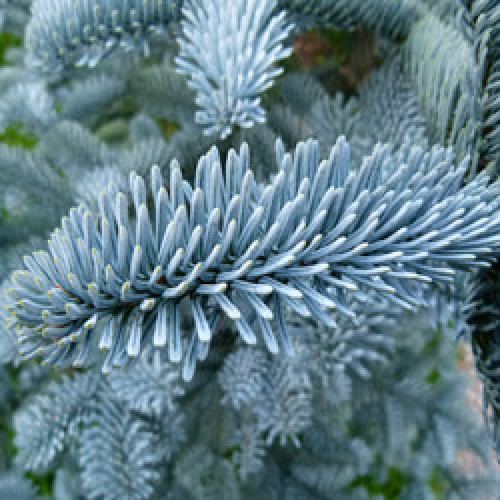
Leaves (Needles): Flat, soft, aromatic needles with two white lines on the underside; arranged in a combed pattern
-
Bark: Smooth and gray when young, becoming furrowed and silver-gray with age
-
Cones: Upright, cylindrical cones that disintegrate at maturity, releasing winged seeds
-
Roots: Deep, spreading root system that stabilizes mountain soils and prevents erosion
Native Habitat + Growth Conditions:
-
Native To: Central and Southern Europe (Alps, Carpathians, Pyrenees)
-
Preferred Soil: Cool, moist, well-drained soils, often acidic or humus-rich
-
Sunlight: Prefers partial shade to full sun, depending on altitude
-
Climate: Cold-temperate to subalpine; frost-hardy and adapted to high rainfall
-
Ecological Notes: Important for biodiversity; supports lichen, moss, and wildlife; often used in reforestation efforts due to its soil-binding and canopy-cooling properties
