
Personal Use
Khella Essential Oil: An Underrated Aromatherapy Ingredient
- Khella essential oil, derived from Ammi visnaga, remains relatively obscure in the realm of popular aromatherapy. This limited awareness could be attributed to the prevalent use of other plant extracts in research, overshadowing the essential oil. Found predominantly in the plant's umbels and fruit, the oil's composition is influenced by both the plant's maturity stage and the specific part used.
Powerful Antimicrobial Properties of A. visnaga Essential Oil
- Research led by Iraj Rasooli unveiled that A. visnaga essential oil exhibits remarkable antimicrobial activity. Notably, it's highly effective against harmful bacteria like E. coli, Pseudomonas aeruginosa, and Klebsiella pneumoniae, as also confirmed by Khalfallah (2011). This efficacy positions Khella as a potential key ingredient in treatments for respiratory issues and urinary tract infections (UTIs), especially when paired with other essential oils like tea tree and sandalwood.
Khella in Respiratory Health:
- A Personal Account From my professional experience, A. visnaga essential oil proves to be an exceptional bronchial antispasmodic, likely due to its ester content. This makes it particularly effective for respiratory distress and asthmatic conditions, offering a gentler alternative to traditional oils that contain 1.8 cineole, which can sometimes trigger asthma attacks.
Case Study: A Breakthrough in Asthma Management with Khella
- A striking example comes from my Aromatherapy Certification course, where a student, suffering from asthma, found relief with a Khella-based inhaler formula. This blend also featured Chamaemelum nobile, Citrus bergamia, and Inula graveolens, demonstrating Khella's potential in easing respiratory discomfort.
Combating Cold, Flu, and Respiratory Distress with Khella
- In formulations aimed at addressing cold and flu symptoms, Khella pairs effectively with Thymus vulgaris ct thymol, Lavandula angustifolia, and Eucalyptus dives, providing significant relief.
Understanding Khella Beyond Its Essential Oil
- It's crucial to note that Khellin, a pivotal compound in herbal preparations of Ammi visnaga, is absent in the distilled essential oil. Historically, Khellin has been utilized for a range of medical conditions, including renal colic, angina pectoris, asthma, and vitiligo (Kilicaslan, 2012).
Khella's Role in Allergy Management and Mast Cell Stabilization
- Interestingly, despite lacking Khellin, Khella essential oil has shown anecdotal success in easing allergies. When used alongside Blue Tansy and Helichrysum italicum, it has helped clients with respiratory allergies and allergic dermatitis. This highlights the complex synergy in essential oils that transcends their individual components.
Traditional Use
A. visnaga: A Time-Honored Herb Documented Since Ancient Egypt
- Ammi visnaga, commonly known as Khella, boasts a long and storied history dating back to 1546-1526 BC, as evidenced in Eber’s papyrus. Originating from the fertile Nile Delta, this herb is among the oldest known in herbal medicine.
The Greek Origins of Ammi visnaga: Insights from Dioscorides
- The renowned Greek physician and botanist, Dioscorides (40-90 AD), played a pivotal role in documenting the use of Ammi visnaga. He named the plant "Ammi," derived from the Greek word "Ammos," meaning sand—a nod to Khella's affinity for sandy soils. The term "Visnaga" is believed to have originated from "bis actum," translating to "doubly pointed," as noted by Alam in 2018.
Khella in Egyptian Folk Medicine:
- From Urinary Ailments to Modern Uses Historically, Khella was a staple in Egyptian folk medicine, primarily used for treating urinary calculi and bladder stones. Even today, its dried umbels are found in markets across the Middle East and Far East, where they are used as toothpicks, giving rise to names like "Toothpick plant" and "Toothpick Ammi."
The Therapeutic Versatility of Khella:
- Loniceras' Observations According to Loniceras, Ammi was considered a hot, dry plant, making it suitable for treating "cold afflictions." This included its use for alleviating irritable stomachs, stimulating menstruation, and addressing urinary and reproductive issues. The seeds of the plant were historically used to treat sterility, convulsions in the urethra, and kidney stones. Additionally, Khella was known for its effectiveness in treating vertigo, diabetes, and headaches, as highlighted by Khallil in 2020.
Botany
Ammi visnaga, a significant plant in herbal medicine, is classified as an annual or biennial herb. This categorization is based on its life cycle: annuals complete their life cycle within one season, whereas biennials take two years, germinating and growing in the first year, surviving winter, blooming in the second year, and then dying.
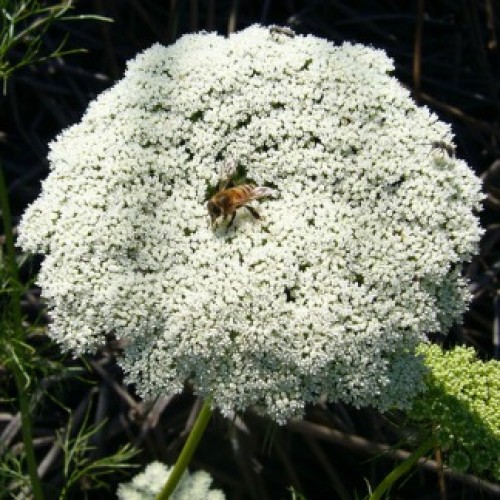
Physical Characteristics and Growth Cycle of A. visnaga Ammi visnaga is known for its moderate growth, reaching up to 2’7” (0.8m) in height and 1’4” (0.4m) in width. The plant typically flowers from July to September. An intriguing aspect of A. visnaga is its self-fertility, possessing both male and female organs and being pollinated by insects. This feature is common among hermaphroditic plants.
The Apiaceae/Umbelliferae Family: A Rich Botanical Heritage Ammi visnaga is a proud member of the Apiaceae or Umbelliferae family, commonly known as the Carrot family. This botanical group includes approximately 434 genera and 3,700 species. The family is characterized by its aromatic nature, with members typically having hollow stems, taproots, and distinctive flat-topped flower clusters called umbels. Notable for their aromatic qualities and compounds like ethereal oils, terpenoids, and saponins, these plants are essential in various herbal remedies. Khella shares its botanical family with well-known plants like carrot (Daucus carota), fennel (Foeniculum vulgare), and parsley (Petroselinum crispum).
