
Personal Use
Hinoki Essential Oil is new to us. It is a wonderful alternative to using Cypress essential oil (Cuppressae sempriverens). The aroma is a bit softer. This Hinoki is distilled from the Needles.
-
Stress Reduction: Hinoki oil is often used in aromatherapy for its soothing, calming effects. The aroma is believed to reduce stress and anxiety, promote relaxation, and enhance mental clarity.
-
Respiratory Benefits: The oil is thought to have decongestant properties and can help with respiratory issues when inhaled, such as in a steam bath.
-
Antibacterial and Antifungal Properties: Hinoki wood contains phytoncides, which are organic compounds with antibacterial and antifungal properties. This is part of why the wood is so resistant to rot.
-
Skin Health: Hinoki oil is sometimes used in skincare for its potential antiseptic and astringent properties. It's believed to help with skin issues like minor cuts, rashes, and acne.
-
Relief from Muscle Tension: Hinoki oil is often added to bath water or used in massage oils for its potential to relieve muscle tension and promote relaxation.
-
Immune System Support: The phytoncides in hinoki are also thought to boost the immune system, particularly when inhaled in an aromatherapy context.
Traditional Use
- Acetylcholinesterase is a thing in our body that helps send signals between our nerves and muscles. In Alzheimer's, a disease that hurts our memory, acetylcholinesterase can be found around damaging parts in the brain. Some research suggests that smelling C. obtusa oil can help with memory problems from Alzheimer's (Bae, 2012).
- A study showed that C. Obtusa can help reduce signs of asthma in mice. However, some oils can make asthma worse, so we need to pick carefully. Hinoki oil mixed with other safe oils could be good for asthma (Young-Cheal, et al., 2015).
- Some studies have shown that C. obtusa oil can help fight off some bacteria and fungi, including some tough types of bacteria (Bae, 2016; Lee, 2009).
- Research has shown that C. obtusa oil can help with pain in the same way aspirin does, suggesting it could be good for pain and swelling (Park, 2015).
- Some studies have shown that C. obtusa can help rats feel less anxious when they are away from their mothers. The oil seems to work by affecting certain parts of the brain. Smelling Hinoki oil can also make us feel more comfortable (Matin et al., 1993; Stillpoint Aromatics, 2017).
- Shampoos with Hinoki oils have been said to help hair grow. Research on animals has shown this to be true (Lee et al., 2010).
- Studies have found that being in forests can help our bodies fight off diseases, and this effect can last more than a week. In one study, men who stayed in a room where C. obtusa oil was being diffused had better immune system performance and less stress (Li, 2009; forest therapy.net).
- Tests have shown that C. obtusa oil can help keep fruit flies and house flies away, suggesting it could be a good and safe insect repellent. It could be used with other oils that also keep insects away (Lee et al., 2015).
Botany
-
Size: Hinoki is a slow-growing tree that can reach up to 35 meters (115 feet) in height, and its trunk can grow up to 1 meter (3 feet) in diameter.
-
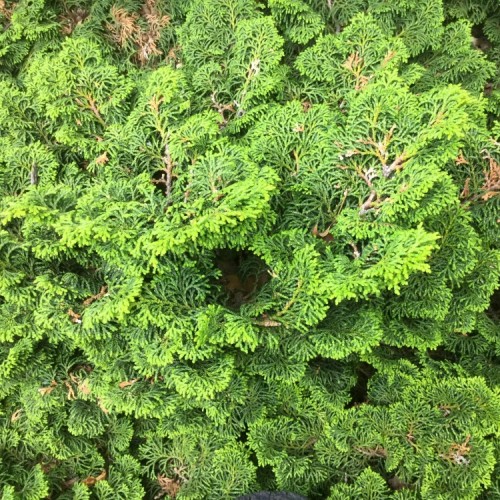
Leaves: The leaves of the hinoki tree are scale-like, very small, and arranged in flattened sprays, giving the foliage a feathery appearance. They are typically dark green on the top side and have a whitish underside.
-
Bark: The bark of the hinoki tree is dark reddish-brown, often peeling off in long vertical strips, which adds to its visual appeal.
-
Cones: Hinoki produces small, globe-shaped cones that are about 8-12 millimeters (0.3-0.5 inches) in diameter. The cones are green when immature, turning brown as they mature and open up to release the seeds.
-
Wood: The wood of the hinoki tree is light, durable, and resistant to rot. It is highly valued for its pleasant lemon-like scent, beautiful straight grain, and natural oil content, which makes it less likely to shrink, warp, or crack.
-
Growth Conditions: Hinoki trees prefer well-drained soils and sunny or partially shaded sites. They are hardy and can tolerate different soil types but grow best in slightly acidic conditions.
The tree's slow growth and the quality of its wood have made it a significant tree in Japanese culture, often used in the construction of palaces, temples, shrines, and for the creation of Noh theatre masks and traditional Japanese baths. The essential oil from hinoki wood is used in aromatherapy for its soothing and stress-relieving properties.It is a slow-growing tree which grows to 35 m tall with a trunk up to 1 m in diameter. The bark is dark red-brown. The leaves are scale-like, 2–4 mm long, blunt tipped (obtuse), green above, and green below with a white stomatal band at the base of each scale-leaf. The cones are globose, 8–12 mm diameter, with 8–12 scales arranged in opposite pairs.
