Personal Use
Fresh Root Ginger Essential Oil (Zingiber officinale)
Warm | Bright | Mobilizing
Fresh Root Ginger doesn’t lumber in like old dried spice. It sparks. It moves. It wakes the body with warmth, brightness, and that unmistakable zing that says: something is about to shift.
Its aroma is fresh, spicy, warm, slightly lemony, and alive — less dense than dried ginger, more radiant, more fluid, more immediate. It has the familiar ginger heat, but with a cleaner, greener edge, like freshly sliced rhizome releasing its medicine into the air.
This is an oil for movement. For digestion. For circulation. For the places in the body and spirit where things have gotten cold, stuck, sluggish, or heavy.
Fresh Root Ginger brings heat without being brutal. It warms the belly, stirs the blood, awakens the senses, and helps move what has been sitting too long — physically, emotionally, and energetically.
Stillpoint’s Fresh Root Ginger essential oil is steam distilled from the fresh rhizome of Zingiber officinale, a tropical perennial plant long valued in traditional medicine systems for digestive support, warmth, circulation, nausea, vitality, and restoring movement to the body.
This oil is for rekindling. For motion. For thawing what has gone cold. For getting the body, belly, and spirit moving again.
Therapeutic Applications
Digestive Support + Belly Warmth
-
Fresh Root Ginger has a long history of traditional use for digestive discomfort, nausea, sluggish digestion, gas, bloating, and lack of appetite.
-
Its warm, spicy aroma may support digestive ease, especially when the belly feels cold, tense, heavy, or slow.
-
Useful in properly diluted abdominal massage blends when the digestive system needs warmth and movement.
- Especially appropriate when digestion is affected by stress, travel, fatigue, emotional holding, or nervous system tension.
Nausea + Motion Support
-
Ginger is one of the classic plant allies traditionally used for nausea, queasiness, motion discomfort, and unsettled stomach.
-
Fresh Root Ginger’s brighter aromatic profile makes it especially useful in inhalation blends, travel blends, and aroma sticks when the stomach feels unsettled.
- Its aroma may help bring a sense of steadiness when nausea is connected to motion, travel, anxiety, or digestive upset..
Circulation + Coldness
-
Fresh Root Ginger is warming and mobilizing, making it useful in blends for cold hands, cold feet, sluggish tissue, and general lack of warmth.
-
It may support a sense of improved movement and vitality in the body, especially when someone feels cold, tired, stagnant, or physically depleted.
-
Useful in massage oils, foot rubs, winter body blends, and pre-movement preparations.
- This is not frantic stimulation. It is warmth with direction.
Muscular Support + Stiffness
-
Fresh Root Ginger may be useful in massage blends for sore muscles, stiffness, tension, and areas that feel cold or slow to loosen.
-
Its warming action makes it especially appropriate when discomfort feels stagnant, contracted, or related to coldness rather than acute heat.
-
Useful in localized massage blends for the low back, shoulders, neck, hips, legs, and feet.
- It helps bring circulation, sensation, and movement back into the tissue.
Emotional Warmth + Energetic Movement
-
Fresh Root Ginger may support emotional states marked by hesitation, depletion, low motivation, fear, or feeling “frozen.”
-
Energetically, it brings warmth back to the belly and courage back to the body.
- It is especially helpful when someone feels stuck between knowing what needs to happen and actually having the fire to move.
Fresh Root Ginger does not scream, “Get your life together.” It says, “Start here. Warm the center. Take the next step.”
This is an oil that moves what has gone stagnant. Belly, blood, body, spirit.
Traditional Use
Fresh Ginger has been used for thousands of years across traditional medicine systems, especially in Ayurveda, Traditional Chinese Medicine, Southeast Asian medicine, and household folk medicine. The rhizome of Zingiber officinale was valued as food, spice, warming medicine, digestive support, nausea support, and a plant ally for cold, damp, sluggish, or stagnant conditions.
Fresh Ginger and dried Ginger have overlapping medicine, but they are not exactly the same. Fresh Ginger is often experienced as brighter, juicier, more moving, and more dispersing, while dried Ginger is generally hotter, deeper, and more inwardly warming. For this profile, we are focusing on the fresh rhizome — the living, aromatic, zesty root that wakes up the belly and gets things moving.
Digestive Fire + Stomach Comfort
Fresh Ginger has long been used to support digestion, appetite, and stomach comfort.
Traditional uses include:
-
Sluggish digestion
-
Gas and bloating
-
Nausea
-
Queasiness
-
Coldness in the belly
-
Loss of appetite
-
Heavy or slow digestion
-
Digestive discomfort connected to cold, damp, or stagnant conditions
In Ayurveda, Ginger is famous as a digestive fire plant — used to awaken agni, the inner digestive flame. In Chinese medicine, fresh ginger is traditionally used to warm the middle, harmonize the stomach, and help redirect rebellious stomach qi when nausea or vomiting is present. Modern reviews also note ginger’s long-standing traditional use for nausea, vomiting, and gastrointestinal discomfort.
This is the plant people reached for when the belly needed warmth, movement, and intelligence.
Nausea, Travel + Motion Discomfort
Ginger is one of the most well-known traditional plants for nausea and vomiting.
Traditional uses include:
-
Motion sickness
-
Travel queasiness
-
Morning sickness
-
General nausea
-
Vomiting
-
Unsettled stomach
-
Nervous stomach
-
Post-illness queasiness
The fresh rhizome was chewed, brewed into tea, added to food, made into syrups, or prepared in traditional formulas when the stomach felt unsettled. Ginger has been used as a broad-spectrum antiemetic in traditional medicine systems for more than 2,000 years, and modern reviews continue to examine its role in nausea and vomiting support.
Fresh Ginger is practical medicine. It belongs in kitchens, travel bags, sickrooms, and anywhere someone says, “My stomach feels weird.”
Colds, Chills + Damp Conditions
Fresh Ginger has traditionally been used when the body felt chilled, cold, damp, congested, or stuck at the surface.
Traditional uses include:
-
Early-stage chills
-
Cold-type discomfort
-
Damp heaviness
-
Mild respiratory congestion
-
Sore throat
-
Coughs
-
Feeling cold after exposure
-
Needing to sweat or warm the body
In many traditions, fresh Ginger tea was used to warm the body, support sweating, comfort the throat, and help the body move through cold, damp, or stagnant conditions. A review on ginger notes long traditional use for concerns such as colds, nausea, arthritis, migraines, and other ailments, while another review notes Southeast Asian traditional use for digestive problems, sore throats, coughs, and fevers.
Fresh Ginger does not feel like heavy fire. It feels like kindling catching.
Circulation + Coldness
Fresh Ginger has been traditionally used to bring warmth and movement to the body.
Traditional uses include:
-
Cold hands and feet
-
Poor peripheral warmth
-
Stagnant-feeling tissue
-
General chilliness
-
Low vitality
-
Cold, tense muscles
-
Winter body support
As a food and medicine, Ginger has long been used to warm the body from the inside out. In topical and aromatic traditions, its essential oil continues that same energetic lane — bringing heat, movement, and circulation to areas that feel cold, contracted, or slow.
This is not reckless stimulation. It is intelligent warmth.
Muscles, Joints + Body Aches
Ginger has traditionally been used for discomfort in the muscles and joints, especially where coldness, stiffness, dampness, or stagnation are part of the pattern.
Traditional uses include:
-
Sore muscles
-
Stiff joints
-
Rheumatic discomfort
-
Aches connected to cold or damp weather
-
Tension from overwork
-
Body heaviness
-
General pain patterns connected to stagnation
The rhizome was used internally as food, tea, and traditional medicine, and externally in poultices, compresses, oils, or warming preparations depending on the culture and context.
Ginger has been studied extensively for inflammatory and musculoskeletal concerns, but the traditional message is much older and simpler: when the body is cold, stiff, and stuck, Ginger brings warmth and movement.
Women’s Traditional Use
Fresh Ginger has also been used traditionally in women’s health contexts, especially where coldness, cramping, nausea, or digestive discomfort were involved.
Traditional uses include:
-
Menstrual discomfort
-
Cold-type pelvic tension
-
Nausea during pregnancy
-
Postpartum warming foods and teas in some traditions
-
Digestive support during hormonal shifts
This does not mean essential oil use is automatically appropriate during pregnancy — that belongs in the safety section. But as a plant, Ginger has a long traditional place in pregnancy nausea, postpartum warming foods, and menstrual support across various cultures.
The thread is warmth, movement, and comfort where the body feels cold, clenched, or unsettled.
Everyday Kitchen Medicine
One of the most beautiful things about Ginger is that it never belonged only to healers. It belonged to households.
Fresh Ginger was used in:
-
Teas
-
Soups
-
Broths
-
Pickles
-
Syrups
-
Decoctions
-
Compresses
-
Foods
-
Digestive formulas
-
Warming remedies
It is one of those plants that lives at the intersection of food and medicine. Ordinary, yes — but ordinary in the holy way. The kind of ordinary that keeps people alive.
Fresh Ginger is practical fire medicine. It warms the belly, settles nausea, moves cold and dampness, supports circulation, and helps the body shift out of stagnation.
It is not fancy. It is not fragile. It is the root you turn to when the body says: I need warmth. I need movement. I need help coming back online.
Botany
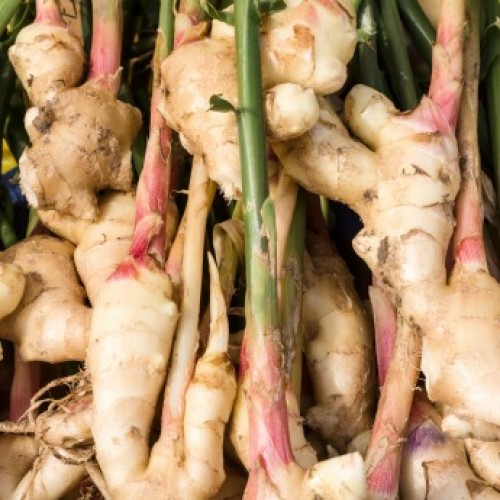
Zingiber officinale, commonly known as Ginger, is a tropical perennial plant in the Zingiberaceae family. It is grown for its aromatic rhizome — the thick, knobby underground stem most people casually call “ginger root.”
Fresh Root Ginger essential oil is steam distilled from the fresh rhizome. That matters, because fresh rhizome distillation often gives the oil a brighter, juicier, more lemony-spicy aroma than oil distilled from dried ginger. It still carries Ginger’s warmth, but with more lift, movement, and living spark.
Botanical Profile
-
Botanical Name: Zingiber officinale
-
Family: Zingiberaceae
-
Common Names: Ginger, Fresh Ginger, Ginger Root, Fresh Root Ginger
-
Plant Type: Tropical herbaceous perennial
-
Part Used for Distillation: Fresh rhizome
-
Growth Habit: Upright leafy shoots emerging from underground rhizomes
-
Height: Usually around 2–4 feet tall, depending on growing conditions
-
Flowering Season: Varies by climate; flowers appear from separate stalks when conditions are favorable
-
Harvest Time for Distillation: Rhizomes are harvested when aromatic compounds are well developed; fresh rhizomes are distilled before drying
Physical Characteristics
-
Rhizome: Thick, knobby, branching underground stem with pale yellow flesh and a strong spicy-aromatic scent
-
Leaves: Long, narrow, lance-shaped green leaves arranged alternately along upright stems
-
Stems: Reed-like leafy shoots rising from the rhizome
-
Flowers: Cone-like flower spikes with pale yellow, greenish, or purple-marked flowers depending on variety and growing conditions
-
Roots: Fine roots emerge from the rhizome and anchor the plant into warm, moist soil
-
Aroma: Fresh, spicy, warm, slightly lemony, bright, and penetrating when the rhizome is cut or crushed
Native Habitat + Growth Conditions
-
Native To: Southeast Asia, with long cultivation throughout India, China, tropical Asia, Africa, the Caribbean, and other warm regions
-
Preferred Soil: Rich, loose, well-drained soil with good moisture and organic matter
-
Sunlight: Partial shade to filtered sun; can tolerate more sun in humid climates with enough moisture
-
Climate: Warm, humid tropical to subtropical climates
-
Water Needs: Consistent moisture, but not waterlogged soil
-
Ecological Notes: Ginger spreads through rhizomes and is widely grown as a cultivated medicinal and culinary plant rather than as a wild forest species in most modern settings
Energetic Botanical Signature
Ginger teaches through the rhizome.
This plant does not put its main medicine in a tall trunk, a delicate flower, or a showy fruit. It stores its fire underground, in the swollen, branching rhizome — hidden in the dark, close to the earth, gathering heat, moisture, and life force beneath the surface.
That is the doctrine.
Ginger’s medicine is not flashy. It is subterranean fire. The kind of warmth that begins below the visible world and then rises through the whole system. It starts in the belly. It starts in the root. It starts in the place where digestion, courage, instinct, and movement all meet.
The rhizome itself is a map of movement: branching, spreading, pushing outward, creating new growth from what is stored below. Ginger does not ask the body to leap before it is ready. It warms the center first. Then movement becomes possible.
Fresh Root Ginger carries that teaching with more brightness and immediacy than dried ginger. It has the spark of living tissue — juicy, aromatic, awake. It knows how to move cold, stir stagnation, and bring warmth back without burying the spirit under heaviness.
This is a plant that teaches: Your fire does not have to be loud to be real. Warm the center. Trust the next movement. Let life begin again from the root.