
Suggested Uses
Smooth, balsamic, spicy, slightly floralnti-inflammatory, anti-malaria, antiseptic, anxiety, arthritis, astringent, carminative, rheumatism, stress, tendonitis
Personal Use
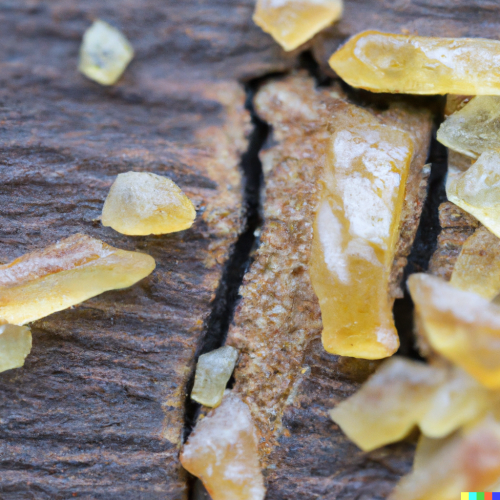
Sourced straight from the wild Boswellia serrata resin in India and crafted with expert precision by local artisans, this oil is a masterpiece with a unique, semi-transparent, clear to light yellow color.
What sets this oil apart? It's all in the composition. In contrast to our previous steam-distilled oil, this new champ features standout constituents like Incensole and Serratol. These ingredients infuse the oil with a smooth, floral aroma that's like a killer remix of citrus, balsamic, and spice notes. All lit takes is one sniff
But there's more to Serratol than a great smell. Science tells us that it fights against some major protozoan human pathogens. One study showed that Serratol takes on T. brucei, the cause of sleeping sickness, and P. falciparum, known for triggering tropical malaria. How's that for a hidden superpower?
Traditional Use
-
Psychoactive Properties: Frankincense serrata CO2 extract is a prominent choice in aromatherapy due to its calming effect on the nervous system. The fragrant compounds help to stimulate the limbic system in the brain, influencing emotional responses, heart rate, and stress levels.
-
Dermatological Applications: Its therapeutic role in skincare is largely attributed to its anti-inflammatory and astringent properties. These properties can help in the repair and regeneration of skin cells, mitigating signs of aging and scar visibility.
-
Spiritual & Meditation Aid: Its use in spiritual practices stems from its psychoactive properties, which help stimulate the release of neurotransmitters, inducing a state of calm and focus conducive to meditation.
-
Respiratory Health: Frankincense serrata CO2 extract has been observed to contain compounds with expectorant properties, promoting the removal of mucus from the airways and lungs, thus supporting respiratory health.
-
Anti-Inflammatory Applications: The extract contains compounds known to inhibit pro-inflammatory enzymes, which can provide relief in conditions like arthritis and other inflammatory diseases.
-
Perfumery: Frankincense's unique scent profile, rich in monoterpenes and sesquiterpenes, provides a stable base note in fragrances. These components are also believed to slow the evaporation of other, more volatile components of a perfume, improving its longevity.
-
Insect Repellent: Certain terpene compounds present in Frankincense serrata CO2 extract have shown insecticidal properties, making it an effective natural insect repellent.
Botany
Frankincense serrata, also known as Indian Frankincense or Salai, comes from the Boswellia serrata tree. This tree is a member of the Burseraceae family and is native to the arid mountainous regions of India, Northern Africa, and the Middle East.
-
Appearance: Boswellia serrata is a deciduous tree that can grow up to 2-8 meters in height. It has thin, peeling bark that's papery and ash-colored with a pinkish hue underneath. Its leaves are like fern fronds, delicate and feathery, grouped in threes at the ends of branches.
-
Resin Production: The resin, which eventually becomes frankincense, is extracted by making incisions into the tree's trunk. The milky-white sap that seeps out hardens upon contact with air, forming droplets or "tears." These are collected and then processed to produce frankincense.
-
Environment: The Boswellia serrata tree is adapted to thrive in tough environmental conditions. It's commonly found in rocky, dry, and nutrient-poor soils where few other plants can survive. Its resilience is also seen in its ability to withstand grazing and fire.
-
Conservation Status: Boswellia serrata populations are in decline due to overexploitation for resin, habitat loss, and lack of effective conservation strategies. Efforts are ongoing to protect this valuable species and ensure its sustainable use.
