
Every order ships USPS Priority — $10.95 flat-rate USPS Priority shipping on all US orders, no minimum. Free shipping on domestic orders over $299.
Welcome to Stillpoint. Subscribe to our newsletter for sale details and new-product news · One discount code per order · Every order is hand-poured, packed with care in ceremony, and shipped as we receive it.

Corkbark (Subalpine) Fir Essential Oil - Limited Reserve

Abies lasiocarpa

  • Corkbark (Subalpine) Fir Essential Oil - Limited Reserve

Average Rating: (see reviews)

$16.00 Ex Tax: $16.00
GC/MS Report
Current: Summer 2013

GC/MS Report

Batch: crkbk2013 (Summer 2013)
Distilled: Spring 2013

Gas Chromatography Analysis (%)

Monoterpenes

β-pinene 17.00
camphene 14.99
β-phellandrene 9.87
α-pinene 7.01
tricyclene 2.20
santene 2.20
myrcene 1.10
terpinolene 0.60
trans-β-ocimene 0.38
α-phellandrene 0.31
d 3-carene 0.21
para-cymene 0.20
α-terpinene 0.11
γ-terpinene 0.10
α-thujene 0.10
para-cymenene 0.07
cis-β-ocimene 0.06
sabinene 0.03

Monoterpenols

α-terpineol 0.20
borneol 0.17
citronellol 0.03
p-cymene-8-ol 0.02

Sesquiterpenols

α-bisabolol 1.88
trans-nerolidol 0.60
epi-α-bisabolol 0.06
10-epi-γ-eudesmol 0.05

Sesquiterpenes

β-bisabolene 0.27
α-selinene 0.06
β-selinene 0.03

Esters

bornyl acetate 24.22
geranyl acetate 0.27
citronellyl acetate 0.20
methyl citronellate 0.14
camphene hydrate 0.08
methy salicylate 0.04
isobornyl acetate 0.03

Ketones

piperitone 0.70
camphor 0.13
fenchone 0.10
2-undecanone 0.08

Phenols

thymol 0.50

Essential Facts

  • Latin Name: Abies lasiocarpa
  • Country of Origin: Cameroon
  • Botanical Family: Pinaceae
  • Plant Parts: Needles
  • Note Classification: Top/Middle
  • Cultivation Method: Wild Harvested
  • Method of Extraction: Steam or Hydro Distillation
  • Extraction Date: December 2024
  • Approx. Shelf Life: 5 years
  • Chemical Family: Esters, Monoterpenes
  • Batch: crkbk
  • Aroma: Balsamic, Coniferous, Cool, Fresh, Strong, Woody
  • Energetic Applications: 1st Chakra - survival and support, 3rd Chakra - personal power, 7th Chakra - higher information, Clarity, Grounding, Transformative, Uplifting
  • Therapeutic Properties: Anti-inflammatory, Anti-rheumatic, Anti-septic, Decongestant, Deodorant, Rubefacient, Stimulant, Strengthening, Warming
Notes & Use

Personal Use

Distilled from the needles of the rare and high-altitude Corkbark Fir, this oil offers a breath of sacred forest air—clean, elevating, and grounding all at once. Native to the subalpine forests of the American Southwest, this particular variety of Abies lasiocarpa is known for its silver-blue needles, resin-rich wood, and vibrant resilience at extreme elevations. Its aroma is crisp, coniferous, and gently balsamic—like sunlight through pine branches after snowfall.

Corkbark Fir connects breath to spirit, body to earth. Used in ceremony and ritual by Indigenous peoples of the Southwest, this tree carries both medicine and memory. Stillpoint’s limited reserve distillation was done with deep respect, in small quantities, and offered only when available. This is not just a fir oil—it’s a communion with alpine stillness.

Respiratory Support:
Corkbark Fir’s clean, expansive aroma may help open the lungs, deepen the breath, and ease mild congestion or tightness in the chest. Its expectorant and bronchodilating properties make it a supportive ally during seasonal respiratory challenges or emotional contraction.

Muscle and Joint Comfort:
Traditionally used in forest medicine to ease physical discomfort, this fir oil may assist with sore muscles, stiffness, or overuse. It can be blended into massage oils or used in compresses for its mild analgesic and anti-inflammatory qualities.

Adrenal and Nervous System Restoration:
Corkbark Fir’s scent is both uplifting and stabilizing. It may help reduce the effects of stress, tension, and emotional depletion by supporting the adrenals and grounding the nervous system. This is a go-to oil for emotional fatigue, overwhelm, and feeling energetically “scattered.”

Immune and Energetic Resilience:
Its antimicrobial properties paired with its vibrational strength make it ideal for diffusing or using in bath blends during times of immune stress or recovery. It helps create a boundary of strength, both physically and energetically.

Skin Support and Wound Care:
With its gentle antiseptic and regenerative qualities, Corkbark Fir may support minor skin concerns such as abrasions or dry, irritated skin when properly diluted. Its fresh scent and purifying action also make it a welcome addition to cleansers and balms.


Traditional Use

Corkbark Fir has long been used in Indigenous and traditional forest medicine as both a physical remedy and a spiritual ally. Known for thriving in extreme subalpine environments—often over 9,000 feet in elevation—this tree was seen as a bridge between worlds, carrying the clarity of sky and the grounding of earth.

Breath, Lungs, and Vital Force:
Native peoples of the Southwest and Pacific Northwest used fir needles, resin, and bark in steam inhalations, teas, and poultices to support respiratory health. The tree was called on to ease cough, clear lung congestion, and restore vitality to those weakened by illness or harsh environmental conditions. Its connection to the lungs was also seen energetically—as a way to release grief, expand breath, and reconnect with life force.

Wound Cleansing and Protection:
The resin and needle infusions were also used traditionally to cleanse wounds, soothe skin irritations, and reduce inflammation. Applied externally, it was believed to purify and protect the body, accelerating healing and warding off infection.

Ritual, Ceremony, and Energetic Clearing:
Burned as incense or used in ceremonial bundles, Corkbark Fir was valued for its ability to clear negative energy and call in clarity. It was often part of ritual purification, grounding, and visioning practices, particularly when spiritual guidance or ancestral connection was needed.

Symbol of Resilience and Renewal:
Because it grows where few others can—on steep slopes, rocky ridges, and in snow-covered terrain—Corkbark Fir became a symbol of endurance, adaptability, and high-altitude clarity. Its medicine was believed to help people reclaim strength after hardship, anchor into their purpose, and breathe new life into the spirit after emotional loss or depletion.

Botany

Corkbark Fir (Abies lasiocarpa var. arizonica) is a rare, high-altitude subspecies of Subalpine Fir found in the rugged mountainous regions of the southwestern United States, particularly in northern Arizona and parts of New Mexico. Belonging to the Pinaceae family, it is one of the few firs adapted to survive at extreme elevations—often above 9,000 feet—where cold, wind, and thin air dominate.

Botanical Name: Abies lasiocarpa var. arizonica
Family: Pinaceae
Common Names: Corkbark Fir, Subalpine Fir (Arizona variety)
Plant Type: Evergreen coniferous tree
Part Used: Needles and small branches (steam distilled)

Physical Characteristics
  • Height: Typically reaches 30–60 feet (10–18 meters), though often stunted at higher elevations due to wind exposure
  • Bark: Distinctive light gray to silvery-white and thick—almost “cork-like” in texture, giving the tree its common name
  • Needles: Short, soft, and silver-blue to deep green; grow in a spiral arrangement around the branch, creating a dense, cushiony texture
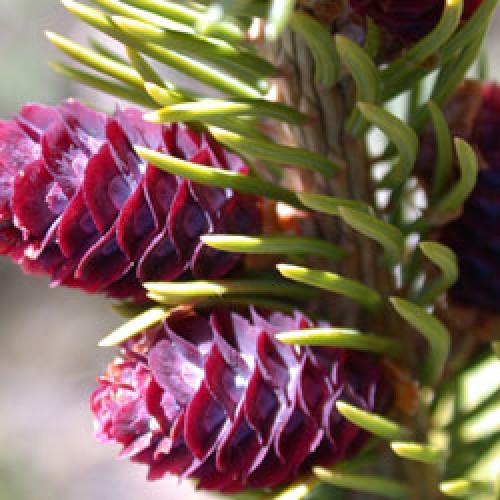
  • Cones: Upright, cylindrical, and purplish when immature—disintegrate on the tree to release seeds

Native Habitat and Growth Conditions
  • Native Region: High-elevation forests of Arizona, New Mexico, and southern Colorado
  • Preferred Environment: Cold, subalpine climates with full sun and well-drained rocky or volcanic soils
  • Ecological Role: Often one of the last tree species before the tree line, Corkbark Fir plays a key role in stabilizing alpine ecosystems and providing habitat for high-altitude wildlife
Energetics

Energetic Properties

Corkbark Fir is a guardian of high places—a tree that lives where the air is thin, the silence is sacred, and the earth meets the sky. Its essential oil carries that same vibration: clear, elevating, and deeply stabilizing. It doesn’t just ground you—it roots you to your breath, to your truth, to the part of you that knows how to endure.

Energetic Themes:
  • Restoring resilience after depletion
  • Anchoring the spirit back into the body
  • Opening breath = opening life
  • Clearing emotional congestion, especially grief held in the lungs
  • Reconnecting with inner clarity, purpose, and peace
This oil may be especially supportive during times of grief, emotional burnout, spiritual fatigue, or major transition. It helps release the density of the past while calling the soul gently back to presence. For those who feel like they’ve been holding their breath—literally or metaphorically—Corkbark Fir invites you to exhale and begin again.

Spiritual Use:
Used in ritual or meditation, it creates space for stillness, ancestral connection, and deep listening. It is an ally for those walking between worlds—whether as healers, grievers, or seekers—offering both protection and elevation.

Traditional & Folklore

Corkbark Fir has long been honored by Indigenous peoples of the American Southwest as a sacred tree of breath, protection, and high vision. Growing in the thin, windswept air near the tree line, it was seen as a messenger between realms—a living sentinel that held space between earth and sky, body and spirit.

The branches and resin were burned in ceremony to clear heavy energy, support grieving hearts, and call in guidance from the ancestors. Bundles of fir needles were sometimes placed in homes or carried during times of emotional challenge to restore inner strength and courage. It was believed that the scent of fir could call the spirit back into the body after trauma or deep sorrow, helping to re-anchor the soul in present time.

In winter ceremonies, the tree was often associated with light in darkness—a symbol of resilience, warmth, and life force enduring through cold and hardship. Its presence reminded people to breathe, remain upright, and hold to their center even when the world turned cold or quiet.

In more practical medicine, fir needles and resins were used to make infusions for cough, poultices for wounds, and aromatic steam tents for those needing both cleansing and reconnection.

To this day, those who distill Corkbark Fir often speak of the tree as a teacher in stillness, a guide for those navigating the long road home to themselves.


Chemistry

Chemical Components

Corkbark Fir essential oil is rich in monoterpenes, which give it its characteristic clarity, lung-opening properties, and energetic sharpness softened by a balsamic grounding. The aroma is clean, piney, slightly citrusy, and resinous—reflecting the strength and spaciousness of the high-altitude forests it comes from.

Key Chemical Components:
  • Alpha-pinene – Supports respiratory health, reduces inflammation, and clears mental fog. Offers clarity and direction on an energetic level.
  • Beta-pinene – Adds antimicrobial support and aids focus and circulation.
  • Limonene – Bright, mood-lifting, and immune supportive; often used to clear emotional heaviness.
  • Bornyl acetate – Deeply calming to the nervous system; a core component in conifer oils that promotes inner peace and grounding.
  • Camphene – Supports muscle comfort and may assist in circulation and recovery.
  • Myrcene – Gently sedative, pain-relieving, and helps calm emotional overstimulation.
Recipes & Blends

Recipes & Blends

1. Breathe + Anchor Respiratory Chest Salve
Purpose: Opens the lungs, calms the nervous system, and supports grief held in the chest
Use: Apply to chest and upper back during times of congestion, sorrow, or breath restriction
  • 1 oz infused carrier oil (try Calendula or Tamanu)
  • 8 drops Corkbark Fir (Abies lasiocarpa var. arizonica)
  • 4 drops Black Spruce (Picea mariana)
  • 3 drops Ravintsara (Cinnamomum camphora ct. 1,8 cineole)
  • 2 drops Myrrh (Commiphora myrrha)
  • Optional: Add 1 tsp beeswax for a firm salve consistency

2. Sacred Stillness Diffuser Blend
Purpose: Creates an energetic container for meditation, inner clarity, or grounding after trauma
Use: Diffuse during breathwork, grief processing, or emotional reset
  • 4 drops Corkbark Fir
  • 3 drops Frankincense (Boswellia sacra)
  • 2 drops Palo Santo (Bursera graveolens) or Elemi (Canarium luzonicum)
  • 1 drop Lavender (Lavandula angustifolia)

3. Adrenal Reset Bath Soak
Purpose: Supports recovery from burnout, nervous exhaustion, or spiritual depletion
Use: Add to warm bath and soak for at least 20 minutes
In a small glass bowl, mix:
  • 1 tablespoon Epsom or magnesium flakes
  • 1 tablespoon pink Himalayan salt
  • 5 drops Corkbark Fir
  • 3 drops Atlas Cedarwood (Cedrus atlantica)
  • 2 drops Sweet Marjoram (Origanum majorana)
  • 1 tablespoon carrier oil (Jojoba or fractionated coconut)

4. Breath + Boundary Inhaler Stick
Purpose: Clears emotional fog, restores energetic boundaries, and deepens breath
Use: Inhale deeply during travel, after emotional exposure, or when you feel untethered
  • 8 drops Corkbark Fir
  • 5 drops Rosalina (Melaleuca ericifolia)
  • 3 drops Lemon (Citrus limon)
  • 2 drops Vetiver (Vetiveria zizanoides)
Add to a blank aroma stick wick and cap tightly.
Safety Etc.

Safety Information


Corkbark Fir essential oil is generally considered safe when properly diluted. Recommended topical dilution is 1–3%. Avoid use on or near the face of infants or young children. Not for internal use. While non-irritating and non-sensitizing for most, always perform a patch test on sensitive skin. Due to its high monoterpene content, it may oxidize over time—store tightly sealed in a cool, dark place to maintain freshness and prevent potential skin sensitization.

References

  • Elmore, F. H. (1944). Ethnobotany of the Navajo. Albuquerque, NM: University of New Mexico Press.
  • Kearney, T. H., Peebles, R. H., & Howell, J. T. (1960). Arizona Flora (with Supplement). Berkeley, CA: University of California Press.
  • Moerman, D. E. (1998). Native American Ethnobotany. Portland, OR: Timber Press.
  • SEINet Portal Network. (n.d.). Southwest Environmental Information Network. Retrieved from https://swbiodiversity.org/seinet
  • Turner, N. J., & Thomas, J. (2005). The sacred and the medicinal: Conifers in Indigenous ceremony and medicine. In D. Deur & N. J. Turner (Eds.), Keeping It Living: Traditions of Plant Use and Cultivation on the Northwest Coast (pp. 77–102). Vancouver, BC: UBC Press.
  • USDA Forest Service – Southwestern Region. (n.d.). Species Profile: Corkbark Fir (Abies lasiocarpa var. arizonica). Retrieved from https://www.fs.usda.gov
  • University of Arizona – Cooperative Extension. (n.d.). Arizonensis Plant Database. Retrieved from https://cals.arizona.edu

Reviews (1)

Write a review

Note: HTML is not translated!
    Bad           Good
Powered By OpenCart
Stillpoint Aromatics © 2026