Suggested Uses
Personal Use
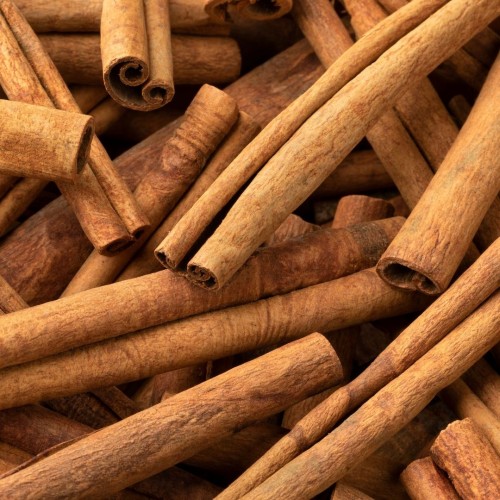
Sister to the other Cinnamon Bark. Cassia is a bit sweeter in aroma. It smells just like Big Red and the Red Hot Candy!!

| styrene | 0.17 |
| α-pinene | 0.09 |
| camphene | 0.04 |
| β-pinene | 0.03 |
| d-limonene | 0.02 |
| α-terpineol | 0.01 |
| trans-nerolidol | 0.33 |
| spathulenol | 0.08 |
| α-bisabolol | 0.03 |
| α-copaene | 0.42 |
| β-caryophyllene | 0.21 |
| β-bisabolene | 0.21 |
| δ-cadinene | 0.18 |
| trans-cadina-1(6),4-diene | 0.12 |
| allo-aromadendrene | 0.09 |
| γ-cadinene | 0.08 |
| α-muurolene | 0.08 |
| viridiflorene | 0.07 |
| trans-β-farnesene | 0.04 |
| ar-curcumene | 0.04 |
| α-humulene | 0.03 |
| α-cadinene | 0.02 |
| trans-calamenene | 0.02 |
| α-cis-bergamotene | 0.01 |
| α-amorphene | 0.01 |
| trans-Cinnamyl acetate | 6.80 |
| 2-phenylethyl acetate | 0.15 |
| benzyl benzoate | 0.04 |
| bornyl acetate | 0.02 |
| Phenyl ethyl octanoate | 0.01 |
| trans-Cinnamaldehyde | 79.86 |
| trans-o-methoxy-cinnamaldehyde | 1.41 |
| benzaldehyde | 1.35 |
| Benzenepropanal | 0.84 |
| Salicylaldehyde | 0.44 |
| cis-Cinnamaldehyde | 0.31 |
| ortho-Anisaldehyde | 0.08 |
| Tetradecanal | 0.07 |
| cis-9-Hexadecenal | 0.02 |
| Hexadecanal | 0.02 |
| phytone | 0.02 |
| caryophyllene oxide | 0.09 |
| 13-epi-Manool oxide | 0.02 |
| eugenol | 0.04 |
| coumarin | 3.94 |
Sister to the other Cinnamon Bark. Cassia is a bit sweeter in aroma. It smells just like Big Red and the Red Hot Candy!!
According to Tisserand & Young, hazards associated with Cinnamon Bark include: drug interactions, inhibiting blood clotting, embryotoxicity, skin sensitization, mucous membrane irritation.
Maximum dermal level: 0.07%. This dermal maximum is based on 75.5% cinnamaldehyde content with a dermal limit of 0.05%

By Appointment Only
Please email info@stillpointaromatics.com
Or call (928) 282-0029
Monday thru Friday
11–5 PM