
Personal Use
Catmint Essential Oil (Calamintha nepeta)
Bright. Uplifting. Unexpected. Catmint (Calamintha nepeta) offers an aroma that’s sweetly minty with a soft herbal-green undercurrent, but it’s not just another mint. This oil carries the energetic clarity of peppermint softened by a warm floral breath, making it ideal for blends that need mental freshness without overwhelming intensity.
Bright. Uplifting. Unexpected. Catmint (Calamintha nepeta) offers an aroma that’s sweetly minty with a soft herbal-green undercurrent, but it’s not just another mint. This oil carries the energetic clarity of peppermint softened by a warm floral breath, making it ideal for blends that need mental freshness without overwhelming intensity.
Stillpoint’s Catmint essential oil is steam distilled from the aerial parts of the plant, grown and harvested with care. Though lesser known in aromatherapy circles, it has long held a place in traditional medicine and folk ritual for its ability to ease anxiety, open the lungs, and move emotional stagnation—especially when grief or worry gets trapped in the chest and head.
This oil is like the clear breeze after a storm—grounding, uplifting, and gently transformative.
Therapeutic Applications
Respiratory Support + Lung Opening:
Catmint may assist with clearing the sinuses and easing mild respiratory congestion, especially where there is tension or emotional weight in the chest. It’s a gentler option than peppermint or eucalyptus—supportive without being overpowering.
Catmint may assist with clearing the sinuses and easing mild respiratory congestion, especially where there is tension or emotional weight in the chest. It’s a gentler option than peppermint or eucalyptus—supportive without being overpowering.
Nervous System Support + Anxiety Relief:
This oil has a long-standing traditional use as a calming nervine, especially in cases of anxiety, restlessness, circular thoughts, or emotional overstimulation. It may help calm the mind while still promoting alertness and emotional clarity.
This oil has a long-standing traditional use as a calming nervine, especially in cases of anxiety, restlessness, circular thoughts, or emotional overstimulation. It may help calm the mind while still promoting alertness and emotional clarity.
Digestive Aid:
Catmint has carminative and antispasmodic properties, making it useful for blends targeting bloating, cramping, and digestive discomfort, especially when linked to emotional stress or nervous system dysregulation.
Catmint has carminative and antispasmodic properties, making it useful for blends targeting bloating, cramping, and digestive discomfort, especially when linked to emotional stress or nervous system dysregulation.
Anti-inflammatory + Analgesic:
Mildly anti-inflammatory and gently pain-relieving, Catmint may help support headache relief, muscle tension, or soft tissue pain, especially when those symptoms are tied to stress or energetic overload.
Mildly anti-inflammatory and gently pain-relieving, Catmint may help support headache relief, muscle tension, or soft tissue pain, especially when those symptoms are tied to stress or energetic overload.
Menstrual Support:
Traditionally used to ease cramping, support flow, and calm emotional intensity around the menstrual cycle. It can be a supportive addition in abdominal or lower back massage blends for emotional + physical cycle care.
Traditionally used to ease cramping, support flow, and calm emotional intensity around the menstrual cycle. It can be a supportive addition in abdominal or lower back massage blends for emotional + physical cycle care.
Traditional Use
Catmint (Calamintha nepeta) has deep roots in European folk medicine, where it was cherished for its ability to calm the mind, soothe the belly, and open the breath. Though often overshadowed by its flashier cousins like peppermint or lavender, Catmint has held quiet space in the apothecaries of herbalists, midwives, and grief-tenders for generations.
In Southern and Central Europe, Catmint was steeped into teas and compresses to support the nervous system, especially during times of loss, fear, or agitation. It was used for insomnia, melancholy, and worry, particularly in children or those with sensitive constitutions.
Emotional + Energetic Support:
Catmint was known as a “comfort herb”—used during periods of mourning, hormonal shifts, or heartbreak. It was often burned or applied to the chest to help release “the sadness that settles in the lungs.”
Women’s Health + Menstrual Ease:
Traditionally used to regulate menstruation and ease cramping, Catmint was sometimes referred to as “woman’s balm.” Folk healers used it for uterine tension, postpartum recovery, and to help shift emotional stagnation during the cycle.
Digestive and Respiratory Use:
The plant was also used to calm spasmodic digestion—especially bloating or cramping linked to worry or grief. Its aromatic infusions were taken to support the lungs and sinuses, especially when emotional weight or tension was part of the picture.
In short: Catmint was never just physical—it was seen as a plant that spoke the language of the nervous system, the heart, and the breath.
Botany
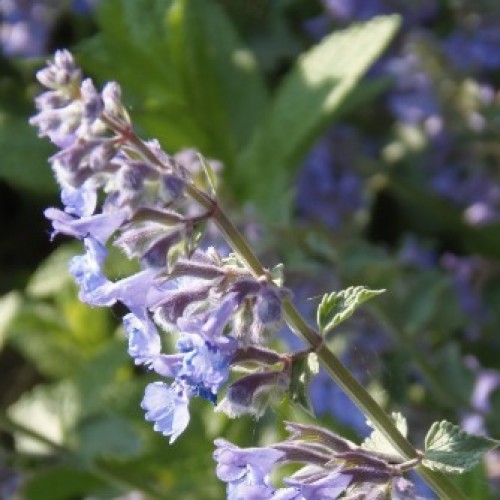
Calamintha nepeta, commonly known as Catmint, is a perennial herb in the Lamiaceae (mint) family. Though often confused with Nepeta cataria (Catnip), Catmint is its own distinct species—more floral, more balanced, and energetically more refined.
It grows abundantly across Southern and Central Europe, often found along hillsides, dry meadows, and forest edges—wild but not invasive, sturdy but soft. Its energy reflects this: resilient and calming, structured yet open.
Botanical Name: Calamintha nepeta
Family: Lamiaceae
Common Names: Catmint, Lesser Calamint, Mountain Balm
Plant Type: Perennial herb
Part Used for Distillation: Aerial parts—leaves, stems, and flowers
Growth Habit: Upright, branching, 12–24 inches in height
Flowering Season: Late summer to early fall
Harvest Time for Distillation: At full bloom, when volatile oils are at their peak
Common Names: Catmint, Lesser Calamint, Mountain Balm
Plant Type: Perennial herb
Part Used for Distillation: Aerial parts—leaves, stems, and flowers
Growth Habit: Upright, branching, 12–24 inches in height
Flowering Season: Late summer to early fall
Harvest Time for Distillation: At full bloom, when volatile oils are at their peak
Physical Characteristics:
-
Leaves: Oval, softly toothed, with a distinct minty aroma when crushed
-
Stems: Square, like all mints—tender but structured
-
Flowers: Tiny, tubular, and light violet to lavender; grow in delicate clusters
-
Roots: Shallow, with a tendency to spread gently across dry terrain
Native Habitat + Growth Conditions:
-
Native To: Mediterranean and Central Europe
-
Preferred Soil: Well-drained, slightly alkaline, rocky or sandy soils
-
Sunlight: Full sun to partial shade
-
Climate: Thrives in warm, dry climates; drought tolerant once established
-
Ecological Notes: Loved by bees and pollinators; often planted in calming gardens and herbal sanctuaries
Energetic Botanical Signature
Catmint doesn’t scream for attention—and that’s part of her medicine. She grows low and soft, spreading herself gently across dry, rugged land—surviving heat, wind, and neglect not by hardening, but by adapting. Her square stems show her alignment with the Lamiaceae family—structured, intelligent, and energetically stabilizing. Her tiny lavender flowers bloom late in the season, offering quiet clarity and subtle transformation when flashier plants have already finished.
This plant’s growth pattern is a mirror of her emotional medicine:
-
She moves gently but thoroughly, spreading light and calm without taking over.
-
Her presence is humble, soothing, and subtly potent—perfect for those who have been overstimulated, overextended, or emotionally flattened.
Where some plants protect with bold chemistry, Catmint holds space with resonant stillness. She reminds the system that you can rest and still be resilient.
