
Every order ships USPS Priority — $10.95 flat-rate USPS Priority shipping on all US orders, no minimum. Free shipping on domestic orders over $299.
Welcome to Stillpoint. Subscribe to our newsletter for sale details and new-product news · One discount code per order · Every order is hand-poured, packed with care in ceremony, and shipped as we receive it.

Douglas Fir Essential Oil | Limited Reserve | USA

Pseudotsuga menziesii

  • Douglas Fir Essential Oil | Limited Reserve | USA

Average Rating: (see reviews)

$17.00 Ex Tax: $17.00

GC/MS Report

Gas Chromatography Analysis (%)

Monoterpenes

camphene 17.09
β-pinene 12.93
d-limonene 12.69
α-pinene 9.39
β-phellandrene 5.99
tricyclene 2.43
terpinolene 2.22
sabinene 1.13
myrcene 0.92
γ-terpinene 0.88
α-terpinene 0.80
δ-3-carene 0.73
α-phellandrene 0.50
para-cymene 0.40
α-thujene 0.20
trans-β-ocimene 0.13
para-cymenene 0.04
thuja-2,4(10)diene 0.03

Monoterpenols

terpinen-4-ol 1.34
borneol 0.29
α-terpineol 0.24
cis-p-menth-2-en-1-ol 0.18
trans-p-menth-2-en-1-ol 0.15
p-cymene-8-ol 0.06
linalol 0.05

Sesquiterpenols

trans-nerolidol 0.09
α-bisabolol 0.04

Sesquiterpenes

santene 2.00
longifolene 0.17
α-selinene 0.09
β-bisabolene 0.06
δ-cadinene 0.04
trans-α-bisabolene 0.04
β-selinene 0.03
γ-cadinene 0.01

Esters

bornyl acetate 24.74
citronellyl acetate 0.67
methyl citronellate 0.31
geranyl acetate 0.29
Methyl 2-methyl heptanoate 0.15
camphene hydrate 0.09
isobornyl acetate 0.05
Pentyl hexanoate 0.05
Isopulegyl acetate 0.05
Citronellol isobutanoate 0.04
methy salicylate 0.03
Citronellyl butanoate 0.02
Methyl 2-methyl hexanoate 0.01
Methyl 2-methyl-3-hexenoate 0.01

Aliphatic Aldehydes

citronellal 0.02

Ketones

camphor 0.37
piperitone 0.27
2-undecanone 0.07

Oxides

1,4-cineole 0.04

Phenols

thymol 0.33

Ethers

trans-isoelemicin 0.03

Essential Facts

  • Latin Name: Pseudotsuga menziesii
  • Country of Origin: Cameroon
  • Botanical Family: Pinaceae
  • Plant Parts: Needles, Twigs/Branches
  • Note Classification: Top/Middle
  • Cultivation Method: Wild Harvested
  • Method of Extraction: Steam or Hydro Distillation
  • Extraction Date: December 2023
  • Approx. Shelf Life: 6 years
  • Chemical Family: Monoterpenes
  • Batch: dougfir
  • Aroma: Coniferous, Cool, Earthy, Fresh, Woody
  • Energetic Applications: 1st Chakra - survival and support, 4th Chakra - unconditional love, 7th Chakra - higher information, Balancing, Grounding, Protective, Purifying
  • Therapeutic Properties: Anti-infectious, Anti-inflammatory, Anti-microbial, Anti-septic, Anti-spasmodic, Cooling, Decongestant, Deodorant, Expectorant, Immuno-stimulant, Warming
Notes & Use

Personal Use

Douglas Fir Essential Oil (Pseudotsuga menziesii) – Limited Reserve, USA Distillation
This Douglas Fir is something special. Sourced from a very small-batch, artisan distillation right here in the U.S., this Limited Reserve oil captures the essence of wild forests, ancestral medicine, and grounded renewal. It’s not just an oil—it’s a moment in time, distilled.

The aroma? Bright and balsamic, with a lemony top note, resinous heart, and a soft, almost effervescent green depth that lingers in the lungs and the psyche. It’s uplifting without being flighty, grounding without dragging you down.

This Douglas Fir carries the clarity of high-altitude evergreens, the heart-opening energy of the forest, and the quiet medicine of trees that have stood through centuries. It’s one of those oils you keep close for deep breathwork, emotional clearing, or simply reconnecting to your own inner stillness.

This isn’t your standard conifer. This is a Limited Reserve forest ally—distilled in small batches, offered in reverence, and available only while this rare stock lasts.

Therapeutic Applications
Douglas Fir essential oil is a powerful respiratory, musculoskeletal, and emotional support oil, with deep ties to both physical detox and energetic cleansing. This small-batch distillation offers not just therapeutic strength, but vibrational clarity—making it a standout for conscious formulation and intentional healing work.

Respiratory Support
Douglas Fir is one of the most effective conifers for opening the lungs, clearing sinus congestion, and supporting deep, relaxed breathing. It’s helpful in cases of bronchial tightness, cold-season congestion, or emotional chest constriction.

Muscle and Joint Relief
With its mild analgesic and anti-inflammatory actions, Douglas Fir supports sore muscles, overworked joints, and post-activity recovery. Combine with other evergreen oils for movement blends that soothe and strengthen.

Emotional Clarity + Nervous System Support
Energetically cooling, this oil helps clear mental fog, reduce irritability, and bring the nervous system back into coherence. Especially helpful for those experiencing burnout, overwhelm, or emotional noise that won’t quiet down.

Detoxification + Lymphatic Movement
Douglas Fir may assist in stimulating the lymphatic system, supporting detox pathways and the release of stagnant physical or emotional energy—especially when used in dry brushing blends or salt soaks.

Skin and Immune Support
Mildly antimicrobial and astringent, this oil may assist in topical applications for skin clarity, minor wounds, or to help purify blends for immune season defense.


Traditional Use

Douglas Fir has a long-standing relationship with Indigenous North American cultures, forest medicine traditions, and early European settlers. The tree was honored not just for timber, but for its profound healing, protective, and spiritual properties. The essential oil, though a more modern extraction, carries the essence of those long-held practices.

Indigenous North American Traditions
Tribes throughout the Pacific Northwest used Douglas Fir needles, bark, and resin for respiratory ailments, wound cleansing, and spiritual protection. The needles were often brewed into steam baths or teas for colds and fevers, while the pitch was applied to wounds, used as a protective salve, or burned for its cleansing smoke.

Early settler and folk applications
European settlers adopted Douglas Fir as a respiratory remedy, infusing it in oils or decocting the needles for chest colds, joint pain, and infectious illness. It was used similarly to other pines—both as a physical antiseptic and an emotional cleanser, especially during winter.

Spiritual and ceremonial roles
Douglas Fir branches were sometimes used to sweep away negative energy, similar to cedar or juniper. The tree was seen as a protector—strong, upright, and resilient. Its presence in ritual spaces was thought to invite clarity, truth, and ancestral connection.

Modern herbalism and forest medicine
Today, Douglas Fir continues to be used in plant spirit medicine and aromatherapy as a bridge between earth and breath, between the physical body and the energetic field. Its scent is often associated with mental renewal, emotional detox, and support through transition.

Botany

Pseudotsuga menziesii, known as Douglas Fir, is a towering evergreen conifer native to western North America. Though called a “fir,” it’s not a true fir (genus Abies)—it belongs to the Pinaceae family and is unique in both botanical identity and aromatic profile. The essential oil is steam distilled from the needles and twigs, carrying the vibrant energy of the tree’s photosynthetic tips.

This Limited Reserve batch was harvested and distilled in the U.S., from wild or sustainably grown trees in a small, artisan-run distillation—capturing the freshest, most vibrant green material.

Botanical Name: Pseudotsuga menziesii
Family: Pinaceae
Common Names: Douglas Fir, Oregon Pine, Douglas Spruce
Plant Type: Evergreen conifer
Part Used for Distillation: Needles and small branches
Growth Habit: Tall, pyramidal tree; can grow over 200 feet in height
Flowering Season: Late spring (pollen cones and seed cones emerge)
Harvest Time for Distillation: Late fall to early winter, often after the first frost, when the needles are rich in monoterpenes and energetically grounded.

Physical Characteristics
  • Needles: Flat, soft, spirally arranged with a sweet, citrusy-green aroma when crushed
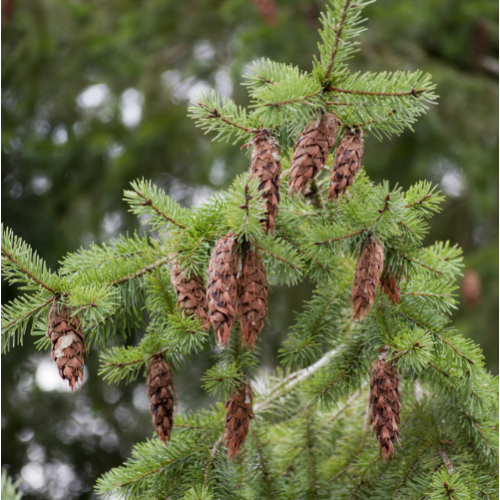
  • Cones: Pendant, with distinctive three-pointed bracts extending beyond each scale
  • Bark: Smooth and grayish in young trees, becoming thick, ridged, and reddish-brown in older trees
  • Form: Straight-trunked, with a tall central leader and whorled branches—symbolic of clarity and upward alignment

Native Habitat + Growth Conditions
  • Native To: Western North America—from British Columbia to Mexico
  • Preferred Soil: Well-drained, slightly acidic to neutral soils
  • Sunlight: Full sun
  • Climate: Thrives in temperate forest zones with moist winters and dry summers
  • Ecological Notes: Provides habitat for birds and mammals; needles support mycorrhizal fungi and forest biodiversity

Energetic Botanical Signature
Douglas Fir grows straight and impossibly tall, reaching toward the sky while rooted in stone and shadow. Its needles spiral in whorls around the branch, mirroring the sacred geometry of breath and balance. The tree thrives through fire, wind, snow, and time—its very body a blueprint of resilience.

Energetically, it teaches us how to rise without disconnecting, to be bright without burning out, and to carry grief without losing direction.
Energetics

Energetic Properties

Douglas Fir is a tree of belonging—a guide back to center when the world feels disorienting. Its energy is ancient, clean, and uncompromising. Where trauma scatters, Douglas Fir gathers. Where grief hangs in the lungs, it helps you breathe again. Where doubt fogs the mind, it clears space for truth.

This Limited Reserve distillation brings something extra—a living vibrational imprint of wild forest medicine. It feels clean but not sterile, strong but not rigid. It’s the oil that steadies you when you’ve forgotten how to stand tall.

Energetic themes:
  • Clearing emotional fog from the lungs, heart, and head
  • Strengthening boundaries after energetic depletion
  • Breath-focused integration work—especially post-ceremony, grief, or fear
  • Reconnecting to self-trust and inner clarity after overwhelm
  • Realignment of the vertical axis (root to crown), especially when scattered or fragmented
  • Grounding without heaviness—like standing barefoot in a clearing after rain

Spiritual use:
Douglas Fir is ideal for breathwork, ancestral healing, and root-to-crown integration. Use it to support ritual aftercare, especially after deep emotional processing or soul retrieval work. It opens the upper energy channels without severing the lower ones—clarity without dissociation.

This oil pairs beautifully with Cedarwood, Silver Fir, and Black Spruce for deeper journeying. Use it when you need a forest in your lungs, and a steady presence at your back.


Traditional & Folklore

Douglas Fir holds a deep presence in the stories and ceremonies of Indigenous peoples of the Pacific Northwest, where it has long been revered as both medicine and myth. This is not just a “useful tree”—it’s a sacred one.

First Nations Teachings
Many Coast Salish and other tribes believe Douglas Fir trees hold the spirits of the ancestors—wise watchers of the forest. One legend tells of people seeking refuge from a great fire who were taken into the tree for protection. Even today, if you look closely at the bracts of the cones, you can see what looks like little mouse legs and tails sticking out—reminders of the spirits that still live there.

The needles and twigs were burned or steamed for respiratory healing, while the pitch was used as an antiseptic and spiritual purifier. Fir boughs were laid under sleeping mats or used to sweep ceremonial spaces—clearing stagnant or harmful energy.

European-American Traditions
When settlers arrived in the West, Douglas Fir quickly became known as a powerful forest remedy. The needles were brewed into teas to break fevers, the resin chewed for cold relief, and the wood used to build homes and altars—sacred and practical.

Over time, it came to symbolize resilience, steadfastness, and protection—both in body and spirit. Early herbalists viewed it as a “tree of light,” helping to bring clarity to illness, confusion, or grief.

Modern Plant Wisdom Circles
Today, plant spirit medicine workers still call on Douglas Fir as a guardian ally—especially for people in transition, grief, or spiritual exhaustion. The oil is often used to restore energetic boundaries, clear inherited heaviness, and rebuild inner clarity after collapse.

Douglas Fir isn’t just a tree that heals—it’s a tree that remembers. It holds stories. It holds people. And when we sit with it, breathe it in, or anoint ourselves with its essence, we’re not just using an oil—we’re entering into a conversation with something ancient, upright, and unshakably kind.
Chemistry

Chemical Components

Douglas Fir essential oil is rich in monoterpenes, particularly beta-pinene and alpha-pinene, which give it its characteristic fresh, forest-bright aroma and powerful respiratory and immune-modulating properties. This small-batch U.S. distillation likely reflects the cooler, mountainous terrain where it was harvested—yielding a composition that’s both clean and deeply resonant.

Primary chemical families:

  • Monoterpenes

    • Beta-pinene – Anti-inflammatory, bronchodilating, emotionally uplifting

    • Alpha-pinene – Known for its respiratory support, antimicrobial action, and memory-enhancing qualities

    • Delta-3-carene – Supports decongestion and may help with joint and muscle discomfort

    • Limonene – Offers immune support and subtle mood-lifting brightness

    • Myrcene – Relaxing, slightly sedative, helps reduce pain and inflammation

  • Esters (minor)

    • May be present in trace amounts, lending a subtle soothing and balancing action to the nervous system


Therapeutic implications of its chemistry:

  • The high pinene content makes Douglas Fir one of the top oils for clearing the lungs, improving focus, and restoring a sense of mental clarity

  • Carene and limonene bring mild expectorant and immune-supportive actions—perfect for cold-season blends

  • The terpene-rich profile also makes this oil ideal for musculoskeletal formulas and lymphatic movement

  • Aromatically, its chemistry creates a blend of uplift and grounding, making it as effective emotionally as it is physically

Recipes & Blends

Recipes & Blends

1. Forest Lungs Respiratory Rub
For chest congestion, shallow breathing, or cold-season clarity
  • 4 drops Douglas Fir (Pseudotsuga menziesii)
  • 3 drops Black Spruce (Picea mariana)
  • 2 drops Eucalyptus radiata
  • 1 oz carrier oil (Sunflower or Jojoba preferred)
Use: Massage gently onto the chest, upper back, and soles of the feet. Use during breathwork or before rest.

2. Joint + Lymph Release Oil
For muscle tension, swollen lymph nodes, or detox rituals
  • 3 drops Douglas Fir
  • 3 drops Juniper Berry (Juniperus communis)
  • 2 drops Laurel Leaf (Laurus nobilis)
  • 1 oz carrier oil (Hazelnut or Grapeseed)
Use: Apply to swollen or stiff areas, especially underarms, neck, groin, or backs of knees. Pair with dry brushing or warm compresses.

Energetic + Emotional Recipes
3. Vertical Alignment Anointing Blend
For energetic disarray, grief, or spiritual disconnection
  • 3 drops Douglas Fir
  • 2 drops Frankincense (Boswellia carterii)
  • 2 drops Hinoki (Chamaecyparis obtusa)
  • 1 tsp carrier oil (Moringa or Meadowfoam)
Use: Apply a drop to the sternum, spine base, and crown. Breathe in during prayer, breathwork, or grounding ritual. Helps restore the vertical axis—root to crown.

4. Sacred Clearing Diffuser Blend
For space clearing, nervous system reset, or post-journey integration
  • 4 drops Douglas Fir
  • 2 drops Silver Fir (Abies alba)
  • 2 drops Lemon (Citrus limon)
  • 1 drop Vetiver (Vetiveria zizanioides)
Use: Diffuse for 30–45 minutes in healing rooms, post-ceremony, or when the atmosphere feels heavy or fractured.
Safety Etc.

Safety Information

Douglas Fir essential oil is generally gentle and well-tolerated, but like all conifer oils, it should be used with precision and awareness.
  • Skin safety: Always dilute before applying to the skin. Recommended topical dilution is 1–3% for adults. While it's not considered a dermal irritant, its high monoterpene content means it can oxidize easily, which increases the chance of skin sensitivity if the oil is old or improperly stored.
  • Storage: Keep tightly capped in a cool, dark place. Use within 12–18 months for best therapeutic and energetic quality.
  • Children: Safe for use with children over 2 in appropriate dilutions (0.25–1%). Avoid use near the face or nostrils of infants and toddlers due to potential for respiratory sensitivity.
  • Pregnancy/Breastfeeding: Generally considered safe in low dilutions during pregnancy. Always consult a qualified practitioner when working with oils during these times.
  • Internal use: Not for internal use unless under direct guidance from a qualified clinical aromatherapist.
  • Contraindications: None known for healthy individuals when used properly. If dealing with asthma or severe respiratory conditions, test slowly and observe how the lungs respond.

Reviews (1)

Write a review

Note: HTML is not translated!
    Bad           Good
Powered By OpenCart
Stillpoint Aromatics © 2026