
Suggested Uses
1st Chakra – survival and support
2nd Chakra – relationships, creation energy
3rd Chakra – personal power
Balancing
Grounding
Protective
Purifying
Transformative
Personal Use
Stillpoint's Black Cumin CO₂ extract (Nigella sativa) is far from subtle. This is not the whisper of seeds tucked in a loaf of bread. She comes in assertive, pungent, and grounded—with notes of toasted spice, bitter earth, and a warming medicinal presence that seems to wrap itself around the chest and gut. There's depth here. Resinous, peppery, and just slightly smoky, the aroma is unmistakably vital. Not perfumey. Not floral. Just alive.
This particular extract was obtained using supercritical carbon dioxide extraction from organically grown Nigella sativa seeds. The result is a full-spectrum extract rich in thymoquinone and other bioactive compounds that are largely absent in steam-distilled versions. The aroma reflects this broader chemical profile: darker, fuller, and more medicinal.
Therapeutic Applications
1. Metabolic + Blood Sugar Regulation
Black Cumin CO₂ may support healthy insulin sensitivity and blood glucose balance. Research has shown that thymoquinone, one of her key active constituents, may help reduce fasting blood sugar and improve overall metabolic function. She’s often used in integrative protocols for Type 2 diabetes, metabolic syndrome, and insulin resistance. Best used internally under guidance or externally in massage blends over the pancreas or abdomen.
Black Cumin CO₂ may support healthy insulin sensitivity and blood glucose balance. Research has shown that thymoquinone, one of her key active constituents, may help reduce fasting blood sugar and improve overall metabolic function. She’s often used in integrative protocols for Type 2 diabetes, metabolic syndrome, and insulin resistance. Best used internally under guidance or externally in massage blends over the pancreas or abdomen.
2. Immune System Modulation
This extract contains potent antioxidant and anti-inflammatory compounds that may help regulate immune responses—especially in cases of autoimmunity or chronic immune dysregulation. She doesn’t overstimulate. Instead, she supports balance—helping to modulate overactive or suppressed immune activity.
This extract contains potent antioxidant and anti-inflammatory compounds that may help regulate immune responses—especially in cases of autoimmunity or chronic immune dysregulation. She doesn’t overstimulate. Instead, she supports balance—helping to modulate overactive or suppressed immune activity.
3. Respiratory Support
Traditionally used for asthma, bronchitis, and allergies, Black Cumin may ease airway inflammation, reduce bronchospasms, and support clearer breathing. The thymoquinone content lends anti-histamine and bronchodilating effects, making her a strong ally in respiratory blends—especially those addressing chronic inflammation.
Traditionally used for asthma, bronchitis, and allergies, Black Cumin may ease airway inflammation, reduce bronchospasms, and support clearer breathing. The thymoquinone content lends anti-histamine and bronchodilating effects, making her a strong ally in respiratory blends—especially those addressing chronic inflammation.
4. Skin and Scalp Health
Rich in anti-inflammatory, antimicrobial, and antioxidant properties, Black Cumin CO₂ is a powerful skin soother. She may help with eczema, psoriasis, acne, and fungal infections—especially when the root imbalance is immune or inflammatory in nature. She’s also used to reduce itching and support hair follicle health.
Rich in anti-inflammatory, antimicrobial, and antioxidant properties, Black Cumin CO₂ is a powerful skin soother. She may help with eczema, psoriasis, acne, and fungal infections—especially when the root imbalance is immune or inflammatory in nature. She’s also used to reduce itching and support hair follicle health.
5. Anti-inflammatory + Pain Support
With a composition rich in thymoquinone, unsaturated fatty acids, and minor sesquiterpenes, this extract offers targeted relief for pain tied to chronic inflammation. Whether used in joint balms, belly oils, or scalp applications, she supports deeper healing—not just symptom relief.
With a composition rich in thymoquinone, unsaturated fatty acids, and minor sesquiterpenes, this extract offers targeted relief for pain tied to chronic inflammation. Whether used in joint balms, belly oils, or scalp applications, she supports deeper healing—not just symptom relief.
Traditional Use
Black Cumin (Nigella sativa) has been revered for over a thousand years as both food and medicine. Known as “the seed of blessing” (Habbatul Barakah) in Islamic tradition, her pungent, aromatic seeds have been used to treat a wide range of ailments across Middle Eastern, North African, and South Asian herbal systems.
Immune Fortifier
In traditional Unani and Middle Eastern medicine, Black Cumin was used as an immune tonic—believed to strengthen the body’s natural defenses and restore resilience after illness. It was often taken with honey or mixed into herbal pastes to ward off colds, flu, and fevers.
Digestive + Respiratory Support
Black Cumin seeds were used in Ayurveda, Siddha, and Greco-Arabic systems to support digestion, relieve bloating, gas, and intestinal spasms, and improve absorption. The seeds were also infused or ground into pastes to soothe coughs, ease asthma, and open the lungs—especially when paired with warming herbs like ginger or licorice.
Metabolic + Blood Sugar Regulation
Historically, Black Cumin was used to help regulate blood sugar and support metabolic health. Traditional texts describe its use in balancing energy, reducing fatigue, and aiding in the management of sugar-related imbalances—aligning with modern interest in its anti-diabetic properties.
Reproductive + Hormonal Tonic
In North African and South Asian traditions, Black Cumin was valued for its reproductive support—used to promote menstrual regularity, improve fertility, and support postpartum recovery. The seeds were often given to women after childbirth to restore warmth and strengthen the womb.
Liver + Detoxification
Nigella sativa was considered a gentle liver stimulant and detoxifier—used in cases of sluggish digestion, jaundice, and toxin buildup. It was believed to clear stagnation from the blood and improve overall vitality.
Protective + Spiritual Use
In Middle Eastern households, Black Cumin was often burned as incense or placed near entrances to protect against illness and bad spirits. It was considered a sacred seed—purifying to the air, body, and spirit.
Botany
Nigella sativa, commonly known as Black Cumin, is a hardy annual herb in the Ranunculaceae family. Native to southwestern Asia and the Middle East, she has been cultivated for centuries in arid and semi-arid regions for her aromatic seeds—treasured for their medicinal, culinary, and spiritual significance.
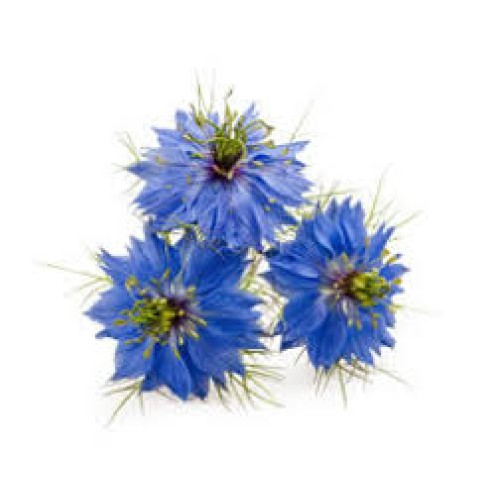
Black Cumin is a low-growing plant with finely divided, feathery foliage and delicate pale blue to white flowers. As the flowering phase passes, she forms inflated, balloon-like seed capsules that ripen and split open to release her tiny matte-black seeds. These seeds are the source of the CO₂ extract and hold her pungent, medicinal complexity.
Botanical Name: Nigella sativa
Family: Ranunculaceae
Common Names: Black Cumin, Black Seed, Habbatul Barakah (Seed of Blessing)
Plant Type: Annual herb
Part Used for Extraction: Seeds (fully matured and dried)
Growth Habit: Low bushy herb, generally reaching 12–24 inches in height
Flowering Season: Spring to early summer
Harvest Time for CO₂ Extraction: When seed pods are fully dry and begin to split
Family: Ranunculaceae
Common Names: Black Cumin, Black Seed, Habbatul Barakah (Seed of Blessing)
Plant Type: Annual herb
Part Used for Extraction: Seeds (fully matured and dried)
Growth Habit: Low bushy herb, generally reaching 12–24 inches in height
Flowering Season: Spring to early summer
Harvest Time for CO₂ Extraction: When seed pods are fully dry and begin to split
Physical Characteristics:
-
Leaves: Finely dissected, thread-like, light green; soft and airy in appearance
-
Stems: Slender, erect, sometimes branching
-
Flowers: Star-like, pale blue or white with five to ten petals; ephemeral
-
Fruits: Large inflated capsules (technically follicles), containing numerous angular black seeds
Native Habitat + Growth Conditions:
-
Native To: Middle East, Turkey, South Asia
-
Preferred Soil: Well-drained, light loam or sandy soil
-
Sunlight: Full sun
-
Climate: Warm, dry Mediterranean or subtropical climates
-
Ecological Notes: Drought-tolerant and often grown in low-input or organic systems. Common in traditional herb gardens and permaculture plots.
Energetic Botanical Signature
Black Cumin doesn’t draw attention with bright colors or showy blooms. Her power lies in the seed—in what is small, dark, and unapologetically potent. She doesn’t ask for space. She claims it quietly, with a steady burn that clears stagnation from the inside out.
Her leaves are feathery and delicate, but her medicine is not. She teaches us that softness and strength are not opposites. That something can be both bitter and life-giving. Both grounding and awakening.
Black Cumin is the ally you call on when you need to purify, to rise from depletion, to remember your core vitality. She strengthens the center—clears what’s clinging—and fans the embers of life force when they’ve gone dim.
She reminds you: you are not fragile. You are fierce and fortifying. Even in seed form, you carry the whole medicine.
