
Personal Use
Salvia rosmarinus - Tuscan Blue
Tuscan Blue Rosemary essential oil is a rare take on the cineole chemotype—unexpectedly grounded, pinene-rich, and balanced with aromatic complexity. Distilled in spring, when the plants are most vibrant, this oil offers a synergy of penetrating freshness and gentle strength.
Unlike cineole-rich Rosemarys that hit sharply with camphorous brightness, this distillation opens with a crisp, resinous clarity—like pine needles kissed by Mediterranean sunlight. Notes of α-pinene, camphene, and borneol offer a clear, breath-opening profile that’s simultaneously awakening and stabilizing.
This oil is ideal for respiratory blends, immune support, and energetic cleansing, but it also invites deeper grounding and clarity of thought.
Therapeutic Applications | Tuscan Blue Rosemary Essential Oil
Respiratory Support & Lung Clarity
Thanks to its high content of α-pinene and 1,8-cineole, Tuscan Blue Rosemary is an exceptional oil for supporting the respiratory system. It helps open the breath, ease congestion, and clear stagnant energy in the lungs—making it especially valuable during cold, flu, or allergy seasons. Unlike sharper commercial cineole chemotypes, this variety offers a more grounded, resinous breath-opener.
Thanks to its high content of α-pinene and 1,8-cineole, Tuscan Blue Rosemary is an exceptional oil for supporting the respiratory system. It helps open the breath, ease congestion, and clear stagnant energy in the lungs—making it especially valuable during cold, flu, or allergy seasons. Unlike sharper commercial cineole chemotypes, this variety offers a more grounded, resinous breath-opener.
Cognitive Support & Mental Focus
Traditionally associated with memory and clarity, this oil may help sharpen concentration, lift brain fog, and support mental endurance. The synergy of pinene and cineole stimulates the mind without overstimulating the nervous system, making it ideal for studying, writing, or when clarity of thought is needed.
Traditionally associated with memory and clarity, this oil may help sharpen concentration, lift brain fog, and support mental endurance. The synergy of pinene and cineole stimulates the mind without overstimulating the nervous system, making it ideal for studying, writing, or when clarity of thought is needed.
Muscle & Joint Care
Tuscan Blue Rosemary is a solid ally for sore muscles, stiffness, and joint discomfort. Its composition supports circulation and may assist in relieving minor aches and pains, especially when used in a warming massage blend with oils like Black Pepper or Sweet Marjoram.
Tuscan Blue Rosemary is a solid ally for sore muscles, stiffness, and joint discomfort. Its composition supports circulation and may assist in relieving minor aches and pains, especially when used in a warming massage blend with oils like Black Pepper or Sweet Marjoram.
Hair & Scalp Health
Used in hair care, this oil may help stimulate circulation to the scalp, support healthy follicles, and refresh the roots. It’s an excellent addition to scalp treatments, rinses, or strengthening serums—especially when emotional or energetic stagnation is manifesting through the crown.
Used in hair care, this oil may help stimulate circulation to the scalp, support healthy follicles, and refresh the roots. It’s an excellent addition to scalp treatments, rinses, or strengthening serums—especially when emotional or energetic stagnation is manifesting through the crown.
Immune System Activation
The synergy of monoterpenes and cineole makes this Rosemary oil helpful in immune blends, especially where stagnation or low vitality is present. It may be supportive in diffusers, inhalers, or chest blends during times of seasonal immune challenge.
The synergy of monoterpenes and cineole makes this Rosemary oil helpful in immune blends, especially where stagnation or low vitality is present. It may be supportive in diffusers, inhalers, or chest blends during times of seasonal immune challenge.
Traditional Use
Rosemary has walked with us through time. From temples to kitchens, battlefields to apothecaries, its uses span continents and centuries. Tuscan Blue—a cultivar known for its rich cineole chemistry and robust form—carries those traditions forward with clarity and depth.
Memory and Mental Clarity:
In both ancient Greece and Rome, students would braid rosemary into their hair or wear garlands during study or exams, believing it would enhance memory and cognition. It was seen as a botanical ally for the brain—one that could sharpen thought and bolster wisdom.
In both ancient Greece and Rome, students would braid rosemary into their hair or wear garlands during study or exams, believing it would enhance memory and cognition. It was seen as a botanical ally for the brain—one that could sharpen thought and bolster wisdom.
Protection and Purification:
Rosemary was traditionally burned like incense to cleanse a space—spiritually and physically. It was believed to ward off illness, protect against evil, and purify the air. This custom made its way into both religious ceremonies and everyday folk healing rituals, where it was often bundled with other herbs like juniper or bay.
Rosemary was traditionally burned like incense to cleanse a space—spiritually and physically. It was believed to ward off illness, protect against evil, and purify the air. This custom made its way into both religious ceremonies and everyday folk healing rituals, where it was often bundled with other herbs like juniper or bay.
Sacred Remembrance:
Long associated with memory and mourning, rosemary was laid on graves, woven into funeral wreaths, and carried by mourners. Shakespeare immortalized it in Hamlet: “There’s rosemary, that’s for remembrance.” In this sense, it was more than a medicinal—it was a bridge between the living and the dead.
Long associated with memory and mourning, rosemary was laid on graves, woven into funeral wreaths, and carried by mourners. Shakespeare immortalized it in Hamlet: “There’s rosemary, that’s for remembrance.” In this sense, it was more than a medicinal—it was a bridge between the living and the dead.
Circulatory and Muscular Support:
In medieval Europe and North Africa, rosemary was macerated in oils or vinegar and used in warming salves and liniments for cold limbs, joint pain, and fatigue. Bathing with rosemary was believed to revive the body and lift melancholy—especially in cold, damp seasons.
In medieval Europe and North Africa, rosemary was macerated in oils or vinegar and used in warming salves and liniments for cold limbs, joint pain, and fatigue. Bathing with rosemary was believed to revive the body and lift melancholy—especially in cold, damp seasons.
Hair and Scalp Health:
An old folk remedy involved steeping rosemary in water or oil and using it as a scalp tonic. It was believed to stimulate hair growth, reduce dandruff, and keep the head “clear.” Some traditions even saw it as a way to retain youthful vigor and vitality.
An old folk remedy involved steeping rosemary in water or oil and using it as a scalp tonic. It was believed to stimulate hair growth, reduce dandruff, and keep the head “clear.” Some traditions even saw it as a way to retain youthful vigor and vitality.
Culinary and Digestive Uses:
While the cineole-rich chemotype is stronger than the culinary variety, rosemary in general has a long-standing tradition as a digestive bitter. It was used to flavor meats and stews, yes—but also to ease digestive discomfort, gas, and sluggishness after a heavy meal.
While the cineole-rich chemotype is stronger than the culinary variety, rosemary in general has a long-standing tradition as a digestive bitter. It was used to flavor meats and stews, yes—but also to ease digestive discomfort, gas, and sluggishness after a heavy meal.
Botany
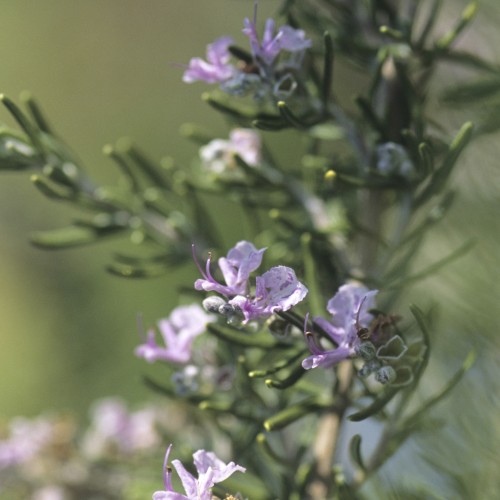
Rosemary ‘Tuscan Blue’ (Salvia rosmarinus, formerly Rosmarinus officinalis) is a robust evergreen shrub native to the Mediterranean region. This specific cultivar, Tuscan Blue, is known for its rich green foliage, upright growth habit, and prolific blue flowers. It belongs to the Lamiaceae family, sharing the botanical intelligence of other mints—resilient, aromatic, and energetically clear.
Unlike camphor chemotypes grown at higher elevations, Tuscan Blue develops in more temperate, sun-soaked environments, which results in higher α-pinene and borneol and lower 1,8-cineole. This creates a brighter, resinous aromatic profile that’s less bracing, more expansive, and ideal for energetic and respiratory support without overstimulation.
Botanical Name: Salvia rosmarinus ‘Tuscan Blue’
Family: Lamiaceae
Common Names: Rosemary, Tuscan Blue Rosemary
Plant Type: Evergreen shrub
Part Used for Distillation: Leaves and flowering tops
Growth Habit: Upright, woody perennial; 4–6 feet tall
Flowering Season: Late spring to early summer
Harvest Time for Distillation: At or just after full bloom for optimal oil composition
Family: Lamiaceae
Common Names: Rosemary, Tuscan Blue Rosemary
Plant Type: Evergreen shrub
Part Used for Distillation: Leaves and flowering tops
Growth Habit: Upright, woody perennial; 4–6 feet tall
Flowering Season: Late spring to early summer
Harvest Time for Distillation: At or just after full bloom for optimal oil composition
Physical Characteristics
-
Leaves: Long, narrow, rich green with a silvery underside; highly aromatic
-
Flowers: Deep blue to violet; clustered along the upper stems
-
Stems: Square, woody at the base; classic Lamiaceae structure
-
Root System: Deep-rooted, anchoring well in dry or rocky soils
Native Habitat + Growth Conditions
-
Native To: Mediterranean basin
-
Preferred Soil: Well-drained, sandy to rocky soils
-
Sunlight: Full sun
-
Climate: Warm, dry summers and mild winters; tolerates heat and drought
-
Ecological Notes: Drought-tolerant; attracts bees, butterflies, and beneficial insects; frequently used in permaculture and regenerative gardens for structure and aroma
Energetic Botanical Signature
Tuscan Blue Rosemary carries resonance without harshness. Its upright, strong form speaks to structure and resilience—but there’s a smoothness to its expression. This cultivar doesn’t bulldoze—it lifts. Where other rosemary chemotypes may command with sharpness,
Tuscan Blue encourages you to rise without tension. Its deep-blue blossoms, balanced chemistry, and intelligent adaptability reflect a plant that knows how to support clarity, respiration, and insight—without overpowering.
Tuscan Blue encourages you to rise without tension. Its deep-blue blossoms, balanced chemistry, and intelligent adaptability reflect a plant that knows how to support clarity, respiration, and insight—without overpowering.
