
Every order ships USPS Priority — $10.95 flat-rate USPS Priority shipping on all US orders, no minimum. Free shipping on domestic orders over $299.
Welcome to Stillpoint. Subscribe to our newsletter for sale details and new-product news · One discount code per order · Every order is hand-poured, packed with care in ceremony, and shipped as we receive it.

Ginger Essential Oil (Dried Root) | Warming Support for Digestion & Energy

Zingiber officinale

  • Ginger Essential Oil (Dried Root) | Warming Support for Digestion & Energy

Average Rating: (see reviews)

$10.00 Ex Tax: $10.00
GC/MS Report
Current: Spring 2015

GC/MS Report

Batch: gindr2014 (Spring 2015)
Distilled: Fall 2014

Gas Chromatography Analysis (%)

Monoterpenes

camphene 6.94
β-phellandrene 5.23
α-pinene + α-thujene 1.95
d-limonene 1.55
β-myrcene 0.75
α-phellandrene 0.32
β-pinene 0.24
terpinolene 0.23

Monoterpenols

borneol 0.90
α-terpineol 0.40
geraniol 0.36
linalol 0.34
terpinen-4-ol 0.16

Sesquiterpenols

elemol 0.46
trans-nerolidol 0.35
zingiberol 0.24
β-eudesmol 0.18

Sesquiterpenes

α-zingiberene 33.66
β-sesquiphellandrene 13.85
β-bisabolene 7.15
α-curcumene 6.63
E-α-farnesene 4.94
Unidentified Sesquiterpene 2.23
germacrene D 1.54
β-curcumene 1.26
β-elemene 0.83
E-β-farnesene 0.73
α-copaene 0.42
β-caryophyllene 0.37
germacrene B 0.34
cyclosativene 0.31
germacrene A 0.31
allo-aromadendrene 0.27
δ-cadinene 0.20
γ-curcumene 0.15
γ-selinene 0.11
γ-cadinene 0.06

Aliphatic Aldehydes

geranial 0.19
decanal 0.13
neral 0.09

Ketones

zingerone 0.16

Oxides

1,8-cineole 2.62

Essential Facts

  • Latin Name: Zingiber officinale
  • Country of Origin: Burkina Faso
  • Botanical Family: Zingiberaceae
  • Plant Parts: Rhizome
  • Note Classification: Middle
  • Cultivation Method: Distiller is Certified Organic
  • Method of Extraction: Steam or Hydro Distillation
  • Extraction Date: August 2023
  • Approx. Shelf Life: 7 - 8 years
  • Chemical Family: Monoterpenes, Sesquiterpenes, Sesquiterpenols
  • Batch: gingerdr
  • Aroma: Earthy, Green, Herbaceous, Slightly spicy, Warm
  • Energetic Applications: 1st Chakra - survival and support, 3rd Chakra - personal power, Grounding, Protective, Purifying
  • Therapeutic Properties: Analgesic, Anti-inflammatory, Anti-rheumatic, Carminative, Circulatory stimulant, Digestive stimulant, Expectorant, Immuno-stimulant, Mucolytic, Stomachic, Warming
Notes & Use

Personal Use

Ginger Essential Oil (from Dried Root) – Zingiber officinale

This is Ginger with backbone—bold, warm, and earthy. Stillpoint’s Ginger Essential Oil, distilled from the dried root (not fresh), brings a deeper, spicier, more resinous character to the table. It smells like sun-warmed spice cabinets and slow-burning fire, with less of the fresh citrusy zing you find in the fresh root version.

The drying process concentrates both heat and grounding, making this oil an ideal ally for circulation, digestive fire, and emotional tenacity. Where fresh root ginger is quick and bright, dried root ginger is steady, slow-burning, and fortifying.
This oil doesn’t rush the process—it warms from the inside out, encouraging movement, willpower, and presence. Whether you’re looking to stoke digestive fire, unstick frozen energy, or simply come back into your body after spiritual burnout, Ginger from dried root offers root-deep support.

Therapeutic Applications
Warming, stimulating, and grounding, Ginger Essential Oil from dried root is a powerhouse for the digestive, circulatory, and musculoskeletal systems. Its dried root origin gives it a deeper, more penetrating heat, making it ideal for chronic stagnation and cold conditions—both physical and emotional.

Digestive Fire & Gut Stagnation
Ginger has long been used to support digestion, appetite, and gut motility. This dried root version is especially helpful when things feel sluggish, cold, or stuck. Think bloating, gas, constipation, or that heavy belly feeling that doesn't move.

Circulatory Support
Known to stimulate blood flow, Ginger can support cold extremities, poor circulation, and general fatigue. Useful in massage blends for warming the body and getting energy moving again.

Muscle & Joint Relief
Its warming and anti-inflammatory properties make it excellent in topical blends for muscle stiffness, arthritis, and chronic joint pain—especially where cold and damp are involved.

Immune Support
As a warming diaphoretic, Ginger can support the immune system in the early stages of a cold or flu. It’s especially useful when the body needs help “burning through” congestion or breaking a mild fever.

Fatigue & Burnout Recovery
Physically and emotionally, Ginger is a firestarter. It supports adrenal recovery, energetic depletion, and burnout when you need to reclaim vitality from the roots.


Traditional Use

Ginger has been a medicinal and spiritual ally for thousands of years—used to stimulate, protect, and move energy across cultures from China and India to Africa and the Caribbean. The dried root, in particular, was prized for its deeper heat and longer shelf life, making it a core herb in ancient trade and ritual.

Ayurveda
In Ayurvedic medicine, dried ginger (shunthi) is considered heating and drying—ideal for balancing Kapha and Vata doshas. It’s used to stoke agni (digestive fire), relieve nausea, congestion, and joint pain, and as a rejuvenative for the lungs and circulation.

Traditional Chinese Medicine (TCM)
In TCM, dried ginger is known as Gan Jiang and used to warm the interior, dispel cold, and restore yang energy. It's often prescribed for abdominal cold, diarrhea, cough with cold phlegm, and shock recovery. It’s considered an herb of returning life force when yang is depleted.

Folk + Indigenous Uses
  • Used in poultices, teas, and infusions for digestive and respiratory issues
  • Burned or infused in rituals for protection, vitality, and strength
  • Employed as a warming circulatory aid and aphrodisiac in various global traditions
  • Used by African diasporic healers as a boundary-setting herb—fiery, purifying, and clarifying

Ginger from dried root is not just a helper—it’s a mover of stagnation and restorer of drive. Whether brewed in temples, crushed into poultices, or carried in satchels for protection, it’s always been medicine for the cold, the stuck, and the worn out.

Botany

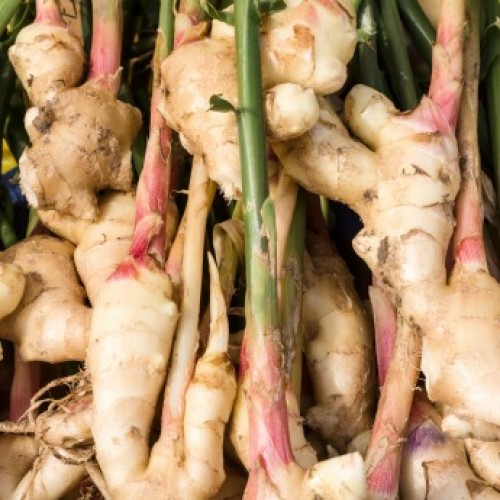
Zingiber officinale, commonly known as Ginger, is a tropical, aromatic perennial herb in the Zingiberaceae family. Though often referred to as a root, the essential oil is actually distilled from the rhizome—a horizontal underground stem that stores the plant’s energy and medicine.

This particular oil is distilled from dried rhizomes, which results in a deeper, more resinous aromatic profile and an increased concentration of sesquiterpenes. The drying process transforms the plant's expression—from quick and bright to anchored and enduring.

Botanical Name: Zingiber officinale
Family: Zingiberaceae
Common Names: Ginger, Dried Ginger, Dried Root Ginger
Plant Type: Perennial herb
Part Used for Distillation: Dried rhizome
Growth Habit: Upright, clumping stems reaching 2–4 feet in height
Flowering Season: Late spring to mid-summer (depending on climate)
Harvest Time for Distillation: Rhizomes are harvested in late fall after the plant has died back, then dried before distillation

Physical Characteristics:
  • Leaves: Long, narrow, lance-shaped, alternate along the stem
  • Stems: Pseudostems formed from leaf sheaths
  • Flowers: Pale yellow with purple markings; orchid-like, but rarely seen outside tropical habitats
  • Rhizomes: Thick, aromatic, and knotted with a golden interior; warming, pungent, and spicy when dried

Native Habitat + Growth Conditions:
  • Native To: South and Southeast Asia
  • Preferred Soil: Loose, fertile, well-drained, and slightly acidic
  • Sunlight: Partial to full shade in hot climates; full sun in temperate zones
  • Climate: Thrives in humid tropical to subtropical environments with consistent warmth and moisture
  • Ecological Notes: Grown commercially in India, Sri Lanka, Indonesia, Nepal, and select parts of Africa and the Caribbean

Energetic Botanical Signature
Ginger grows downward and outward, expanding beneath the surface while holding steady in heat and rain. Its rhizome—the part that feeds, stores, and protects—mirrors its emotional and physical role: a stabilizer, a firekeeper, a mover of what’s been frozen.
The drying of the root concentrates this signature even more. It becomes fire medicine for the cold, root medicine for the lost, and a whisper to the body that it’s safe to come back.

Energetics

Energetic Properties

This oil is earth fire—not the flash of a match, but the long, sustaining burn of coal beneath the surface. Ginger from dried root doesn’t push you into action; it restores your capacity to act. It gathers your scattered energy, returns it to your core, and helps you remember your own momentum.

Where emotional coldness, fatigue, or disconnection take hold, this oil says: “Come back. You’re not done.”

Energetic Themes:
  • Reigniting purpose after burnout or depletion
  • Warming the heart after emotional withdrawal or shock
  • Rebuilding inner reserves when you've given too much for too long
  • Re-centering in the body after spiritual or energetic overextension
  • Encouraging movement—emotional, psychic, physical—without forcing it
  • Grounding through the belly—especially for freeze, fatigue, or over-caring

Spiritual Use:
Use this oil in rituals or blends for recovering drive and vitality, especially after trauma, grief, or long emotional labor. Anoint the soles of the feet, lower back, or solar plexus when your energy feels “cut off from source.”
Ginger teaches that strength isn’t always loud. Sometimes it’s a quiet flame, held steady, that gets you through.

Traditional & Folklore

Ginger has long held sacred status in medicinal, magical, and culinary traditions around the world. Where fresh root was often used for quick heat and culinary fire, the dried root carried a deeper, more spiritual resonance—used in rituals of protection, strength, and warmth.

India & Ayurveda
Dried Ginger (shunthi) is one of the oldest recorded herbal medicines in Ayurveda. It was used not just for digestion, but also to "burn away toxins," strengthen prana (life force), and fortify agni (inner fire). It was often part of rejuvenating formulas to restore strength after illness or trauma.

China & TCM
In Traditional Chinese Medicine, Gan Jiang (dried ginger) was used to revive yang, dispel internal cold, and restore consciousness in cases of collapse or shock. It was seen as a life-restoring herb, one that brought the spirit back into the body.

Africa & the Caribbean
Ginger, especially dried or powdered, was burned in spiritual cleansings, carried in protection sachets, and used in rituals to invoke courage, stimulate passion, and release blockages. It was also used to ward off evil spirits and energetic parasites.

Europe & Folk Traditions
In folk healing, Ginger was regarded as a protector and circulator. It was added to mulled wines and digestive tonics, used to promote warmth in the cold months, and offered to those suffering from melancholy, low libido, or fatigue.

Ginger is a survivor's ally—used by healers, warriors, midwives, and mystics across centuries to rekindle what has dimmed, to protect what is sacred, and to get things moving again when everything feels stuck.

Chemistry

Chemical Components

Ginger essential oil from dried root is chemically distinct from its fresh counterpart. The drying process intensifies its sesquiterpene content, deepens its heat, and shifts the balance of its aromatic profile—making this version warmer, more grounding, and longer acting.

Primary Components
  • Zingiberene (Sesquiterpene)
    • Core constituent of dried root ginger
    • Offers anti-inflammatory, antispasmodic, and grounding qualities
    • Contributes to the rich, earthy base note of the oil
  • β-Sesquiphellandrene & Ar-Curcumene (Sesquiterpenes)
    • Add to its warming, tonic effects
    • Support circulatory and digestive function
    • Contribute to the oil’s deeper, less sharp aromatic character
  • α-Pinene & Camphene (Monoterpenes)
    • Offer mild analgesic and expectorant support
    • Lighten the oil slightly while still grounding the system
  • 1,8-Cineole (Oxide, small amounts)
    • Supports respiratory opening and immune response
    • Less dominant than in fresh ginger
  • Gingerol/Shogaol Derivatives (Trace)
    • Not found in large quantities, but these thermal compounds influence the warming energetic imprint

Therapeutic Implications of This Chemistry
  • More grounding and slow-acting than fresh root ginger
  • Better suited for chronic cold, fatigue, and deeper inflammatory states
  • Excellent for digestive, circulatory, and musculoskeletal applications
  • Warming without overwhelming—ideal for constitutionally cold or depleted clients
  • Pair with other sesquiterpene-rich oils (Myrrh, Patchouli, Vetiver) for anchoring blends


Recipes & Blends

Recipes & Blends

1. Circulation Revival Massage Oil
For cold hands/feet, sluggish blood flow, and fatigue
  • 5 drops Ginger (dried root)
  • 3 drops Black Pepper (Piper nigrum)
  • 2 drops Rosemary ct. cineole (Rosmarinus officinalis)
  • 1 oz carrier oil (such as sesame or tamanu)
Use: Massage into extremities and along the spine to warm, energize, and stimulate movement.

2. Digestive Fire Belly Blend
To ease bloating, cramping, and post-meal heaviness
  • 4 drops Ginger (dried root)
  • 2 drops Cardamom (Elettaria cardamomum)
  • 2 drops Sweet Orange (Citrus sinensis)
  • 1 oz carrier oil
Use: Apply clockwise to the abdomen after meals or when digestion feels stagnant or cold.

Energetic & Emotional Blends
3. Root & Rise Anointing Blend
For rebuilding internal strength, especially post-burnout
  • 2 drops Ginger (dried root)
  • 2 drops Myrrh (Commiphora myrrha)
  • 1 drop Frankincense (Boswellia carterii)
  • 1 tsp carrier oil
Use: Anoint the feet, lower spine, or solar plexus. Inhale deeply to call energy back into the body.

4. Cold Heart Disperser Ritual Oil
To soften emotional rigidity and melt through numbness or grief
  • 3 drops Ginger (dried root)
  • 2 drops Rose (Rosa damascena)
  • 1 drop Cypress (Cupressus sempervirens)
  • 1 oz Jojoba oil
Use: Apply over the heart space or pulse points. Use during grief work, emotional thawing, or re-opening to love after loss.
Safety Etc.

Safety Information

Ginger essential oil from dried root is generally well tolerated when properly diluted, but like all oils with strong warming and stimulating properties, it’s important to use it with respect.
  • Skin Irritation Risk: Can be mildly irritating to sensitive skin or in higher concentrations due to its warming nature. Always dilute appropriately—no more than 1–2% for body applications, and start lower for facial or sensitive areas.
  • Avoid Near Mucous Membranes: Its pungency can cause a hot or burning sensation if applied too close to eyes, nose, or other sensitive areas.
  • Not recommended for use with small children under 5, particularly in bath blends, due to its warming action and potential to irritate delicate skin.
  • Internal Use: Should only be used under the guidance of a qualified practitioner. This oil is potent and stimulating—internal use may cause digestive upset or irritation if not professionally formulated.
  • Photosensitivity: Ginger is not phototoxic, so it's safe to use on exposed skin.
  • Pregnancy: Generally considered safe in low dilutions for topical use during pregnancy, but consult a knowledgeable practitioner if using regularly.


Reviews (1)

Write a review

Note: HTML is not translated!
    Bad           Good
Powered By OpenCart
Stillpoint Aromatics © 2026