
Personal Use
Traditional Use
Marjoram was used in tea to cure headaches, head colds, calm nervous disorders, respiratory distress and to clear sinuses due to its antimicrbia effect. Marjoram has also been used to comfort stomachaches and skeletal?muscular pains as well as improve circulation. Marjoram has antioxidant properties with fats and helps to retain color of carotenoid pigments.
In herbalism, marjoram is used for many gastrointestinal disorders and to assist with digetsion. Marjoram has been known to provide antiulcer activity and mucus protecting effects in gastrointestinal tract. It has also been shown to restore hormomal balance and reduction of DHEA-S when used on vaginitis and polysystic ovarian disease. For the circculatory system, marjoram exhibits anti-platelet and cardioprotective qualities.
Botany
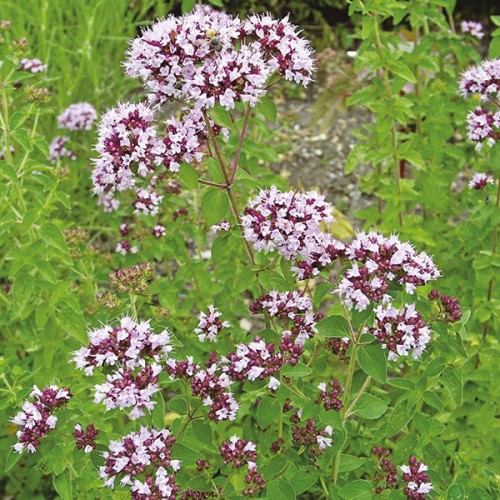
Marjoram, (Origanum majorana), also known as Sweet Marjoram. It is a bushy herbaceous plant that typically reaches 1 - 2 feet in height. Marjoram is a perennial plant of the Lamiaceae family. By the way, the plants that belong to this botanical family are knwwn to have very aromatic essential oils in all parts of the plant. Marjoram leaves are opposite, whole, oval and petiolated (attached to the stem by petiole). The branching stems are densley covered with hairy ovate leaves arrange opposite each other in pairs. THe flowers are pale and are in small clusters. The plane is Native to India and the Middle East and then extended into the Mediteranian.
