
Every order ships USPS Priority — $10.95 flat-rate USPS Priority shipping on all US orders, no minimum. Free shipping on domestic orders over $299.
Welcome to Stillpoint. Subscribe to our newsletter for sale details and new-product news · One discount code per order · Every order is hand-poured, packed with care in ceremony, and shipped as we receive it.

Thyme Co2 Select

Thymus vulgaris ct thyme

  • Thyme Co2 Select

Average Rating: (see reviews)

$15.00 Ex Tax: $15.00

Essential Facts

  • Latin Name: Thymus vulgaris ct thyme
  • Country of Origin: British Indian Ocean Territory
  • Botanical Family: Lamiaceae
  • Plant Parts: Flowering plant/herb
  • Note Classification: Middle
  • Cultivation Method: Organically Grown
  • Method of Extraction: CO2 Select Extraction
  • Extraction Date: February 2026
  • Approx. Shelf Life: 6 - 7 years
  • Chemical Family: Phenols
  • Aroma: Fresh, Herbaceous, Medicinal, Slightly spicy, Soft, Warm
  • Energetic Applications: 3rd Chakra - personal power, 4th Chakra - unconditional love, 6th Chakra - perspective, Clarity, Expansive, Protective, Purifying
  • Therapeutic Properties: Analgesic, Anti-bacterial, Anti-infectious, Anti-inflammatory, Anti-microbial, Anti-oxidant, Anti-parasitic, Anti-rheumatic, Anti-septic, Anti-viral, Carminative, Disinfectant, Immune support, Rubefacient, Warming
Notes & Use

Personal Use

When it comes to picking between Thyme Co2 and its sister essential oil, Thyme thymol, I'm all in for the former. Sure, Thyme thymol has its merits, but its medicinal vibe can sometimes feel like a bit much.
 
On the other hand, Thyme Co2 hits the spot just right. It trades in the medicinal punch for a woody and herbaceous aroma that feels like a breath of fresh air, like taking a stroll in a lush forest. The steam distilled oil simply doesn't have that kind of earthy charm.
 
And let's not forget about its warming, stimulating effect. It's like a perfect cup of herbal tea for the soul - soothing, reviving, and just the right amount of invigorating without going overboard. To me, Thyme Co2 is more than an essential oil; it's my go-to companion for when I need that uplifting, nature-infused pick-me-up.

Traditional Use

  • Antimicrobial Properties: Thymol, one of the primary compounds in thyme extract, has well-documented antimicrobial properties. It's effective against a wide range of bacteria and fungi, which makes thyme extract a useful ingredient in natural disinfectants and cleaning products.
  • Respiratory Health: Thyme has traditionally been used for respiratory health, assisting with conditions like bronchitis, whooping cough, and sore throat. The 1,8 Cineol (Eucalyptol) present in thyme is known for its ability to support the respiratory system.
  • Immune Support: Thyme is known for its immune-boosting properties, helping to strengthen the body's natural defenses. It may help stimulate white blood cells, and its antioxidant properties can neutralize free radicals in the body.
  • Antioxidant Properties: Thyme CO2 extract is packed with antioxidants, compounds that help protect the body from oxidative stress and inflammation. The presence of components like Thymol and Carvacrol contributes to its potent antioxidant properties.
  • Digestive Health: Traditionally, thyme has been used to improve digestion, alleviate gastrointestinal discomfort, and decrease gas and bloating. It may also promote healthy gut flora due to its antimicrobial effects.
  • Skin Health: Thyme extract has been used in skincare due to its antibacterial and anti-inflammatory properties. It may help in managing conditions like acne and eczema, and its antioxidants may have anti-aging effects.
  • Pain Relief: There's some evidence that thyme may have analgesic (pain-relieving) properties, making it potentially useful in managing pain from conditions like arthritis.

Botany

Thyme, known scientifically as Thymus vulgaris, is a perennial shrub belonging to the Lamiaceae or mint family. It's native to the southern Europe and Mediterranean regions, but is now widely cultivated all over the world due to its culinary, medicinal, and ornamental uses.
 
Physically, thyme is a compact, bushy plant that typically grows up to 15-30 cm in height. It's characterized by a woody, fibrous root and a multi-branched stem that’s somewhat woody at the base but turns softer and more herbaceous towards the top. The stems are usually somewhat square-shaped, a common trait in the mint family.
 
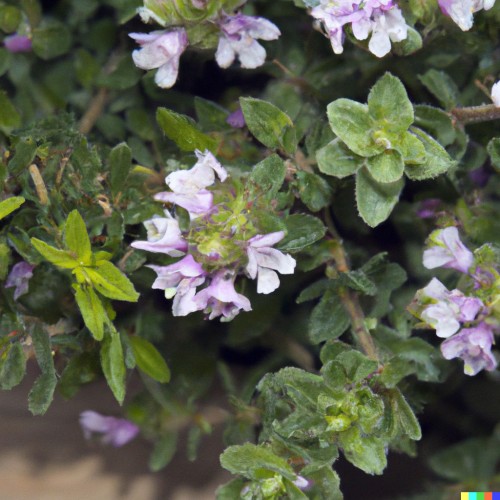
The leaves of thyme are small, approximately 4-10mm long, and are elliptical or oblong in shape. They are usually grayish-green to green in color, and they're notable for their pungent, aromatic fragrance. The upper surface of the leaves is usually smooth, while the underside has densely packed glands filled with essential oils.
 
Thyme flowers are tiny, typically lilac or purple, and are borne in small clusters at the end of the stems. The plant generally flowers in the late spring and early summer. These flowers are very attractive to bees, and thyme honey from bee-keeping areas where thyme is abundant is considered a delicacy.
 
The fruits of thyme are small nutlets. Each flower produces four of these in a single cluster.
 
Overall, thyme is a hardy plant that prefers well-drained soil and a sunny location. It's resistant to drought and can thrive in poor soil conditions. The plant’s lifespan is typically two to five years, but it can live longer in ideal conditions.
Energetics

Energetic Properties

  • Resilience and Strength: Thyme is renowned for embodying resilience and fortitude, often used as a spiritual aid for individuals looking to bolster their inner strength.
  • Energetic Cleansing: In the esoteric realm, Thyme is believed to have the ability to cleanse and clear negative energies. It's often used in meditation or spiritual practices to foster a space of clarity and openness.
  • Emotional Wellbeing: Thyme is reputed to provide emotional comfort and support, particularly beneficial for those battling stress, anxiety, or emotional fatigue. It promotes a sense of balance and tranquillity.
  • Communication and Self-expression: Thyme is often linked with the Throat Chakra (Vishuddha), the energetic center of communication, creativity, and self-expression. Utilizing Thyme could potentially enhance one's capacity to express oneself freely and authentically.
  • Confidence and Empowerment: Thyme is sometimes associated with the Solar Plexus Chakra (Manipura), which is the center of personal power and self-confidence. Its warming and stimulating properties might serve to activate this chakra, fostering feelings of empowerment and self-assuredness.

Traditional & Folklore

  • Ancient Egypt: Thyme was used in the embalming process to ensure safe passage to the afterlife.
  • Ancient Greece: Thyme was burnt as incense in sacred temples, as it was believed to be a source of courage. Greek soldiers also bathed in thyme before battles to boost strength and bravery. Moreover, it was associated with elegance and grace, with the phrase "to smell of thyme" being a compliment.
  • The Roman Empire: Romans used thyme to purify their rooms and added it to cheese and alcoholic beverages for its aromatic properties. Like the Greeks, they believed it could provide courage and strength.
  • Middle Ages: Ladies would often give knights and warriors gifts that included thyme leaves, as it was believed to bring courage to the bearer. Thyme was also used for its therapeutic properties in medicinal practices.
  • Victorian Era: In the language of flowers, thyme symbolized courage and bravery. A patch of wild thyme in a garden was considered a sign of fairies.
  • Folk Tales & Fairies: In many European folklore traditions, thyme was believed to be a favorite plant of fairies and was thought to be a key ingredient in potions for seeing these magical beings.
  • Bee Lore: Given that thyme flowers are a favorite amongst bees, in some cultures, the plant is associated with the ancient art of beekeeping. Thyme honey from regions where the plant grows abundantly is highly prized.
Chemistry

Chemical Components

  • Alpha Pinene: This is a monoterpene, and is one of the principal constituents of turpentine. It has a strong, pine-like scent and is also found in conifer trees, rosemary, and eucalyptus. It has been studied for its potential anti-inflammatory and antimicrobial properties.
  • Beta Myrcene: This is a monoterpene and a significant component of the essential oil in several plants including hops, cannabis, and lemongrass. It has an earthy aroma and has been studied for its potential analgesic, anti-inflammatory, and sedative effects.
  • p-Cymene: This is a naturally occurring aromatic hydrocarbon which is found in over 100 plant species including cumin and thyme. It has a citrusy, sweet aroma and has been studied for its potential antioxidant, anti-inflammatory, and antimicrobial properties.
  • Limonene: This is a common monoterpene found in citrus peels. It has a bright, citrusy aroma and is known for its potent antioxidant and anti-inflammatory properties. It's also used as a flavoring in food and beverages.
  • 1,8 Cineol (Eucalyptol): This is a monoterpenoid and is the primary constituent of eucalyptus oil, giving it its characteristic scent. It's known for its potential respiratory benefits, including bronchodilator and expectorant effects.
  • Gamma Terpinene: This is a monoterpene found in several citrus fruits and has been studied for its antioxidant properties. It's also found in juniper and eucalyptus oils.
  • Linalool: This is a terpene alcohol found in many flowers and spice plants, known for its floral, lavender-like aroma. Linalool has potential calming, anti-anxiety, and sedative effects.
  • Borneol: This is a bicyclic organic compound and a terpene derived from pine oil. It has a balsamic, camphor-like odor and has been studied for its potential analgesic and anti-inflammatory properties.
  • Thymol: This is a naturally occurring phenol compound found in thyme oil. It has a strong, herbaceous scent and is known for its antiseptic properties. It's commonly used in mouthwashes and antiseptic wipes.
  • Carvacrol: This is a phenol that occurs in the essential oil of many plants, most notably in oregano and thyme. It has a warm, spicy aroma and has been studied for its antimicrobial properties.
  • Beta Caryophyllene: This is a sesquiterpene found in many plants including black pepper, clove, and cannabis. It has a spicy, woody aroma, and has been studied for its potential anti-inflammatory and analgesic effects. It's unique for being a dietary cannabinoid.
Recipes & Blends

Recipes & Blends

Emerald Canopy Awakening

  • Thyme CO2 Select (Salvia officinalis): 3 drops
  • Siberian Fir Essential Oil (Abies sibirica): 4 drops
  • Cedarwood Essential Oil (Cedrus atlantica): 4 drops
  • Eucalyptus Essential Oil (Eucalyptus globulus): 2 drops
  • Lemon Essential Oil (Citrus limon): 2 drops

How to use: Mix the oils with a carrier oil such as jojoba or sweet almond oil and use in a diffuser. It can also be used for inhalation therapy by adding a few drops to a bowl of hot water and breathing in the steam.

Serenity's Embrace
  • Thyme CO2 Select (Salvia officinalis): 2 drops
  • Lavender Essential Oil (Lavandula angustifolia): 4 drops
  • German Chamomile CO2 Extract (Matricaria recutita): 2 drops
  • Frankincense Essential Oil (Boswellia carterii): 3 drops
  • Sweet Orange Essential Oil (Citrus sinensis): 4 drops

How to use: Mix with a carrier oil and apply to the wrists, temples, or soles of the feet for a soothing effect. This blend can also be used in a diffuser before bed to promote restful sleep.

Sunrise Vigor
  • Thyme CO2 Select (Salvia officinalis): 3 drops
  • Peppermint Essential Oil (Mentha piperita): 3 drops
  • Rosemary Essential Oil (Rosmarinus officinalis): 3 drops
  • Grapefruit Essential Oil (Citrus paradisi): 3 drops
  • Coffee CO2 Extract (Coffea arabica): 1 drop

How to use: Mix with a carrier oil and apply topically to the wrists or behind the ears for an energizing boost. Alternatively, use in a diffuser in the morning to start your day off invigorated.

Guardian Essence
  • Thyme CO2 Select (Salvia officinalis): 3 drops
  • Eucalyptus Essential Oil (Eucalyptus globulus): 3 drops
  • Tea Tree Essential Oil (Melaleuca alternifolia): 2 drops
  • Lemon Essential Oil (Citrus limon): 2 drops
  • Ginger CO2 Extract (Zingiber officinale): 2 drops

How to use: Mix with a carrier oil and apply to the chest, back, or soles of the feet. This blend can also be used in a diffuser to support immune function and provide respiratory relief.

Remember to always perform a patch test on a small area of skin to ensure no adverse reactions before applying these blends more broadly.
Safety Etc.

Safety Information

For adults, experts suggest maintaining a dilution range of 1-1.5% when applying Thyme topically. This percentage should be lowered for elderly individuals. The use of Thyme is generally not recommended for children and should be completely avoided during pregnancy. As Thyme has the potential to cause irritation to the mucous membranes, it should always be used in a diluted form on the skin.
 
Persons who are taking any form of anticoagulants should proceed with caution when using Thyme, as it might interfere with the efficacy of these medications, a point emphasized by renowned essential oils expert, Robert Tisserand.

Reviews (0)

Write a review

Note: HTML is not translated!
    Bad           Good
Powered By OpenCart
Stillpoint Aromatics © 2026