
Personal Use
(Salvia rosmarinus, cineole type, CO₂-se-plus extract)
Why it's called "CO₂-se-plus":
The “plus” refers to the use of an entrainer—in this case, ethanol—during the supercritical CO₂ extraction process. This method allows for the capture of both volatile and semi-volatile compounds that wouldn’t be fully extracted with CO₂ alone.
So what does that mean practically?
-
You get a richer, broader-spectrum extract—not just the aromatic components (like 1,8-cineole and camphor), but also non-volatile constituents like carnosic acid, rosmarinic acid, and other phenolic diterpenes.
-
These compounds contribute to antioxidant, anti-inflammatory, and skin-repairing properties—which you wouldn’t get from a steam-distilled essential oil alone.
-
It also gives the extract a slightly thicker, resinous texture and longer-lasting scent profile.
You can think of it as a "whole-plant whisper"—not just the breath, but the blood and bones of Rosemary, all in one potent drop.
This Rosemary CO₂ extract is nothing like the brittle-shelved herbs in your pantry. It’s deep, sharp, and medicinal—but also full-bodied and commanding. The scent blends eucalyptus-like clarity with warm camphoraceous spice and an undercurrent of resinous, woody depth. It moves up and out—cutting through distraction, stagnation, and congestion like a scalpel of presence.
Stillpoint’s CO₂-select-plus extract is sourced from organically grown Rosemary leaf and produced using supercritical carbon dioxide extraction with ethanol as an entrainer. The result is a complete extract with high levels of 1,8-cineole and camphor, balanced by trace verbenone, borneol, alpha-pinene, and phenolic diterpenes (like carnosic acid). This is not just a fragrance—it’s medicine in molecular form.
Therapeutic Actions
Respiratory + Immune Support
With its rich 1,8-cineole and camphor content, this extract may support lung function by opening the bronchi, thinning mucus, and offering strong antiviral, antibacterial, and antifungal action. Ideal for steam blends, chest salves, or diffusers during cold and flu season.
With its rich 1,8-cineole and camphor content, this extract may support lung function by opening the bronchi, thinning mucus, and offering strong antiviral, antibacterial, and antifungal action. Ideal for steam blends, chest salves, or diffusers during cold and flu season.
Circulation + Muscle Recovery
Traditionally used to stimulate blood flow, relieve muscle tension, and assist in post-exertion recovery. May ease minor joint and rheumatic pain when diluted and massaged into sore areas.
Traditionally used to stimulate blood flow, relieve muscle tension, and assist in post-exertion recovery. May ease minor joint and rheumatic pain when diluted and massaged into sore areas.
Cognitive Clarity + Alertness
Rosemary has a long-standing reputation for enhancing memory, focus, and mental clarity. It stimulates the mind without overloading the nervous system, making it excellent for midday slumps, study support, or emotional fatigue.
Rosemary has a long-standing reputation for enhancing memory, focus, and mental clarity. It stimulates the mind without overloading the nervous system, making it excellent for midday slumps, study support, or emotional fatigue.
Antioxidant + Skin Defense
Contains carnosic acid, a phenolic compound known for its potent antioxidant effects, making this extract a powerful addition to skin-supportive blends that address environmental exposure or inflammation.
Contains carnosic acid, a phenolic compound known for its potent antioxidant effects, making this extract a powerful addition to skin-supportive blends that address environmental exposure or inflammation.
Traditional Use
Rosemary has been used as a tonic herb for centuries—invigorating the mind, warming the body, and stimulating circulation. As far back as the first century CE, it was included in herbal texts for its ability to “comfort the brain,” cleanse internal stagnation, and protect the spirit.
Cognitive + Mental Support
Rosemary leaf was traditionally steeped as a tea or used in ritual baths to enhance memory, lift mental fatigue, and sharpen focus. It was especially valued for older adults and students alike, believed to “revive the senses” and prevent forgetfulness.
Circulation + Muscular Support
Compresses, salves, and infusions made from Rosemary were commonly used for cold extremities, poor blood flow, and rheumatic conditions. It was applied topically to relieve muscle tension, stimulate movement in sluggish systems, and energize “cold” constitutions.
Digestive + Liver Stimulation
Internally, Rosemary was used to support digestion, bile production, and liver vitality. It was seen as a warming herb, helpful for indigestion, flatulence, and feelings of heaviness or food stagnation.
Immune Fortification + Protective Use
The aromatic leaves were brewed into steams or decoctions to support immunity, ease respiratory complaints, and prevent seasonal illness. In times of epidemic, it was burned with other herbs to cleanse air and ward off contagion—a practice continued in households for generations.
Hair + Scalp Care
Rosemary infusions were long used in traditional beauty rituals to stimulate hair growth, darken greys, and improve scalp health. Applied as a rinse or vinegar, it supported clarity at the crown—physically and energetically.
Botany
Salvia rosmarinus (formerly Rosmarinus officinalis) is an aromatic evergreen shrub in the Lamiaceae family, native to the Mediterranean basin. It thrives in sun-drenched, rocky soils, often along the coastline where salt air and heat shape its resilient nature.
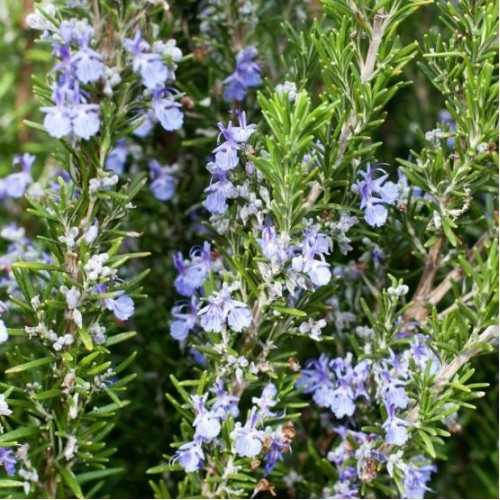
Known for its needle-like leaves and sharp, camphoraceous scent, Rosemary has long been cultivated for its culinary, medicinal, and ceremonial properties. It blooms in late winter through early spring, producing small pale blue to violet flowers that attract bees and pollinators, signaling renewal and mental vitality.
Botanical Name: Salvia rosmarinus
Family: Lamiaceae
Common Names: Rosemary, Rosmarinus, Anthos
Plant Type: Aromatic evergreen shrub
Part Used for Extraction: Leaves
Growth Habit: Upright, woody perennial shrub up to 1.5–2 meters tall
Flowering Season: Late winter to spring (depending on climate)
Harvest Time for CO₂ Extraction: When foliage is rich in aromatic oils—typically early spring to late summer, before flowering peaks
Family: Lamiaceae
Common Names: Rosemary, Rosmarinus, Anthos
Plant Type: Aromatic evergreen shrub
Part Used for Extraction: Leaves
Growth Habit: Upright, woody perennial shrub up to 1.5–2 meters tall
Flowering Season: Late winter to spring (depending on climate)
Harvest Time for CO₂ Extraction: When foliage is rich in aromatic oils—typically early spring to late summer, before flowering peaks
Physical Characteristics:
-
Leaves: Narrow, leathery, dark green on top, silvery-white beneath; highly aromatic
-
Stems: Woody and upright with square cross-sections
-
Flowers: Small, tubular, pale blue to violet; arranged in clusters along upper stems
-
Roots: Deep and fibrous—anchoring the plant in rocky or dry conditions
Native Habitat + Growth Conditions:
-
Native To: Mediterranean basin
-
Preferred Soil: Rocky, calcareous, well-drained soils
-
Sunlight: Full sun
-
Climate: Arid to temperate Mediterranean
-
Ecological Notes: Drought-tolerant; thrives in wind-exposed, nutrient-poor environments; deeply loved by pollinators
Energetic Botanical Signature
Rosemary’s upright growth and needle-like leaves reflect clarity, direction, and focus. It grows in exposed, sun-filled environments—thriving where other plants wither. That tells us it endures, clears, and sharpens.
Its scent is piercing yet clean, speaking to vision, vigilance, and spiritual strength. The dual color of its leaves—dark green and silvery-white—reminds us that Rosemary bridges the worlds of earth and insight.
This is a plant of remembrance, resilience, and renewal.
