
Personal Use
White Champaca Absolute (Michelia × alba) is not here to whisper. She arrives like memory you didn’t know you were missing—soft, seductive, and utterly timeless.
The aroma is intensely floral but not sharp—creamy, almost buttery, with hints of banana blossom, dew-washed petals, and soft green shadows. There’s a lunar quality to her presence—cool yet magnetic, like moonlight pooling on wet stone. She draws you in, but never demands. There’s no performance here—only presence.
This oil is solvent-extracted from the fresh white blossoms of the Michelia × alba tree, a hybrid revered throughout Southeast Asia. Used in sacred rites, temple offerings, and ceremonial perfumery, White Champaca has long been a bridge between the sensual and the sacred. She’s rooted in the body, but always pointing toward the divine.
Energetically, she slips beneath the noise and settles into the psyche like a love song you almost forgot. She clears emotional static, loosens identity loops, and calls the soul back into soft alignment. It’s no surprise she’s used in meditation, tantric ritual, and spiritual dreamwork—her frequency lives somewhere between scent and silence.
Emotional Regulation + Grief Support
White Champaca may help soften waves of sadness, loss, and emotional overwhelm. Its deeply comforting aroma is known to calm agitation, support emotional recovery, and create a sense of inner sanctuary. Often used in blends for grief, heartache, or anxious tension stored in the chest.
White Champaca may help soften waves of sadness, loss, and emotional overwhelm. Its deeply comforting aroma is known to calm agitation, support emotional recovery, and create a sense of inner sanctuary. Often used in blends for grief, heartache, or anxious tension stored in the chest.
Nervous System + Sleep Support
Traditionally used in calming rituals and bedtime anointing oils, White Champaca has a gentle sedative effect that may help unwind the nervous system, especially after overstimulation or emotional shock. Supportive in night blends for those with restless sleep, racing thoughts, or chronic inner chatter.
Traditionally used in calming rituals and bedtime anointing oils, White Champaca has a gentle sedative effect that may help unwind the nervous system, especially after overstimulation or emotional shock. Supportive in night blends for those with restless sleep, racing thoughts, or chronic inner chatter.
Energetic Protection + Aura Maintenance
With its spiritually grounded aroma, this oil may help seal the field—offering protection from emotional or psychic overload. Often diffused or applied topically before ceremony, public speaking, or energy work to maintain energetic boundaries without becoming rigid or shut down.
With its spiritually grounded aroma, this oil may help seal the field—offering protection from emotional or psychic overload. Often diffused or applied topically before ceremony, public speaking, or energy work to maintain energetic boundaries without becoming rigid or shut down.
Skin + Subtle Inflammation Relief
Though rarely used therapeutically for the skin, White Champaca may assist in soothing minor irritation, redness, or tension, especially when blended with carrier oils for gentle facial massage or décolletage application. Its natural compounds may offer subtle anti-inflammatory effects when used appropriately.
Though rarely used therapeutically for the skin, White Champaca may assist in soothing minor irritation, redness, or tension, especially when blended with carrier oils for gentle facial massage or décolletage application. Its natural compounds may offer subtle anti-inflammatory effects when used appropriately.
Hormonal + Feminine Balance
Champaca has been associated with feminine cycles for centuries. It may help soothe emotional swings, irritability, and spiritual fatigue linked to hormonal imbalances—especially when used in abdominal or heart-centered applications during times of inner flux.
Champaca has been associated with feminine cycles for centuries. It may help soothe emotional swings, irritability, and spiritual fatigue linked to hormonal imbalances—especially when used in abdominal or heart-centered applications during times of inner flux.
Traditional Use
White Champaca has long been honored across healing traditions, spiritual practices, and sacred sensuality. Every part of the plant—from flower to bark—has been used to tend the body, calm the spirit, and awaken the heart.
Ayurvedic Medicine
In Ayurveda, Michelia × alba and its related species have been used for their cooling, tonifying, and harmonizing properties. The flowers are considered to balance excess heat (Pitta) and support emotional clarity. Infused into oils, they’ve been applied to the forehead, chest, and abdomen to ease restlessness, agitation, and emotional congestion. The bark and seeds have been used traditionally to address inflammation, metabolic imbalance, and diabetes, speaking to the full-body intelligence of this sacred tree.
In Ayurveda, Michelia × alba and its related species have been used for their cooling, tonifying, and harmonizing properties. The flowers are considered to balance excess heat (Pitta) and support emotional clarity. Infused into oils, they’ve been applied to the forehead, chest, and abdomen to ease restlessness, agitation, and emotional congestion. The bark and seeds have been used traditionally to address inflammation, metabolic imbalance, and diabetes, speaking to the full-body intelligence of this sacred tree.
Perfumery + Sacred Cosmetics
Champaca has been a beloved floral in India for centuries—not just for scent, but for its role in beauty rituals and energetic hygiene. The flowers have been steeped into fragrant body oils, hair tonics, and temple balms, believed to bless the body and uplift the spirit. Today, its absolute remains one of the most prized ingredients in fine natural perfumery—a scent that evokes devotion and depth in equal measure.
Champaca has been a beloved floral in India for centuries—not just for scent, but for its role in beauty rituals and energetic hygiene. The flowers have been steeped into fragrant body oils, hair tonics, and temple balms, believed to bless the body and uplift the spirit. Today, its absolute remains one of the most prized ingredients in fine natural perfumery—a scent that evokes devotion and depth in equal measure.
Spiritual + Ritual Use
White Champaca is considered deeply sacred in Hindu and Buddhist traditions. Blossoms are offered at temples, woven into prayer garlands, and laid on altars as acts of reverence. The flower is associated with Lakshmi, Saraswati, and the Buddha—carrying a vibration of grace, awakening, and feminine divinity. Used in rituals of blessing, purification, and love, it is said to attract positive energy and dispel lower influences.
White Champaca is considered deeply sacred in Hindu and Buddhist traditions. Blossoms are offered at temples, woven into prayer garlands, and laid on altars as acts of reverence. The flower is associated with Lakshmi, Saraswati, and the Buddha—carrying a vibration of grace, awakening, and feminine divinity. Used in rituals of blessing, purification, and love, it is said to attract positive energy and dispel lower influences.
Traditional Chinese Medicine (TCM)
In TCM, Champaca has been used more functionally: the bark and flowers to support menstrual regulation, digestive clarity, and inflammatory conditions. Though not a cornerstone of the system, its inclusion across multiple traditions highlights its global relevance.
In TCM, Champaca has been used more functionally: the bark and flowers to support menstrual regulation, digestive clarity, and inflammatory conditions. Though not a cornerstone of the system, its inclusion across multiple traditions highlights its global relevance.
Aromatherapy + Emotional Healing
Long before modern aromatherapy had language for it, Champaca was used to soothe the heart, uplift the mood, and support spiritual clarity. Today, it’s still a go-to in blends for emotional trauma, heartbreak, or creative stagnation. It brings softness where there’s sharpness, warmth where there’s numbness, and depth where there’s disconnection.
Long before modern aromatherapy had language for it, Champaca was used to soothe the heart, uplift the mood, and support spiritual clarity. Today, it’s still a go-to in blends for emotional trauma, heartbreak, or creative stagnation. It brings softness where there’s sharpness, warmth where there’s numbness, and depth where there’s disconnection.
Botany
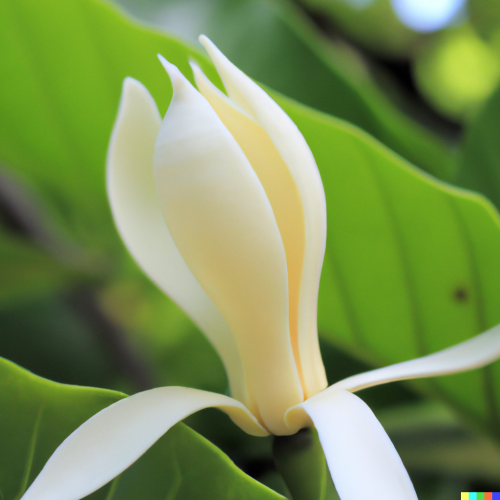
Michelia × alba, commonly known as White Champaca or White Jade Orchid Tree, is a lush evergreen hybrid in the Magnoliaceae family. This tree is widely revered throughout Southeast Asia—not just for its beauty, but for its unmistakable, sacred aroma that emanates from its waxy white blossoms. These blooms are gathered daily, often before dawn, when their fragrance is at its most profound and potent.
Native to subtropical Asia and widely cultivated in India, China, Indonesia, and the Philippines, White Champaca thrives in warm, humid environments. The tree itself can reach up to 50 feet, its glossy green leaves providing a soft canopy for the intensely fragrant blossoms that grow in clusters along the branches. Unlike other flowering trees, Champaca doesn’t need to dazzle. She emanates. Her medicine moves through the air like a transmission, even before a flower is touched.
This species is a naturally occurring hybrid between Michelia champaca and Michelia montana—but over centuries, it has become its own presence entirely. A tree of temples, night markets, and sacred courtyards, White Champaca is still offered daily in devotional rituals and prayers across cultures.
Botanical Name: Michelia × alba
Family: Magnoliaceae
Common Names: White Champaca, White Jade Orchid Tree, Paklan (Chinese), Sapu Malem (Indonesian)
Plant Type: Evergreen flowering tree
Part Used for Extraction: Fresh blossoms
Growth Habit: Upright and spreading; can reach up to 15–20 meters tall
Flowering Season: Year-round in tropical climates; peak in early spring and autumn
Harvest Time for Extraction: Early morning, when flowers are fully open and aromatic compounds are richest
Family: Magnoliaceae
Common Names: White Champaca, White Jade Orchid Tree, Paklan (Chinese), Sapu Malem (Indonesian)
Plant Type: Evergreen flowering tree
Part Used for Extraction: Fresh blossoms
Growth Habit: Upright and spreading; can reach up to 15–20 meters tall
Flowering Season: Year-round in tropical climates; peak in early spring and autumn
Harvest Time for Extraction: Early morning, when flowers are fully open and aromatic compounds are richest
Physical Characteristics
-
Leaves: Glossy, ovate to elliptical, deep green, up to 20 cm long
-
Stems: Smooth, grayish-brown; upright with spreading canopy
-
Flowers: Waxy, white to ivory petals in layered whorls; intoxicating aroma
-
Roots: Deep, anchoring root system with good water retention in loamy soil
Native Habitat + Growth Conditions
-
Native To: Hybridized in Southeast Asia; now naturalized and cultivated across tropical Asia
-
Preferred Soil: Rich, loamy, well-drained; tolerates both tropical rains and dry spells with established roots
-
Sunlight: Full sun to partial shade
-
Climate: Tropical to subtropical; sensitive to frost
-
Ecological Notes: Flowers attract bees and nocturnal pollinators; often grown near temples, homes, and sacred gardens
Energetic Botanical Signature
White Champaca doesn’t climb—she rises. Her blossoms are held like offerings: elegant, exposed, unapologetically fragrant. She teaches the body to soften and the spirit to open.
This is a tree that blooms in the liminal—between night and morning, root and ether, body and light. She embodies the feminine principle in all its power: not force, but invitation. Her medicine is steady and subtle. She doesn’t push—she calls.
She is the flowering of what’s been buried.
She is the breath between devotion and desire.
She is the permission to remember you were always sacred.
