
Personal Use
Cananga Essential Oil (Cananga odorata)
Cananga essential oil is Ylang Ylang’s sister—but she’s got her own presence, and she’s not trying to be sweet. While Ylang can be syrupy and heady, Cananga is softer, greener, and easier to work with in blends. I actually prefer her—there’s something in her grounded floral note that feels more real, less performative.
Cananga essential oil is Ylang Ylang’s sister—but she’s got her own presence, and she’s not trying to be sweet. While Ylang can be syrupy and heady, Cananga is softer, greener, and easier to work with in blends. I actually prefer her—there’s something in her grounded floral note that feels more real, less performative.
Distilled from the flowers of Cananga odorata var. macrophylla, this oil comes from the same genus and species as Ylang Ylang, but from a different variety entirely. That shift matters. Cananga contains higher levels of the sesquiterpene β-caryophyllene, giving it more of a woody, balancing, emotionally stabilizing edge.
It still carries that warm floral note, but it’s tempered with fresh green depth and a slightly spiced undertone. If you’ve ever felt like Ylang was too much—Cananga may be exactly what your system has been asking for.
Nervous System Support:
Cananga is a calming, nervine oil that supports the parasympathetic nervous system. It may help ease anxiety, emotional agitation, and overwhelm—especially when you need grounding without sedation. Think: emotional decompression for people who can’t afford to collapse.
Cananga is a calming, nervine oil that supports the parasympathetic nervous system. It may help ease anxiety, emotional agitation, and overwhelm—especially when you need grounding without sedation. Think: emotional decompression for people who can’t afford to collapse.
Cardiovascular + Stress Support:
Traditionally used to calm the heart and lower nervous tension, Cananga may support a regulated heart rate and gentle blood pressure balance in moments of acute stress. Its subtle floral-woody aroma has been used in folk medicine to ease palpitations and nervous heat.
Traditionally used to calm the heart and lower nervous tension, Cananga may support a regulated heart rate and gentle blood pressure balance in moments of acute stress. Its subtle floral-woody aroma has been used in folk medicine to ease palpitations and nervous heat.
Skin + Scalp Health:
Cananga is mildly anti-inflammatory and antimicrobial, making it useful for acne-prone skin, minor irritations, or scalp health. It’s a good addition to hair oils, facial serums, or soothing salves when you want therapeutic effect without overpowering fragrance.
Cananga is mildly anti-inflammatory and antimicrobial, making it useful for acne-prone skin, minor irritations, or scalp health. It’s a good addition to hair oils, facial serums, or soothing salves when you want therapeutic effect without overpowering fragrance.
Hormonal + Emotional Balance:
Cananga has been used to support hormonal and emotional shifts, particularly around the menstrual cycle. It’s helpful in blends for irritability, emotional volatility, or tension held in the belly and lower back.
Cananga has been used to support hormonal and emotional shifts, particularly around the menstrual cycle. It’s helpful in blends for irritability, emotional volatility, or tension held in the belly and lower back.
Sleep Support (without heaviness):
This oil may help quiet a busy mind and relax the body, making it useful in nighttime blends where you want to wind down but not be knocked out.
This oil may help quiet a busy mind and relax the body, making it useful in nighttime blends where you want to wind down but not be knocked out.
Traditional Use
Though not as globally known as Ylang Ylang, Cananga has a deep history of use in Southeast Asia and island cultures, where it’s been valued for both emotional healing and spiritual protection. Distilled from the flowers of the Cananga tree, the oil has been used in ritual, anointing, and folk medicine—especially when nervous tension, grief, or spiritual unrest were present.
Heart + Nerve Medicine
In traditional Javanese and Balinese practices, Cananga blossoms were woven into garlands and placed in temples and bedrooms to calm the spirit and invite peaceful dreams. The oil was believed to soothe emotional storms, ease heartache, and quiet the overactive mind. It was especially used during times of mourning, heartbreak, or relationship stress.
Protective and Ceremonial Use
Cananga oil was also used as a cleansing and protective agent—applied to the body, added to ritual baths, or diffused to ward off negative energies and ground scattered emotions. In spiritual work, it was used to calm emotional intensity and help integrate experiences that felt destabilizing or overwhelming.
Aromatic Adornment
Outside of ritual, Cananga has long been used as a natural perfume—added to body oils, hair tonics, and clothing. Unlike the more intoxicating Ylang Ylang, Cananga was used when the goal was soft allure, not seduction—a quiet strength, a calming presence.
Botany
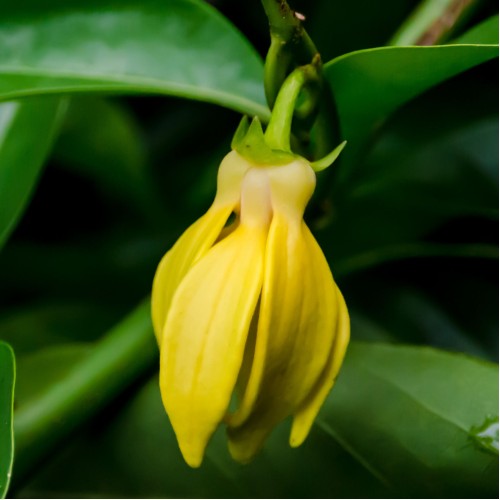
Cananga (Cananga odorata var. macrophylla) is a fast-growing tropical tree native to Southeast Asia, especially Indonesia and the Philippines. Part of the Annonaceae family, it produces long, drooping yellow-green flowers that are steam distilled into a fragrant, emotionally grounding essential oil. Though from the same species as Ylang Ylang, this variety (macrophylla) produces an oil with a more herbaceous, woody-floral character and higher sesquiterpene content.
This tree is widely planted not just for its aromatic value, but for its ecological role in tropical reforestation and cultural use in ritual and traditional healing practices.
Botanical Name: Cananga odorata var. macrophylla
Family: Annonaceae
Common Names: Cananga, Wild Ylang, Hardy Ylang
Plant Type: Tropical evergreen tree
Part Used: Fresh flowers
Growth Cycle: Fast-growing; long-blooming
Family: Annonaceae
Common Names: Cananga, Wild Ylang, Hardy Ylang
Plant Type: Tropical evergreen tree
Part Used: Fresh flowers
Growth Cycle: Fast-growing; long-blooming
Physical Characteristics
Height: Up to 40–60 feet (12–18 meters)
Bark: Smooth to slightly fissured, pale gray to brown
Leaves: Large, glossy green, oval-shaped with wavy edges
Flowers: Long, narrow, drooping petals; pale green to yellow; mildly fragrant
Fruit: Small, clustered green drupes that ripen to black; not used in distillation
Bark: Smooth to slightly fissured, pale gray to brown
Leaves: Large, glossy green, oval-shaped with wavy edges
Flowers: Long, narrow, drooping petals; pale green to yellow; mildly fragrant
Fruit: Small, clustered green drupes that ripen to black; not used in distillation
Native Habitat and Growth Conditions
Native Regions: Philippines, Indonesia, Malaysia
Preferred Environment: Tropical lowland forests, humid environments
Soil Needs: Rich, well-drained, slightly acidic to neutral soils
Ecological Role: Supports pollinators; fast-growing canopy species; used in reforestation and agroforestry systems
Preferred Environment: Tropical lowland forests, humid environments
Soil Needs: Rich, well-drained, slightly acidic to neutral soils
Ecological Role: Supports pollinators; fast-growing canopy species; used in reforestation and agroforestry systems
Energetic Botanical Signature
Cananga is a tree of fast, upward growth with drooping, fragrant flowers that hang like offerings to the earth. Its height suggests elevation and expansion, yet its downward-facing blooms reflect humility, grounded sensuality, and a willingness to surrender. The balance between lift and release is key here.
The leaves are large, veined, and lush—suggesting a capacity to nourish and hold emotional weight. Its flowers bloom abundantly, not in isolation, reflecting a medicine that’s meant for connection, integration, and emotional generosity without depletion.
Energetically, Cananga mirrors those of us who’ve grown quickly out of necessity, who carry beauty and softness while still learning how to root. It teaches balance between offering and receiving, between holding space and protecting your own.
