Personal Use
Anise Star and Anise seed and this essential oil, Aniseed Myrtle are very similar in chemistry and their applications. Anise Star is typically used for her anti-spasmodic and carminative therapeutic properties to relieve dyspepsia, colic and gas and is anti-ulcerogenic.It has also been proven to be sedative and inhibits acetylcholinesterase. Because of the fantastic anti spasmodic properties, we find her to be awesome when dealing with deep respiratory issues. She can relieve the spastic coughs of bronchitis and chest colds. A good friend of ours uses this in her anti asthma blend.
Botany
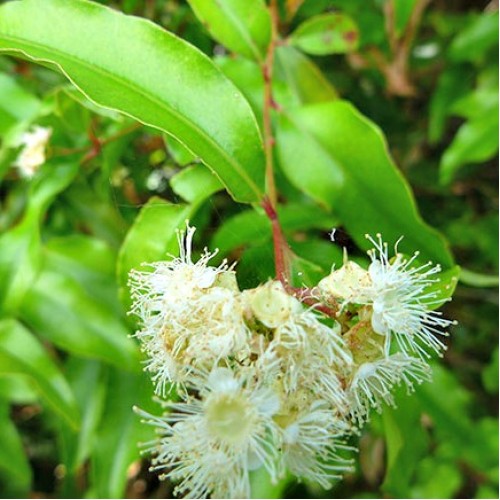
Syzygium anisatum, with common names ringwood and aniseed tree, is a rare Australian rainforest tree with an aromatic leaf that has an essential oil profile comparable to true aniseed. The leaf from cultivated plantations is used as a bushfood spice and distilled for the essential oil, and is known in the trade as aniseed myrtle or anise myrtle. The ringwood tree has a dense crown and grows up to 145 feet The leaves are 6–12 cm long with prominently undulate margins and rich aniseed aroma when crushed. Flowers are white and sweetly scented, borne in panicles. The fruit are dry papery capsules around 5 mm long and are white in appearance. (Wikipedia)