Personal Use
Cedarwood Indian, Vintage Essential Oil (Cedrus deodara)
Deep | Softened | Devotional
Indian Cedarwood doesn’t rush into the room. It arrives like an old temple door opening slowly — warm, woody, dry, resinous, and deeply settled. This vintage 2010 distillation has aged beautifully. Over a decade of resting has softened its edges, deepened its body, and given the aroma a rounder, quieter, more meditative presence.
This is not sharp, fresh-cut wood. This is aged wood. Lived-in wood. Wood that has held silence.
Its aroma is grounding without being heavy, balsamic without being sticky, and softly sweet in the way old cedar can be — not sugary, but warm, resinous, and quietly comforting. There is something ancient-feeling here. Not dramatic. Not theatrical. Just steady as hell.
This is an oil for nervous system settling, spiritual grounding, breath, endurance, meditation, and the kind of emotional repair that happens when the body finally feels safe enough to exhale.
Energetically, Indian Cedarwood has the medicine of rooted devotion. It brings you down out of the spinning mind and back into the body, back into the bones, back into the place inside you that has survived more than it should have had to survive — and is still standing.
Stillpoint’s Vintage Indian Cedarwood essential oil is steam distilled from the wood of Cedrus deodara, a majestic Himalayan cedar traditionally associated with sacred groves, temples, protection, and spiritual presence. The name deodara is often translated as “wood of the gods,” and this oil carries that feeling beautifully.
This vintage 2013 oil is for grounding. For breath. For meditation. For sacred space. For spiritual endurance. For grief held in the chest. For returning to the deep root when life has scattered you into a thousand pieces.
Therapeutic Applications
Respiratory Support + Steady Breathing
-
Indian Cedarwood has been traditionally used to support the respiratory system, especially when the breath feels heavy, shallow, congested, or emotionally restricted.
-
Its dry, woody, balsamic aroma may help support a feeling of deeper, steadier breathing and greater ease through the chest.
-
Useful in properly diluted chest rubs, inhalation blends, steam inhalation rituals, and diffuser use when respiratory support and grounding are both desired.
- Especially appropriate when respiratory discomfort is accompanied by stress, grief, fatigue, or a sense of heaviness in the body.
Nervous System Grounding
-
Indian Cedarwood may support the nervous system during periods of stress, overstimulation, emotional fatigue, and mental restlessness.
-
Its aged, softened aroma gives this vintage oil a particularly settled quality, making it well suited for evening use, grounding practices, and moments when the body needs help coming down.
- Useful in massage oils, anointing oils, bath blends, meditation rituals, and body oils when the goal is calm, steadiness, and embodied presence.This is not an oil that knocks the system out. It helps the system remember how to root.
Meditation + Ritual Support
-
Indian Cedarwood has a long association with sacred space, prayer, meditation, and spiritual steadiness.
-
Its aroma may support focus, inner quiet, and a deeper connection to the body during meditation, breathwork, ceremony, or reflective practice.
-
Useful in anointing oils, altar blends, grounding rituals, spiritual baths, and quiet evening ceremonies.
- Especially supportive when the mind feels scattered, the energy field feels thin, or the body needs a strong aromatic anchor.
Skin + Scalp Support
-
Cedarwood oils have traditionally been used in skin and scalp preparations, especially when oil balance, congestion, or scalp care are part of the concern.
-
Indian Cedarwood may be useful in properly diluted blends for oily skin, congested skin, scalp massage, beard oils, and grounding body oils.
-
Its dry, woody nature makes it especially appropriate in formulas where the skin or scalp feels overactive, oily, or in need of balance.
- Can be incorporated into hair and scalp care preparations when the goal is cleansing, grounding, and supporting a healthier-feeling scalp.
Musculoskeletal + Body Support
-
Indian Cedarwood may support massage blends for tension patterns connected to stress, overwork, fatigue, and chronic holding.
-
While it is not a hot, stimulating pain oil, it brings steadiness and depth to bodywork where the muscles feel tired, compressed, or emotionally burdened.
-
Useful in massage oils for the back, shoulders, chest, neck, feet, and areas where stress has settled into the body.
- Especially appropriate when the body needs grounding and support rather than aggressive stimulation.
This is an oil that doesn’t force the body open. It creates the conditions for settling, softening, breathing, and remembering your own root. Physical, emotional, and spiritual.
Traditional Use
Traditional Use of Indian Cedarwood | Respiratory Support, Skin Care & Sacred Wood Medicine
Indian Cedarwood, traditionally known as Deodar or Devadaru, has been used for centuries across Himalayan, Ayurvedic, and regional folk medicine traditions. The tree itself is native to the western Himalayas and has long been valued for its aromatic wood, durable timber, resinous qualities, and practical medicinal use.
In Ayurveda, Cedrus deodara is known as Devadru, often translated as “wood of the gods” or “divine wood.” That name belongs more fully in folklore, but it also tells us something practical: this tree was not treated as ordinary lumber. Its wood, resin, bark, and aromatic preparations were used for the body, the home, the temple, and the threshold between illness and restoration.
Traditional preparations included decoctions, powders, oils, pastes, extracts, incense, and wood use. A modern ethnobotanical review notes that Cedrus deodara has been traditionally used in forms such as decoction, syrup, oil, powder, and extract for concerns including asthma, ulcers, bone fractures, sprains, rheumatism, boils, and skin conditions.
Respiratory Support + Asthma Traditions
Indian Cedarwood has a long traditional association with respiratory support, especially in Ayurvedic and Himalayan medicine.
The wood and related preparations were used in formulas for asthma, cough, breathing difficulty, and chest congestion.
Its dry, aromatic, resinous nature made it useful when the respiratory system felt damp, heavy, stagnant, or burdened.
Traditional use focused less on “opening” the breath in a sharp way and more on helping clear heaviness and support steadier breathing.
This is breath medicine with roots — not bright eucalyptus-style clearing, but deep, woody support for the chest and lungs.
Joint Pain, Sprains + Rheumatic Conditions
Deodar has been traditionally used for joint disorders, sprains, rheumatism, swelling, and pain associated with musculoskeletal strain. Traditional reviews specifically note its use for bone fractures, sprains, rheumatism, and joint disorders.
Wood preparations, oils, and pastes were applied or used in traditional formulations for painful joints, swelling, and stiffness.
It was used when the body felt inflamed, strained, injured, or structurally burdened.
In this way, Indian Cedarwood belongs to the old category of tree medicines that support the body’s architecture — bones, joints, connective tissue, and the places where stress settles into form.
It is not aggressive heat medicine. It is steadier, deeper, more enduring.
Skin Conditions, Wounds + Cleansing Use
Indian Cedarwood has been traditionally used for skin diseases, boils, wounds, ulcers, itching, and microbial concerns. Traditional sources and reviews describe its use in the management of skin diseases, microbial infections, boils, leprosy, ulcers, and infested wounds.
Pastes, oils, and decoctions were used topically for skin irritation, sores, and wounds.
Its aromatic wood and oil were valued for cleansing, protective, and antimicrobial qualities in traditional practice.
This does not mean the essential oil should be applied undiluted or used casually on broken skin. The plant tradition is strong, but modern essential oil use still requires dilution and good sense.
The traditional theme is clear: Deodar was used where tissue needed cleansing, protection, and repair.
Insect Repellent + Preservation Use
The aromatic wood of Deodar has long been valued because insects tend to avoid it. Traditional and practical uses include insect-repellent applications, food storage, and protection of materials.
Deodar wood has been used in Himalayan regions for rooms and structures where food grains were stored, taking advantage of its aromatic, insect-resistant qualities.
Its essential oil has also been used traditionally and practically as an insect repellent, including for animals such as horses, cattle, and camels.
This is one of the very practical medicines of cedarwood: it protects space. It protects stores. It protects thresholds. It keeps rot, pests, and decay from taking over.
Construction, Temples + Sacred Architecture
Deodar wood has been highly valued as timber because of its durability and resistance to decay. It has been used historically in construction, temples, bridges, public buildings, and other structural applications in Himalayan regions. Its use in temple construction and landscaping around temples is also well documented.
This belongs partly to folklore, yes — but it is also practical traditional use.
People built with this tree because it endured.
They used it where structure mattered.
They used it where sacred space needed to last.
That tells us something about the plant’s medicine: Indian Cedarwood is structural, preserving, stabilizing, and protective.
Incense + Aromatic Use
The inner aromatic wood of Deodar has been used for incense and aromatic preparations. The wood is fragrant, resinous, and long associated with sacred and household use.
In Nepal and Tibet, the gum or resinous material of the tree has been used to make rope incense. Deodar wood has also been used in incense, perfumery, household preparations, soaps, sprays, and aromatic products.
Traditionally, burning the aromatic material served both practical and spiritual purposes:
-
Scenting space
-
Clearing heaviness
-
Supporting prayer or ritual
-
Repelling insects
-
Marking sacred atmosphere
-
Bringing the forest into the home or temple
This is where practical use and sacred use begin to touch.
Digestive, Urinary + Systemic Traditional Use
Ayurvedic sources also describe Devadaru in relation to digestion, urinary concerns, fever, piles, and systemic discomfort. Some traditional formulations include Deodar for indigestion, flatulence, urinary disorders, fever, itching, eczema, and related concerns. (
This does not mean we make medical claims for the essential oil.
It means the plant has a broader traditional footprint than “cedarwood smells grounding.”
The tree was used as medicine for movement — moving dampness, heaviness, stagnation, discomfort, and old accumulation in the body.
Indian Cedarwood was never just a nice woody smell. It was used as building material, incense, skin medicine, respiratory support, insect protection, temple wood, and traditional body medicine. It belongs to the category of plants that stabilize, protect, preserve, and help the body return to structure.
This is not flashy medicine. It is old mountain medicine. Durable, aromatic, practical, sacred, and built to last.
Botany
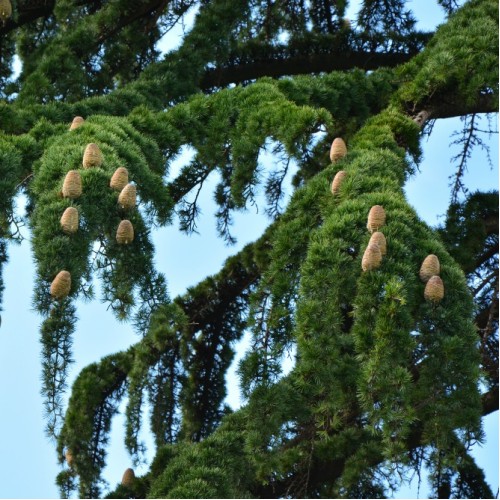
Cedrus deodara, commonly known as Indian Cedarwood, Deodar Cedar, or Himalayan Cedar, is a large evergreen conifer native to the western Himalayas. A member of the Pinaceae family, it is one of the true cedars — not a “cedar” by common-name confusion, but an actual Cedrus.
The essential oil is steam distilled from the wood, which holds the tree’s deep, dry, woody, balsamic aromatic medicine. This is trunk, beam, temple, root, and structure medicine.
Botanical Profile
-
Botanical Name: Cedrus deodara
-
Family: Pinaceae
-
Common Names: Indian Cedarwood, Deodar Cedar, Himalayan Cedar, Deodar
-
Plant Type: Evergreen coniferous tree
-
Part Used for Distillation: Wood
-
Growth Habit: Large, long-lived evergreen tree with a pyramidal form when young, becoming broader and more spreading with age
-
Flowering / Cone Season: Male cones release pollen in autumn; female cones mature over time and release winged seeds
-
Harvest Time for Distillation: Wood is harvested, chipped, and steam distilled for essential oil production
-
Distillation Year for This Oil: 2010
Physical Characteristics
-
Leaves / Needles: Slender needle-like leaves, green to blue-green, borne singly on long shoots and in dense clusters on short shoots
-
Branches: Horizontal to spreading branches with graceful, drooping branchlets
-
Bark: Gray-brown to dark brown, becoming fissured and textured with age
-
Wood: Aromatic, durable, and traditionally valued for construction, temples, bridges, and structural use
-
Cones: Upright barrel-shaped female cones that mature and break apart to release winged seeds; smaller male cones release pollen
-
Roots: Strong anchoring root system that supports the tree in mountainous terrain
Native Habitat + Growth Conditions
-
Native To: Western Himalayas, including regions of Afghanistan, Pakistan, India, Nepal, and Tibet
-
Preferred Soil: Well-drained mountain soils; does not tolerate waterlogged conditions well
-
Sunlight: Full sun to light shade
-
Climate: Temperate mountain climate with cold winters and seasonal change
-
Ecological Notes: Provides habitat, shade, soil stabilization, and long-lived structural presence in Himalayan forest ecosystems
Energetic Botanical Signature
Deodar teaches through architecture.
This tree does not just grow. It builds a world around itself. Rooted in mountain terrain, rising toward the sky, holding enormous weight through trunk and branch, it carries the doctrine of sacred structure. Its medicine is not scattered, fast, or decorative. It is structural. It holds.
The drooping branchlets matter. They soften the whole presence of the tree. This is not rigid tower medicine. It is strength with humility. Height with bowing. Power with grace. The tree reaches upward, but its branches bend downward, as if the whole being is praying while standing.
That is the doctrine.
Upward devotion. Downward grounding.
The aromatic medicine comes from the wood — the part of the tree that becomes beam, temple, bridge, threshold, and shelter. Indian Cedarwood supports the places in us that need structure without hardness, endurance without shutdown, protection without isolation.
And this vintage 2010 oil deepens that teaching. Time has softened the edges. The oil has become less sharp, more settled, more inward. It carries the feeling of old wood that has witnessed weather and kept standing.
This is a plant that teaches: You can be strong without becoming hard. You can bow without collapsing. You can hold sacred space inside yourself, even when the world around you is loud, unstable, and full of crap.