Every order ships USPS Priority — $10.95 flat-rate USPS Priority shipping on all US orders, no minimum. Free shipping on domestic orders over $299.
Welcome to Stillpoint. Subscribe to our newsletter for sale details and new-product news · One discount code per order · Every order is hand-poured, packed with care in ceremony, and shipped as we receive it.

Black Pepper Essential Oil | Warmth, Circulation + Courage

Piper nigrum

  • Black Pepper Essential Oil | Warmth, Circulation + Courage

Average Rating: (see reviews)

$10.00 Ex Tax: $10.00

Essential Facts

  • Latin Name: Piper nigrum
  • Country of Origin: Bahamas
  • Botanical Family: Piperaceae
  • Plant Parts: Dried fruit
  • Note Classification: Top/Middle
  • Cultivation Method: Distiller is Certified Organic
  • Method of Extraction: Steam or Hydro Distillation
  • Extraction Date: March 2025
  • Approx. Shelf Life: 7 years
  • Chemical Family: Monoterpenes, Sesquiterpenes
  • Batch: blkpep
  • Aroma: Spicy, Strong, Warm, Woody
  • Energetic Applications: 1st Chakra - survival and support, 2nd Chakra - relationships, creation energy, Grounding, Protective, Purifying
  • Therapeutic Properties: Anti-emetic, Anti-inflammatory, Anti-septic, Anti-viral, Carminative, Digestive stimulant, Diuretic, Energizing, Expectorant, Febrifuge, Rubefacient, Stimulant, Warming
Notes & Use

Personal Use

Black Pepper Essential Oil (Piper nigrum)

Warm | Spicy | Fortifying

Black Pepper doesn’t whisper its way in—it wakes the system up and tells the body to come back online. Its aroma is warm, dry, spicy, and penetrating, with that familiar peppery bite softened by a subtle woody depth. It feels like heat returning to cold hands, like circulation moving through places that have been stuck too long.

This is an oil for stagnation. For exhaustion that has gone flat. For the places in the body and spirit where movement has slowed, warmth has faded, and life force needs a damn invitation to re-enter the room.

There is something deeply animating about Black Pepper. It doesn’t overstimulate in the shiny, frantic way. It strengthens. It rekindles. It brings fire back into the belly, the muscles, the breath, and the will. This is not soft comfort medicine. This is “get back in your body” medicine.

Stillpoint’s Black Pepper essential oil is steam distilled from the dried fruits of Piper nigrum, a climbing vine native to India and widely grown throughout tropical regions. Long valued as both a culinary spice and traditional botanical ally, Black Pepper has been used for centuries to support digestion, circulation, muscular comfort, warmth, and vitality.

This oil is for movement. For warmth. For courage. For waking up the inner fire when the body, mind, or spirit has gone cold.

Therapeutic Applications

Muscular Support + Warming Relief
  • Black Pepper is traditionally used in massage blends for sore muscles, stiffness, and areas that feel cold, tight, or under-circulated
  • May assist with easing muscular tension after physical exertion, overuse, or long periods of holding stress in the body
  • Ideal in warming massage oils, salves, and recovery blends where deep heat and movement are desired
  • Especially useful when discomfort feels stagnant, heavy, contracted, or slow-moving rather than sharp or acute

Circulatory Support
  • Known for its warming and stimulating nature, Black Pepper may help encourage healthy circulation when used appropriately in topical blends
  • Useful for cold hands and feet, sluggish-feeling tissue, or areas that benefit from gentle warming and movement
  • Combines beautifully with Ginger, Rosemary, Juniper Berry, or Sweet Orange in blends meant to bring vitality back into the body
  • Can be helpful in winter body oils, pre-movement massage blends, and formulas designed to support warmth and flow
Digestive Support
  • Black Pepper has a long history of traditional use for digestive sluggishness, gas, bloating, and lack of appetite
  • May assist in abdominal massage blends when digestion feels cold, slow, tense, or stuck
  • Its warming aromatic profile makes it a strong companion for Ginger, Cardamom, Fennel, Sweet Orange, or Coriander Seed
  • Best used in low dilution and with respect, because this oil has fire — and fire is medicine when used wisely
Nervous System + Energetic Fortification
  • Black Pepper may support those who feel depleted, emotionally flat, hesitant, or disconnected from their own strength
  • Its warming nature can help bring a sense of courage, presence, and embodied confidence
  • Useful when fear, shock, grief, or long-term stress has left the system feeling cold, collapsed, or immobilized
  • Combines well with Frankincense, Vetiver, Cedarwood, or Patchouli when the goal is grounding with fire rather than grounding into heavinessThis is an oil that doesn’t just warm the body — it calls the life force back. Physical, emotional, and energetic.

Traditional Use

Black Pepper has been used for thousands of years across Ayurvedic, folk, culinary, and traditional medicine systems, where the dried fruits of Piper nigrum were valued for warmth, digestion, circulation, stamina, and protection.

This was never just “table pepper.” Before it became ordinary, it was precious as hell — traded, carried, guarded, and used as medicine.

Known as a warming spice of movement and activation, Black Pepper was traditionally used when the body felt cold, sluggish, congested, weak, or stuck. It was used to kindle digestive fire, support circulation, ease muscular discomfort, and bring vitality back into the system.

Digestive Fire + Sluggish Digestion
  • Black Pepper has long been used in traditional digestive formulas to support appetite, relieve gas, and assist sluggish digestion
  • In Ayurveda, it is considered heating and stimulating, often used to awaken agni — the digestive fire
  • Traditionally paired with herbs and spices like Ginger, Long Pepper, Turmeric, Cardamom, and Cumin to support assimilation and movement
  • Especially valued when digestion feels cold, heavy, slow, or bogged down
Circulation + Warmth
  • Used traditionally to warm the body from the inside out, especially during cold seasons or periods of low vitality
  • Black Pepper was commonly included in warming oils, liniments, and massage preparations for cold hands, cold feet, and sluggish circulation
  • Its fiery nature made it useful when the body needed movement, heat, and restored flow
  • In energetic terms, Black Pepper helps move what has become stagnant — physically, emotionally, and spiritually
Muscular Aches + Stiffness
  • Traditionally used in topical preparations for sore muscles, stiffness, joint discomfort, and tension
  • Often included in warming massage blends for people who felt cold, contracted, or depleted
  • Especially suited for discomfort that feels heavy, stuck, or slow-moving rather than hot and acute
  • Black Pepper brings heat into the tissue, helping the body remember movement
Vitality, Courage + Protection
  • Across various folk traditions, Black Pepper was valued not only as a physical warming agent, but as a protective and fortifying plant ally
  • Its sharp, fiery nature made it symbolically connected with strength, courage, endurance, and energetic defense
  • Traditionally used to cut through heaviness, lethargy, fear, and energetic fog
  • It carries the medicine of inner fire — not chaos, not burnout, but the steady flame that says: I am still here. I am still moving.
Black Pepper isn’t fancy medicine.
It’s fire medicine. Practical, ancient, warming, and direct.

In traditional settings, it wasn’t used to soothe someone into softness — it was used to wake the body, move the blood, kindle the belly, and bring the whole system back into motion.

Botany

Piper nigrum, commonly known as Black Pepper, is a perennial climbing vine native to the tropical regions of South India and now grown in warm, humid climates throughout the world. A member of the Piperaceae family, Black Pepper is not a tree, root, or seed in the way many people assume—it is the dried fruit of a flowering vine.

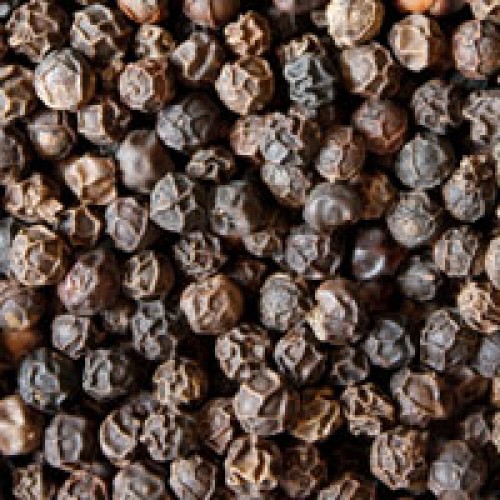
The essential oil is steam distilled from the dried peppercorns, which are the small fruits of the plant harvested before full ripeness and then dried until they darken and wrinkle. These fruits hold the plant’s heat, spice, and penetrating aromatic compounds.

Black Pepper grows by climbing and attaching itself to support trees or poles, reaching upward through relationship. It needs warmth, moisture, structure, and something strong to hold onto. That alone tells us a lot about its medicine.

  • Botanical Name: Piper nigrum
  • Family: Piperaceae
  • Common Names: Black Pepper, Peppercorn, Black Peppercorn
  • Plant Type: Perennial climbing vine
  • Part Used for Distillation: Dried fruit / peppercorns
  • Growth Habit: Woody climbing vine that can reach 4–10 meters or more when supported
  • Flowering Season: Varies by region; typically produces slender flowering spikes in warm, humid growing conditions
  • Harvest Time for Distillation: Fruits are generally harvested before full ripeness, then dried before distillation

Physical Characteristics
  • Leaves: Broad, glossy, heart-shaped to oval leaves with prominent veins; deep green and aromatic when crushed
  • Stems: Woody, jointed climbing stems that root at the nodes and attach to nearby support structures
  • Flowers: Small, pale flowers arranged on long, slender spikes
  • Fruits: Small round drupes that grow in clusters along the spikes; green when immature, turning red as they ripen, and blackened through drying
  • Roots: Adventitious climbing roots that help the vine anchor itself as it grows upward
Native Habitat + Growth Conditions
  • Native To: South India, especially the Malabar Coast region
  • Preferred Soil: Rich, well-drained, moisture-retentive soil with abundant organic matter
  • Sunlight: Partial shade to filtered tropical sun; often grown with support trees or structured trellising
  • Climate: Warm, humid tropical climate with consistent rainfall and protection from harsh drying winds
  • Ecological Notes: Black Pepper is a climbing vine that depends on support, moisture, and warmth; its growth reflects relationship, upward movement, and the need for rooted structure before expansion
Energetic Botanical Signature
Black Pepper climbs. It does not sprawl helplessly or stand rigidly alone. It reaches, attaches, rises, and finds its way upward through connection. Its medicine is not about forcing movement—it is about restoring the heat and structure needed for movement to happen.

The fruit carries concentrated fire: small, dark, potent, and unmistakable. It warms what has gone cold. It stimulates what has gone sluggish. It brings circulation, courage, and presence back into the body.

This is a plant that teaches: Warmth is medicine. Movement is medicine. You do not have to burn yourself down to come back to life.
Energetics

Energetic Properties

Inner Fire • Courage • Movement Through Stagnation
 
Black Pepper isn’t an oil that drifts in gently and asks permission. It enters with warmth, clarity, and a little kick in the ass. It’s for the moments when your energy has gone cold, your courage has gone quiet, or your body feels like it forgot how to move forward.

This is not frantic fire. It’s not burnout dressed up as motivation. Black Pepper carries a steady, embodied heat — the kind that brings circulation back to the places where fear, grief, fatigue, or shock have created contraction.

It says, “You are still here. Get back in your body. There is life moving through you.”


Energetic Themes:
  • Rekindling inner fire after depletion, fear, grief, or emotional shutdown
  • Supporting movement through stagnation, hesitation, and energetic paralysis
  • Helping restore courage when the spirit feels timid, cold, or collapsed
  • Bringing warmth and vitality back into the body after stress or burnout
  • Supporting embodiment when someone feels disconnected, frozen, or “not fully in the room”
  • Strengthening the solar plexus and helping reconnect to personal will, direction, and momentum
Spiritual Use:
  • Ideal for rituals focused on courage, protection, movement, and reclaiming personal power
  • Use in solar plexus and root chakra blends when strength, warmth, and grounded action are needed
  • Supportive in practices where fear has created contraction and the body needs help returning to presence
  • Can be used before movement, ceremony, breathwork, or intention-setting when the goal is activation without chaos
  • Pairs beautifully with oils like Ginger, Frankincense, Vetiver, Cedarwood, Sweet Orange, or Rosemary to create blends that are warming, grounding, and forward-moving
This is the oil for getting the fire back — not to burn everything down, but to remember that your life force is still in there, waiting for the spark.

Traditional & Folklore

Black Pepper is one of those plants that became so common we forgot how powerful it once was. Before it sat on every kitchen table next to salt, Piper nigrum was a plant of heat, wealth, protection, appetite, digestion, trade, and fire.

Native to India’s Malabar Coast, Black Pepper moved across oceans, kingdoms, kitchens, medicine systems, and ritual practices. It was carried by merchants, prescribed by healers, guarded by traders, and valued so highly that peppercorns were once used as payment, rent, dowry, and tax.

That alone tells you something.
This was never just seasoning. This was plant fire with a passport.

Folk Use as Fire Medicine
  • In traditional medicine systems, Black Pepper was used to bring warmth where there was coldness, movement where there was stagnation, and sharpness where the body felt dull or heavy.
  • It was used to kindle digestive fire, support appetite, clear sluggishness, and help the body assimilate what it was taking in.
  • In Ayurveda, Black Pepper is one of the three pungent herbs in Trikatu alongside Long Pepper and Ginger — a classic formula used to awaken agni, the digestive fire, and move through heaviness, congestion, and damp stagnation.
  • Energetically, this is the medicine of the spark. The thing that says: wake up, move, digest, metabolize, live.
Protection + Boundary Medicine
  • Because of its sharp, pungent, fiery nature, Black Pepper has long been associated with protection and energetic defense in folk traditions.
  • Pepper was used to repel unwanted influences, cut through heaviness, and create a kind of fiery boundary around the body, home, or spirit.
  • It was not soft protection. It was not gentle angel-wing protection. It was “don’t bring that crap over here” protection.
  • In energetic work, Black Pepper can be understood as a plant that helps strengthen the perimeter — especially when someone feels porous, invaded, depleted, or energetically slimed by other people’s chaos.
Wealth, Trade + “Black Gold”
  • Black Pepper was once known as “black gold,” and that wasn’t poetic exaggeration. Pepper shaped trade routes, built fortunes, fueled exploration, and moved through ancient and medieval economies as one of the most desired spices in the world.
  • In medieval Europe, peppercorns were sometimes used as payment for rent, taxes, tolls, and dowries. A small, wrinkled fruit from a tropical vine became a symbol of value, status, and access.
  • That history gives Black Pepper another layer of energetic meaning: worth, exchange, protection of resources, and the power of small things that carry enormous force.
  • This tiny fruit changed economies. Don’t underestimate the small medicine.
Digestive Fire + Assimilation
  • Across traditional systems, Black Pepper was used to help the body digest — not just food, but experience.
  • It was added to foods and formulas to warm the stomach, awaken appetite, relieve gas and bloating, and support sluggish digestion.
  • Energetically, this makes Black Pepper a powerful ally for people who are taking in too much but not metabolizing it well — too much grief, too much stress, too much noise, too many people’s emotions, too many damn things at once.
  • It helps the system say: this is mine, this is not mine, this can be used, this can be released.
  • That is digestion in the deepest sense.
Courage, Stamina + Forward Motion
  • Black Pepper has also carried the folklore of endurance. It is warming, stimulating, and fortifying — a plant used when the body needed to keep going.
  • It was not the medicine of floating away into spiritual bliss. It was the medicine of staying embodied, staying warm, staying alert, and staying in motion.
  • For fatigue, fear, coldness, hesitation, and energetic collapse, Black Pepper brings the inner flame back into the room.
  • It does not ask you to become someone else. It reminds you that your fire is still there.
  • Black Pepper is ancient fire medicine. It warms the belly, wakes the blood, sharpens the senses, protects the field, and helps the body remember how to move. In folk memory, it lives as the little black fruit that carried heat across the world — a tiny peppercorn with enough power to feed empires, protect thresholds, and bring the spirit back into the body.
Chemistry

Chemical Components

Warming Support, Circulation & Embodied Fire
 
Black Pepper is a monoterpene- and sesquiterpene-rich oil, and it smells exactly like that: warm, spicy, dry, bright at the top, woody underneath, and sharply alive. It has that immediate peppery lift, but underneath the sparkle is something deeper — a steady, circulatory warmth that feels like blood moving back into cold places.

This is not a heavy oil. It is not sleepy, resinous, or slow. Black Pepper has movement in its chemistry. It enters quickly, warms quickly, and gets things going. Its aroma is built from a beautiful tension between the fast-moving monoterpenes and the more grounded sesquiterpene presence, especially β-caryophyllene.

Black Pepper essential oil commonly contains constituents such as α-pinene, sabinene, β-pinene, δ-3-carene, limonene, and β-caryophyllene, though the exact balance varies by origin, harvest, age, and distillation.

Its chemistry gives it that rare combination: stimulation with grounding. It can wake the body without scattering the spirit. It can bring heat without becoming chaos. It can support movement while still helping someone feel more present inside their own skin

Main Chemical Families:

Monoterpenes
  • Black Pepper contains a strong monoterpene presence, including constituents such as α-pinene, β-pinene, sabinene, δ-3-carene, and limonene. These are the molecules that give the oil its brightness, lift, diffusion, and quick movement. 
  • Known for their stimulating, clearing, and circulatory-supportive qualities
  • Give Black Pepper its fresh, sharp, sparkling top note beneath the familiar spice
  • Move quickly through the aroma field, which is why Black Pepper feels activating rather than heavy
  • Support the oil’s traditional use for sluggishness, coldness, congestion, and low vitality
  • Help explain why Black Pepper is useful when the body or spirit feels stagnant, dull, or stuck
  • Energetically, the monoterpenes are the “wake up” portion of Black Pepper’s medicine. They bring air to the fire. They clear the fog. They get the blood, breath, and will moving again.
Sesquiterpenes
  • Black Pepper also contains a significant sesquiterpene component, especially β-caryophyllene, which gives the oil depth, warmth, and a more grounded therapeutic profile. Some analyses show β-caryophyllene as one of the major constituents of Black Pepper essential oil, though percentages can vary widely. 
  • Known for their grounding, anti-inflammatory, and tissue-supportive qualities
  • Give the aroma its dry, woody, spicy depth beneath the brighter peppery lift
  • Help Black Pepper feel strengthening instead of merely stimulating
  • Support its use in massage blends for muscular discomfort, stiffness, and overuse
  • Bring a steady, embodied quality to the oil’s heat
  • This is the part of Black Pepper that makes it more than “spicy.” The sesquiterpene layer gives it backbone. It keeps the fire from flying all over the damn room.
β-Caryophyllene
  • β-Caryophyllene deserves its own moment here because it is one of the most important constituents in Black Pepper essential oil.
  • This molecule is also found in oils like Copaiba, Clove, and some cannabis chemotypes, and it is known for its affinity with inflammatory pathways and tissue comfort. In Black Pepper, β-caryophyllene helps bridge the oil’s spicy stimulation with deeper physical support.
  • Supports the oil’s traditional role in muscular and joint massage blends
  • Contributes to the dry, woody-spicy body of the aroma
  • Helps soften the sharper monoterpene lift with a more grounded, steady presence
  • May support inflammatory balance when used appropriately in topical formulations
  • Energetically, β-caryophyllene is the coal under the flame. It is not flashy. It does not sparkle. It holds heat.
Limonene
  • Limonene gives Black Pepper a subtle brightness and lift that many people don’t consciously notice at first because the peppery spice takes center stage.
  • Adds a fresh, lift beneath the dry spice
  • Supports the oil’s digestive and mood-brightening associations
  • Helps keep the aroma from becoming too dense or heavy
  • Contributes to the feeling of movement, optimism, and renewed appetite for life
  • This is part of why Black Pepper can feel warming without feeling oppressive. It has fire, yes — but it also has air.
Sabinene, Pinene + δ-3-Carene
  • These monoterpenes help create Black Pepper’s sharper, fresher, more penetrating aromatic edge. Depending on origin and distillation, these constituents can be present in meaningful amounts and contribute to the oil’s stimulating and clearing character. 
  • Support the oil’s fresh, spicy, slightly resinous lift
  • Contribute to the sense of clearing, opening, and movement
  • Help explain Black Pepper’s traditional use when the body feels congested, cold, or sluggish
  • Bring brightness and direction to the blend, especially when paired with heavier oils
  • Energetically, these molecules are like striking a match. They don’t do the whole fire by themselves, but they begin the ignition.
Minor Components:
  • Trace constituents may include other monoterpenes, oxygenated terpenes, and aromatic compounds depending on origin, age of the peppercorns, storage, and distillation method.
It is important to understand that Black Pepper essential oil is not the same as whole ground black pepper. The pungent alkaloid piperine, which gives black pepper its biting taste and is often discussed in herbal and nutritional contexts, is not a major volatile component of the essential oil.

The essential oil carries the aromatic volatile chemistry — the warmth, spice, movement, and diffusion — but not the same full chemical profile as the whole spice.

That matters. We are working with the spirit and chemistry of the volatile oil here, not the whole peppercorn as food or herbal powder.

Therapeutic Implications of This Chemistry:

Warming muscular support:
The monoterpene-sesquiterpene balance makes Black Pepper excellent in massage blends for cold, tight, sore, or overworked muscles. It brings warmth, movement, and depth.

Circulatory activation:
Its stimulating monoterpene profile supports its traditional use in blends for cold hands, cold feet, sluggish tissue, and winter body oils.

Digestive fire:
The aromatic warmth of Black Pepper aligns beautifully with its traditional use for sluggish digestion, gas, low appetite, and abdominal tension. In topical belly blends, it brings heat and movement.

Respiratory and clearing support:
The pinene-rich and monoterpene aspects may support a sense of openness and movement when the body feels congested or heavy.

Emotional activation:
Black Pepper’s chemistry can help move someone out of collapse, hesitation, fear-freeze, or emotional dullness. It is not a sedative. It is a re-entry oil.

Grounded stimulation:
Because of its β-caryophyllene and sesquiterpene depth, Black Pepper doesn’t just shoot energy upward. It helps keep the warmth embodied.

Energetic protection:
The sharp, pungent chemistry gives the oil a boundary-setting quality. It cuts through fog, heaviness, and energetic sludge.
This chemistry does not lull you to sleep. It does not wrap you in a blanket and tell you everything is fine. Black Pepper brings the match, the heat, and the reminder that your body still knows how to move.

It helps warm what has gone cold, stir what has gone stagnant, and call the life force back into circulation.
Recipes & Blends

Recipes & Blends

Warm the Bones Massage Blend
Physical Support | Muscular Tension + Circulation

  • Black Pepper Essential Oil (Piper nigrum): 8 drops
  • Ginger Essential Oil (Zingiber officinale): 6 drops
  • Sweet Marjoram Essential Oil (Origanum majorana): 8 drops
  • Juniper Berry Essential Oil (Juniperus communis): 6 drops
  • Lavender Essential Oil (Lavandula angustifolia): 12 drops
This warming massage blend is designed for cold, tight, overworked muscles and areas of the body that feel stagnant, sore, or slow to recover. Black Pepper brings heat and movement, Ginger deepens the warming action, Sweet Marjoram softens muscular tension, Juniper Berry supports fluid movement, and Lavender brings balance so the blend doesn’t become too aggressive.

Dilute in a suitable carrier oil before applying to the skin. A 1–2% dilution is generally appropriate for most adult body applications.

Digestive Fire Belly Blend
Physical Support | Sluggish Digestion + Abdominal Tension
  • Black Pepper Essential Oil (Piper nigrum): 5 drops
  • Cardamom Essential Oil (Elettaria cardamomum): 8 drops
  • Ginger Essential Oil (Zingiber officinale): 5 drops
  • Sweet Orange Essential Oil (Citrus sinensis): 12 drops
  • Coriander Seed Essential Oil (Coriandrum sativum): 10 drops
This blend is designed for abdominal massage when digestion feels cold, slow, tense, or bogged down. Black Pepper and Ginger bring warmth and movement, Cardamom supports digestive comfort, Coriander Seed helps soften digestive tension, and Sweet Orange brings brightness, ease, and emotional warmth.

Massage gently over the abdomen in a clockwise direction after diluting in a carrier oil. Use at a low dilution and avoid applying before heat exposure, intense sun, or to sensitive skin.


Courage Back in the Body Blend
Energetic Support | Fear, Collapse + Reclaiming Strength

  • Black Pepper Essential Oil (Piper nigrum): 7 drops
  • Frankincense Essential Oil (Boswellia carterii): 8 drops
  • Vetiver Essential Oil (Chrysopogon zizanioides): 4 drops
  • Sweet Orange Essential Oil (Citrus sinensis): 12 drops
  • Cedarwood Atlas Essential Oil (Cedrus atlantica): 9 drops
This blend is for the moments when fear, grief, stress, or exhaustion has pulled you out of yourself. Black Pepper brings the fire back, Frankincense steadies the breath, Vetiver anchors the nervous system, Sweet Orange restores warmth and hope, and Cedarwood Atlas helps rebuild inner strength.

Use in ritual, meditation, or body oil when you need to feel present, steady, and alive in your own skin again.


Cut Through the Fog Blend
Energetic Support | Stagnation, Protection + Forward Motion

  • Black Pepper Essential Oil (Piper nigrum): 8 drops
  • Rosemary Essential Oil (Rosmarinus officinalis): 8 drops
  • Lemon Essential Oil (Citrus limon): 10 drops
  • Patchouli Essential Oil (Pogostemon cablin): 5 drops
  • Myrtle Essential Oil (Myrtus communis): 9 drops
This blend is designed to clear energetic sludge, sharpen the field, and help move through hesitation or emotional heaviness. Black Pepper brings ignition, Rosemary strengthens clarity, Lemon cuts through dullness, Patchouli grounds the body, and Myrtle supports clean breath and emotional renewal.

Use before intentional work, movement, ceremony, or any moment where you need to stop circling the damn drain and take the next grounded step.


Affirmation
I return to my body with warmth, courage, and steady fire. I move forward from the place inside me that is still alive, still willing, and still strong.


General Safety Note:
Always dilute essential oil blends in a suitable carrier oil before applying to the skin. Avoid use on broken or irritated skin. Perform a patch test when using a new oil or blend. Use extra caution during pregnancy, nursing, with children, elders, pets, or when taking medications. Consult a qualified healthcare provider or certified aromatherapist when needed.

For Black Pepper specifically, use with respect. It is warming, stimulating, and can be irritating if overused. Low dilution is your friend here. Fire is medicine — but we don’t need to set the whole house on fire.
Safety Etc.

Safety Information

Black Pepper essential oil is generally considered non-toxic and non-phototoxic when used appropriately, but it is a warming, stimulating oil and should be used with respect. This is not an oil to dump into a blend like you’re seasoning soup. A little goes a long way.

Because of its heat and circulatory action, Black Pepper may feel irritating on sensitive skin or if used at too high a dilution. It is best used in low to moderate amounts, especially in massage blends, digestive blends, and formulas for muscular support.

Topical Use: Recommended dilution is generally 0.5–2% for most adult applications. For localized muscular blends, it may be used slightly higher by experienced formulators, but lower dilution is usually enough. Black Pepper brings the fire. You don’t need to set the whole damn blend on fire.

Skin Sensitivity: May be irritating to sensitive skin if overused. Avoid applying to broken, inflamed, freshly shaved, or highly reactive skin. Patch testing is recommended.

Phototoxicity: Not known to be phototoxic.

Internal Use: Not recommended for internal use unless supervised by a qualified practitioner trained in aromatic medicine.

Pregnancy & Lactation: Use with caution during pregnancy and lactation. Avoid during the first trimester unless guided by a qualified practitioner. Use low dilution only.

Pediatric Use: Use cautiously with children. Best avoided with very young children. For children over 6, use only in very low dilution and avoid application near the face, chest, or mucous membranes.

Medical Considerations: Use caution with people who are highly sensitive, overheated, dealing with inflammatory skin conditions, or taking medications that affect circulation or blood clotting. When in doubt, work with a qualified aromatherapist or healthcare provider.

Storage: Store in a cool, dark place away from heat, light, and oxygen. Black Pepper contains monoterpenes that can oxidize over time, and oxidized oils are more likely to cause skin irritation. Keep the cap tightly closed and replace if the aroma becomes flat, harsh, or unpleasantly sharp.

Due to its warming and stimulating nature, Black Pepper is best used when the body needs movement, heat, courage, and circulation — not when the system is already overheated, irritated, or inflamed. It is a beautiful oil when used wisely: strong, direct, activating, and deeply useful.

References

  • Apollo 247. Trikatu Churna: Uses, Benefits, Side Effects, and Traditional Applications. Apollo 247 Health Library.
  • AromaWeb. Black Pepper Essential Oil Profile. AromaWeb.
  • Battaglia, Salvatore. The Complete Guide to Aromatherapy. Perfect Potion.
  • Britannica. Black Pepper. Encyclopaedia Britannica.
  • Dosoky, Noura S., et al. Volatiles of Black Pepper Fruits (Piper nigrum L.). Molecules, 2019.
  • Feitosa, Cristhiane M., et al. Chemical Composition of Piper nigrum L. Cultivar Essential Oils. Molecules, 2024.
  • Frawley, David, and Vasant Lad. The Yoga of Herbs: An Ayurvedic Guide to Herbal Medicine. Lotus Press.
  • Holmes, Peter. Aromatica: A Clinical Guide to Essential Oil Therapeutics, Volume 1 and Volume 2. Singing Dragon.
  • Lawless, Julia. The Encyclopedia of Essential Oils. Conari Press.
  • Merriam-Webster. Piper Definition. Merriam-Webster Medical Dictionary.
  • Nurjanah, Siti, et al. Essential Oils from Different Parts of Piper nigrum L.: Chemical Composition and Biological Activity. 2025.
  • Pole, Sebastian. Ayurvedic Medicine: The Principles of Traditional Practice. Singing Dragon.
  • Salehi, Bahare, et al. Piper Species: A Comprehensive Review on Their Phytochemistry, Biological Activities and Applications. Molecules, 2019.
  • ScienceDirect. Trikatu Formulation / Ayurvedic Formulation Research Article. ScienceDirect, 2025.
  • Tisserand Institute. Essential Oil Safety Guidelines. Tisserand Institute.
  • Tisserand, Robert, and Rodney Young. Essential Oil Safety: A Guide for Health Care Professionals. 2nd ed., Churchill Livingstone Elsevier, 2014.
  • Tisserand. Black Pepper Essential Oil Safety / Product Safety Information. Tisserand Aromatherapy.

Related Products

Clove Bud Essential Oil | Immune & Pain Support
Anise Star Essential Oil

Anise Star Essential Oil

Anise star essential oil is a fabulous oil to use for many digestive issues...

$10.00 Ex Tax: $10.00

Clove Bud Essential Oil -  Sedona Limited Reserve
Clove Bud CO2 Select Extract Organic

Clove Bud CO2 Select Extract Organic

..

$11.00 Ex Tax: $11.00

Reviews (3)

Write a review

Note: HTML is not translated!
    Bad           Good
Powered By OpenCart
Stillpoint Aromatics © 2026